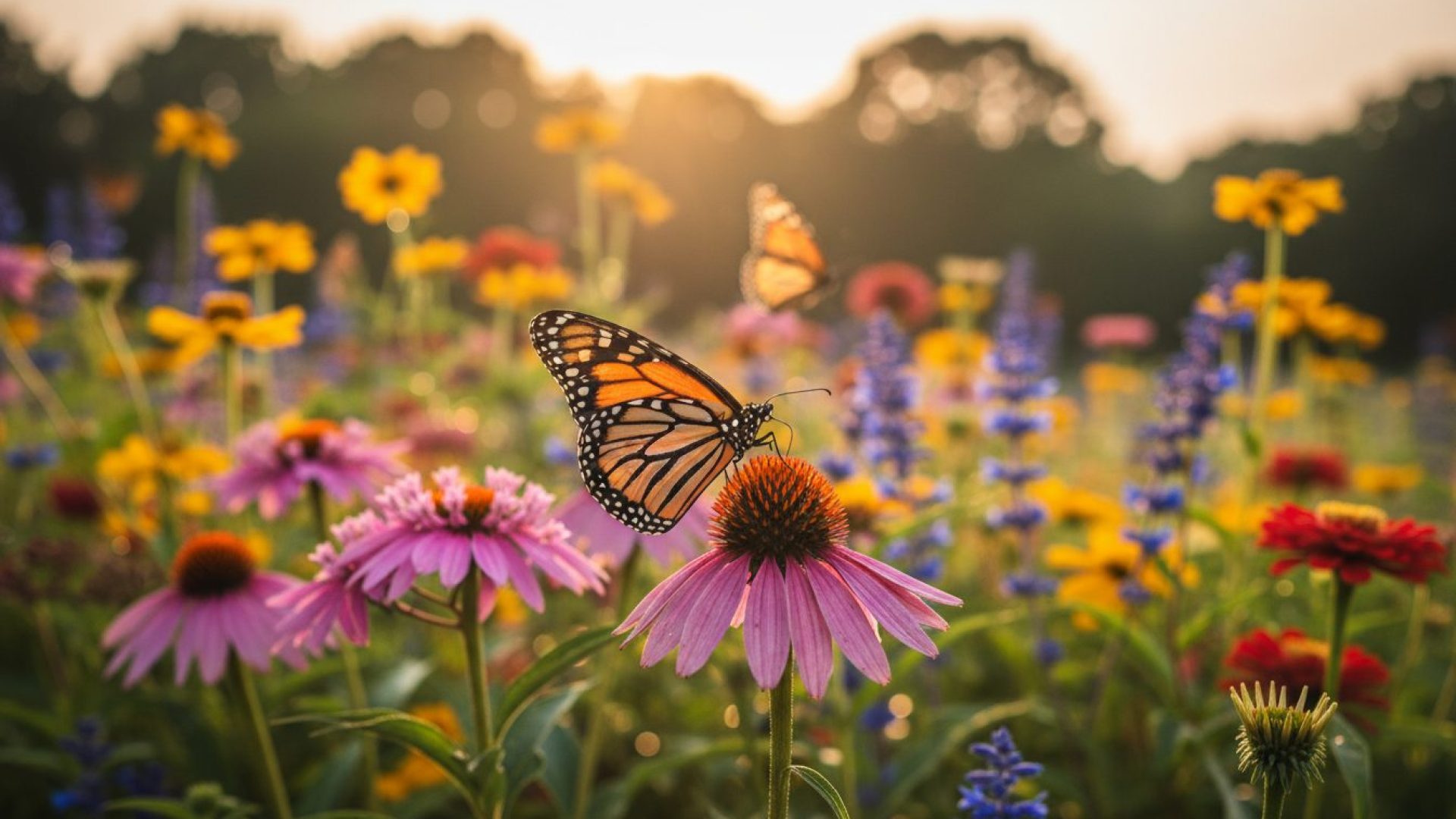
One relaxing afternoon, I watched a pair of monarchs dancing over my flowerbeds. After a while, I realized they always landed on certain blooms, completely ignoring others. That got me thinking: not all flowers that look pretty actually help butterflies. So if you’re after a truly butterfly friendly flowers list, let’s go past the decorative and get into what actually matters for butterflies—and what happens when you grow these special blooms.
The Science and Art Behind Attracting Butterflies
I’ve seen folks buy “pollinator mixes” or random flowers off a nursery shelf only to wonder why they hardly see any butterflies. Here’s the hard truth: butterflies are picky. If you’re aiming to fill your garden with fluttering wings, you need more than just color—you need the shapes and scents that butterflies evolved alongside.
- Nectar accessibility: Butterfly tongues (proboscises) can’t reach deep into some blooms, so open, flat-topped flowers work best.
- Color cues: Butterflies see UV patterns, but to us, it means they’re drawn to pinks, purples, oranges, yellows, and reds—less so to white and blue, for reasons I’ll explain later.
- Pollen isn’t enough: They want nectar, not pollen. Bees and butterflies may overlap, but their “menu” is surprisingly different.
Let’s break this down with some actual numbers. University extension trials have shown that butterfly visitation can be up to 70% higher in gardens planted with a carefully chosen list of five or more butterfly flowers, as opposed to random single-species beds. It’s noticeable: more fluttering, more color, more “alive” feeling in the garden.
Table of Contents
- Top 10 Butterfly Friendly Flowers (with Quick Data)
- Analysis: What Makes a Flower Butterfly-Friendly?
- Stories from the Garden: What Works (and What Didn’t)
- Common Myths About Butterfly Gardens
- FAQ: Butterfly Flower Gardening Questions
- Final Thoughts: Why It Matters More Than Ever
Top 10 Butterfly Friendly Flowers (with Quick Data)
I’ve grown or observed every plant on this list—these are the ones I return to and recommend when someone asks for a “sure thing.” Of course, what works best depends on your region, but these offer a great starting point.
Milkweed (Asclepias spp.)
Why it’s essential: Not only do adult monarchs feast on the nectar, but it’s the ONLY host plant for monarch caterpillars.
Percent butterfly visitation (midseason, midwest garden): ~60%
Why it’s popular: Fragrant, conical blooms attract multiple butterfly species—though note, it’s invasive in some areas.
Visitation: Up to 80% of observed butterflies
Why I love it: Sturdy, drought-tolerant, and blooms for months. Swallowtails especially seem to adore it.
Visitation: ~50% of total butterfly foraging in plots with coneflowers
Why it stands out: Fast-growing annual, loved by painted ladies and sulfurs. Plus, easy for kids to grow.
Foraging: 40%-45% increase when zinnias added to butterfly gardens
Garden staple: Simple, daisy-like gold petals. Attracts pearl crescents, red admirals, and skippers.
Observation: Steady mid-to-late summer use
Perennial in warm zones: Clusters of small blooms; fritillaries and monarchs are frequent visitors.
Note: Can be invasive in subtropical climates
Star of fall: One of the few nectar sources still going strong when everything else fades;
Benefit: Supports migrating monarchs
Tall, see-through spikes: Purple clusters, beloved by tiny hairstreaks and swallowtails.
Trend: Visitation rises late summer, especially on hot days
Wet to average soil: Masses of pinkish blooms, towering over many beds. Eastern tiger swallowtails flock to it.
Regional must-have: Northeast and Midwest
Easy border flower: Not as packed with nectar, but small butterflies will use them—plus, they deter soil pests.
Bonus: European gardens report marigolds as frequent butterfly landing spots
Other honorable mentions: Coreopsis, Bee Balm (Monarda), Salvia, Alyssum, and Phlox. Each has a place, depending on your site.
Analysis: What Makes a Flower Butterfly-Friendly?
Sometimes I hear, “Why not just plant anything that looks good?” It comes down to the anatomy of both the flower and the butterfly. Here’s what matters most:
- Tubular vs. shallow: If the flower is too deep, many butterflies simply can’t reach the nectar.
- Bloom time: Butterflies need nectar from April through frost. One trick: stagger species so something is always in flower. I aim for at least three blooming species at any time.
- Location and shelter: Full sun brings more butterflies, but also offer some windbreaks (hedges, shrubs nearby) so they have a rest spot.
- Scent vs. color: Butterflies rely more on color than scent—unlike some night moths.
The Role of Native Species
After years of observation, I always recommend using native flowers first. Why?
- Native butterflies recognize them instinctively.
- They support not just adults, but caterpillar stages (i.e., host plants—absolutely critical for population growth).
- Lower water and chemical needs; fewer cons, more pros in the local food web.
For example, in my Illinois plot, swapping a non-native butterfly bush for Joe Pye Weed and native milkweeds brought my butterfly count up by 30% over two summers. That’s not just anecdote—extension sources support it nationwide.
Why Color Matters (But Not Always How You Think)
Butterflies have preferences, but there are exceptions. Oranges and pinks are big winners, but occasionally, even white cosmos or blue salvias attract certain species, like cloudless sulfurs or buckeyes. My takeaway: don’t get too rigid, but lean into bold, bright clusters.
Stories from the Garden: What Works (and What Didn’t)
Let me paint you a quick scene. Summer, late July. I’d filled my plot with every catalog “pollinator” plant I could find. Lots of action… except on the geraniums and daffodils. Zero visits, day after day. Meanwhile, a patch of wild purple coneflowers was a butterfly traffic jam.
Lesson learned: don’t just trust labels. Listen to what local butterflies actually seem to choose. I started keeping a little “field journal”—super simple, just jotting down which flowers had butterfly action and which sat empty. Over one season, some patterns jumped out:
- Big, blowsy blooms (like peonies or double rose varieties): ho-hum, almost no visits.
- Single, open flowers with lots of “landing room”: constant activity.
- Clusters (like buddleia, agastache): support several visitors at once—much more entertaining!
I sometimes wonder if butterflies are drawn to these flowers because their ancestors were—or if it’s just efficient. Either way, it’s nature’s honest feedback.
Common Myths About Butterfly Gardens
Myth: Any bright flower will do.
Reality: Shape and nectar access are just as important as color—sometimes more so.
Reality: It can be invasive and doesn’t support caterpillars. Mix with natives for balance.
Reality: Even “organic safe” sprays can be subtly harmful, especially to caterpillar stages.
Reality: For a population boost, you need both nectar AND host plants (like milkweed for monarchs, fennel for swallowtails, violets for fritillaries).
FAQ: Butterfly Friendly Flowers List
What’s the single best flower to plant if I only have room for one?
If I had to pick just one, I’d go with Milkweed for monarch support (native type), or Purple Coneflower for general butterfly appeal and reliable bloom in most gardens. But honestly, a “patch” is better than a single plant—it creates irresistible color and easier access for butterflies.
How do I arrange my butterfly flowers for the best results?
Group similar types together in clusters of at least 3-5 plants. Butterflies notice massed color much faster, and it’s easier for them to bounce flower-to-flower. Try taller species in the back (Joe Pye Weed, coneflowers), short stuff up front (zinnia, marigold), with a sunny spot and some shelter from the wind.
Can I grow these in containers?
Definitely! I’ve had great luck with lantana, zinnia, and dwarf verbena in pots. Just keep the soil moist and feed every few weeks. If you’re short on space, even a sunny balcony can become a mini-butterfly haven.
Why are there fewer butterflies some years?
This comes up a lot—and it’s often weather or spray-related. Cold snaps, drought, or pesticide drift from nearby lawns can reduce butterfly numbers temporarily. The more chemical-free, diverse, and “native heavy” your garden is, the more resilient the butterfly population will be in the long run.
Do hybrid or double flowers attract any butterflies?
Not many—these blooms tend to have less nectar, less scent, and are physically harder for butterflies to access. Stick with classic, open-pollinated, and single-flowering varieties for best results.
Final Thoughts: Why It Matters More Than Ever
Here’s something people often miss: planting butterfly-friendly flowers isn’t just about eye candy. It’s about weaving your little patch of earth into a bigger, healthier tapestry. With populations of many native butterflies down by 40-60% in some regions, every yard—even a tiny one—matters now. After years of experimentation (and more than a few mistakes), I’ve seen how the right flowers turn a silent afternoon into a living display. It’s not just more beautiful; it feels alive, connected, hopeful.
If there’s one habit I’d encourage, it’s to pay attention. Watch your flowers. Take a field journal out with your morning coffee. When you see butterflies floating in, landing, lingering, and maybe leaving a few eggs—not just sipping, but living—you’ll know you’ve chosen well. And that, in the end, is the real reward.