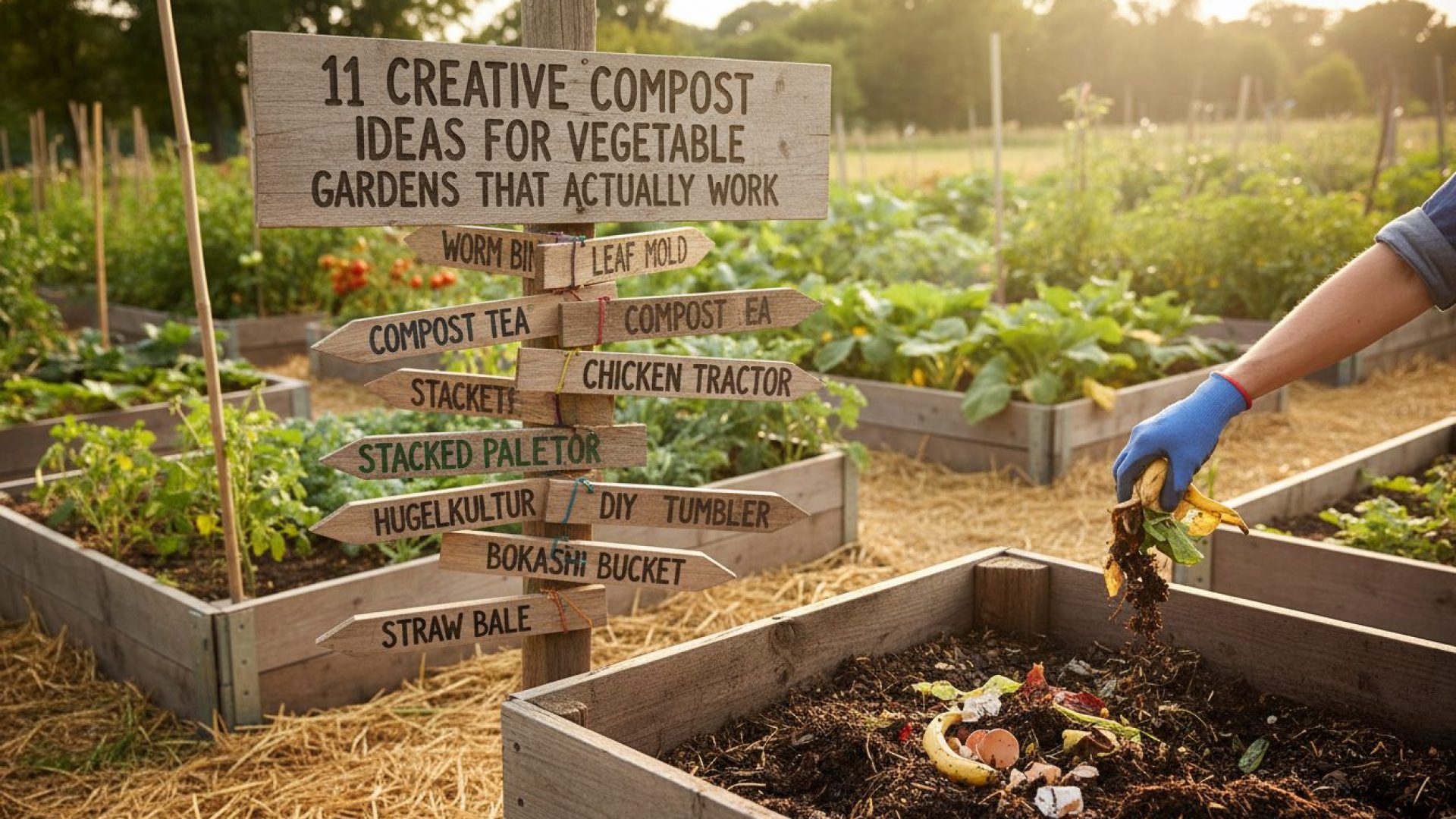
Every season, I find myself standing at the edge of the vegetable garden, trying to puzzle out just what new kind of “black gold” I can cook up for my soil. Honestly, there’s something weirdly exciting about compost. It’s more art than science, and there are always fresh compost ideas for vegetable gardens to try—some classic, some downright quirky. And trust me, a thriving tomato patch or a bumper crop of carrots depends as much on what’s rotting away in your compost pile as on anything you do above ground.
Why Composting Matters (More Than You Might Think)
Let’s start with the “why.” Compost isn’t just some eco-friendly hobby or a way to feel less guilty about your banana peels (though it is both of those, too). Adding homemade compost to your vegetable beds can boost your soil’s organic matter by 5–10%, which makes a shocking difference. According to Rodale Institute, garden yields can be up to 30% higher when soils get regular organic amendments like compost as opposed to only synthetic fertilizers. It improves water retention—which is a lifesaver during a dry stretch—and encourages those happy little microbes that make plant nutrition possible.
But not all compost is the same. I’ve experimented for years, and trust me, the kind of compost you make can change your whole gardening experience.
Classic Compost Bin: The Workhorse
Okay, let’s start here, because most people think “pile in the corner” when they hear “compost.” And honestly, it works. If you’re new, piling fruit/veggie scraps, leaves, and clippings into a bin or heap is as straightforward as it gets. But here’s what stands out about the classic pile:
- Takes 6–12 months on average to finish, depending on size and turning
- Works best in sun (faster decomposition)
- Can handle almost all kitchen greens and garden trimmings
- You need to give it a turn with a fork every couple weeks for best results
Pro insight: If you’re in a small space, a $50 tumbler bin speeds things up—my friend gets finished compost in two months (but the capacity is lower than heaps).
Passive Composting: Set and Forget
Sometimes, especially in busy seasons, you need a low-maintenance solution. Passive composting is just that. Toss your organic material in a pile, let rain and time do the work, and… that’s it. It takes about a year, sometimes more. Here’s why I like it:
- Zero-fuss for lazy (or just time-strapped) gardeners
- Let’s you process lots of yard waste without stress
- Final product is a bit chunkier, but vegetables don’t seem to mind
The downside? It can attract more critters. Raccoons seem to think of it as a 24-hour buffet, especially if you add food scraps. Some people mix their piles with a thin shovel layer every few months just to speed it up a little—totally optional.
Compost Ideas for Vegetable Gardens: Getting Creative
By now, you might be thinking: “Isn’t compost just compost?” Nope. There are several ways to tailor your composting that make real, noticeable differences to your veggie harvests. Let’s break down a few creative approaches:
1. Trench Composting: Right in the Vegetable Bed
Ever walked out and wished you could just bury your kitchen scraps where the roots will find them? With trench composting, you can. I sometimes dig a narrow trench (about 10 inches deep), fill it with food scraps and garden waste, then cover with soil. The spot slowly becomes a superfood buffet underground.
- Trench composting especially helps with root crops—carrots and beets come out plumper in my experience
- Minimal smell or pest issues (out of sight, out of nose!)
- Soil structure improves exactly where you need it
Rotate where you bury scraps, and after a year, you’ll notice earthworms moving in droves.
2. Vermicomposting: Worms Do the Work
Red wiggler worms are honestly kind of magic. Vermicomposting is just letting worms convert kitchen waste into ridiculously rich castings (worm poop, to be precise). Here’s what stands out in my garden tests:
- Produces finished compost in 2–4 months — much faster than passive piles
- Worm castings are about 5 times richer in available nitrogen than standard compost
- Ideal for indoor gardeners or apartment dwellers (no yard? No problem.)
Note: worms need their bedding (shredded paper or coconut coir) and a moisture level like a wrung-out sponge. No citrus, spicy, or oily foods—they’re picky eaters, but worth it.
3. Leaf Mold: “Slow Compost” for Soil Texture
Leaves alone, heaped and forgotten, become “leaf mold”—maybe the most underrated compost idea for vegetable gardens. It takes a year or so to break down, but it adds light, spongy structure to heavy clay beds. I always pile leaves in autumn, water them, and by next season, I’ve got a lovely, crumbly amendment. Bonus: It increases fungi in your soil (which most vegetables love, except brassicas).
4. Bokashi: Composting With (Beneficial) Microbes
Bokashi is a Japanese method that uses special bran inoculated with effective microorganisms. You add kitchen scraps to a lidded bin, sprinkle in bokashi bran, and let it ferment for about two weeks. It’s technically not finished compost, but the pre-fermented scraps can then be buried in the garden soil for final breakdown. My neighbor swears by it—he gets no smell, and it even handles dairy/meat scraps (stuff that’s usually a no-go in classic compost).
- Faster processing of food waste (as little as 1–2 weeks after burial)
- Closed system—almost zero odor
- Requires buying or DIY-ing the special bran
What Belongs in Compost? The Good, the Bad, and the Oddball
Most folks know the basic “greens and browns” rule, but confusion still reigns. The goal? A carbon-to-nitrogen ratio of about 25–30:1, give or take. But let’s keep it simple.
Things That Make Great Compost
- Fruit and vegetable scraps (avoid too much citrus—worms hate it)
- Shredded paper, cardboard, egg cartons
- Grass clippings (thin layers to avoid slime)
- Dry leaves (autumn bounty evolves into beautiful leaf mold!)
- Coffee grounds and filters—full of nitrogen
- Eggshells (rinse for less odor; add calcium for tomatoes)
- Old plant trimmings (no disease)
Compost Additions People Overlook
- Human hair and pet fur (seriously—it’s high in nitrogen and breaks down surprisingly well)
- Spent tea leaves and bags (remove the staple)
- Untreated wood ash (sparingly, as pH buffer—my tomatoes appreciate a light sprinkle)
- Dried seaweed if you’re coastal (adds micronutrients like iodine, which leafy veggies love)
- Plain brown paper napkins
What to Avoid—For Your Garden’s Sake
I’ve made the rookie mistake of tossing in oily food or meat scraps. Result? Smelly pile, raccoons, frustrated spouse. Here’s what you really shouldn’t add:
- Meat, bones, dairy (unless using bokashi)
- Diseased plants (or you’ll spread problems)
- Lots of citrus or onions
- Glossy/coated paper
- Weeds with seeds or persistent roots (unless your pile heats above 140°F)
Case Study: Tomato Trials With Different Composts
About three seasons back, I ran a little experiment. Three raised beds, each with a different compost: classic hot pile, pure worm castings, and just leaf mold. The tomatoes planted in worm castings grew 18% taller by midsummer, with noticeably deeper red fruit. The classic pile gave a middle-of-the-road result (solid yields, but not quite as robust), while the leaf mold bed had the fluffiest soil and still respectable plants, if a bit slower to start.
What’s the takeaway? Don’t agonize—you don’t need “perfect” compost. Try a mix over the years, and watch what your plants seem to like. That’s the fun!
Quick Composting Tips for Busy Gardeners
- Shred or chop big scraps—it can halve decomposition time
- Add at least equal parts dry brown “stuff” (leaves, paper) to green “stuff” (kitchen waste) for balance
- Moisten dry piles—the right level feels like a wrung-out sponge
- Turn your heap every two weeks for faster results (or invite your kids/neighbors—it’s oddly satisfying work!)
- If you see white fungus or mushrooms, don’t freak out—it’s a good sign of active decomposition
Pros and Cons of Different Composting Styles
| Method | Speed | Cost | Pest Risk | Best For |
|---|---|---|---|---|
| Traditional Bin/Pile | 6–12 months | Low | Medium | All-around use |
| Vermicomposting | 2–4 months | Moderate (worms + bin) | Low (if indoors or lidded) | Small space/high nutrient needs |
| Trench Compost | 3–6 months | Free | Very Low | Heavy feeders, root crops |
| Bokashi | 2–4 weeks to ferment; then 2–6 weeks in soil | Moderate (bran purchase) | Very Low | All food waste, odor-sensitive areas |
| Leaf Mold | 12–18 months | Free | Very Low | Soil amendment, clay soils |
FAQ: Answering Common Compost Confusions
- Can I compost directly in my vegetable beds?
- Absolutely! Trench composting is just that. It’s smart for heavy-feeding crops—roots access nutrients directly. Just wait until the fresh material has broken down (3–6 months) before planting right on top, so you don’t overheat your baby seedlings.
Which compost is best for tomatoes?
Really rich, well-rotted compost or worm castings are the gold standard for tomatoes. Add a handful of crushed eggshells for extra calcium if you’re seeing blossom end rot. I’ve seen tomatoes double their yield when I use a mix of compost and worm castings under the mulch.
How can I speed up compost in rainy or cold weather?
Chop everything smaller, keep the pile covered (a tarp helps), and add “hot” materials like grass clippings or coffee grounds to boost the internal temperature. Turning frequently (every 1–2 weeks) helps the microbes stay active, even when it’s chilly out.
Is there ever too much compost for a vegetable garden?
Believe it or not, yes. More than 2–3 inches of compost per season can overdo it, especially if you’re adding concentrated stuff like worm castings. It can lead to too much nitrogen (lots of leafy greens, not as much fruit), or even root burn. Trust your soil—moderation wins.
Last Thoughts: Why Compost Is Never Just a Pile
Every garden season teaches me something new about compost—often from mistakes, or from accidentally stumbling on just the right mix. What’s never changed is how composting bridges science and gut feeling: how much of this, how little of that, what the plants seem to crave each season. There’s no “one perfect” compost idea for vegetable gardens because every plot, every family table, every weather pattern throws a new variable. Maybe that’s what makes watching old leaves and apple cores morph into life-giving soil so satisfying. Go try a mix, watch what happens, and don’t be afraid to experiment—that’s how the best gardens, and the best compost, are made.