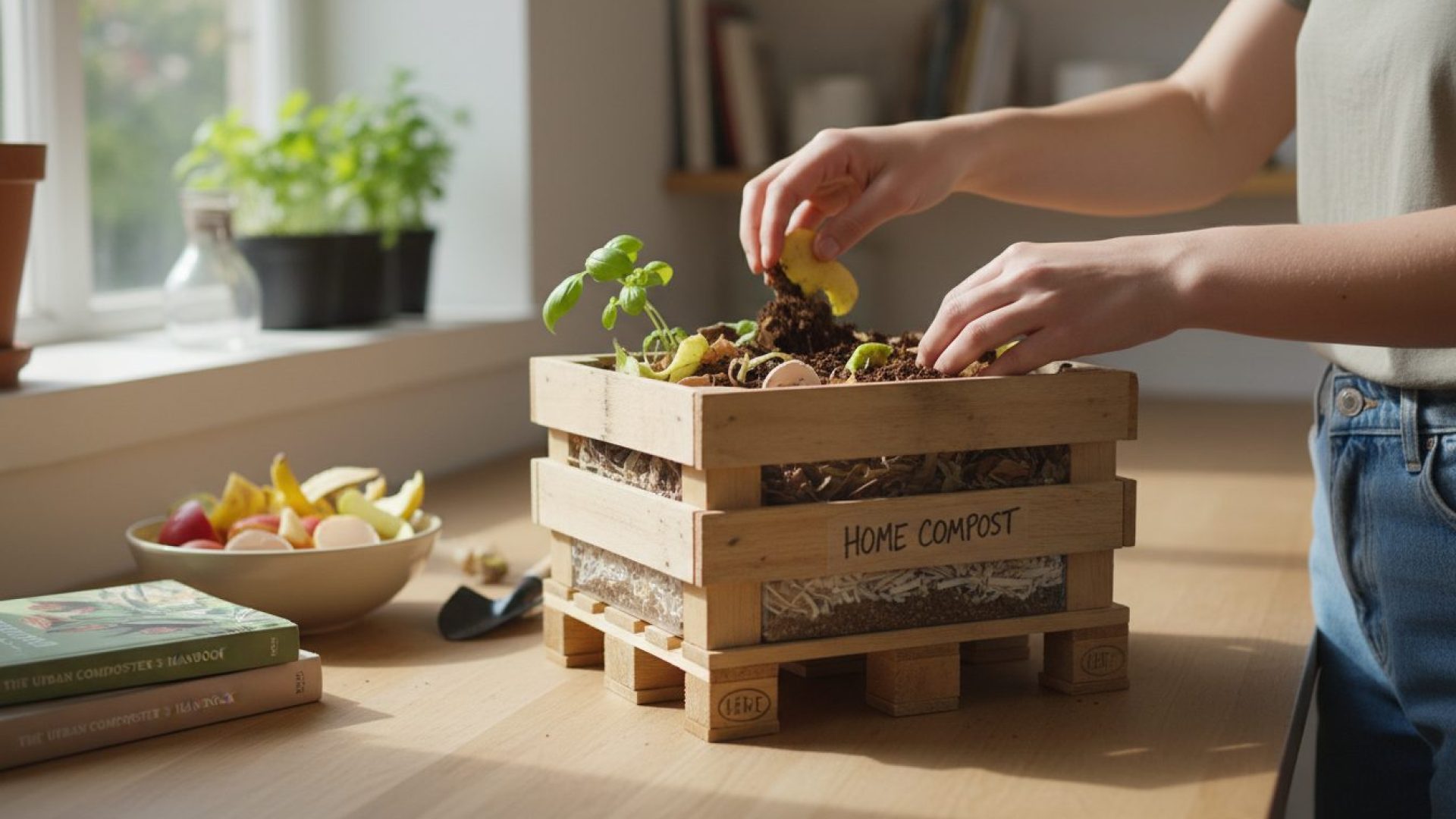
If there’s one thing I wish someone had told me years ago, it’s this: composting at home isn’t just about being “green.” It’s about watching waste turn into life, right in your backyard or even a small balcony. When you start composting for beginners at home, it’s not just food scraps that transform—your relationship with what you throw away changes, too.
I know it might sound intimidating. Rotted banana peels and mystery-fuzz leftovers? Really? But don’t worry; let’s break it down together. I’ll walk you through what works, what doesn’t, and why home composting is easier—and more rewarding—than most people think.
Why Bother Composting at Home? The Simple (and Surprising) Truths
I used to think composting was for people with huge gardens or a backyard farm. Turns out, nearly 30% of what the average household throws out is suitable for a compost pile (EPA link). Imagine shrinking your trash by a third! Aside from saving landfill space—seriously, landfills in North America are filling up at alarming rates—compost improves your soil, saves you money on fertilizers, and just feels good.
- Reduces waste: Less trash in the bin means fewer trips out. That alone sold me on it during rainy months!
- Healthier plants: Compost feeds soil, and healthy soil grows better vegetables, herbs, and even flowers.
- Eco-friendly: Composting cuts methane emissions from landfills. Methane is a far more potent greenhouse gas than CO2 (about 25x more, according to many studies).
- Saves money: You’re making your own soil booster, so you might never buy plant food again.
Here’s a wild detail: even apartment dwellers compost. Worm bins or bokashi buckets can fit under the sink. Truly, there’s a way for everyone, even if your “garden” is a windowsill of herbs.
Composting for Beginners at Home: The Essentials
Let’s Break It Down: What Can (and Can’t) Go In the Pile?
This is the heart of composting. Get this right, and the rest falls into place. I like to think in terms of two categories—the “greens” and the “browns.” Forget the colors for a minute: greens mean moist and loaded with nitrogen, browns are dry and carbon-rich. Your pile needs both, just like a decent soup needs broth and vegetables.
- “Greens” (Nitrogen-Rich): Fresh grass clippings, fruit and veggie scraps, coffee grounds, tea bags. Even wilted salad greens count.
- “Browns” (Carbon-Rich): Dry leaves, straw, shredded cardboard (not glossy types), small twigs, paper towels (if not greasy).
Here’s what not to include, especially as a beginner:
- Meat, dairy, oils (messy, stinky, and attract pests)
- Pet waste (unless you’re using a special system)
- Diseased plants (could spread pathogens)
- Big branches (unless you chop them up small—nature’s patient, but not that patient)
The Secret Ratio: Not as Scary as It Sounds
People love to give exact proportions. (The 2:1 rule! The magic 30:1 carbon-to-nitrogen ratio!) Here’s a reality check: home composting is forgiving. I usually aim for a loose mix—about 2/3 browns to 1/3 greens by volume. If things get wet and stinky, I add more dry stuff. If it’s slow and dry, in go more greens or a sprinkle of water. Common sense wins here.
Step-by-Step: Starting Your First Compost Pile or Bin
Pick Your Spot.
- If you’ve got a yard, shaded corners work best. Sun can dry it out, but you can always water the pile.
- No yard? A compost tumbler on a patio, a worm bin under the sink, or a small store-bought bin with a charcoal filter will do the trick.
- Simple piles work fine, but bins (wood, plastic, or wire) keep things neat and critter-resistant.
- Make sure there’s airflow—drilled holes or slats help oxygen get in.
- Begin with a layer of browns on the bottom—this keeps things from getting soggy.
- Add your greens, then add more browns. Keep alternating, as if you’re building a weird but wonderful lasagna.
- The best compost feels like a wrung-out sponge. Too soggy = stinky. Too dry = nothing happens.
- Every 1-2 weeks, mix things up. Oxygen powers the composting microbes.
- In 2-6 months (sometimes faster in summer, slower in winter), you’ll spot dark, crumbly humus at the bottom. That’s black gold. (By the way, patience is underrated in gardening. Worth every day’s wait!)
Pro-Tip: Keep a small sealed bucket or countertop compost pail indoors for daily scraps. When it fills, dump it in your outdoor bin or pile.
Small-Space and Indoor Composting: Yes, It Works!
This is something I get asked all the time: “But I live in an apartment. Can I really compost?” Yes. Worm composting (vermicomposting) is surprisingly odor-free when managed right. I kept a worm bin under my kitchen counter for two years—my only complaint was every time I moved it, folks asked about the ‘crunchy’ noise. (It’s just bedding, promise!)
- Worm bins: Plastic containers or special stacking trays house red wiggler worms—the champions of kitchen scrap breakdown. They’ll happily devour coffee, peels, even used napkins.
- Bokashi: This method uses a special bran to “pickle” food scraps. It works indoors, even for things like bread or cooked leftovers (except much meat or oil).
- Electric countertop composters: They dry and grind scraps—convenient but expensive, and some debate about the quality of the end product for plants.
A fun fact: a healthy worm bin can process roughly half a pound of scraps per square foot each week. Doesn’t sound like much, but it adds up—for a small household, you’ll barely fill the trash can with anything worth composting.
Dealing With Common Composting Challenges
Why Is My Compost Pile Smelly—or Not Decomposing?
Here’s where the “art” side comes in. Most issues boil down to:
- Too Wet, Not Enough Air: Add dry material (shredded leaves, torn-up egg cartons), stir up the pile.
- Too Dry: Sprinkle water and add more kitchen scraps.
- Pests: Only add plant-based materials and make sure food is buried. If your bin is sealed and smells fine, you’re golden.
I remember one chilly November my bin went almost stagnant—nothing but slimy, half-rotted veggies. Turned out I’d added too many wet greens and forgotten about browns. Half a bag of shredded leaves later, problem solved—and I gained a new respect for those “brown” ingredients.
The Timeline: How Long Does Composting Take?
Let’s be realistic: the magic compost you see in photos takes time. In summer heat, with ideal mixing and moisture, you might have usable compost in two or three months. In cool weather, it slows down—sometimes six months is normal. People often give up too soon. If you can stick with it through one full composting cycle, the second go-around feels like a breeze.
The Composting for Beginners at Home Mindset
A big surprise for beginners is how composting changes your daily habits. Suddenly, that tired spinach or coffee ground isn’t “garbage.” It’s practically future tomatoes. My kitchen “scrap bowl” changed how I shop and cook; I cut back on packaged food and started appreciating leftovers more because I saw the full cycle.
Mini Case Study: My Front-Yard Compost’s Unexpected Impact
A few years ago, I set up a modest bin near my front steps. Within a season, the soil around the bin became dark and crumbly—plants I’d struggled to keep alive suddenly grew double the size. Neighbors started asking what I was feeding my flowers. The only answer: homemade compost, and a pinch of patience. Five years in, that original patch is still the healthiest part of my yard, despite less watering and no commercial fertilizers. Sometimes, the rewards sneak up on you.
Common Myths vs. Realities
- Myth: Composting stinks up your yard.
Reality: Only if done wrong. A properly balanced pile smells earthy, like a forest floor.
Reality: A simple pile in a shady spot works. I started mine with just chicken wire and stakes.
Reality: Most days, it takes me less than five minutes to add scraps or give a quick stir.
Quick Tips: Composting Success Shortcuts
- Chop bigger scraps for faster breakdown. (I cut up melon rinds, avocado shells, and even cardboard—your compost will thank you.)
- Keep a covered pail near your cooking area. Out of sight = out of mind otherwise.
- Add a handful of finished compost or garden soil to “inoculate” your pile with friendly microbes.
- If your pile dries out, poke holes with a stick before watering so moisture spreads evenly.
- Worried about animals? Use a locking lid bin or bury scraps beneath browns.
FAQ: Composting for Beginners at Home
What’s the absolute easiest way to start composting at home?
Honestly, a basic pile works. But for the least hassle, get a small plastic bin or wire cage, toss in leaves and kitchen scraps, and stir once in a while. Don’t stress the ratios too much; add more dry stuff if it gets slimy, more greens if it’s not doing much. You’ll learn as you go.
Can I compost “compostable” packaging or bioplastics?
Most “compostable” cups, plates, and wrappers need commercial facilities with high heat. Home compost piles usually can’t break these down unless they’re certified for home composting. When in doubt, stick with food and paper products.
Is worm composting (vermicomposting) really smell-free?
If you balance the moisture and don’t overfeed, yes! Mine smelled sweet and earthy—even my skeptical partner admitted it. Just skip meat, dairy, and super-oily stuff. Too many scraps can overwhelm the worms; small, regular feedings keep things tidy.
What if I don’t have outdoor space at all?
Try a worm bin (vermicomposting) inside, or a bokashi bucket on a balcony. Some city programs let you drop kitchen scraps at farmers markets or community gardens, too. You can always start small—every banana peel diverted from the trash counts.
How do I know when my compost is “done” and ready to use?
You’ll know: it looks dark, crumbly, and smells like damp earth. You shouldn’t be able to tell what it used to be (though the odd eggshell or avocado pit isn’t a big deal). If it’s still slimy or chunky, give it more time and turn it again.
A Thoughtful Reflection on Composting at Home
Starting composting for beginners at home is more about mindset than technique. Over the years, I’ve realized composting is a slow, hopeful act. Nobody gets it perfect the first go-round—there are soggy messes, dry spells, and “what is that smell?” moments. But there’s always this gentle satisfaction: knowing you’re making soil, participating in something ancient, and seeing waste come full circle. Every shovelful of finished compost feels like a small victory—and a quiet reminder that change, for gardens or habits, happens bit by bit.