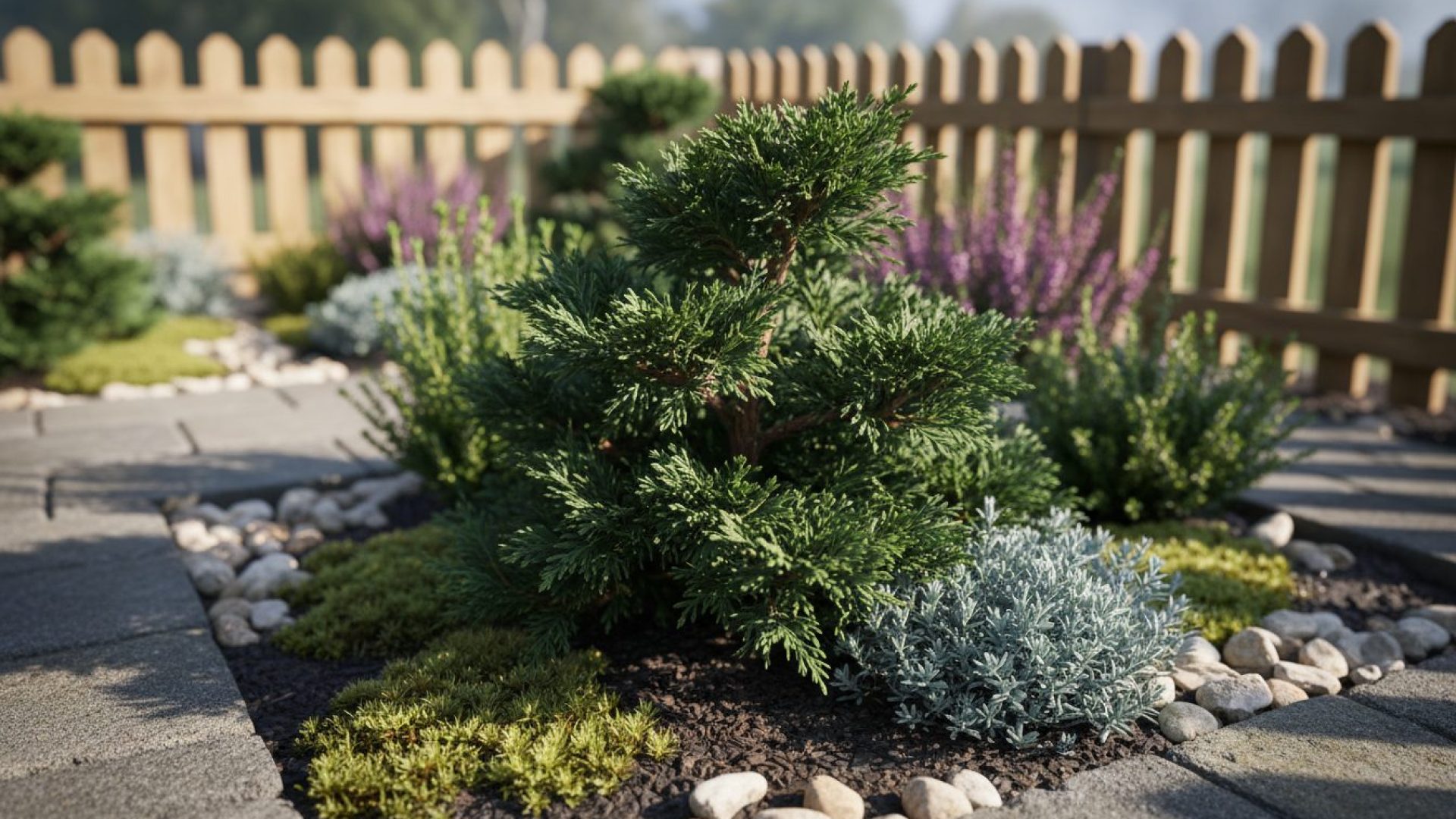
Every time I visit a friend’s tiny backyard or pass one of those pocket-sized urban gardens, I can’t help but notice something: gardens with evergreen plants just feel… more alive. There’s a certain comfort in greenery that doesn’t disappear with autumn’s wind or winter’s gnaw. If you’ve ever wondered whether those lush, all-season splashes of green are an option for small plots, balconies, or pint-sized patios, let’s talk about evergreen plants for small gardens—and why (spoiler alert) they’re not just possible, they’re a game-changer.
What Makes an Evergreen “Evergreen” (and Why Small Spaces Need Them)
I sometimes pause to think: why do evergreens capture so much attention in landscape design? For me, it’s more than just the year-round color. It’s the sense of reliability—almost like an old friend who sticks around no matter what. Evergreen simply means these plants keep their leaves or needles throughout the year. In small gardens, where every square foot counts, that constant greenery keeps the space looking “finished,” not bare or forgotten in the off-seasons.
- Visual anchor: Evergreens provide structure even when perennials die back.
- Privacy boost: Dense foliage can screen windows or block out less-than-charming views.
- Wildlife haven: Birds and pollinators appreciate the shelter and food sources some evergreens offer, especially during winter months.
If you’ve ever felt your tiny garden looked…a bit sad in winter, you’ll understand why evergreens matter.
Choosing Evergreen Plants for Small Gardens: Key Considerations
Let’s break this down. Not all evergreens play nicely in tight spaces—think hulking cedars or monster laurels. Here’s what I consider when selecting for small gardens:
- Size at Maturity: Many evergreens start small and cute, but can double, triple, or quadruple in size over years. Always check the mature height and width before planting.
- Growth Habit: Look for plants that are naturally compact, slow-growing, or even suitable for topiary or container culture.
- Light Requirements: Is your spot shady, or does it bake in full sun? There’s an evergreen for nearly every light condition, but matching plant to place means less frustration later.
- Soil & Drainage: Urban gardens especially vary wildly—some spots are dry and sandy, others heavy with clay.
After years of trial (and plenty of error—my accidental “hedge monsters,” anyone?), I’ve learned the difference between a charming backyard nook and a perpetual pruning headache lies in these details.
Top Evergreen Plants for Small Gardens: My Real-World Picks
Here’s a round-up of evergreens I’ve actually used or seen perform brilliantly in restricted spaces. No mere catalogue fluff—these earn their keep, season after season.
Boxwood (Buxus sempervirens): The Classic Shape-Shifter
It’s old-fashioned, but boxwood has stood the test of time for a reason. You can prune it into balls, cubes, low hedges, or just leave it a little wild. A healthy boxwood can live upwards of 40 years—even in containers.
- Size: Many dwarf selections top out at 2-3 feet tall.
- Light: Sun to partial shade.
- Cons: Vulnerable to box blight in humid climates; slower growth means patience.
Japanese Holly (Ilex crenata): The Boxwood Alternative
If boxwood blight is a regional concern, Japanese holly is an excellent swap—similarly dense, tiny-leaved foliage, but generally more pest-resistant.
- Size: Compact forms reach 2-4 feet.
- Look: Deep green (bordering on black) leaves; can be clipped or left natural.
- Perk: Tiny black berries add winter interest.
Dwarf Conifers: Year-Round Structure, Little Footprint
Conifers might sound like giants, but there are loads of dwarf or slow-growing cultivars perfect for small spaces and even pots:
- Dwarf Alberta Spruce (Picea glauca ‘Conica’): Iconic cone shape; rarely surpasses 6 feet, but extremely slow to get there.
- Mugo Pine (Pinus mugo ‘Mops’): Chunky and shrubby; mine barely moved past 3 feet in a decade!
- Creeping Juniper (Juniperus horizontalis): Hugs the ground, awesome for edges or containers.
Heavenly Bamboo (Nandina domestica): The Color Changer
Despite its name, it isn’t a bamboo at all—but its airy evergreen leaves turn fire-red in cold weather, with clusters of white flowers and red berries.
- Size: Compact selections stay under 2-3 feet.
- Light: Sun to shade; tolerates a wide range.
- Low fuss: Drought-tolerant, deer ignore it, handles air pollution.
Skimmia japonica: Year-Round Glossy Appeal
Skimmia is a reliable choice, especially for tricky shade or north-facing nooks. Its broad, glossy leaves look fresh even against February frost, and small flowers or berries add seasonal pops.
- Size: 2-4 feet, rarely outgrowing its welcome.
- Seasonal perk: Fragrant spring flowers on females if a male nearby; winter berries.
Other Notables for Small Evergreens:
- Sarcococca (Sweet Box): Tiny, shade-loving, intoxicating winter scent.
- Euonymus fortunei: Great for golden or variegated foliage in low borders or containers.
- Wintergreen (Gaultheria procumbens): Miniature, ground-hugging, with edible berries.
The key trend: dwarf cultivars and slow growers dominate small gardens, and there’s more choice every year. Catalogs now offer hundreds of miniature evergreens—the industry estimates about 30% of all new garden evergreens introduced in the last decade are compact forms for small spaces.
Expert Analysis: Why Go Evergreen in Tight Quarters?
Let’s think in practical terms. Small gardens are like tiny open-concept apartments—there’s nowhere to hide when a bed or border looks bleak. Deciduous plants (the ones that drop leaves) can leave gardens feeling skeletal for up to five months, depending on where you live. Here’s where evergreens shine:
- Higher “Interest Per Foot” Ratio: Evergreens pull double duty: they structure borders, fill gaps in winter, and can often provide subtle color (think blues, golds, and silvery greens).
- Lower Seasonal Workload: Evergreens don’t require replanting each spring or cleaning up a blizzard of fallen leaves in autumn. Less “reset” work = more time to enjoy the garden.
- Microclimate Regulation: Even small amounts of evergreen foliage can block winter winds, providing cozier corners and a buffer for more tender plants nearby.
I’ve noticed a profound difference in client gardens after introducing just two or three well-placed evergreens—their patios stay inviting year-round, and the garden simply looks “cared for,” even in February. It’s a subtle but powerful design trick.
Common Evergreen Myths in Small Gardens: Let’s Bust a Few
- “Evergreens are all dark and boring.” Actually, new varieties come in variegated, golden, blue, and even burgundy tones. Check out Euonymus or certain heathers for vivid color.
- “They need loads of maintenance.” Some, like boxwood, appreciate a yearly shaping, but others—especially dwarf conifers—need almost none.
- “Evergreens hog water.” Many (like nandina and junipers) are drought-tolerant, and some demand less water than flashy annuals or thirsty ferns.
- “They’ll crowd everything else out.” If you select by mature size, you’ll avoid most space issues. Container gardening is a great compromise—roots stay contained, and you can move things as needed.
Combining Evergreens with Flowering Companions: Living, Layered Spaces
One of my favorite bits about working in small gardens is the opportunity to get creative with layers. Evergreens don’t have to be all alone—in fact, pairing them with flowering perennials or bulbs adds delight and complexity. Here are some easy combinations that work especially well in limited space:
- Boxwood & Tulips: Sharp, formal hedging sets off vibrant spring bulb color.
- Conifers & Heuchera: Blue-green conifers next to chartreuse or burgundy foliage—try it for high contrast.
- Skimmia & Snowdrops: Elegant evergreen shrubs make a beautiful winter foil for snowdrop carpets.
I once squeezed four evergreens and a handful of bulbs into a container just 18 inches across. It still surprises me how diverse you can make a small bed feel if you layer in heights and textures. The eye moves around, and the tiny patch feels boundless.
Quick Tips for Maximum Impact (Without Overcrowding)
- Use odd numbers: Three is more visually pleasing than two.
- Vary textures: Think needle-leaf conifers next to broadleaf evergreens—fresh and dynamic.
- Keep it moving: Evergreen containers can be shifted around as backdrops or focal points seasonally.
- Think vertical: Slender columnar evergreens allow you to add “height without bulk” in tiny plots.
- Layer heights: Low-growing groundcovers up front, mid-sized shrubs at the back or in corners.
And here’s something people often miss: in very small plots, each plant is “on stage” all year. Pick evergreens that absolutely delight you; those few green friends will carry your garden’s look every single day.
Mini Case Study: Transforming a 10×10 Patio with Evergreens
In real life, I once worked with a client whose entire garden was barely 100 square feet—a postage stamp concrete patio bordered on three sides by fencing. The trick was selecting three main evergreen stars:
- A dwarf Japanese holly in a large pot—primary backdrop and privacy screen.
- A pair of Skimmia shrubs flanking the back steps, layered with cyclamen bulbs.
- Creeping juniper along one edge, hugged by thyme and a few spring bulbs for color.
Result? The patio stayed green even in December, guests stopped by year-round, and even the neighbor’s cat spent more time sunning itself in the new “wilderness.” It wasn’t perfect—sun exposure was tricky, and we trialed a few container soils—but every square inch was suddenly useful and inviting. That’s the magic power of the right evergreens in cramped corners.
FAQ: Evergreen Plants for Small Gardens
What are the easiest evergreen plants for beginners?
If you’re new, I recommend boxwood, dwarf mugo pine, or Euonymus fortunei. They’re resilient to a little neglect and won’t punish you for missing a watering or two. Just keep an eye on mature sizes!
Can I grow evergreens in pots if I don’t have a yard?
Absolutely. In fact, many evergreen shrubs and dwarf conifers thrive in containers, as long as you use a well-draining mix and fertilize once or twice a year. Just remember they’ll need a bit more water in summer heat, and—if it’s a cold winter—think about wrapping the pots or moving them somewhere sheltered.
What’s the best evergreen for full shade?
Shade isn’t a problem for Sarcococca (sweet box), Skimmia japonica, or even some varieties of Japanese holly. These will keep a dark corner green where many sun-lovers would sulk.
How can I avoid evergreens outgrowing my small plot?
This is all about research. Choose dwarf or slow-growing types, always check the ultimate height and width, and don’t feel bad about trimming once a year. Container growing offers an extra degree of control—your plant simply can’t expand beyond the pot.
Are there fragrant evergreens for small gardens?
Yes, and they’re gems! Sarcococca will fill your winter air with vanilla scent, and Skimmia produces delightful spring fragrance—both while looking sharp all year.
Gardener’s Reflection: The Enduring Allure of Evergreen Simplicity
Maybe it’s just me, but there’s something deeply reassuring about seeing green leaves holding steady through every season, especially in a small space. I’ve come to think of evergreens as the “anchor tenants” of tiny gardens: quiet, reliable, and—when you choose wisely—they do as much for mood as for design. Would every garden be better with a dash of this evergreen backbone, no matter how small? I think so. It’s a tiny act of defiance against gray winter days—one square foot of vibrant green at a time.
If your own patch of earth—or balcony, or even window box—looks sparse in the off-season, consider weaving in evergreen plants for small gardens. The right choices make the smallest spaces feel full of life, all year round. And honestly, isn’t that what we’re all looking for—a little bit of calm, unchanging green in a world that seems to spin in circles?