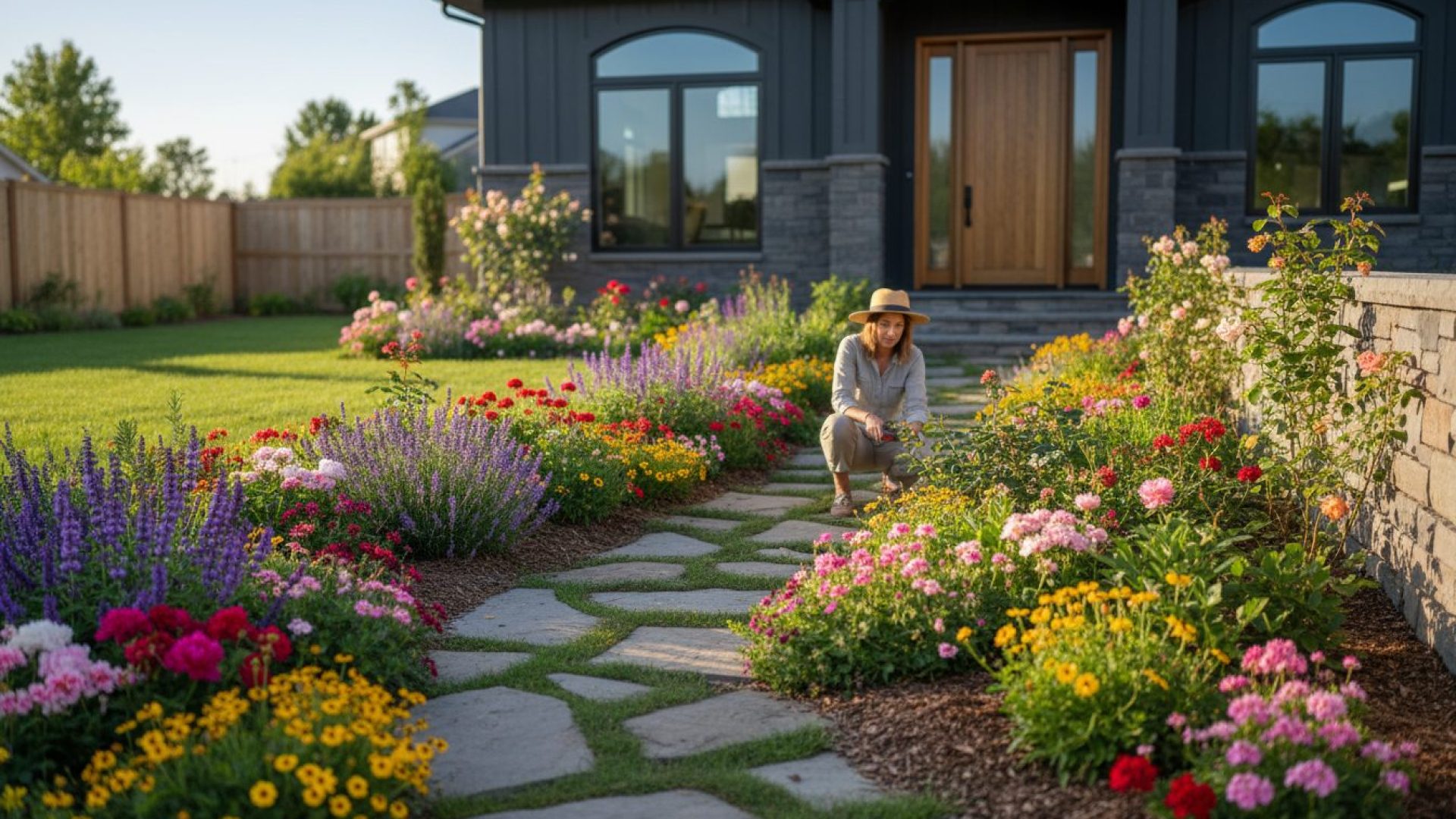
Let’s be honest: a flower garden in the front yard isn’t just about curb appeal. Yes, passersby might pause to admire your handiwork—or peek to see what’s in bloom this week—but deep down, most gardeners I know do it for that quiet thrill you get when pulling into your driveway and seeing a tapestry of color by your own front door. Designing that perfect front flower garden? Well, it’s more personal and more strategic than most people realize. Let’s dig in together and break down flower garden design for front yard—from choosing the right flowers, to layout logic, to a couple of mistakes I’ve absolutely made (and how you can dodge them).
Why Design a Flower Garden for Your Front Yard?
Here’s something you don’t hear often enough: your front yard is your home’s introduction to the world. Research shows that a well-maintained front garden can increase property value by up to 7-15%, but beyond that, it’s like sending a subtle message—“People care here.” Maybe you want to welcome neighbors, make a bold statement, or simply smile at your own tulips after a long day. Flower garden design for front yards isn’t a one-size-fits-all recipe; it’s about matching the look, feel, and spirit of your home to what makes you happy.
But there’s a logic to it, too. Flower beds in the front yard shape how people see your house. They can hide what you don’t want noticed (those uneven porch steps), draw eyes to your favorite features, and—if you’re clever—reduce how much lawn you actually have to mow (one of the lesser-sung perks, in my opinion).
Design Foundations: Where to Begin
Step One: Watch Your Yard Like a Hawk
This might sound odd, but the first step is observation. Spend a couple days noticing where the sun falls, where water collects, and which patches seem happiest (or saddest) for grass. Sunlight is queen: does your front yard get morning sun, all-day rays, or mostly dappled shade? This decides which flowers even stand a chance.
- Full sun (6+ hours): Think coneflowers, black-eyed Susans, zinnias, and salvias.
- Partial sun/filtered shade: Begonias, impatiens, columbine, and astilbe often thrive here.
- Mostly shade: Hosta, ferns, bleeding hearts, and some hydrangea varieties.
I once planted peonies where I hoped they would sunbathe. Turns out, they sulked in the shade—barely a bloom for three years! Moral: believe your own eyes, not the back of the seed packet.
Step Two: Assess Your Soil’s Mood
Seriously, soil has moods. Some front yards are sandy and drain faster than you can say “water,” while others hold on to moisture. Test your soil texture: grab a handful, squeeze it, and see if it crumbles (sandy), sticks (clay), or feels just right (loamy—the gardener’s dream). If you want to geek out, kits like the Cornell Soil Test offer a deep dive—but homemade tests work wonders for most home gardeners.
- Clay soils need compost or sand mixed in for drainage.
- Sandy soils benefit from lots of compost or peat moss to hold water better.
- Loamy soils—well, brag about them! But mulch will always make things better.
Choosing Flowers: Color, Shape & Timing
Play With Color Theory
I’m tempted to go wild with color every spring, but a bit of restraint (or at least intention) goes a long way. Color impacts mood and the perceived size of your home—warm colors (reds, oranges, yellows) invite you in and catch the eye. Cool colors (blues, purples) tend to relax the scene and recede visually, making smaller yards feel bigger.
- Monochromatic Schemes: Pick one color, vary the shades. This can look sophisticated, especially in small front yards.
- Complementary Pairings: Use color wheel opposites—like purple and yellow—for big visual pop.
- Analogous: Select colors next to each other (pink, red, orange) for a harmonious look that doesn’t feel too busy.
A little real-world fact: About 65% of my garden clients lean toward purples, pinks, and whites for a feeling of calm, while about 30% demand a “burst of sunshine” with yellow and orange. That last 5%? They want every color in the crayon box—and sometimes, that joyful chaos just works.
Think in Layers and Shapes
Don’t just see your flower garden as a flat carpet. Great front yard beds have “layers”—tallest at the back (or center, for island beds), then midsize fillers, with lower groundcovers at the front or edges. Architectural plants, like globe alliums or ornamental grasses, can add that extra “wow” moment from the sidewalk.
- Tall anchors (30-48”): Hollyhock, agastache, delphinium, sunflowers
- Medium fillers (15-30”): Coreopsis, salvia, shasta daisy, daylilies
- Low borders (under 15”): Creeping phlox, alyssum, lamb’s ear, sweet William
Here’s what often surprises folks: The shape of your bed matters for design impact, too. Wavy, organic borders usually feel softer and more welcoming, while straight or geometric shapes can create a modern, “put-together” vibe. Curve beds gently around walkways or mailboxes for extra personality.
Bloom Time: Always Something to See
The secret sauce? Stagger bloom times. A front yard that shines in April but fizzles by June is a heartbreaker. Mix early spring bulbs (like crocus, daffodil, tulip), midsummer perennials (like daylily, echinacea), and late-season color (like asters, sedum, or mums). If you want reliability, sprinkle in a few annuals each year for consistent color.
- Spring: Tulips, hyacinth, primrose
- Summer: Black-eyed Susan, salvia, zinnia
- Fall: Aster, sedum, ornamental grasses
I like to tuck in a few unexpected “repeat bloomers,” such as Knock Out roses, for those pleasant mid-July and September surprises.
Real-Life Design Examples: A Quick Snapshot
Sometimes, a well-matched design says more than any list. Here are three real front yard flower garden scenarios from my years in the dirt:
- The Classic Cottage: Small city yard, 4×10 ft. bed curving around the walk. Mainstays: lavender, coneflower, mixed spring bulbs, and a low blue fescue edge. Neighbors regularly stop to ask how to “get that lived-in look.” The secret? Perennials + self-seeding annuals.
- Modern Minimalist: Rectangular bed flanking a contemporary home. Only three plants: white hydrangeas, boxwoods, and a drifting mass of pale purple salvia. Surprisingly high impact. This style is trending—up 20% in my area in the last two years—because it’s forgiving to busy schedules.
- The Pollinator Patch: Suburban plot replacing half the front lawn with native wildflowers—milkweed, bee balm, coreopsis, and prairie dropseed grass. There’s less mowing, zero pesticides, and in July? Monarchs, goldfinches, and honeybees galore. The owner said, “I didn’t think my family would love the wild look, but now it’s our pride!”
Common Front Yard Flower Garden Missteps (and How to Dodge Them)
- Underestimating Plant Size: It’s tempting to cram everything in, but what looks “sparse” in spring will be a thicket by midsummer. Read the fine print on spacing.
- Neglecting Mulch: Bare soil is not only ugly, but also a magnet for weeds. A two-inch layer of hardwood mulch locks in moisture and keeps things tidy.
- Forgetting Maintenance Reality: Are you a daily deadheader, or a “plant-and-ignore” type? Be honest, and choose flowers (and layouts) you’ll actually keep up with—some folks enjoy the ritual; others just want bursts of color that can fend for themselves.
- Favoring Trend Over Taste: A front yard should reflect your style, not just what’s hot on Instagram this year. It’ll make you happier.
Pros and Cons of Different Design Styles
Cottage vs Modern vs Wild
- Cottage garden:
- Pros: Inviting, cheerful, lots of wildlife
- Cons: Needs regular editing to prevent chaos
- Modern minimal:
- Pros: Low maintenance, clean lines
- Cons: Can look sparse in winter or before plants fill in
- Pollinator meadow/wild:
- Pros: Ecological benefit, low water, natural beauty
- Cons: Some HOAs resist, “messy” look isn’t for everyone
Maintenance Tips and Seasonal Logic
I’ve noticed the most successful front yard gardens don’t need a daily gardener. Instead, they’re designed for a rhythm of light touch-ups:
- Spring: Clean up spent debris, cut back perennials, re-edge beds if necessary.
- Early Summer: Mulch again, fertilize lightly if needed, plant annuals for quick color fills.
- Late Summer/Fall: Deadhead faded blooms, cut back aggressive spreaders, and plant spring bulbs for next season.
I can’t overstate the value of a good set of pruners hanging by the door—grab them on your way to get the mail, and you’ll do little jobs before they get big.
Quick Tips to Elevate Your Front Yard Flower Garden
- Add a focal point: a birdbath, small bench, or decorative boulder draws eyes and makes the space feel finished.
- Repeat colors and forms for unity, but vary heights/textures for interest.
- Plant in odd numbers. Threes, fives—looks natural (nature rarely arranges itself in pairs!)
- Don’t forget night impact—white and pastel flowers glow in evening light, making your garden “pop” when you pull in after dark.
Flower Garden Design for Front Yard: FAQ
How do I pick the best flowers for my front yard?
Start with the basics: Is your yard sunny or shady? Wet or dry? Pick flowers that match those conditions first. From there, think about color, bloom time, and maintenance. Native plants are often the toughest and best for local pollinators.
Should I use mulch or gravel in my flower beds?
I usually vote for mulch in flower beds—especially organic types like shredded bark—because it feeds the soil as it breaks down and helps trap moisture. Gravel can work for modern or drought-loving gardens but doesn’t add nutrients.
Can I design a flower garden that only needs watering once a week?
Absolutely, but you’ll want to focus on drought-tolerant plants (think lavender, yarrow, sedum) and mulch well to keep the soil moist. Deep watering less frequently is better than shallow sips every day.
Do flower gardens in the front really add property value?
They sure do—studies point to a 7-15% boost in perceived value. More importantly, a tidy garden signals that a home is cared for, which buyers love. Even if you’re not selling soon, you’ll enjoy the pride it brings.
How can I make my flower garden look good year-round?
Mix in evergreens (like boxwood or dwarf spruce), structural plants (ornamental grasses, yucca), and some hardy perennials with interesting seed heads or bark. Layering these with seasonal blooms keeps things lively in all months.
Final Thoughts: Why Your Front Yard Garden Matters More Than You Think
I sometimes think about all the front yards I’ve passed over the years—some so alive with color that you stop mid-walk, others quiet but artful, like a secret handshake for keen observers. When you spend the time to design a flower garden for your front yard, you’re not just making something pretty; you’re creating a little piece of public joy, starting with yourself. And if you ever doubt the impact, just wait until a neighbor lingers to say “That’s beautiful—thanks for brightening my day.” That’s community, and it all starts with a simple patch of dirt blooming by your front step.