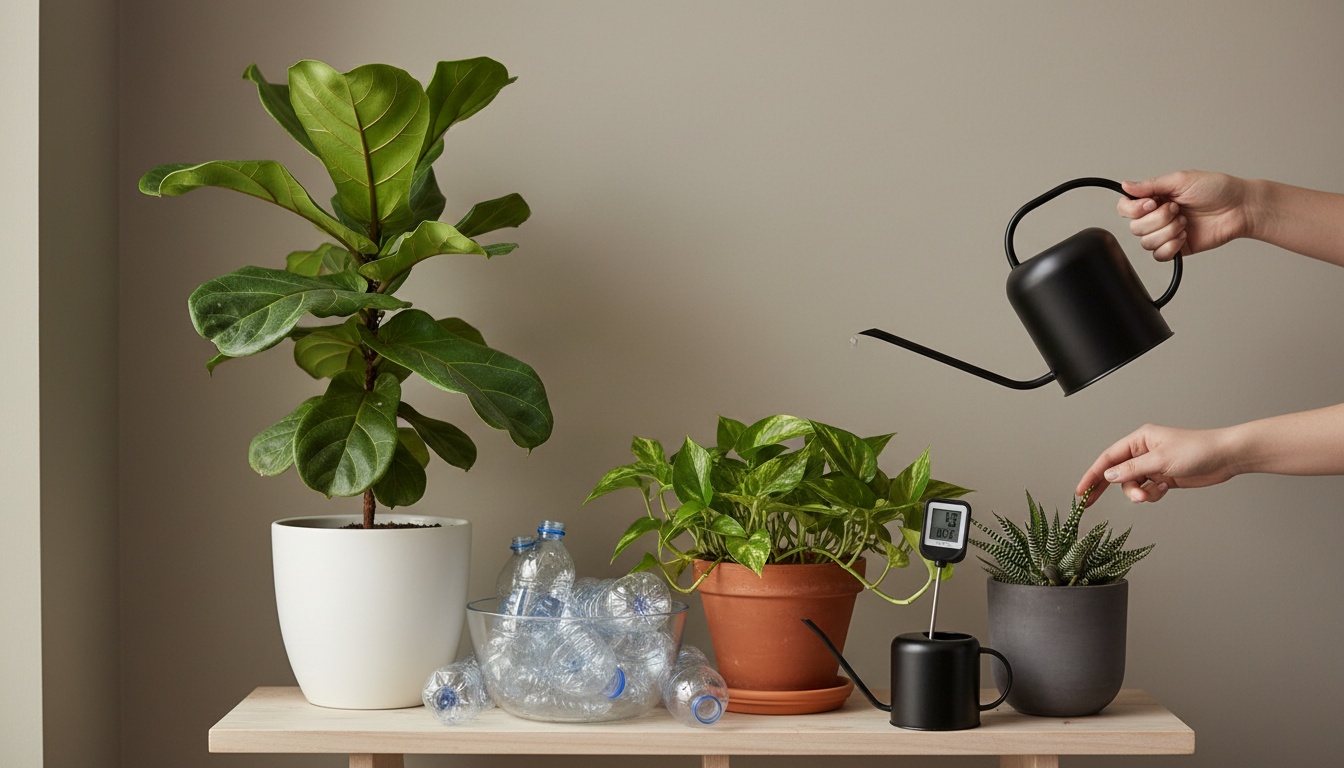
It’s a funny thing—people are either terrified of watering their indoor plants too much or convinced they aren’t giving their beloved greenery enough. I’ve met folks who practically keep a watering schedule tighter than a locker room coach, and others who “just do it when I remember.” Honestly, watering is the one caring routine that can absolutely make or break your indoor jungle. With a little real-world logic, a dash of observation, and some genuinely practical indoor plant watering tips, you can sidestep most of the classic houseplant disasters. Let’s walk through the why, the how, and the subtle art of keeping plants hydrated—but not haunted by soggy roots.
Why Does Indoor Plant Watering Seem So Tricky?
If you’ve found yourself stressed about watering lately, you’re not alone. According to some informal but interesting studies (I once dug through garden club survey results for fun), over 60% of struggling houseplants are suffering from water or drainage issues. Here’s the “deep root” problem: houseplants live in containers, not a wild world of limitless soil. That means their whole hydration balance is up to you.
Unlike outdoor gardens, where rain falls and soil layers balance things out, a pot is just a little world of its own. Too much water drowns roots, squeezes out air, and basically suffocates plants. Not enough turns potting mix dry and dusty—roots give up, and leaves yellow or crisp. Sometimes you get both problems at once, especially if your pot has hidden drainage issues. See why people get nervous?
Understanding Your Plant’s Water Needs
I sometimes joke that every plant comes with its own set of secret instructions—but really, water needs are about:
- The species: A succulent’s thirst is nothing like a fern’s. Aloe and snake plants almost resent frequent drinks, while ferns and peace lilies expect regular moisture.
- The size: Big leafy plants usually need more water due to evaporation, but even small pots can dry out quickly.
- Growth stage: Actively growing plants (spring/summer) use more water. In winter, most houseplants “doze off” and barely drink at all.
- Container and potting mix: Does it drain well or hold water like a swamp? Terra cotta pots dry out 20–30% quicker than plastic, in my experience.
Every time you add a new plant to your shelf, ask yourself, “What’s its story?” and do a quick background check. You’ll save a lot of wilted hearts down the road.
Classic Indoor Plant Watering Tips That Actually Work
Check Before You Water
This tip sounds annoyingly simple, but honestly, most folks just water out of habit. Stick your finger an inch or two into the soil. If the soil feels cool and damp, give it a few more days. If it’s dry, time for a drink. I keep an old wooden chopstick for this, too—the wood shows a dark mark if the mix is moist below the surface. Some people buy fancy moisture meters (and hey, if that works for you, go for it), but your senses do the trick for 90% of houseplants.
Water Thoroughly But Less Often
I see this mistake all the time: dribbling a little water here and there, never soaking the whole root ball. Over time, dry pockets form, roots stay parched, and annoying fungi can set up camp. Instead, water until you see a bit running out of the bottom—then let the excess drain. For most plants (exceptions: succulents, cacti, and certain orchids), this “soak then dry” rhythm mimics natural rains better than constant light misting.
Don’t Let Pots Sit in Water
Sometimes after watering, folks leave their plastic cachepot full of water, thinking, “It’ll soak up as needed.” Instead, roots drown. Always empty your plant saucer after 10–15 minutes. Root rot (the notorious killer of houseplants everywhere) thrives in soggy situations—given a chance, it’ll turn your plant’s roots to brown mush.
Adjust for the Season
I water my indoor plants maybe three times as often in summer as in winter. Heat, sunlight, and active growth in summer pull water quickly from soil. Shorter days and cooler indoor temps put plants in survival mode—they barely drink. I’ll even let my snake plant stay dry for 3–4 weeks midwinter. If you notice droopy leaves in August but perky ones in January despite a dry top layer, don’t panic—follow the growth’s lead, not the old calendar.
Use Room-Temperature Water
Cold tap water can shock roots, especially for tropical plants (think of it as a surprise cold shower—brrr!). Let water sit until it’s at room temp. You’ll see fewer leaf spots and droopy leaves, especially on sensitive greenery like calatheas and fiddle leaf figs.
Quick Case Study: When Watering Habits Go Wrong
A friend once brought me her sad baby rubber plant (Peperomia obtusifolia). It was droopy, leaves puckered as if thirsting, but when I tipped it out, the bottom of the pot was soup. Turns out, she watered every Saturday, rain or shine, never checked the soil, and the store-bought mix was heavy peat (holds water forever). We switched to a faster-draining mix, started checking moisture before each watering, and that plant bounced back—perkier now than ever. Moral? There’s no one-size-fits-all watering calendar. It’s all about feedback loops.
Let’s Bust a Few Common Indoor Plant Watering Myths
- “Water every Sunday.” Rigid schedules don’t work—plants’ water needs change with light, heat, pot size, and species.
- “Wilting means your plant is thirsty.” Sometimes wilting means the opposite: roots can’t breathe due to too much water.
- “You must mist everything.” Misting is not watering. For many plants, it just wets leaves and can even promote fungal issues if overdone.
- “Self-watering pots solve everything.” These can help, but make it easy to accidentally keep soil “wet feet” wet. Check the refill schedule, and always use them for the right kinds of plants.
Insights: Reading Your Plants Like a Watering Pro
I like to say that plants “talk”—not with words, but with pretty clear clues. Here’s how their body language reveals what’s going on:
- Crispy, brown leaf edges: Usually dry soil (especially for non-succulents) or low humidity.
- Yellow, mushy leaves and black stems: Too much water; roots might be rotten.
- Leaves drop suddenly: Can be from either erratic watering or a root system in distress (too wet, too dry—both can trigger it).
- Slow or stunted growth: Roots may not be healthy—check both water and drainage.
Honestly, you get better at this over time. After a few months, you can look at a houseplant and just “feel” if it’s thirsty or waterlogged—like recognizing when your pet wants a walk or a snack.
Real-World Tools: What Actually Helps Me Water Plants Well?
People always ask me, “Do I need all those gadgets?” Not really! But a few simple tools make life easier:
- Watering can with long spout: Gets water right to the soil without splashing leaves.
- Moisture meter (optional): For hard-to-read plants in big pots—though don’t let it replace observation or common sense.
- Old chopstick or pencil: For probing soil moisture under the surface.
- Collection tray or saucer: Catches excess, but remember to empty it!
No need for apps or fancy “watering alarms,” though if you’re the forgetful type, set a recurring reminder for quick plant check-ups (not for watering itself, but for observation).
A Short Guide: How Much Water—And How Often?
- Check soil depth (finger or stick) every few days for each plant.
- If dry 1–2 inches down, water thoroughly until a trickle runs out the bottom.
- Empty saucer after 10–15 minutes.
- Let plant dry until the next check shows it’s ready again.
As a rule of thumb for humidity-loving tropicals: water when the potting mix is barely dry to the touch. For succulents and cacti: don’t water until entirely dry, sometimes for two to three weeks.
Pros and Cons of Watering “From the Bottom”
Watering from the bottom means letting pots stand in water so the soil wicks moisture up. There’s a reason pros use both top and bottom watering, but neither is foolproof.
- Pros: Great for African violets or other plants that resent wet leaves; encourages deeper root growth.
- Cons: If the soil has crusted or become hydrophobic (repelling water), it might not wick up well. Salt can build up on the soil surface. Not ideal for every species.
I use bottom watering occasionally, mainly for finicky tabletop plants like nerve plant or peperomias, and top water most others.
Trends and Micro-Patterns: What Seasoned Plant Parents Notice
Some people (okay, I’m one of them) keep informal charts of plant health versus watering frequency. Over a year, here’s what tends to happen:
- Most “normal” indoor plants need water every 5–10 days in spring/summer, every 10–21 days in winter—but adjust for plant size, indoor dryness, and sunlight changes.
- Kitchen herbs in sunny windows dry out much faster (their smaller pots and constant light = more evaporation).
- Older, root-bound plants in tight pots dry out more quickly, too.
- If your plant’s soil won’t absorb water (it runs off), you likely have hydrophobic pot mix—soak the whole pot in water for 10–20 minutes to rehydrate it.
Indoor Plant Watering Tips: FAQ
- How can I tell if my indoor plant is overwatered?
- This one’s classic: yellowing leaves, blackened stems, mushy roots, or a sour smell from wet soil. Sometimes leaves drop “for no reason.” If in doubt, carefully slide the plant out of its pot (roots should be white and firm, not brown and mushy). Let the soil dry and ease back on watering.
- Should I use tap water or filtered water for my houseplants?
- Most houseplants do fine with tap water, but sensitive species (like calatheas or carnivorous plants) might get brown tips from fluoride or chlorine. Letting tap water sit overnight allows some chemicals to dissipate. If your plants keep struggling, try filtered or rainwater to see if it makes a difference.
- Is misting necessary for indoor plants?
- Misting isn’t watering—leaves dry quickly and roots do all the drinking. For tropicals, misting can raise humidity briefly, but a pebble tray or room humidifier works better. Just don’t overdo it; soggy leaves can invite disease.
- What’s the best way to water succulents indoors?
- Succulents need a “soak and dry” approach: let the soil get entirely dry, then water deeply—not a dribble every week. Bright light encourages healthy roots, but overwatering is the quickest way to kill a succulent indoors. Less is more!
- How can I make sure all parts of the root ball get watered?
- Water slowly and evenly around the pot, not just in one spot. For really root-bound plants or hydrophobic soil, sometimes submerging the pot (bottom watering) works best, or poking a few holes in the soil with a stick before watering so it penetrates more deeply.
Final Thoughts: Watering With Attention, Not Anxiety
I sometimes think of watering as the “conversation” I have with my plants. It’s not about following rules or memorizing strict routines — it’s a subtle game of observation, adaptation, and mutual feedback. Plants, unlike pets, can’t “yell” when they’re thirsty, but they nudge you with little signs. Over time, you’ll learn to trust your instincts and read the small changes—a satisfying rhythm that feels less like a chore and more like a small wonder.
In the end, the best indoor plant watering tips are really about listening, not just doing. If you miss a watering or drench a pot by accident, don’t worry—plants are often more forgiving than we think. Pay attention. Experiment. Above all, stay curious. After all, there’s no thrill quite like discovering new leaves unfolding under your care, watered just right.