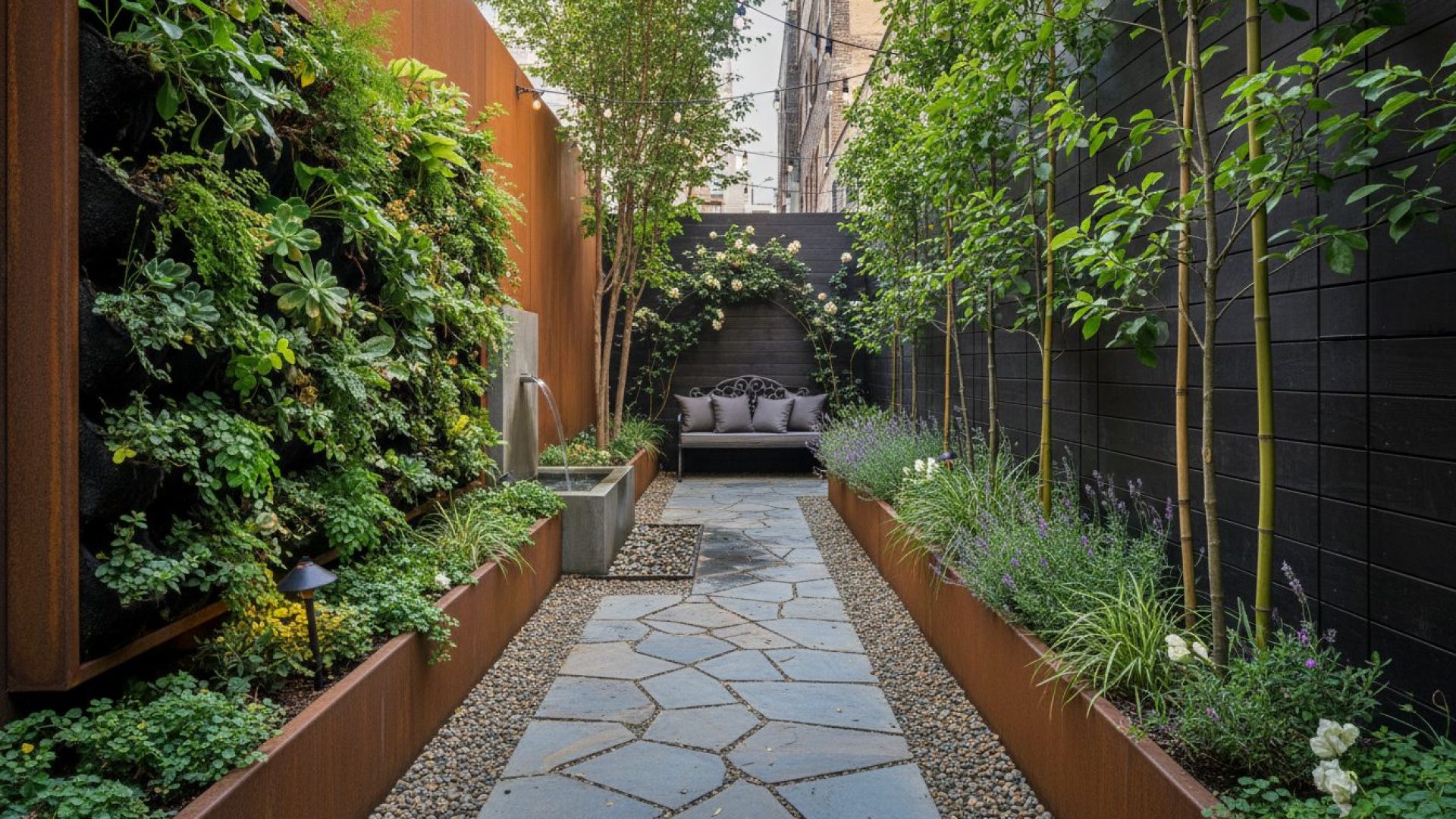
You’d be amazed at how often “narrow space” comes up when talking with gardeners and homeowners. Maybe it’s that slim strip beside a driveway, a side yard that’s more like a corridor, or a backyard that feels pinched between fences. Here’s the good news: landscaping ideas for narrow spaces aren’t just possible, they’re often some of the most rewarding projects—if you approach them with a bit of strategy and creativity.
In my years helping friends and neighbors with skinny spaces, I’ve seen those “impossible” areas become little urban jungles, reading nooks, or even productive kitchen gardens. Let’s look at why tight spaces present unique opportunities, what truly works, and how smart planting (plus a little pattern disruption) can make even the slimmest slice of yard feel remarkable.
Why Narrow Spaces Challenge and Inspire Gardeners
I sometimes joke that narrow spaces force us to become better designers. It’s true—these areas demand intention in every decision. If you’ve ever tried jamming a flowerbed beside a garage or making a side yard useful, you know the feeling.
But here’s something people often miss: what feels like limitation is also a creative prompt. A study I read from the Royal Horticultural Society found that small or narrow gardens, when actively designed, score higher in personal satisfaction and wildlife benefit than most larger, underutilized yards. Neat, right?
Let’s break down the core challenges and opportunities:
- Light patterns: Narrow yards are often shaded on one or both sides. That complicates plant choices, though it opens the door to shade-loving beauties.
- Foot traffic and utility: Sometimes, these spaces aren’t just for looking at—you need to walk through them, move bins, or pass between fences and buildings.
- Privacy and outlook: People often want to hide ugly views or create a sense of escape in a spot that’s basically a passageway.
In my opinion, the best landscaping ideas for narrow spaces do double or triple duty: they look great, solve a problem, and work with—not against—the shape of the land.
Mapping Your Narrow Space: The Reality Check
Before you dig in—literally—I recommend spending a couple days just watching your space. Note where the sunlight falls (say, 2 p.m. vs. 6 p.m.), which areas puddle after rain, or which spots are breezy. I sometimes sketch a basic map showing:
- Where paths already exist (or are needed)
- Access points (gates, doors)
- Any buried utilities (check before you dig!)
- “Views” you want to hide or emphasize
Look for patterns—you might find, for instance, that the narrow yard by your kitchen door gets more sun than you thought. Or maybe part of it could fit a bench because there’s a recess in the wall. These little discoveries shape everything that follows. It’s especially helpful if you’re working with a space only 3–6 feet wide—a common width in U.S. suburban side yards or city row homes.
Landscaping Ideas for Narrow Spaces: Visual Tricks and Tactics
1. Use Vertical Elements
Limited ground width? Go up. Vertical gardening is more than a trend—it’s practical magic in tight spaces. Here’s how:
- Install trellises for climbers (think jasmine, clematis, or even pole beans if you like edible gardens)
- Hang wall-mounted planters or “pocket gardens” for herbs and succulents
- Train espaliered fruit trees directly onto fences
I’ve seen vertical gardens double the “green” visible in a 3-foot-wide alley. Maintenance does go up a little (water drips faster off verticals), but the payoff in beauty and privacy is huge.
2. Pathways: Skinny Doesn’t Mean Boring
So many people slap down two rows of stepping stones—but there are smarter path hacks:
- Offset paths: Zigzag a little instead of going straight. It slows the eye and creates nooks for pots or sculpture.
- Gravel or permeable surfaces: Let water soak in—less runoff, more rustic charm.
- Soft edges: Use plants to “bleed” over the path. It feels less rigid and more like a secret garden.
I helped a neighbor last summer replace her straight concrete walk with a meandering gravel path—her 5-foot-wide side yard suddenly felt twice as interesting, and it actually seemed wider, psychologically.
3. Layer Plant Heights for Depth
You know how some paintings seem deeper than others? It’s all perspective. Try this trick outside:
- Place the tallest plants (maybe slim columnar evergreens, like Italian cypress or arborvitae) close to the fence.
- Fill the midlevel with bushy perennials—astilbe or hydrangea in shade, lavender in sun.
- Line the path or edge with short plants or groundcovers (creeping thyme, mondo grass, or even low hosta).
The eye reads depth where there’s a gradation of height. Your narrow space will look more layered, less like a hallway.
4. Mirrors and Reflective Surfaces: An Unexpected Ally
This isn’t just a decorator’s trick. Outdoor mirrors (safety glass, weatherproofed) can double visual space and bounce light into the shadows. I’ve seen sleek mirrors attached to fences in London courtyards—that’s an old gardener’s hack where space and light are at a premium. Just make sure you angle them slightly so birds aren’t confused or injured.
5. Repeating Patterns: Create Rhythm, Not Clutter
A series of matching pots or repeated plant varieties can “pull” the eye along the length of a yard, making it feel cohesive. Three of the same plant is often enough—you don’t need perfect symmetry. Sharp contrast (like alternating boxwood balls and lavender, or bricks and pebbles) can feel too busy when there’s not much elbow room, so I advise moderation.
Edible & Useful Landscaping for Slim Yards
Why not get more from your space? Narrow doesn’t mean useless. I helped a local family design a side yard vegetable tunnel: peas and tomatoes up trellises, strawberries in hanging planters, and a single row of lettuce and herbs below. They now pick produce on the daily walk from the garage to the kitchen. Here are quick ideas:
- Espaliered apple or pear trees (save 80% of the width vs. standard trees)
- Herb towers (cheap kits, or stack pots DIY-style)
- Culinary vines, like cucumbers or pole beans
One note: yields are smaller than in wide garden beds. But for many, convenience outweighs massive harvest size—especially when your basil is just steps away as you prep dinner.
Design Myths: What Doesn’t Work in a Skinny Space?
I’ll be honest—I’ve made every mistake in the book. Some persistent myths:
- “More is more”: Overcrowding with dozens of tiny plants makes it harder to maintain. In my experience, simplicity = easier care and better growth.
- “Turf fixes everything”: Grass struggles in shaded or heavily trafficked strips. It often browns out. Consider mulched beds or paths instead.
- “Tall fences = privacy”: Actually, the higher the side fence, the more tunnel-like your space can feel. Soften with vines or vary the fence height if possible.
Case Study: 30-Foot Side Yard Makeover
Last year, I worked with a neighbor who had a classic “problem” yard—about 32 feet long, but just 5 feet wide, walled in by brick and a wooden fence. The space was part muddy path, part forgotten storage zone. Here’s what we did:
- Installed a gravel path with gentle curves instead of a straight shot
- Built a wooden arbor (6 feet high) midway along the path—planted with sweet autumn clematis, now a fragrant archway
- Planted columnar evergreens at intervals along the fence to add height—a living screen
- Created nooks with benches and a tiny water bowl for birds
- Added solar-powered string lights for evening glow
The effect? Dramatically more usable and beautiful, plus anecdotally—we noticed more butterflies and small birds visiting over the summer. About 75% of the original lawn was swapped for gravel and beds, reducing maintenance and water use.
Make It Personal: Don’t Copy, Curate
It’s tempting to scroll Pinterest or Instagram, saving dozens of “slim garden” ideas. The best landscaping ideas for narrow spaces, though, always fit your needs. Ask yourself:
- Do I want this space for walking, growing, relaxing, or storage?
- Will I be able to maintain what I plant here? (Real talk: plants against fences get less rain!)
- What small “luxury” would make this space magical—a bench, bird bath, or perhaps fragrant flowers for an evening stroll?
Quick Tips for Narrow Landscaping Success
- Choose upright or columnar plants over big “floppers.” Vertical habits take up less width and stay neater.
- Embrace shade-lovers like ferns, hosta, and hellebore for spots overshadowed by fences or houses.
- Use mulch generously—it helps with water retention and reduces muddy patches.
- Think about drainage—narrow yards sometimes become waterlogged. Adding gravel trenches or French drains pays off fast.
- Don’t be afraid of hardscape: Small patios or “rooms” break up the tunnel effect.
FAQ: Narrow Space Landscaping Questions
How can I make a narrow yard feel wider?
Lighten up! Use pale path materials, paint fences a lighter color, or add mirrors. Layer heights—don’t just have one line of plants. An S-shaped path can help, too. It’s about tricking the eye, not just cramming in more stuff.
What are good plants for shaded narrow spaces?
Some of my go-tos: Japanese forest grass, hosta, astilbe, ferns, and hydrangeas (look for varieties like ‘Annabelle’ that handle part shade). Climbing hydrangea for shady fences is gorgeous—and less common!
How do I create privacy in a narrow space?
Trellises with climbing vines (like clematis, honeysuckle, or star jasmine) work wonders. Slim hedges or living screens—like bamboo (use clumping types to avoid spread), or columnar holly—block views without hogging width. Layering helps too; don’t just rely on tall fences alone.
Is gravel or paving better for paths in narrow strips?
Depends! Gravel drains better (great if your side yard gets swampy). Stone pavers are cleaner and easier on bare feet. If you have a lot of debris or leaves, solid paving is simpler to sweep. I sometimes use a combo: a paved edge with a gravel center looks nice, too.
What are some budget-friendly narrow landscaping ideas?
Think vertical: repurposed pallets become herb walls, and cuttings from friends’ gardens can fill new beds. Use mulch for instant polish, or stagger pots from thrift shops. Skip fancy lights—solar string lights add charm for less than $20. Focus first on tidying and reusing, then layer in new plants as funds allow.
A Final Reflection from the Garden Path
I walk a “narrow” garden path every morning—one that years ago was little more than packed dirt by the house. Today it’s lush, layered, and filled with birdsong. Landscaping ideas for narrow spaces aren’t just theoretical: they’re deeply personal experiments, with surprises at every turn (sometimes literally). Constraints lead to creativity. You may even find that, by paying attention to the specifics of your little slice of ground, you build something richer and more heartening than a wide-open yard ever could. Try, tinker, edit—it’s your garden journey, one step at a time.