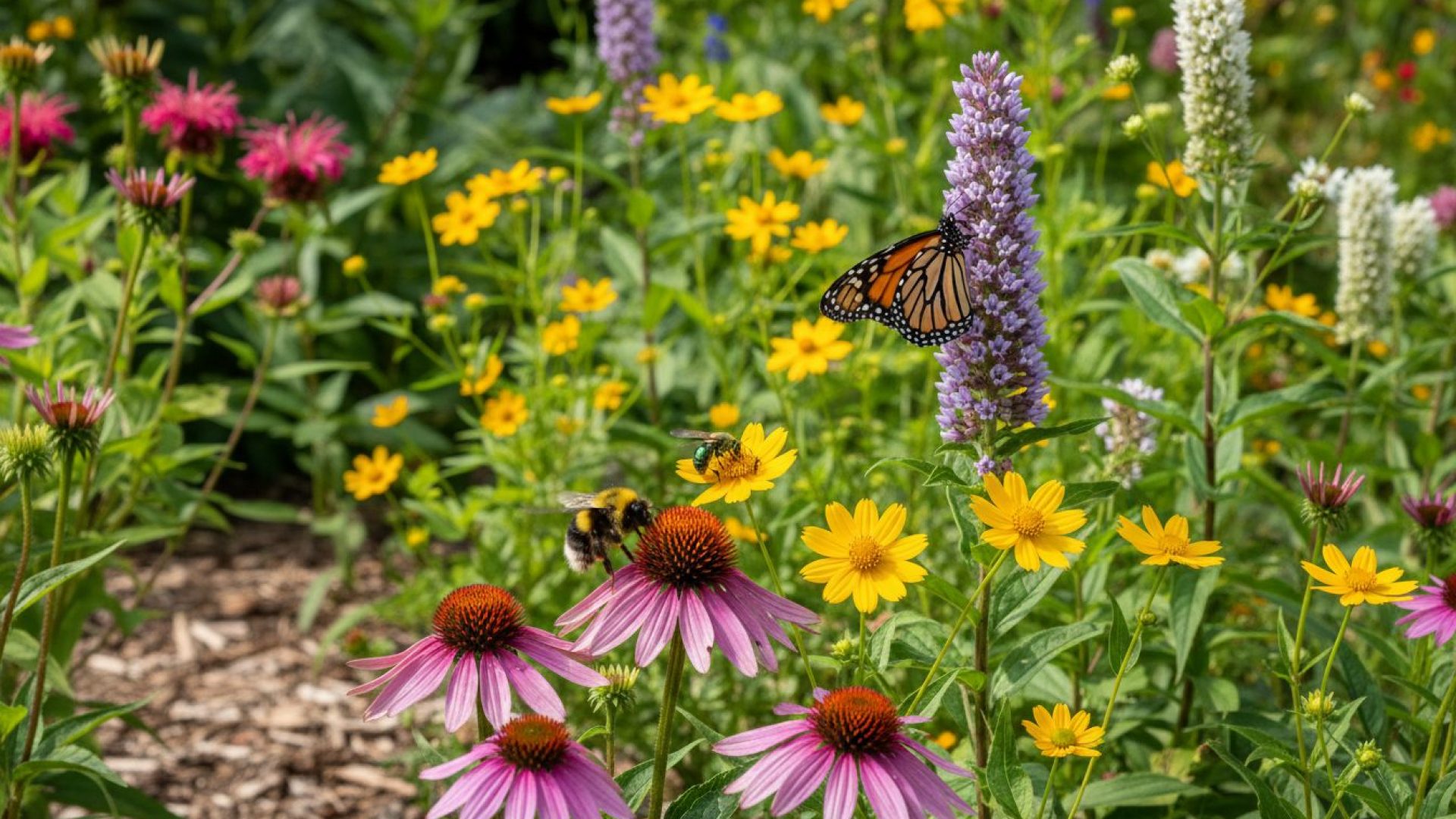
Every spring, I wander into my backyard hoping to spot bees and butterflies—sometimes even a hummingbird if I’m patient enough. But a few years back, after reading yet another article about pollinators facing tough times, I started digging past the surface: Why aren’t our gardens buzzing with life like they used to? And what can we really do about it?
The surprising answer isn’t just “plant flowers.” It’s a lot more powerful and thoughtful: plant native flowers for pollinator gardens. Those words caught my eye during a local conservation talk, and they quickly changed how I see my entire patch of earth. Today, we’ll dig into what that really means, why it matters, and how you can do it—without needing to turn your space into a wild jungle (unless maybe that’s your thing!).
Why Native Flowers Matter for Pollinator Gardens
Let’s be honest—when most people picture a pollinator garden, they imagine a riot of color. But it turns out, not all “pretty flowers” actually help pollinators. Native flowers are specifically adapted to local bees, butterflies, moths, and even birds. Some quick reasons why:
- Nutritional Matchmaker: Native pollinators evolved with local plants, so nectar and pollen are basically tailor-made for each other.
- Reliability: Many native flowers bloom at just the right time for emerging pollinators—they’re synced by thousands of years together.
- Sustainability: Native plants tend to need less water, fertilizer, or chemical help—so you help pollinators and the environment.
- Habitat: Native flowers often support the entire lifecycle, including food for caterpillars, not just adults.
Here’s an eye-opener: Studies suggest native flowers can support up to four times more species of native bees than non-native ornamental flowers. That’s the kind of boost our local ecosystems urgently need.
A Personal Case: My Patchwork Plot
When I swapped out some of my generic supermarket petunias for purple coneflower (Echinacea purpurea) and wild bergamot (Monarda fistulosa), bee visits tripled by mid-June. And here’s something wild—I stopped seeing as many pests. I hadn’t changed anything else. Turns out, those native plants were quietly drawing in parasitic wasps and ladybugs too. Sometimes it’s honestly the indirect stuff that feels the most magical.
What Counts as a Native Flower?
The definition sounds simple: a native flower is one that evolved naturally in your local region—usually before widespread European colonization or massive land changes. But, is it that cut and dried? Not quite.
- Region-Specific: A plant native to California isn’t automatically right for Pennsylvania.
- Microclimate Matters: Consider if your site is sunny, shady, dry, or damp—and find local natives for that spot.
- Watch for Cultivars: Many “nativars” are bred for color or shape, but sometimes lose key traits (like accessible pollen).
If you’re stuck, the National Wildlife Federation’s Native Plant Finder is a solid tool: pop in your zip code and get honed suggestions. I use it whenever I help neighbors get started. You’ll be amazed how different the wildflower lists are if you shift just 50 miles!
The Top Native Flowers for Pollinator Gardens (By Region)
Let’s dial in on specific examples. This is based on what I’ve seen working—and not just in theory, but in real, average home gardens across the US. I tried to avoid the common “one-size-fits-all” recommendations you’ll see elsewhere.
Eastern US & Midwest
- Milkweed (Asclepias spp.): Monarch butterfly’s larval host and a big bee favorite. Try swamp milkweed in damp spots, butterfly weed in dry.
- Black-eyed Susan (Rudbeckia hirta): Super tough, long-blooming, attracts everything from hoverflies to mason bees.
- Wild Bergamot (Monarda fistulosa): Not just for tea—watch the hummingbirds go wild in July.
- New England Aster (Symphyotrichum novae-angliae): Fall color and late nectar when almost nothing else is still blooming.
West Coast
- California Poppy (Eschscholzia californica): Dramatic orange, drought-tolerant, highly attractive to native bees.
- Douglas Aster (Symphyotrichum subspicatum): Great for coastal gardens; lots of pollinator activity through late summer.
- Pacific Bleeding Heart (Dicentra formosa): Woodland charm, loves shade, spring nectar magnet.
South
- Eastern Columbine (Aquilegia canadensis): Red, nodding blossoms—excellent for early hummingbirds.
- Blue Mistflower (Conoclinium coelestinum): Cloudlike, irresistible to butterflies.
- Coreopsis (Coreopsis lanceolata): Sun-loving, cheerful yellow, easy to naturalize.
And no, you don’t have to plant all natives—but even 60–70% can make a huge difference. The numbers back it up: yards with over half native flowering plants reported up to 3x more pollinator abundance in recent local university studies.
Designing a Native Pollinator Garden Without Losing Your Mind
I’ll confess: I once thought “going native” meant letting my yard explode into chaos. Not true. Let’s break it down for a real-world, livable space:
- Start Small: Dedicate one sunny patch, border, or neglected side yard. Even a 4×4 foot bed can draw pollinators.
- Diversify Bloom Times: Pick plants so there’s always something flowering from early spring to frost. Mix annuals and perennials.
- Layer Heights: Plant in “tiers”—low growers, midsize fillers, and tall show-stoppers—to mimic nature and pack in more blooms.
- Go in Clumps: Group 3–7 of each plant together. Pollinators forage more efficiently this way (less searching = more feeding = happier bees).
- Don’t Stress Perfection: Some weedy edges, leaf litter, and even bugs are part of the ecosystem. You want “tidy wildness,” not sterile order.
Honestly, once my parents planted their own pollinator patch near the veggie garden (yes, a bit of gentle nagging from me helped), they started reporting more tomatoes and cucumbers, too. Coincidence? Probably not—it’s a small pollination ripple effect.
Common Mistakes: Lessons Learned (Sometimes The Hard Way)
Let’s save you a few headaches. Here’s what I—or folks I’ve helped—have learned by trial, error, and sometimes a little regret.
- Don’t Just Grab “Wildflower Mix” Seed Packets: Many aren’t regional natives. Some even include aggressive non-natives that won’t help local bees.
- Beware of Over-Mulching: Thick wood mulches can block ground-nesting bees. Leave a few small bare patches!
- Shun Pesticides: Even “natural” sprays can harm pollinators. I learned this after a neighbor’s “safe” organic spray knocked back my bee population for weeks.
- Water Early, Not Late: Late-evening watering risks fungal disease on blooms—especially for dense native beds.
Data Insights: How Fast Do Pollinators Respond?
If you’re a numbers person like me, here’s what the research and my own tiny corner suggest. Change can be surprisingly fast if you nail the big basics:
- Studies reveal that adding native flowers to a single yard can raise overall bee species counts by 50–75% within the first year.
- Butterfly diversity usually jumps more gradually (watch especially in years 2–3), but you’ll likely notice more types within a single season.
- Bumblebees seem particularly responsive to large clumps of native perennials—sometimes visiting within days if you’re lucky with location.
But the real win? You start noticing whole new ecosystems—hoverflies, colorful beetles, maybe even a native solitary wasp or two if you pay close attention.
Pros and Cons of Choosing Only Native Flowers
Sometimes the “plant only natives” mantra gets oversimplified. Here’s a balanced look:
- Pros:
- Direct support for at-risk pollinator populations.
- Improved garden resilience with less watering/fertilizer needed.
- Fewer pest outbreaks (healthy diversity means less imbalance).
- Cons:
- Sometimes tougher to find specific native plants at big stores.
- Occasional wild look (if you prefer rigid order).
- Certain showy annuals (like non-native zinnias) can still offer nectar—so a small blend can be nice for continuous color.
Frequently Asked Questions About Native Flowers for Pollinator Gardens
- Do native flowers draw in honeybees as well as native bees?
- They do, but here’s the interesting thing: honeybees are generalists (meaning they’ll try a bit of everything) while natives like bumblebees or mason bees often prefer, or even require, local blooms. Planting natives helps everyone, but you’re mainly giving a leg up to rarer and often more at-risk species.
- Are all pollinators attracted to the same flowers?
- Nope! Some flowers are engineered for bees (think tubular or flat-topped for easy access), while others cater to butterflies, moths, or hummingbirds. A diverse mix gives the buffet effect.
- Can I combine native flowers with my vegetable garden?
- Absolutely. It’s actually a smart move! Planting native borders or interspersing flowers boosts crop yields by attracting more pollinators and beneficial predatory insects. I often tuck milkweed or coreopsis alongside beans and tomatoes—with great results, by the way.
- What about my small balcony or urban plot?
- You don’t need an acre—it’s honestly the cumulative effect that matters. A few pots of wild bergamot or native asters will help. Imagine if every balcony on your block had just one container of a native bloom: you’d see pollinator traffic multiply in no time.
- Should I deadhead native flowers?
- Mostly yes, to encourage bloom production and neatness. But leave some seed heads for goldfinches (and as a winter food source). Pollinator gardens love a bit of “wabi-sabi”—imperfect beauty.
One Last Observation: Why Native Flowers for Pollinator Gardens Feel Different
Planting tulips and petunias is nice. But setting in a patch of native milkweed, bee balm, and goldenrod? That’s a subtle rebellion—a quiet signal to bees, butterflies, and the whole little world outside your window that you’re paying attention. Maybe it’s wishful thinking, but I’d argue there’s a special kind of pride in spotting a rare bee or an oddball moth nobody else notices—proof your garden isn’t just showing off, but sustaining something real.
And in a world of headlines about pollinator loss, there’s something deeply grounding about being a small part of the answer—one bloom, one native plant at a time. That’s the story your yard can start telling, starting this season.