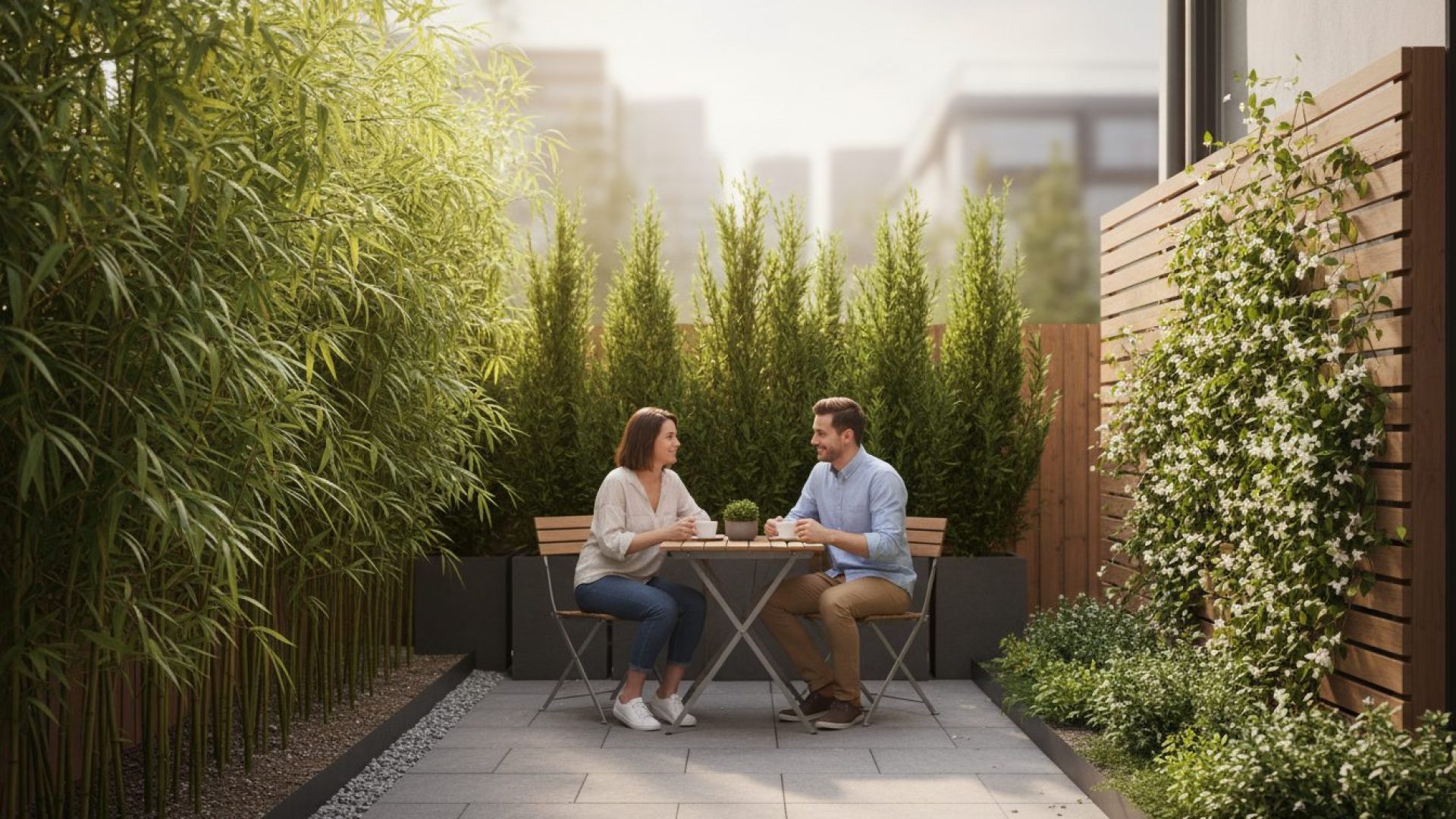
If you’ve got a small yard, you know privacy sometimes feels like a lost cause. Maybe the neighbors’ windows seem just a bit too close, or the street traffic leaves you wishing for a cozy hideaway. But don’t worry—there are creative ways to use privacy plants for small yards that won’t turn your limited space into a dark, cramped thicket. In fact, the right green screen can transform a petite patch of earth into your own leafy sanctuary.
Defining Privacy: More Than Just Blocking Views
Let’s get something out of the way: privacy doesn’t always mean creating an impenetrable wall. Sometimes it’s about softening sight lines, muting sounds, or just giving yourself a feeling of separation from the world. In small yards, balance matters. Too much coverage can box you in, while a few smart plant choices create a seamless, inviting retreat.
Interestingly, a 2022 landscaping survey found that about 61% of city dwellers chose privacy plants for aesthetic reasons, not just seclusion. Isn’t that telling? Most of us want beauty as much as solitude.
How to Choose Privacy Plants for Small Yards
Before you run out to buy the bushiest shrub you can find, let’s break down how to pick privacy plants that fit—not fight—your available space.
Size and Growth Habits
It’s easy to fall for a lush arborvitae, but fast-growing doesn’t always mean small-space friendly. Think about ultimate height and, crucially, width. A plant that grows to 30 feet tall might sound perfect, but if it spreads outwards as much as upwards, your little yard could quickly become overrun.
Root Systems Matter
Plants with aggressive roots (like some bamboo) can cause more headaches than they solve—cracking sidewalks, invading garden beds, or choking out other plants. For confined spaces, fibrous or non-invasive root systems are generally wiser.
Deciduous vs. Evergreen
This is more than a technicality. Evergreen plants like boxwood or privet provide year-round screening, great for four-season privacy. Deciduous options (think serviceberry or dogwood) lose their leaves in winter but can offer lush, textured coverage—and seasonal interest—you just have to be okay with a little off-season openness.
My Top Picks: Privacy Plants for Small Yards
Based on a mix of hands-on experience, client feedback, and some hard-earned mistakes, here are real-world options I recommend again and again for screening tight spaces:
- Dwarf English Laurel (Prunus laurocerasus ‘Otto Luyken’): Dense, glossy green leaves, grows 4–6’ high and wide. Responds well to pruning and makes a fail-proof shrub screen.
- Skip Laurel (Prunus laurocerasus ‘Schipkaensis’): Narrower than most laurels, tolerates shade, and keeps leaves through winter in many climates.
- Boxwood (Buxus spp.): The classic for a reason—slow-growing, easily shaped into neat hedges or more whimsical forms. Some varieties stay below 3 feet tall and wide.
- Emerald Green Arborvitae (Thuja occidentalis ‘Smaragd’): Goes vertical—not horizontal—maxing out around 12–15’ tall but only 3–4’ wide. Ideal for “green wall” effects along fences.
- Clumping Bamboo (Fargesia spp.): Unlike running bamboo (which I’d never recommend for small lots), these clumpers are polite neighbors. Quick to grow, elegant, and cold-hardy.
- Holly (Ilex crenata, Japanese holly, or compact hybrids): Evergreen, glossy, and dignified. Many modern varieties stay compact and tolerate pruning.
Let me share a quick story: My own 20×30-foot yard backs up to three other properties. A single row of Emerald Green Arborvitae—yes, the “easy” choice—worked wonders along my back fence. But for the sides (where width is at a premium), I swapped in boxwood and a few clumping bamboos. The effect is layered but doesn’t feel boxed in. Neighbors are happy, no roots are running wild, and maintenance is simple enough that I haven’t cursed my choices (yet!).
Comparing Approach: Living Walls vs. Shrub Screens
Here’s something people often miss: privacy can be vertical as well as horizontal. Sometimes, a living wall or trellised vine delivers a surprising amount of seclusion in ways a traditional hedge can’t.
| Option | Typical Width | Upkeep Needed | Best For… |
|---|---|---|---|
| Shrub Hedge | 3–8 feet | Annual or semi-annual pruning, watering | Formal looks, year-round coverage |
| Living Wall/Trellised Vine | 1–18 inches | Spring training, occasional tying | Ultra-narrow spaces, quick height, visual interest |
I sometimes wonder if more urban gardeners wouldn’t be happier with slim vertical solutions—especially since you can switch them up over time. Star jasmine or clematis on a simple lattice can feel like a leafy escape even when the entire setup is just a few inches thick.
Clever Plant Pairings for Year-Round Privacy (and Beauty)
Mixing plants isn’t just for show. Pairing evergreens with deciduous varieties gives you layers—so when one “opens up” in winter, the other picks up the slack. Here are some smart combos:
- Evergreen back row + flowering shrubs in front = privacy plus bursts of color each spring or summer.
- Bamboo clusters interspersed with variegated boxwood = movement, brightness, and noise reduction.
- Espaliered fruit trees alternating with tall grasses = privacy, seasonal flowers, plus you get homegrown snacks.
From a data perspective, mixing species typically means less pest and disease buildup—something university extension offices routinely recommend for resilient home gardens.
Common Myths About Privacy Plants, Busted
- “Tall means better privacy.” Not always. Sometimes strategic placement of modest plants blocks lines of sight more effectively than a single towering wall.
- “Fast-growing is best.” Quick growers can be needy, messy, or invasive. Slow and steady is often easier to manage over five or ten years.
- “You need a lot of space.” Actually, tight, narrow plantings (think 18 to 36 inches from a fence) often thrive—just choose vertical growers and keep up on your pruning.
Analytical Insights: What Makes a Great Privacy Plant for Small Yards?
- Strong Structure: Plants with upright branches and dense foliage will screen views without needing much width.
- Tolerance to Pruning: If you have a small space, you’ll need to keep things shaped up. Classic boxwood or yew can survive annual shearing far better than, say, lilac or rhododendron.
- All-Season Interest: This makes your little green barrier a pleasure, not a chore. I recommend at least one plant in your mix that has winter berries, spiky seed heads, or evergreen texture.
There’s no “one size fits all” formula here. Your choice depends on how much you enjoy pruning, whether you crave color or simplicity, and just how much privacy you want (or don’t mind giving up for sunlight).
Quick Tips: How to Keep Privacy Plants Healthy in Small Spaces
- Don’t crowd them. Even vertical growers need airflow to avoid fungal trouble.
- Mulch and water smartly. Small yards heat up quickly, and roots can dry out in raised beds or near pavement.
- Prune with purpose. Regular, light trims are easier (and healthier for the plant) than a big, infrequent chop.
- Watch for pests. Tightly packed hedges can become bug hotels. Check periodically for aphids, spider mites, or scale insects, especially during warm spells.
Mini-Case Study: Using Privacy Plants for Small Urban Yards
Let me tell you about a recent project: a city client with a 10×16-foot backyard wanted both privacy and flowers (tough ask, right?). We planted a row of compact schip laurel, then trellised ‘New Dawn’ roses behind them. In season, the roses ran riot up the lattice, while the laurels kept things green year-round. The whole screen—less than two feet thick—now draws compliments from the neighborhood, and the client says her backyard “feels twice its size” because the green backdrop erases all thoughts of alleyways and neighbors’ porches.
The lesson? Privacy plants for small yards aren’t just about blocking. They make your space feel finished, tended, and somehow more personal, even if you’re working with postage-stamp dimensions.
Frequently Asked Questions (FAQ)
What’s the fastest privacy plant that won’t get out of control?
Clumping bamboo from the Fargesia group is a go-to—it grows quickly but stays in well-behaved clumps. Just don’t plant “running” bamboo or you’ll spend years regretting it. Upright hollies and Emerald Green Arborvitae are also good, fast (but manageable) options.
Can I use vines for privacy in a small yard?
Absolutely. Star jasmine, clematis, and even some honeysuckles, when grown on a sturdy trellis, offer privacy within one growing season. Use strong support, and remember to trim them back every year.
Is it better to plant a hedge close together or give them space?
For small yards, plant as close as the label allows, but don’t crowd so much that air can’t move between plants. Most hedges for privacy are spaced 18–36 inches apart for a seamless look by year three.
What’s the easiest privacy plant for absolute beginners?
Boxwood or ‘Smaragd’ Arborvitae. Both are forgiving, slow-growing, and easy to prune. Laurel is also forgiving if you like more height and broader leaves.
How do I keep privacy plants looking good without constant work?
Choose slow or moderate growers, use mulch to retain moisture, and schedule light trimming once or twice a year. Mixing in some perennials or grasses can fill gaps and reduce visible maintenance chores.
Reflection: The True Value of Green Privacy in Small Spaces
I’ll admit it—sometimes I envy gardeners with sprawling properties. But after years of tinkering in compact city yards, I’ve come to see that privacy plants for small yards aren’t a consolation prize. They’re about intention: making the most of what you have, turning limitations into opportunities for creative living.
There’s something special about stepping into a small garden that feels enclosed, green, and uniquely yours. When the right plants fill out, blocking just enough of the world, it’s as if the space expands—not in size, but in character. If your yard feels too open, or too overlooked, don’t settle for fences alone. The perfect privacy plant is out there, ready to change not only your view, but how you feel at home.