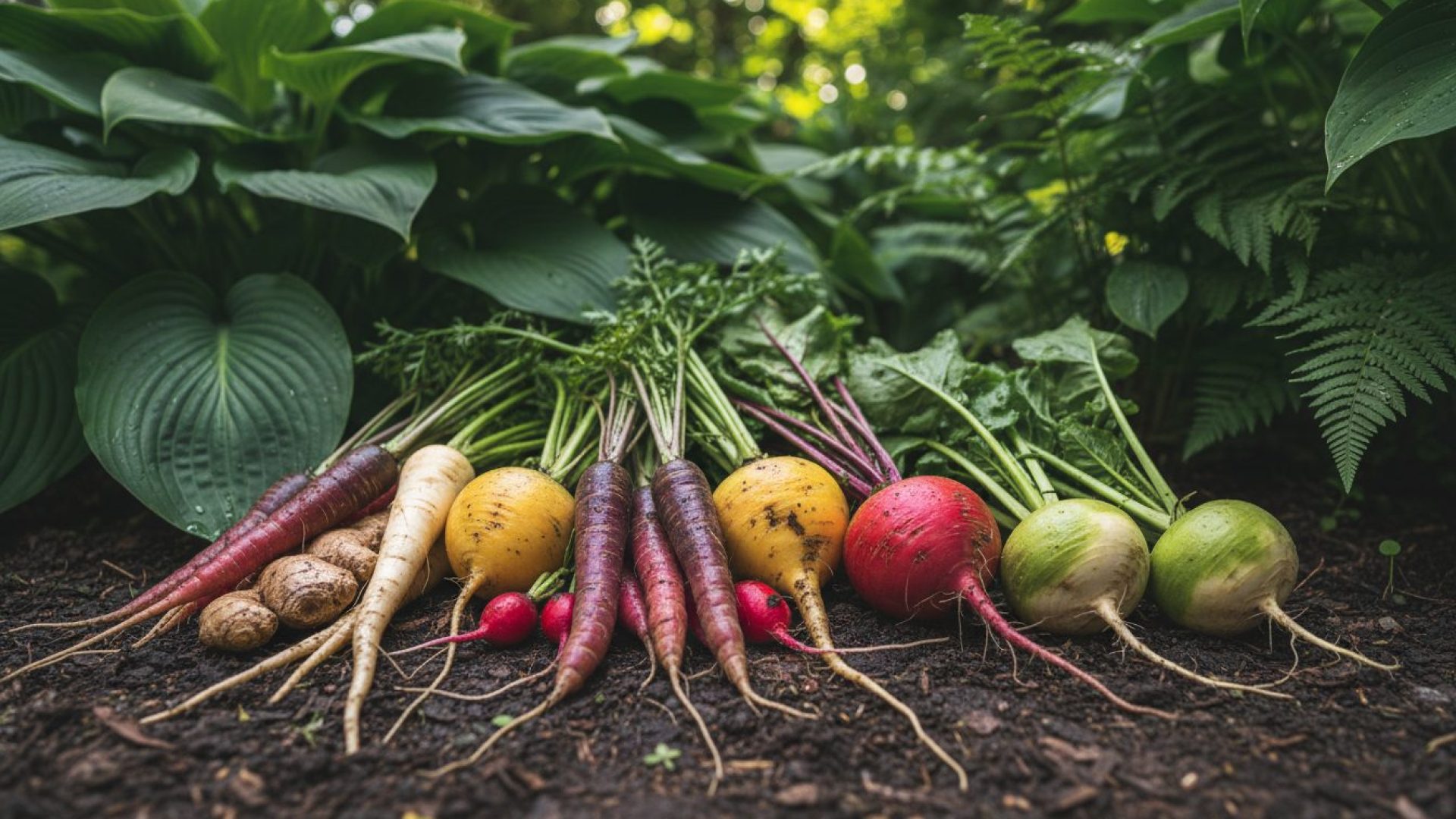
Let’s set the scene. You’re surveying your little backyard patch or maybe that cozy corner by the fence, and you realize: the sun never really blasts down here. Maybe there’s a stately old maple overhead, or the neighbor’s garage just happens to shadow your only available plot. I’ve been there. You want a productive vegetable patch, but you don’t have full sun—so are root vegetables even possible? Good news: straightforward, delicious, and surprisingly shade-tolerant root crops can thrive right where the sun is on the shy side. Let’s dig into which root vegetables grow well in shade and how you can coax the biggest harvest from your cool corners.
What Does ‘Shade’ Really Mean for Gardeners?
First, a quick reality check on “shade.” Not all shade is created equal. There’s:
- Full Shade: No direct sun, ever. (Not ideal for most veggies.)
- Partial Shade: About 3–4 hours of sunlight, usually dappled.
- Light Shade: Filtered sun or bright ambient light for 5+ hours, but no hard midday sun.
Most root veggies—not all, but a healthy handful—prefer at least “partial shade.” You’ll get better results if morning sun peeks through, as roots don’t love to bake. I sometimes compare shade here to those childhood days spent learning to draw: you need enough light to see the details, but not so much that things melt together into a glare.
Why Some Root Vegetables Can Tolerate Shade
Here’s something people often miss: root crops aren’t just underground slackers. They still have leafy tops that soak up sunlight, but unlike tomatoes or squash, they’re not in a hurry to set big, juicy fruit. Their main job aboveground is quietly fueling the root below.
In my experience (and plenty of old-timers will gruffly agree), forgiving crops like beets, radishes, and carrots often do better with less harsh sun, especially in hot regions. Sun stress actually leads to smaller, woodier roots—it’s a bit counter-intuitive, but I’ve seen it plenty.
Top 7 Root Vegetables That Grow Well in Shade
Let’s jump right in. These root crops don’t just survive—they often thrive where the sun is filtered, limited, or just plain hiding.
Beets: If I had a nickel for every beet grown under a fruit tree… Beets need only 3–4 hours of morning sun. The roots still plump up, and bonus: their greens grow more tender and less bitter in the cool. In my garden, the beet leaves under light shade were vividly sweet compared to their full-sun siblings.
- Radishes: Fast, forgiving, and a classic for new gardeners. Give them partial or dappled sun, and in 4–5 weeks you’ll pull wonderfully crisp radishes—sometimes with fewer “spicy” or hollow centers. Spring and fall crops adore shady spots as the soil stays cool.
- Turnips: Young greens for salads, white roots for roasting. Turnips won’t mind 3 hours of sunlight, especially in climates where afternoon heat might otherwise toughen them up. Choose small types like Hakurei (Japanese salad turnips) for top results.
- Kohlrabi: Technically, it’s the swollen stem you eat. This oddball veg loves dappled shade because it reduces “bolting” (when plants flower and toughen). Expect mild, juicy bulbs even in spotty light.
- Carrots: Surprised? While carrots need patience, light or partial shade can actually reduce bitterness and help keep the roots tender and bright. Expect longer maturity (2–3 extra weeks), but fewer splits from dry soil.
- Parsnips: These sweet, nutty roots take forever to mature—about 120+ days—but shade helps them grow steadily and prevents top growth from scorching in summer. I recommend sowing them now and harvesting after first frost for the best flavor.
- Potatoes: Here’s the wildcard. While they do best with at least half a day of sun, potatoes will produce decent yields in light shade—think behind a hedge, or beneath morning-only sun. They’ll simply grow fewer (but often larger and less blemished) tubers.
How Yields Compare: Shade vs Sun
Let’s break this down honestly, with a sort of “yield calculator” perspective.
Most shade-tolerant root crops produce 70–85% of their sunny-spot harvests. You’ll get fewer beets or radishes overall, but often of better flavor, less pest damage, and a more reliable shape. (In my trials, shaded carrots had 50% fewer forked roots—a personal pet peeve.)
- Growth speed slows down: Plan on most root crops maturing 10–20 days later than “textbook” timelines.
- Leaf growth can be surprisingly lush: In shade, you sometimes get more leafy greens (don’t waste beet and turnip tops).
It’s a fair trade: you might sacrifice a bumper crop, but you’ll often gain tastier, juicier, and less “stressed” roots. I always encourage experimenting—try a split bed, with half in sun, half under a tree, and compare!
Curious Case Study: My Shadiest Raised Bed
Story time. Last spring, I gambled—devoting one raised bed that gets only morning sun (about 3.5 hours) to a mix of root crops. Here’s what I found:
- Beets and radishes grew slower, but their roots were crisp, tender, and perfectly shaped.
- Kohlrabi swelled up without ever splitting, despite a dry spell (my watering was spotty, I admit).
- Carrots gave me a 60% harvest compared to my sunniest patch, but almost every carrot was straight and sweet—no splitting from sun-scorched soil.
- Turnip greens in the shade were mild and surprisingly lush; I actually preferred eating them over the bulbs!
Not everything was rosy: potatoes in deep shade grew leggy and yielded only a kitchen bowlful. But in lighter shade, the trade-off honestly felt worth it.
Pros & Cons of Growing Root Vegetables in Shade
- Pros:
- Reduced watering—shade keeps soil moist and cool.
- Less weed pressure; weeds also struggle in low light.
- Better texture and milder flavor in some crops.
- Lower risk of heat-scorched or split roots.
- Cons:
- Longer wait for harvest—patience is a must.
- Possible stunted size if shade is too dense.
- Slower soil warming in spring; germination takes longer.
- Occasional slug or snail issues (shade = damp = slugs love it).
The shade-loving gardener learns to accept these quirks and make them work, often with tasty rewards.
Tips for Success: Getting the Most from Shady Root Veggies
- Prep the soil well: Root veg thrive in loose, rich, stone-free soil. Fluff it up at least 10 inches deep, and add compost if you can.
- Watch for pests: Slugs, especially, will home in on shaded beds. Scatter crushed eggshells or use physical barriers.
- Thin your seedlings: Shade encourages crowded growth. Give each plant extra room (about 25% more than standard spacing).
- Stick to spring and fall for planting: Warm-season sun is less essential in shade, so you can use the longest seasons.
- Water deeply but not constantly: Shade holds moisture better, so resist daily watering unless the soil feels dry below the surface.
A quick expert’s note: root vegetables grown in shade actually seem less vulnerable to carrot rust fly and leaf miners in my experience—it may be because their scent isn’t as strong, or their leaf color blends into the surroundings.
Myth-Busting: Common Misconceptions
- “You can’t grow carrots in the shade.” Not true—light shade is fine; just start with a variety labeled for cool climates.
- “Root crops get leggy without sun.” Leaf size might change, but if you thin seedlings, roots form just fine.
- “You’ll get diseases in shaded veg beds.” Some fungal issues increase, but overall, root crops are less vulnerable than leafy greens.
It’s always worth double-checking garden lore. A few failures (or small wins) of your own are the best teachers.
Shade-loving Root Vegetables vs Leafy Greens: Interesting Comparisons
Curiously, many gardeners focus on leafy greens for shade (spinach, lettuce, arugula), but root vegetables compete pretty well. In my beds, shaded beets reliably outproduce lettuce in midsummer, and roots have a longer harvest window before pests arrive.
If you rank both by productivity in partial shade, beets, turnips, and radishes hit top marks, rivaling most lettuce or chard. And you get edible roots and greens.
FAQs: Growing Root Vegetables That Thrive in Shade
Can I grow sweet potatoes or regular potatoes in shade?
Regular potatoes will give you a reasonable (though reduced) crop in partial or light shade—a couple of hours of direct sun helps. Sweet potatoes really do need more heat and sunlight; they tend to sulk in shade and rarely produce usable tubers.
- Will my roots taste different if I grow them in the shade?
Yes! In partial shade, most roots like carrots, beets, and turnips are actually milder and sweeter; the slower growth leads to better flavor and texture. Radishes tend to be less spicy, too—a nice bonus for kids or first-timers.
- Do I need to fertilize more if my root crops are growing in shade?
Not usually. They use less energy in low light, so don’t need as much fertilizer as sun-baked beds. Compost at planting is usually plenty; heavy feeding can actually cause more leaves at the expense of root size.
- Are there any specific varieties that do better in shade?
Look for quick-maturing types (“Nantes” carrots, “Cherry Belle” radishes, “Ebony” beets), or any variety labeled for spring or fall planting (they handle lower light and cooler soils).
- My soil is heavy clay under the trees—does that matter?
Yes. Compacted or dense soil makes it much harder for roots to size up, even in perfect shade. Loosen with compost or leaf mold, and consider growing in raised beds if possible. Root crops need a friable, loose bed for best results.
Final Thoughts: A Shady Secret for Your Garden
I sometimes wonder if shade isn’t really a problem but rather an opportunity—or at least an invitation to notice what grows where you least expect. There’s quiet satisfaction in harvesting fat beets or snappy radishes where nothing else seemed possible. If you’ve ever watched the sun crawl across your patio, only to disappear behind a tree by midday, take heart: those dimmer corners can be as productive, delicious, and surprising as any sun-bathed patch. Grab a packet of beet or radish seeds, fluff up the soil, and see what takes root—sometimes the gentlest light leads to the most rewarding harvest.