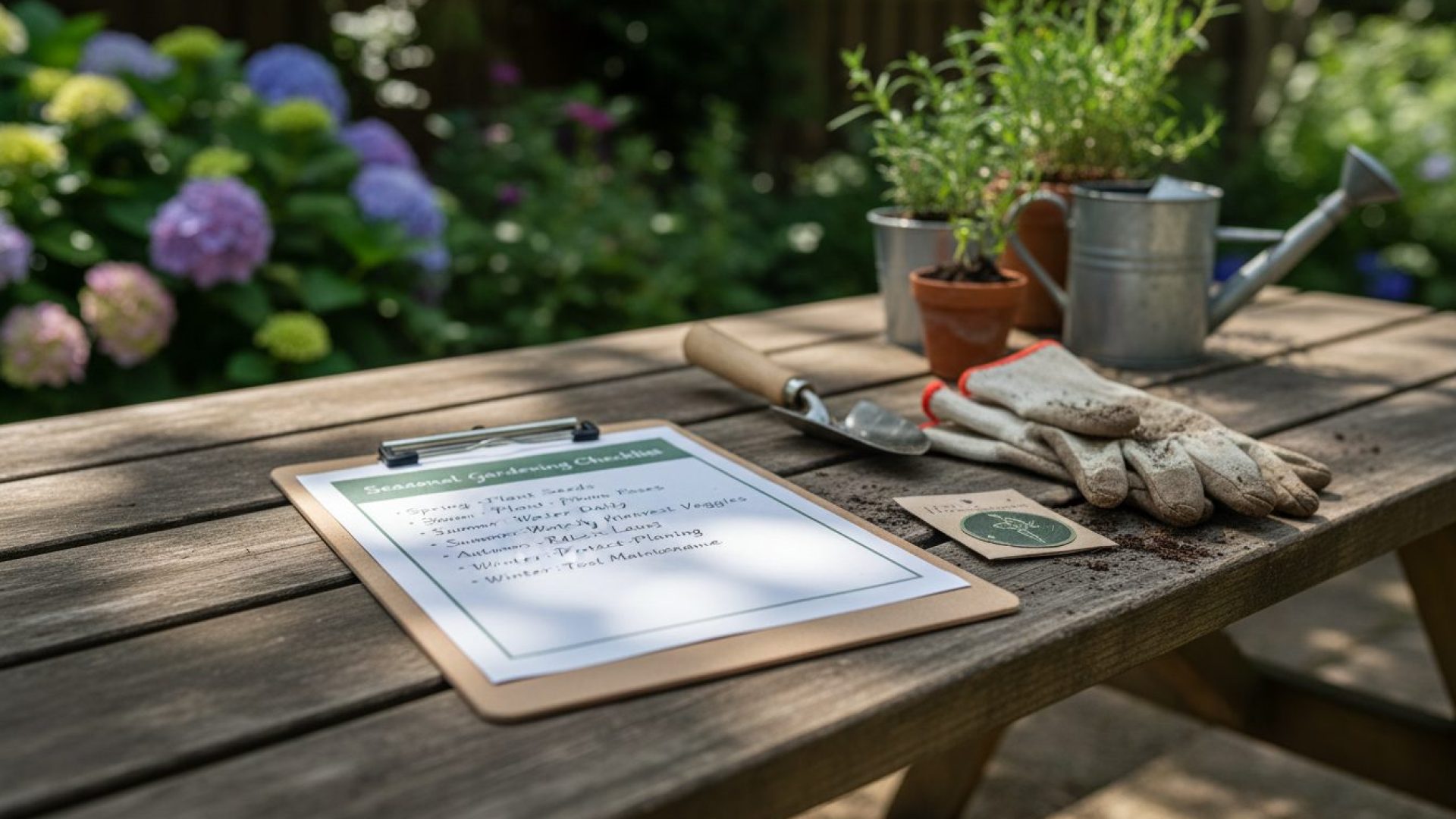
If you’re like me, the promise of each new season feels like flipping the page on a gardening adventure—there’s always something fresh to do, a little mystery, and (let’s be real) the hope that this is the year your tomatoes finally behave themselves. That’s where a seasonal gardening checklist comes in. Instead of feeling lost in the weeds—literally—we’ll break down exactly what to do, when, and why certain tasks matter. This isn’t just about keeping busy; it’s about tuning in to nature’s rhythms and making your patch of earth truly flourish.
Whether you have a balcony’s worth of pots or a couple raised beds, sticking to a simple, mindful list—adapted for your climate—can make all the difference. Let’s dig into the what, when, and why, and I’ll share some stories along the way (including a lesson from an impulsive spring seed order I made… more on that later).
What is a Seasonal Gardening Checklist (and Why Use One)?
A seasonal gardening checklist is like a calendar, shopping list, weather report, and how-to manual all rolled into one. It’s there to help you:
- Plan tasks like planting, pruning, and fertilizing
- Avoid costly mistakes (I’ve planted frost-tender seedlings far too early…oops)
- Identify garden chores that prevent bigger headaches—like late summer pest control or timely mulching
- Track what works (or doesn’t) year to year
- Enjoy gardening more by tackling chores at the best moments
It’s not rigid—it adapts year-to-year, depending on weather, your microclimate, and your goals. Some pro gardeners keep a laminated version on their potting bench. Even a casual gardener benefits by marking a few dates on the family calendar. Frankly, it keeps us honest and less overwhelmed.
How Seasons Shape What Your Garden Needs
Gardening, more than anything else I’ve done, demands respect for timing. Did you know that in most temperate regions, up to 60% of garden failures are just due to mistimed planting or maintenance? It’s not a lack of skill—it’s usually impatience or forgetfulness. Every climate zone has different timing, but the seasonal checklist principle stays the same. Let’s break down the broad strokes before jumping into details for each season.
- Spring: Awakening—prepare soil, plant hardy crops, start seeds
- Summer: Growth—watering, mulching, pest watch, harvest
- Fall: Wind down—plant for next spring, clear and compost
- Winter: Rest—protect, plan, and repair
Spring: A Fresh Start (March–May)
Why Spring Matters Most
Honestly, more of my disasters (and successes) have begun in spring than any other season. The desire to get things going early can be irresistible—but patience pays. Soil temperature matters more than the date on the calendar: seeds won’t germinate in chilly mud, or if they do, they’ll stall.
Here’s my own hard-won rule: unless the soil is workable enough that you can make a ball with your hand and it crumbles without sticking, wait a week. I once planted peas in late March; a surprise frost meant I repeated the process in April!
Core Spring Checklist
- Clean up beds: Remove debris, prune dead wood, rake, and weed early to get ahead.
- Test soil: A quick pH and nutrient check (kits are ~$10) can save you months of poor growth.
- Apply compost: 1–2 inches in veggie beds is perfect; over-fertilizing is tempting but risky.
- Sow cold-tolerant crops: Peas, spinach, lettuce, and radish go in early. Wait for warmth for tomatoes and peppers.
- Divide perennials: Gives older clumps new life and doubles your plants (everyone loves a freebie).
- Mulch after soil warms: Suppresses weeds and conserves moisture; don’t mulch too soon or you’ll keep the soil chilly.
- Sharpen and clean tools: Prevents rust and disease spread (guilty of skipping this and paying the price).
Mini Case Study: The Seed Order Urge
One year, I ordered seeds online late in February—about 30% more than I really needed, swept up in “spring fever.” The lesson? Always consult your checks before ordering. Too many seeds, not enough space or time. Now I compare my list to my actual available garden area. (I still splurge now and then, but wiser now!)
Summer: Nurture, Monitor, and Harvest (June–August)
Keeping Up When Growth Explodes
You can almost watch tomatoes and zucchini grow in July. That’s great… until you realize how fast weeds, pests, and mildew can move too. On average, a neglected bed will see weed coverage jump from 5% to 40% in as little as six weeks! Maintenance now avoids huge headaches later.
Key Summer Tasks
- Water deeply in the morning to 6 inches down, not surface-level sprinkles. Most gardens need about 1 inch/week (but more in heatwaves).
- Mulch regularly as weeds emerge. Grass clippings, bark, or chopped leaves can save you hours weeding later.
- Stagger plantings of beans, lettuce, and carrots—every 2-3 weeks—for a steady harvest instead of a glut.
- Check for pests weekly: squash bugs and aphids love hot weather. Early removal stops population booms.
- Pinch back herbs and flowers to encourage bushier growth. Annuals like basil, zinnias, and cosmos thrive on tough love.
- Harvest daily when peaking—especially crops like beans, cucumbers, and zucchini, which turn from tender to tough in days.
- Support vining plants: Add cages, stakes, or trellises before fruit gets heavy.
Hot-Weather Insight
Some summers, high heat comes weeks early. With average temps creeping up (NOAA says summer heat waves now last 20% longer than 20 years ago), I’ve learned to keep floating row covers handy to shade seedlings, and water a little more in the evening if leaves look droopy.
Pro tip: Overwatering can be as risky as underwatering! If the top 2 inches of soil are dry, but deeper down it’s moist, hold off watering.
Fall: Clean Up and Prepare (September–November)
Fall is less frantic, but maybe even more important. Instead of just pulling out spent plants (tempting, right?), it’s a great chance to set next year’s stage. I fondly call it “gardening for my future self.”
Autumn To-Do’s
- Harvest remaining crops: Root veggies often get sweeter after a light frost (try this with carrots and beets!).
- Remove diseased plants: Burn or trash these—never compost them.
- Plant garlic, shallots, and late-season bulbs: They’ll sleep all winter but emerge strong in spring.
- Mulch and cover beds: A thick straw or leaf mulch protects soil and suppresses winter weeds.
- Compost spent plants: Except diseased ones—those harbor trouble.
- Clean and store tools: Coat metal bits with a little oil to prevent rust. (A coffee can with sand and oil works wonders.)
- Record successes and flops: Your future self will thank you for good notes on varieties, weather issues, and what outperformed expectations.
Personal Thought
The first time I planted garlic in October, I worried the bulbs would rot. Trust the process—garlic really does love hibernating under mulch. In my experience, even a few inches of straw or dried leaf mulch boost harvest size by 20–30% the next year.
Winter: Rest, Reflect, and Repair (December–February)
Why Slow Season Still Matters
I used to ignore the garden in winter—what could possibly need doing? But actually, this is prime time for planning, repairs, and giving wildlife a little help. It’s also when my notes come in handy, letting me savor little wins and plan for changes (did kale really need an entire bed…?).
Winter Tasks Worth Doing
- Review your notes from last year: Map out what worked, what flopped, and where spacing or sun could improve things.
- Order seeds and supplies: Popular varieties can sell out by January, especially heirlooms.
- Prune fruit trees (while dormant): Best in late winter before sap rises.
- Organize your tool shed: Clean, repair, or toss anything broken.
- Feed birds and beneficial wildlife: They’ll repay you by controlling pests come spring.
- Check garden structures: Fences, raised beds, and trellises are easiest repaired before things start growing.
Mini Analysis: Why Planning During Winter Pays Off
On average, gardeners who sketch a rough layout and write up checklists see a 10–20% increase in both yield and efficiency the following growing season (based on several university extension studies over the past decade). It’s less about precision, more about being thoughtful with your space and time.
Quick Tips: Adapting Your Checklist to Your Garden
- Start simple: Don’t get overwhelmed by dozens of tasks. Pick a “Top 3” each month.
- Use your phone: Snap photos or notes for quick reminders—especially good for tracking plant tags and changes.
- Mark your frost dates: Count backward for seed sowing. Local extension websites are goldmines for this info.
- Ask local gardeners: Even with the internet, neighborly advice is priceless. (The old guy two streets over solved my slug problem in five sentences.)
- Expect surprises: Some years are wetter, drier, or hotter. The checklist is a guide, not a rulebook—flexibility pays.
FAQ: Real Questions Gardeners Ask About Seasonal Gardening Checklists
Do I really need a different checklist for every year, or can I reuse last year’s?
Great question! You can absolutely reuse a backbone checklist, but adjust it for weather swings, new crops, or pest issues from last year. I like to keep a digital copy and add sticky notes for that season’s quirks.
What if I miss a key task—like spring mulching—by a few weeks?
Don’t panic. Most garden mistakes recover with time or a bit of adaptation. Late mulching in spring might promote a few weeds, but you’ll catch up by summer. The only “mistakes” are ones you don’t learn from.
How can I get my family (or roommates) involved in sticking to the checklist?
Make it a shared project—not just chores. Assign easy, fast jobs (like watering or harvesting) and keep it visual—color-coded lists, chalkboards, or even group texts help! For kids, give them their own plant to tend and track.
Do checklists matter for ornamental or flower gardens, too?
Absolutely! Timing still counts for bulbs, pruning, dividing perennials, and preventing disease. The same seasonal cycles apply—even if veggies aren’t your thing.
Is there any tech that helps with reminders?
Tons! Apps like Gardenate, Planter, or even Google Calendar let you set up alerts for each job. I mostly stick to pen-and-paper, but apps are awesome for succession planting and pest alerts.
Reflection: Why a Checklist is Less About Perfection, More About Attention
Let me say this: I’ve never once followed a seasonal gardening checklist perfectly. Life interrupts, weather throws curveballs, and sometimes I just flat-out forget things (there’s still a packet of unplanted wildflowers in the garage). But returning to the checklist keeps me rooted—literally and figuratively.
A successful garden isn’t about perfect execution; it’s about noticing, responding, and celebrating small wins. Your checklist is there to guide your attention, not police your actions. And for me, nothing beats walking through the garden in late summer, basket in hand, seeing careful timing and honest effort turn seeds into salad, flowers, or a bowl of snap peas. Isn’t that half the magic?