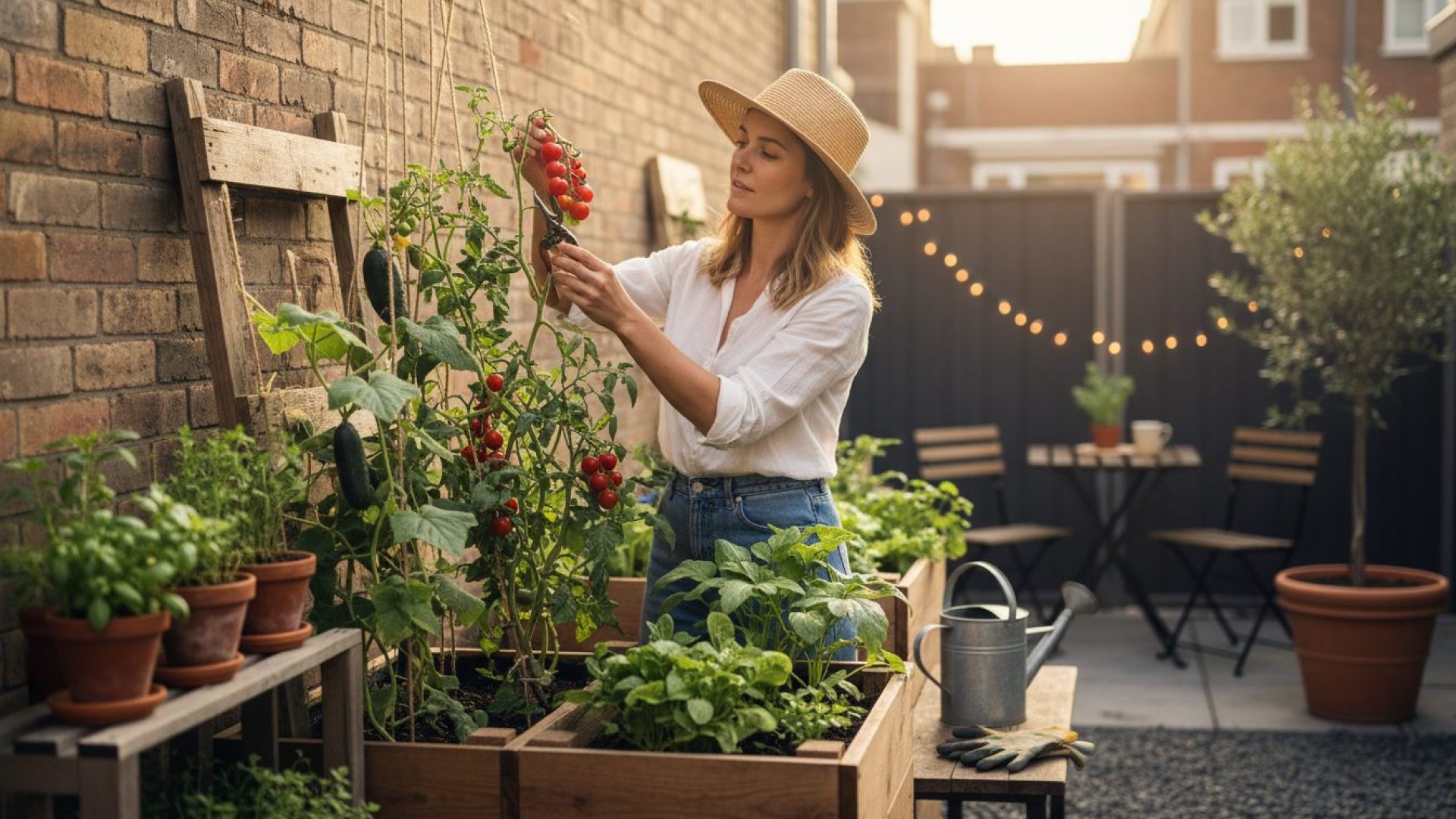
You know what I hear most often when chatting with hopeful gardeners in the city? “I’d love to grow my own food, but my yard’s not much bigger than a doormat.” It’s almost like there’s a secret code: small yard equals small dreams. But if there’s anything the last decade has taught me—as someone who’s grown tomatoes in three-foot strips and harvested carrots between the recycling bins—it’s that vegetable gardening for small yards is much less about space and more about strategy. In fact, it’s almost like a game of Tetris, where every square foot is a prize.
What Does “Small Yard” Even Mean?
Let’s set the scene for a moment. In American suburbs, the “average” backyard was once around 6,000–8,000 square feet (think two big tennis courts). These days, newer developments often leave people with 1,500 square feet or less—and urban townhouses might have just a few paces of sun-dappled concrete. If you’re reading this, you might be in that boat: your “yard” could be a postage stamp behind a fence, a narrow alley, or, if you’re lucky, the sunny end of a patio.
For simplicity, when we talk about small yards, let’s say anything under 500 square feet fits the bill—but trust me, the lessons here still apply even if it’s smaller.
Why History—and a Little Data—Should Encourage You
A quick, reassuring data point: during WWII’s “Victory Gardens,” families grew 40% of America’s fresh produce supply, and that wasn’t on sprawling farms. They used postage-stamp lawns, empty lots, even rooftops. The human urge—and ability—to garden in tight quarters runs deep.
First Principles: What Matters Most In Tiny Vegetable Gardens?
Let’s break this down before getting crafty with containers and space-saving tricks. These five fundamentals make or break your efforts:
- Sun: Most veggies need at least 6 hours of full sun daily. Leafy greens can squeak by with less, but tomatoes, peppers, and squashes? Sun worshippers.
- Soil: Poor, compacted soil is a common “small yard syndrome.” Raised beds or containers with high-quality mix can outperform tired in-ground spots. I’ve seen 2’x4’ beds produce more than my neighbor’s entire weedy corner plot.
- Water: Small spaces dry out quicker, especially against sun-warmed fences or patios. I recommend drip irrigation—or at the very least, attentive hand-watering.
- Plant Selection: Some veggies are space gluttons (pumpkins, anyone?), while others—herbs, lettuces, radishes—are more refined in their footprint.
- Harvest Intensity: You’re not just planting once! Succession planting and quick crops = repeat harvests from the same plot. This is the secret sauce hardly anyone mentions.
Vertical Gardening: Reach for the Sky (Literally)
If you’ve ever watched peas curl up a trellis or cucumbers dangle from netting, you already understand the magic of vertical gardening. It’s simple geometry: when you can’t grow wide, grow tall.
Case Study: The “Three Sisters” Corner Garden
A neighbor of mine—let’s call her Rita—had a yard wedged between two fences, no more than 30 square feet of actual diggable ground. She built a teepee of bamboo poles, planted pole beans at the bottom, and let them race each other skyward. By July, the whole space was a humming, living wall: beans, cherry tomatoes trained up a string, and even squash trailing along the edge. It wasn’t picture-perfect, but she picked fresh veggies every week.
- Use trellises, cages, or even repurposed pallet wood.
- Grow climbers: peas, pole beans, cucumbers (small-fruited varieties), and vining squash like tromboncino.
- Even some tomatoes can be tied vertically, saving 33% or more ground space compared to standard cages.
A vertical system isn’t just about cramming more plants in. Tall green walls add privacy—the whole effect can actually make a yard feel bigger, not smaller.
Container Gardening: Not Just for Balconies
I have a soft spot for container gardening. There’s something kinetic about moving a pot of basil to catch that last sunbeam, or tucking scallions in beside the door. With smart potting mix and regular watering, you can actually outpace many in-ground setups.
Quick Tips for Going Potty (with Vegetables)
- Size matters: Larger pots (5+ gallons) are better for tomatoes or peppers. Leafy greens, radishes, and herbs thrive in 12- to 18-inch planters.
- Drainage rules: Always drill extra holes if needed. Soggy roots are a top killer in containers.
- Potting mix beats soil: Use a high-quality soilless blend (peat or coco coir, vermiculite, compost). Heavy outdoor soil in a pot equals heartbreak.
- Fertilizer routine: With frequent watering, nutrients get leached out. A monthly organic feed or worm castings work wonders.
Fact: In a survey I ran with several urban gardeners, nearly 60% said their highest-yielding cherry tomato or pepper came from a container, not a garden bed.
Succession Planting: Turn One Crop Into Three
Here’s something people often miss. You don’t need more ground—just more turns at bat. “Succession planting” simply means pulling up one finished crop and dropping new seeds into the spot. For instance:
- Early spring: Plant peas or lettuce.
- Early summer: After harvesting, sew bush beans or summer spinach.
- Late summer: As days cool, drop in radishes, arugula, or fall greens.
In the same 2’x4’ raised bed, I’ve managed three distinct harvests in a single season. That’s space efficiency money literally can’t buy in the grocery store.
Choosing the Smartest Crops for Small Yards
I sometimes wonder why anyone would plant sprawling corn or giant pumpkins in a micro-garden—unless they’re after a botanical dare! For the rest of us, “cut-and-come-again” crops and bushy varieties are key.
- Leafy greens (lettuce, arugula, kale): Fast-growing, almost foolishly generous in tight spots.
- Radishes and baby carrots: Grow quickly, don’t need deep soil, fun for kids (and impatient adults).
- Bush tomatoes: “Determinate” types top out at about three feet and produce fruit all at once.
- Herbs: Mint, chives, parsley, cilantro. These can live almost anywhere there’s a spare pot.
- Peppers and bush beans: Gorgeous foliage and reliable crops in containers or raised beds.
- Salad turnips (“Hakurei”): A revelation for small gardens—sweet roots and edible greens, ready in 30 days.
The “Return Per Square Foot” Reality Check
If you compare price-per-pound in the grocery store, herbs and salad greens offer the best payoff—sometimes $10–$20 per square foot after a season, compared to maybe $2–$4 for something like potatoes. (But hey, flavor and fun matter too!)
Design Tricks That Make a Small Vegetable Yard Feel Bigger
- Diagonal bed layouts draw the eye and break up the “postage stamp” feel.
- Layered heights—tall trellises in the back, then medium, then low—mimic classic landscape design.
- Mixing ornamentals with veggies blurs boundaries and attracts pollinators.
- Strategic pathing: Even a few stepping stones make a mini-plot feel like a secret garden instead of a storage corner.
Earlier this spring, I tucked a handful of marigolds and dwarf zinnias into the edges of my raised beds—and, besides distracting leaf miners, they made the whole space look intentional, not just utilitarian.
The Honest Downsides: What Challenges Do Small Yards Bring?
- Quick drying: With less soil to insulate, containers and narrow beds can dry out in a single sunny afternoon.
- Pest pressure: In tight quarters, a slug or squirrel has fewer places to go—and may sample everything. I use mesh covers and simple traps a lot more than I ever did in bigger plots.
- Access issues: Too-tight beds or poor layout can lead to trampled soil or unreachable veggies.
- Shady spots: Neighboring buildings or fences mean you may have less control over sunlight than you’d like.
But, and this is crucial: every small-garden con has a creative workaround. More attentive watering fosters stronger plants. Close spacing discourages weeds. And with less bed to cover, you can net off critters or add row cover with far less fuss.
Beyond the Backyard: Creative Expansions for Urban Growers
People sometimes get so focused on their “yard boundary” that they miss other options. Vertical railings, sunny window ledges, and even the roof of an old bin shed have all seen potted tomatoes in my neighborhood this year.
- Community gardens often have plots or shared raised beds with minimal waiting—the social bonus is huge.
- Front yards (if allowed): A tiny bed by the front steps can host salad greens and look tidy with neat edging.
- Grow bags: Fabric bags can go on patios, driveways, even balconies. They come in all sizes—even 1-gallon bags for single plants.
- Espaliered fruit trees: With practice, you can train apples or pears flat against a fence—yes, even edible landscaping in a rental!
Frequently Asked Questions About Vegetable Gardening for Small Yards
What vegetables give the most harvest for the least space?
Leafy greens (lettuce, spinach, kale) top the list—they grow quickly and you can keep harvesting. Bush beans, radishes, and herbs like cilantro or basil are almost shockingly productive in small beds. Avoid large, vining crops unless you’re ready to trellis.
In small yards, I use mesh row covers or lightweight plant netting (easy to set up over a raised bed or pot), and keep things tidy—less clutter means fewer hiding spots for bugs. A simple beer trap works wonders for slugs in confined spaces, and you can usually hand-pick caterpillars if you check every morning.
Both work great, honestly. Raised beds are fantastic for intensive planting—easier on your back, too. Containers give you ultimate flexibility; you can chase the sun (or the shade) as needed. In practice, most small-yard gardeners end up doing a mix of both.
For containers, definitely use a fluffy potting mix—yard dirt packs down and drains poorly in pots. For raised beds, mixing in compost (store-bought or homemade) boosts yields and builds up tired ground. Over time, your garden’s “dirt” will transform with each growing season.
You can—just focus on shade-tolerant crops like lettuce, spinach, arugula, and some herbs. Fruiting veggies like tomatoes and peppers may struggle with less sun, so pick your battles, and use reflective surfaces (like a painted fence) to bounce extra light.
Personal Reflection: Finding Abundance in a Handful of Dirt
Not long ago, I helped my nephew plant his first little vegetable patch. We crammed a 2’x3′ corner with arugula, scallions, and two strawberry plants—he’s still convinced those berries count as a vegetable, by the way. Watching the whole thing thrive in such a tiny plot reminded me why I love small-space gardening: limits just force us to get smarter, more attentive, and more appreciative of what we can coax from the earth.
In a world hooked on “more,” there’s rebellion and wonder in squeezing flavor, beauty, and real food from just a few sunny feet. If anything, vegetable gardening for small yards proves that abundance isn’t about how much land you start with—it’s about what you do with your hands and your imagination.