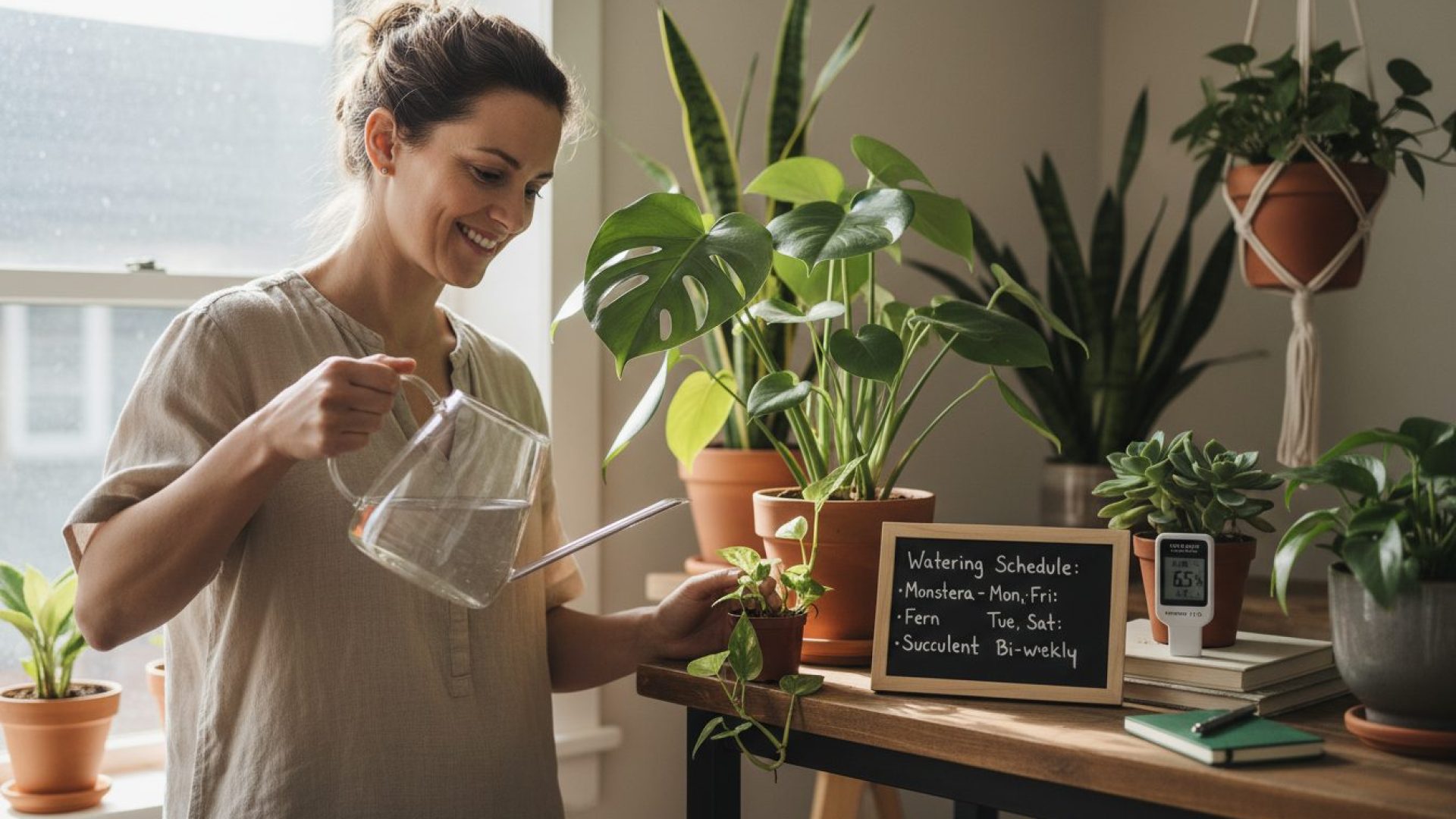
Let’s just admit it: keeping houseplants happy is a blend of science, habit, and a bit of gardening intuition. When someone asks me, “What’s the best watering schedule for home plants?”, I almost want to laugh—not because it’s a silly question (it’s a great one!), but because the real answer depends so much on what kind of plant you’ve got, your indoor climate, and even your own lifestyle. Yet, finding the right balance is absolutely possible, and honestly, incredibly rewarding.
Getting to Know Your Plants: Not All Leaves Drink Alike
Here’s a fun fact I wish I’d learned sooner: those thirsty peace lilies can wilt dramatically if you miss a day, while succulents seem to scoff at your watering can for weeks at a time. The true key to a successful watering schedule for home plants is understanding just how different plant needs can be—even two plants sitting on the same windowsill can require completely different care.
- Succulents & cacti: Water every 2–4 weeks, less in winter.
- Tropical foliage (like monsteras, pothos): Drink every 7–10 days, or when the top inch of soil dries out.
- Flowering houseplants (African violets, peace lilies): Typically weekly, though some need more in peak blooming.
- Herbs (basil, parsley): Often 2–3 times a week.
These are very rough averages. Here’s the trick: most plants die from too much kindness (translation: overwatering), not neglect. In fact, according to a Penn State Extension study, around 67% of houseplant fatalities trace back to watering issues—either drought or soggy roots.
Climate, Light, and the Hidden Influencers
Timing isn’t everything… environmental factors sneak in. Have you ever noticed your spider plant’s soil drying in two days in June, but lingering wet for over a week in December? That’s not your imagination; it’s your house’s mini-climate at work. Plants are affected by all sorts of invisible forces:
- Light: South-facing windows dry soil the fastest. Low-light corners? Water evaporates slowly.
- Humidity: Indoor air below 40% humidity means faster-drying soil—hello, winter heating!
- Temperature: Warm rooms (70°F and up) increase water loss. Cold, drafty nooks do the opposite.
- Pot size/material: Small terracotta pots lose moisture rapidly versus large glazed pottery or plastic.
I sometimes test this by poking a finger into three pots along my windows, and I’m always surprised. The fern in a clay pot dries twice as fast as the snake plant next to it in a plastic nursery container.
Building a Simple, Logical Watering Routine
How Often Should You Water – Really?
This is where observation comes in handy. The best schedule grows out of what you see and feel, not just the calendar. But consistency doesn’t mean rigidity. I always recommend “checking, not guessing.” Here’s a quick guide:
- Stick your finger one inch into the soil. If it’s dry, it’s time to water (for most non-succulents).
- Check once or twice a week, not just on watering day.
- Pay special attention after you move plants, repot, or when seasons change.
The “Soak and Drain” Principle
When you water, do it thoroughly—until a little pours out the pot’s bottom—then let excess drain away. Barely drizzling the surface (I’ve done this out of laziness, trust me) leads to shallow roots. Deep watering helps roots grow strong, but soggy soil kills faster than drought.
Data-Style Insights: Observing Patterns in Plant Thirst
Let’s peek at real-life patterns. In my own home with about 15 plants:
- 50% need watering once a week (tropicals, herbs)
- 30% survive happily with water every 2–3 weeks (succulents, ZZ plant)
- 20% want water 2–3 times per week (basil, mint, ferns in dry air)
The numbers shift with the seasons—herbs double their thirst in the spring. If you like records, try a notebook or a simple plant care app to log “last watered” dates. It’s oddly satisfying to see healthy habits forming.
Plant “Tells”: How to Listen Beyond the Soil
Every plant has ways of communicating. Look for these clues:
- Droopy leaves: Could signal both under- or overwatering—poke the soil to check!
- Browning tips: Usually from drought or dry air.
- Yellowing, mushy stems: Classic too-wet sign.
- Leaf drop: Sudden change in water or environment.
With practice, you’ll read these signs like traffic lights—yellow means caution, green means go ahead and water.
Common Myths (and Hard Truths) About Watering Schedules
- Myth: All houseplants need a weekly schedule.
Truth: It just isn’t that simple. Some want less, some (herbs, ferns) want more. - Myth: More water equals faster growth.
Truth: Roots suffocate in soggy soil—growth actually slows. - Myth: Misting replaces proper watering.
Truth: Misting helps humidity, but roots need soak-and-drain moisture.
Personal Story: Learning the Hard Way
Let me tell you about my old office pothos. I was certain it needed a drink every Friday, set my watch by it—then one day, I found yellowing leaves and soggy soil. Turns out, the office AC had switched off for summer, and humidity made the soil hold water for days. I learned to poke and check, not just trust my routine. That plant forgave me eventually (though it gave me a scare!).
Pros and Cons of Different Watering Styles
- Strict Schedule: Good for routines; risk of missing weather or plant changes.
- Observation-Based: Flexible; demands attention and hands-on checks.
- Self-Watering Pots: Helpful for travel or busy folks; not all plants like ‘constant damp’ conditions.
Mixing a base routine with observation works best for most busy plant-keepers.
Quick Tips for a Foolproof Watering Routine
- Group plants by similar needs to simplify watering rounds.
- Use saucers for extra drainage, not water storage (sitting roots rot fast).
- Don’t rely solely on soil color—test moisture with a finger or wooden skewer.
- Set a weekly calendar reminder—but stay flexible and adjust per season.
- If in doubt, skip a day. Overwatering kills faster than drought for most houseplants.
FAQ: Watering Schedule for Home Plants
How do I know if I’m overwatering or underwatering?
My rule: soggy, yellow, or mushy is too much water; crisp, brown, or dropping leaves usually means too little. But test the soil—sometimes it’s sneaky!
Usually yes, unless it’s heavily softened (lots of salt) or treated with chemicals. Letting water sit overnight can help dissipate chlorine. Some finicky plants (prayer plants, calatheas) prefer filtered or rainwater.
Morning is best. It gives leaves time to dry, which helps prevent mold and fungus. But honestly, “when you remember” is better than forgetting altogether!
A weekend? Water thoroughly before leaving. Longer than a week, group plants together, use self-watering spikes or consider a plant-sitter. Moving them out of direct sunlight helps too.
Moisture meters are helpful, especially for new plant parents. I use a simple wood skewer, and it works almost as well—if it comes out dry, it’s time to water.
The Takeaway: It’s About Attention, Not Just Schedules
If there’s one thing I’ve learned from a decade of indoor gardening adventures—sometimes successful, sometimes mildly embarrassing—it’s that the best watering schedule for home plants isn’t a rigid formula. It’s a habit and a relationship. Plants tell their stories right in their leaves and soil if you bother to check in. So, don’t stress about watering like a robot. Pay attention, know your seasons, and trust your senses—your plants, messy and green, will reward you in kind. And if you miss a week, don’t worry. They’re more forgiving than we give them credit for.