How to Harvest Basil So It Keeps Growing
On this page
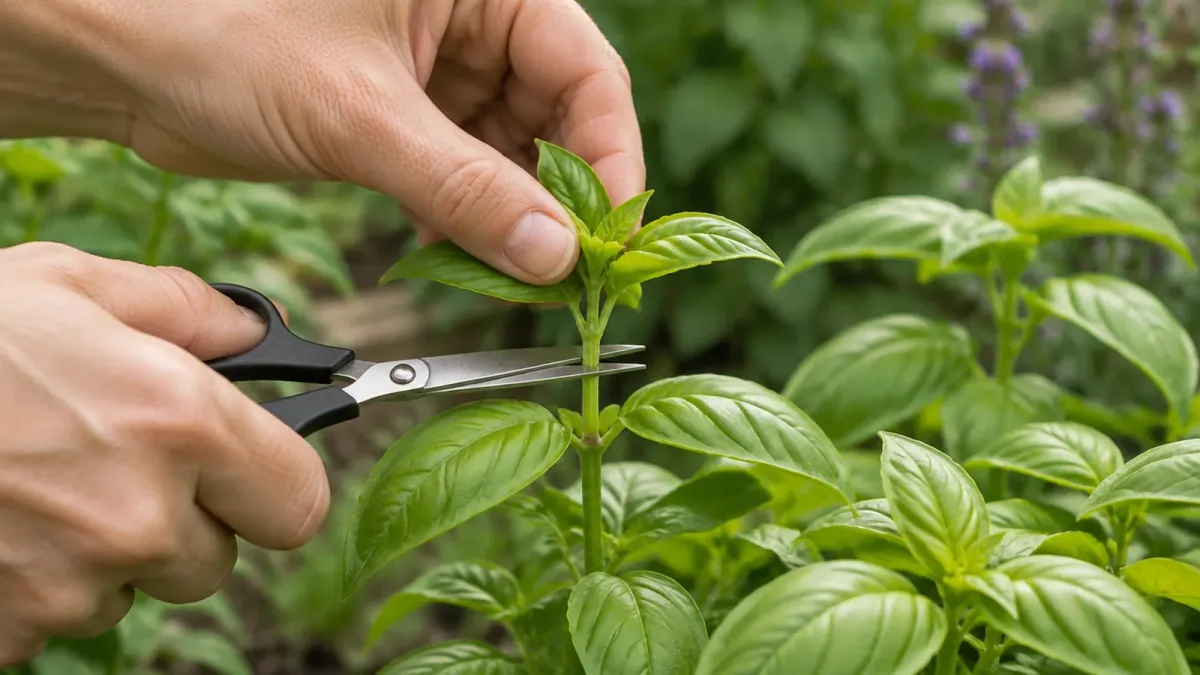
To harvest basil so it keeps growing, pinch or snip each stem just above a pair of leaves once the plant is about 6 inches tall, take no more than a third of the plant at once, and pinch off flower buds. Cutting above a leaf pair makes the plant branch into two new stems, so regular harvesting produces a bushier plant.
Why where you cut matters
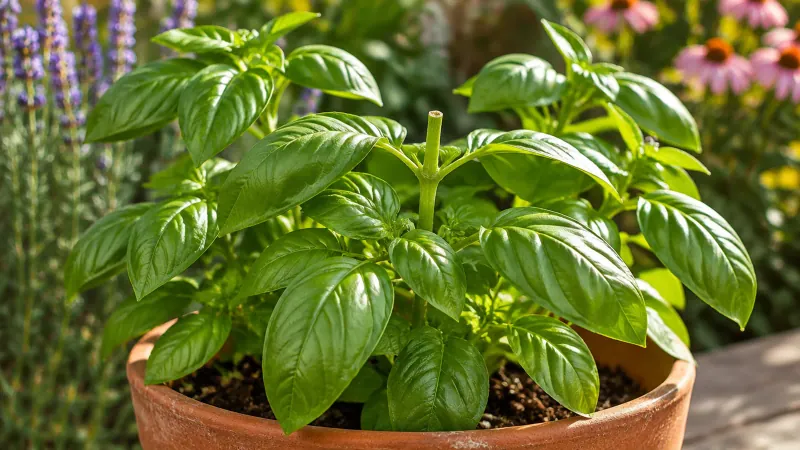
Basil grows from nodes: points where a pair of leaves meets the stem. Each node carries two tiny buds. When you cut the stem just above a node, those buds wake up and become two new stems. Cutting in the wrong place, such as through a bare section of stem, leaves a stub that may die back. Cutting correctly gives you twice as many stems each time. For more herb guides, visit our herbs hub.
When to start
Wait until plants are at least 6 to 8 inches tall with several sets of leaves. Picking too early weakens young plants. Once they are established, begin pinching regularly: early pinching is the best way to get a bushy plant instead of a tall, leggy one. If you grow basil from seed or nursery plants, see our guide to how to grow basil at home.
How to harvest basil step by step
- Pick in the morning, after dew has dried and before the heat of the day.
- Find a node: a pair of leaves on a stem, with tiny shoots at the base of each leaf.
- Cut about ¼ inch above the node with clean scissors or pinch with your fingers.
- Leave at least two sets of leaves on the stem below the cut.
- Take no more than a third of the plant in one go.
- Remove flower buds as you see them.
- Water and feed after harvesting to help regrowth.
Harvesting methods compared
| Method | How | Best for |
|---|---|---|
| Pinching tips | Pinch off the top 1–2 inches above a leaf pair | Regular small harvests; bushy shape |
| Stem cutting | Cut whole stems back to a leaf pair | Larger harvests for pesto |
| Picking single leaves | Pull off individual leaves | Not recommended as a regular method; plant becomes tall and sparse |
| Big cutback | Cut plant back by a third to half | Renewing leggy or flowering plants |
How much basil to take
| Plant stage | Harvest amount |
|---|---|
| Young, under 6 in | None |
| 6–8 in, established | Top tips only |
| Bushy, full-size | Up to a third of stems |
| Flowering or leggy | Cut back by a third to half and feed |
| Late summer, before frost | Harvest most, leaving a few stems if plant will regrow |
Preventing flowering
Basil flowers when it matures, in hot weather or when stressed. Once it flowers, leaves get smaller and the flavor can turn bitter. Pinch off buds as soon as they appear, just above a pair of leaves. See our guide to herb garden layout ideas for where to put basil among other herbs, and companion planting herbs for good neighbors. Regular harvesting delays flowering. If you want pollinators, let one plant bloom, since bees love basil flowers.
Basil varieties and harvesting
| Type | Notes |
|---|---|
| Sweet or Genovese | Classic; pinch often |
| Thai basil | Strong stems; harvest tips regularly |
| Lemon and lime basil | Smaller leaves; bushy |
| Purple basil | Slower; harvest gently |
| Dwarf and globe basil | Compact; pinch tips or snip stems |
Harvesting basil in containers and indoors
Potted basil needs the same cutting rules. Grow it in a bright window or under a light, and harvest tips often. Indoor plants grow more slowly, so take less. See our list of the best herbs to grow indoors for other options.
After you harvest
Water the plant and give a light feed of balanced fertilizer every few weeks. New growth appears within days, and you can harvest again in 1 to 2 weeks. Keep soil moist but not soggy and give 6 to 8 hours of sun.
Storing and preserving basil
| Method | How | How long |
|---|---|---|
| Glass of water | Stand stems in water at room temperature | 3–5 days |
| Fridge | Not recommended; basil blackens in cold | n/a |
| Freezing in oil | Chop leaves, mix with olive oil and freeze in trays | Several months |
| Pesto | Blend with oil, nuts and garlic; freeze | Several months |
| Drying | Hang or dehydrate; flavor fades | A year, with less flavor |
Common mistakes
- Cutting through bare stems instead of above a leaf pair.
- Taking too much at once.
- Pulling off leaves one at a time.
- Letting plants flower.
- Harvesting in the heat of the day.
- Ignoring watering and feeding afterward.
Pets
Basil is listed by the ASPCA as non-toxic to cats and dogs.
Frequently asked questions
How do you harvest basil without killing the plant?
Pinch or snip each stem just above a pair of leaves, leaving at least two sets of leaves below the cut. Never take more than about a third of the plant at one time. The plant then sends out two new shoots from the nodes below the cut, which makes it bushier and more productive.
When is basil ready to harvest?
Start harvesting when plants are about 6 to 8 inches tall and have at least three sets of true leaves. Early, regular picking encourages branching. Pick in the morning after the dew has dried, when leaves hold the most flavor, and keep going all summer to delay flowering.
Should you cut basil flowers off?
Yes, for the best leaves. Once basil flowers, it puts energy into seed and the leaves can turn bitter and sparse. Pinch off flower buds as soon as you see them. If plants have already flowered, cut stems back by a third to half and feed them, and they may bush out again.
How often can you harvest basil?
Healthy basil can be harvested every one to two weeks during the growing season. A little often works better than one big haul. Take a third of the stems each time, then allow a week or two for regrowth. Plants in rich soil and full sun recover fastest.
How do you keep harvested basil fresh?
Basil bruises and blackens in the fridge. Stand stems in a glass of water at room temperature, out of direct sun, and use within a few days. For longer storage, chop and freeze leaves in olive oil or ice cube trays, or dry them, though dried basil loses much of its flavor.