Which Herbs Grow Well Together? Herb Companion Planting
On this page
Herbs that grow well together share the same sun, soil and water needs. Group sun-loving, drought-tolerant herbs such as rosemary, thyme, sage and oregano in one bed, and moisture-loving herbs such as basil, parsley, chives and cilantro in another. Keep mint in its own pot and fennel apart. Companion benefits for pests and pollinators are a useful bonus.
What herb companion planting really means
Companion planting means growing plants close together so they help each other. For herbs, the most dependable benefit is simple: put herbs with the same needs in the same bed or pot. Plants that share sun and water preferences thrive together, and those with opposite needs struggle even when they are traditional “friends”.
Beyond that, companion planting is a mix of well-supported effects and tradition:
- Well supported: flowering herbs attract hoverflies, lacewings, parasitic wasps and other beneficial insects that eat aphids and caterpillars, and mixed plantings make it harder for pests to find their favorite crops.
- Mostly traditional: that strong scents hide vegetables from pests, or that one herb improves the flavor of its neighbor. Results vary, so treat these as a bonus.
For more herb guides, visit our herbs hub.
Step 1: Group herbs by their needs
| Group | Herbs | Sun | Soil | Water |
|---|---|---|---|---|
| Mediterranean | Rosemary, thyme, sage, oregano, marjoram, lavender, winter savory | Full sun | Lean, gritty, very well-drained | Sparingly once established |
| Leafy and soft | Basil, parsley, cilantro, dill, chervil | Sun to light shade | Rich, moist, well-drained | Regularly |
| Easy perennials | Chives, tarragon, sorrel, lovage | Sun to part shade | Average | Moderate |
| Spreaders | Mint, lemon balm | Sun to part shade | Moist | Regularly; grow in containers |
Planting by group makes watering and soil choices simple. A mixed bed with herbs from different groups usually ends up with half the plants over-watered or under-watered.
Herbs that grow well together
Rosemary, thyme, sage and oregano
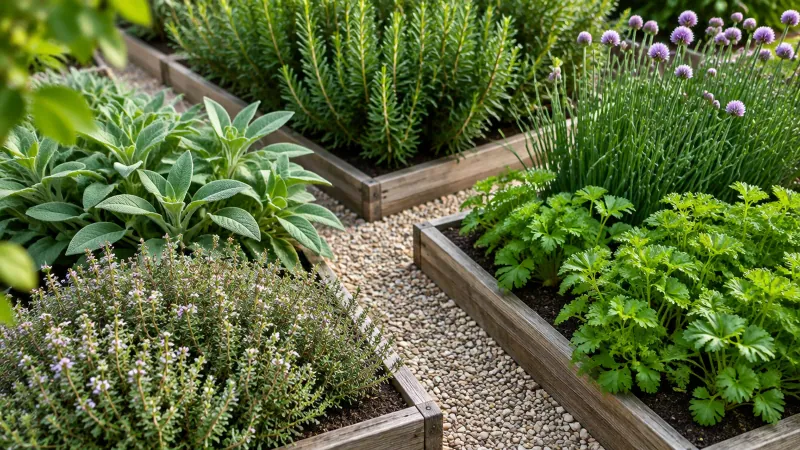
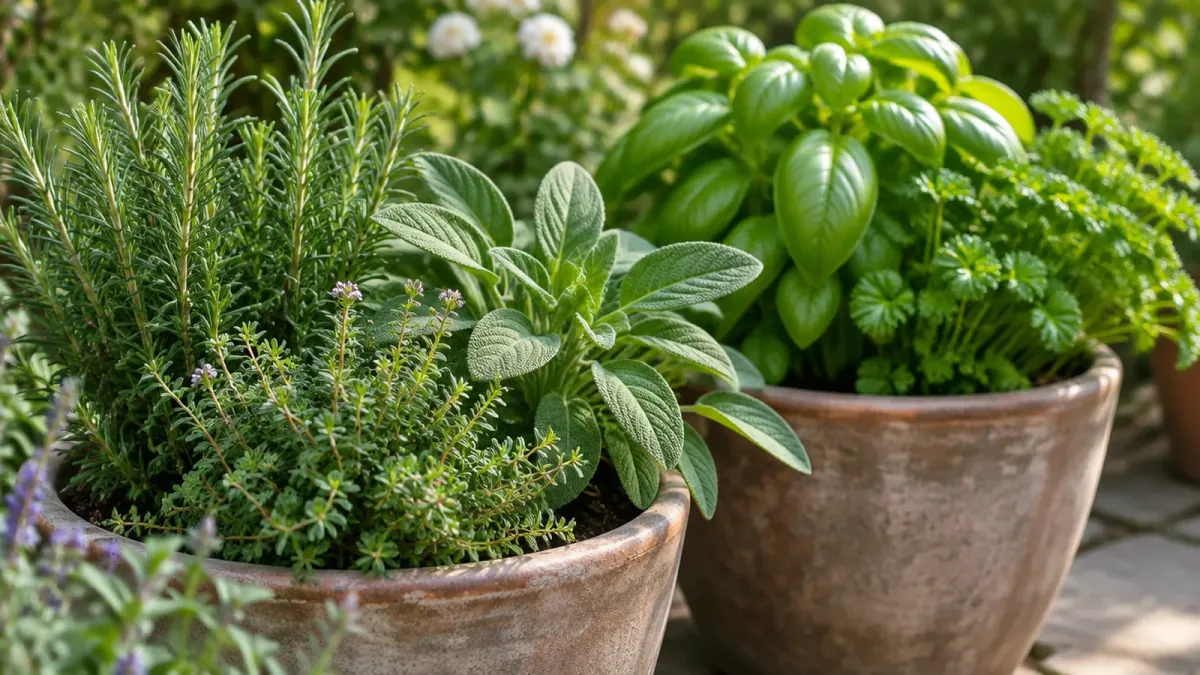
All four love full sun and sharp drainage and dislike being fussed over. They make a handsome, low-maintenance Mediterranean bed or a large container. See our guide to growing rosemary for more.
Basil, parsley and chives
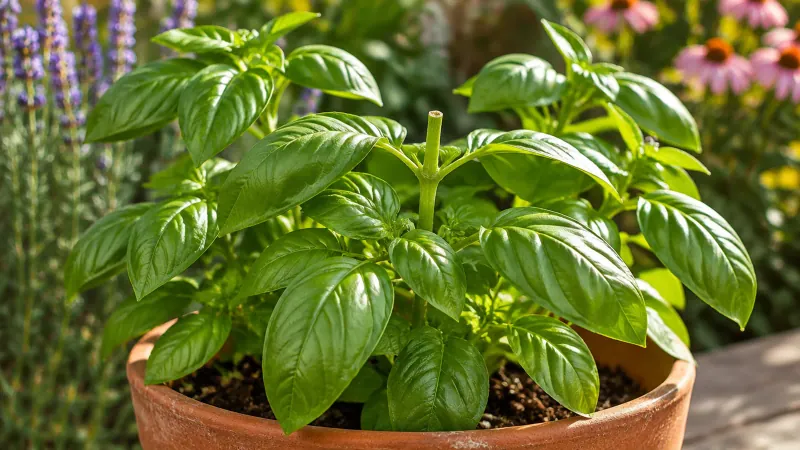
These like richer, moister soil and regular water. Tuck basil among tomatoes and peppers, and keep parsley and chives in the same bed for easy harvesting. Our guide to growing basil at home covers basil care in detail.
Chives and parsley
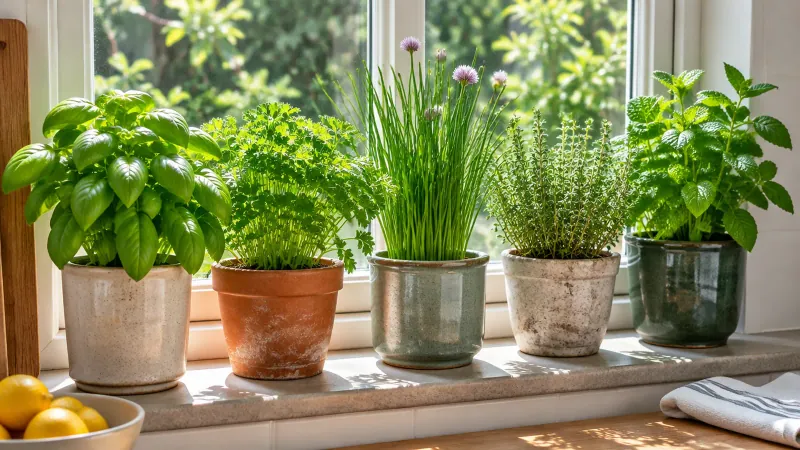
An easy pairing for a kitchen window box or small bed, sharing similar light and water needs.
Thyme and oregano
Both are low, spreading herbs that suit sunny, well-drained spots and make good ground cover between larger plants.
Dill and cilantro
Both are cool-season annuals that bolt in heat, so sow them together in spring and again in early fall. Dill is tall and can shade cilantro slightly, which helps it last a little longer.
Lavender with Mediterranean herbs
Lavender shares the same dry, sunny conditions and adds flowers for bees.
Herbs to keep apart
| Herb | Why | What to do |
|---|---|---|
| Mint | Spreads aggressively by runners | Grow in its own container; see our guide to mint in pots |
| Lemon balm | Self-sows heavily | Cut back before seeds set or contain it |
| Fennel | Can stunt nearby plants; crosses with dill | Grow at a distance on its own |
| Basil with rosemary | Opposite water needs | Separate pots |
| Cilantro with sun-lovers | Bolts in heat | Give it a cooler, partly shaded spot |
Herbs as companions to vegetables
Herbs earn their place in vegetable beds mostly for what they bring in rather than what they keep out.
| Vegetable | Traditional herb companions | Why |
|---|---|---|
| Tomatoes | Basil, parsley, chives, borage, oregano | Share warm, sunny conditions; flowers attract pollinators |
| Peppers | Basil, oregano, parsley | Similar needs |
| Carrots | Chives, sage, rosemary | Traditionally said to confuse carrot flies |
| Cabbage family | Dill, thyme, sage, hyssop | Flowers attract predators of caterpillars |
| Cucumbers | Dill, borage, nasturtium | Attract pollinators |
| Lettuce | Chives, chervil, cilantro | Fill small gaps; cool-season companions |
These are traditional pairings rather than guarantees. For what the evidence says about herbs and pests, read our guide to herbs that repel insects, and for a vegetable-wide guide, see our vegetable companion planting chart.
Layout ideas for companion herbs
- Edge the bed. Plant low herbs such as thyme, chives and oregano along the borders of vegetable beds.
- Interplant. Tuck basil, parsley and cilantro between rows of tomatoes, peppers and lettuce.
- Mix in flowers. Add borage, calendula and nasturtium to bring in pollinators.
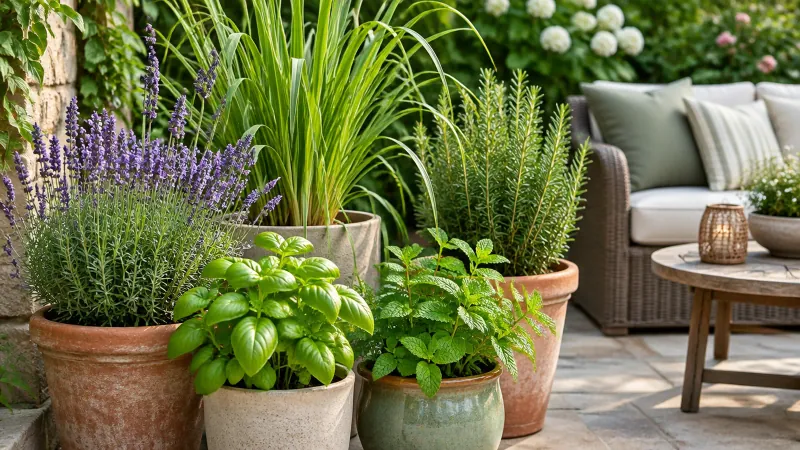
- Use pots near the door. Group herbs by their needs in containers for a convenient kitchen garden.
Our herb garden layout ideas include plans that put these groupings into practice, and our list of perennial herbs shows which ones to plant once and enjoy for years.
Planting herbs together in containers
Containers make it easy to group herbs correctly. A few combinations that work:
| Container | Herbs | Why it works |
|---|---|---|
| Large sunny pot | Rosemary in the center, thyme and oregano around the edge | All want dry, gritty soil and full sun |
| Window box | Chives, parsley and Greek basil | Similar moisture needs and compact growth |
| Salad pot | Chives, chervil, cilantro and lettuce | Cool-season companions for part sun |
| Single-herb pot | Mint alone | Keeps its roots contained |
Use a container at least 12 inches wide for mixed herbs, a quality potting mix with extra grit for Mediterranean groupings, and drainage holes in every pot.
Seasonal succession with herbs
Companion planting can also mean planting in sequence. Sow quick, cool-season herbs such as cilantro and dill in early spring, and follow them with basil once the soil warms, in the same space. Fill gaps with fast annuals such as chervil in early fall. Perennial herbs hold the structure of the bed while annuals rotate through, keeping the space productive for most of the year.
Common mistakes
- Mixing thirsty and dry-loving herbs in the same pot or bed.
- Letting spreaders loose. Mint and lemon balm take over beds within a season or two.
- Crowding. Herbs need airflow; overcrowded plants get mildew and pests.
- Planting tall herbs on the sunny side, shading shorter ones.
- Expecting herbs to replace pest control. They help, but won’t stop a serious infestation.
Frequently asked questions
Which herbs grow well together?
Herbs that share the same needs grow well together. Rosemary, thyme, sage and oregano all like full sun and dry, well-drained soil. Basil, parsley, chives and cilantro prefer richer, moister soil. Chives and parsley pair well, as do thyme and oregano. Grouping by sun and water needs matters far more than any special friendship between plants.
Which herbs should not be planted together?
Avoid planting herbs with very different water needs together, such as basil with rosemary. Keep mint, lemon balm and other spreaders in their own pots. Fennel is best grown apart from other plants, and dill and fennel can cross-pollinate if grown close, which affects seed flavor. Cilantro and dill do not need to be separated, but both bolt quickly in heat.
Can you plant basil and rosemary together?
It is not ideal. Basil likes rich, moist soil and regular watering, while rosemary prefers lean, dry, gritty soil and dislikes being watered often. In the same pot one of them will always be too wet or too dry. Grow them in separate containers next to each other if you want them close together.
Is companion planting scientifically proven?
Partly. Some effects are well supported: flowering herbs such as dill, fennel and thyme attract beneficial insects that eat pests, and mixed plantings reduce the spread of some pests and diseases. Other claims, such as herbs improving the flavor of neighboring vegetables, are mostly traditional, and results vary. Treat companion planting as a helpful extra, not a guarantee.
What herbs go well with tomatoes?
Basil is the classic tomato companion, enjoying the same warm, sunny conditions, and it is traditionally said to improve flavor and deter some pests. Parsley, chives, oregano, thyme and borage are also commonly planted near tomatoes. Keep fennel away from tomatoes and avoid planting dill too close, as it can inhibit growth if allowed to grow large.