How to Grow Mint in Pots (Without It Taking Over)
On this page
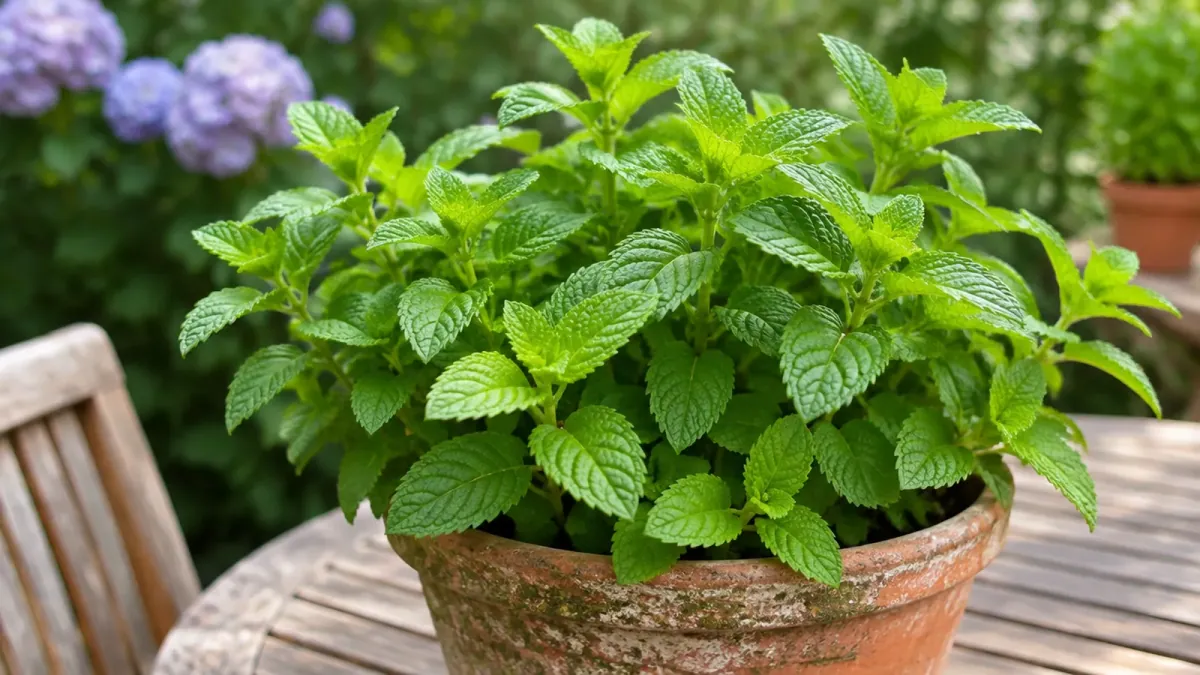
To grow mint in pots, plant it in a container at least 12 inches wide with drainage holes, filled with potting mix, in part shade to full sun. Water whenever the top inch of soil is dry, trim stems regularly, and keep the pot on a hard surface so runners can’t escape into the ground. Divide the plant every year or two.
Why mint belongs in a pot
Mint is one of the easiest herbs to grow, which is exactly the problem. Its underground runners spread quickly, and a single plant can fill a whole bed in a couple of seasons, pushing out everything else. Keeping it in a container is the simplest way to enjoy it without the takeover. For more herb growing guides, visit our herbs hub.
Choose your mint
| Type | Flavor | Notes |
|---|---|---|
| Spearmint | Sweet, mild | The classic for tea, salads and mojitos |
| Peppermint | Strong, menthol | Good for tea; slightly more demanding |
| Chocolate mint | Peppermint with a cocoa note | Dark stems; fun in desserts |
| Apple mint | Mild, fruity | Fuzzy leaves; good in salads |
| Pineapple mint | Fruity | Variegated leaves; ornamental |
| Moroccan mint | Sweet, aromatic | Used in mint tea |
Mints hybridize easily, so buy named plants rather than seed, which is often variable. Grow each type in its own pot, because different mints planted together can blend in flavor.
What you need
- A pot at least 12 inches wide and deep, with drainage holes.
- Potting mix with added compost. Mint likes richer, moister soil than Mediterranean herbs.
- A nursery plant or cutting. Mint roots easily from a stem placed in water.
- A saucer or hard surface underneath, so runners can’t root into the ground.
How to plant mint in a pot
- Fill the pot with moist potting mix, leaving an inch or two below the rim.
- Plant at the same depth as the nursery pot and firm the soil.
- Water well until it drains from the bottom.
- Place in part shade to full sun. In hot climates, shade from the afternoon sun keeps leaves tender.
- Stand the pot on a hard surface such as paving, a stand or a saucer. If you put it on soil, runners will escape through the drainage holes.
Growing mint in the ground, safely
If you want mint in the garden, sink a pot (even one without a bottom) into the soil with the rim 2 inches above ground. Roots stay inside the container, and trimming stems that arch over the rim stops stems rooting where they touch the soil.
Care
Watering
Mint likes steady moisture. Water when the top inch of soil feels dry, and never let the pot dry out completely. Pots dry out fast in summer, so check daily in hot weather. Make sure excess water can drain.
Feeding
Mint in rich potting mix needs little fertilizer. Feed lightly every month or so in the growing season with a half-strength liquid feed, especially if you harvest heavily.
Trimming and harvesting
Regular harvesting keeps mint compact and productive.
- Pinch or cut stems just above a pair of leaves, so two new shoots grow from that point.
- Never cut more than about a third of the plant at once.
- Remove flower buds as they appear, because flowering makes stems woody and leaves less flavorful.
- Cut back hard by half in midsummer if the plant gets leggy; it will regrow.
Dividing and repotting
Pots fill with roots quickly. Every year or two, in spring, tip the plant out, cut the root ball into sections and repot one healthy piece in fresh mix. Share or discard the rest. This renews the plant and stops it becoming root-bound and bare in the center.
Overwintering mint
Mint is hardy, but pots expose roots to cold.
- In mild areas, it can stay outdoors.
- In cold zones, move pots to a sheltered spot against a wall, wrap them in insulation or bubble wrap, or sink them into soil.
- Stems die back after frost and regrow in spring.
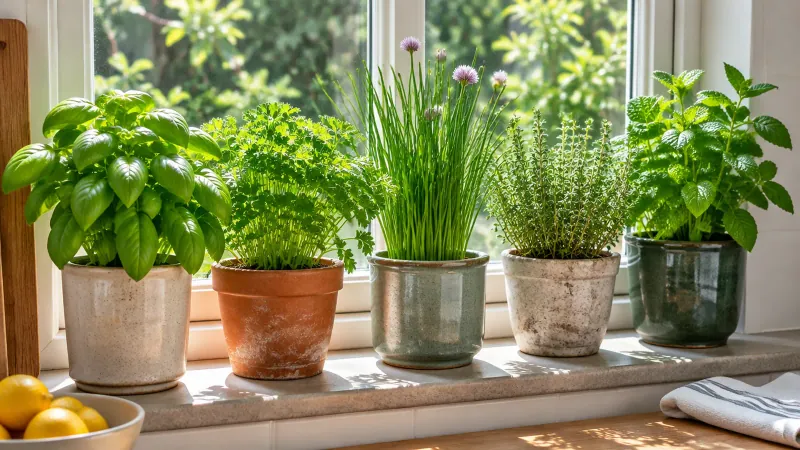
- Indoors, a pot in a bright window gives fresh leaves through winter. Our guide to the best herbs to grow indoors explains how to keep indoor herbs happy.
Common mint problems
| Problem | Likely cause | Fix |
|---|---|---|
| Long, thin stems with small leaves | Too little light or no trimming | Move to brighter light; cut back by half |
| Orange spots under leaves | Mint rust, a fungal disease | Remove affected leaves or the whole plant; improve airflow; replant in fresh mix |
| Yellowing leaves | Overwatering or poor drainage | Water less; check drainage holes |
| Brown, crispy edges | Underwatering or hot sun | Water more regularly; move to part shade |
| Aphids or spider mites | Warm, dry conditions | Rinse with water; use soap spray; see our guide to homemade pest control |
| Roots growing out of the pot | Pot too small | Divide and repot |
Using your mint
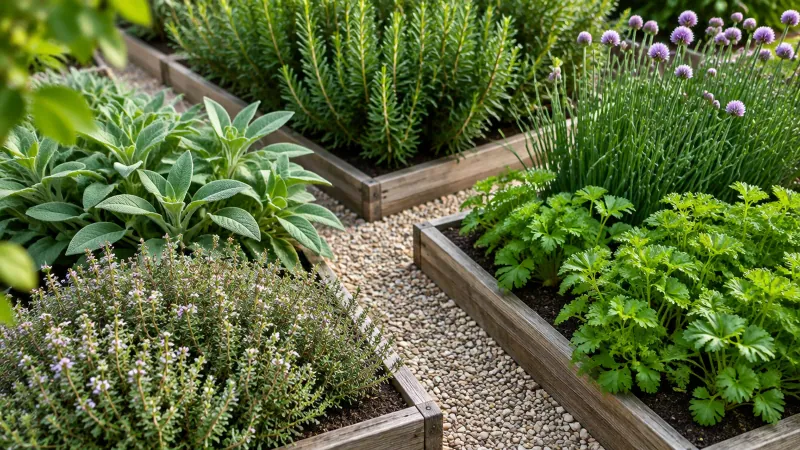
Mint is versatile: fresh in teas, salads, sauces and cold drinks, with lamb, peas and potatoes, and in desserts. It dries well; see our guide to drying fresh herbs. Mint’s strong scent is traditionally used to deter ants and some other pests, as explained in our guide to herbs that repel insects. Keep it away from cats and dogs, since mint is on the ASPCA’s toxic list. For companion planting, mint is best kept in its own pot next to other herbs; see our guide to herbs that grow well together.
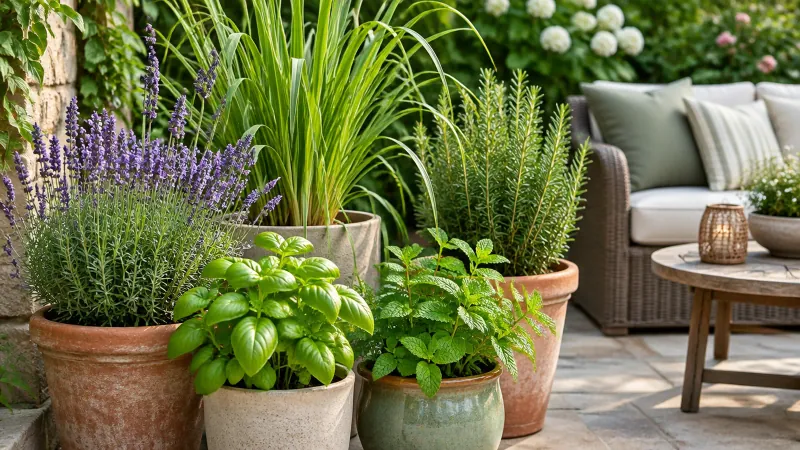
Other herbs for containers
Mint is not the only herb that likes pots. Cilantro grows well in a deep container in morning sun and afternoon shade, where a similar watering routine suits both herbs.
Frequently asked questions
Why should mint be grown in a pot?
Mint spreads aggressively by underground runners and can take over a bed within a season or two, smothering neighboring plants. A pot keeps the roots contained. Even in a pot, mint can send runners over the rim and out through drainage holes, so stand the pot on a hard surface or sink it into the ground with the rim above soil level.
How big a pot does mint need?
A pot at least 12 inches wide and deep suits most mint plants and holds enough soil to stay moist between waterings. Smaller pots work for a season but dry out quickly and become root-bound. Choose a container with drainage holes, and divide or repot the plant every year or two to keep it vigorous.
Does mint need full sun?
Mint grows best in part shade to full sun. In hot climates, afternoon shade keeps leaves lush and prevents scorching, and in cooler climates it can take full sun. It tolerates lower light better than most herbs, which makes it a good choice for a patio or balcony with only a few hours of direct sun.
Why is my mint leggy?
Leggy mint, with long stems and sparse leaves, usually means it needs more light or a trim. Move it to a brighter spot and cut stems back by about half, just above a pair of leaves. Regular harvesting also keeps mint bushy. Flowering makes plants stretch too, so pinch off flower buds as they form.
Can mint survive winter in a pot?
Yes. Mint is a hardy perennial, but roots in pots are more exposed to cold than roots in the ground. In cold zones, move the pot to a sheltered spot against a wall, wrap the container in insulation, or sink it into the soil. Stems die back after frost, and new growth reappears in spring. You can also bring a pot indoors to a bright window.