How to Grow Cilantro (and Stop It Bolting)
On this page
Grow cilantro in cool weather, in full sun to light shade, in rich, moist, well-drained soil. Sow seeds directly in the garden every two to three weeks, because the plant bolts quickly in heat, and harvest the outer leaves often. If plants bolt anyway, let them flower and collect coriander seed.
Know your plant
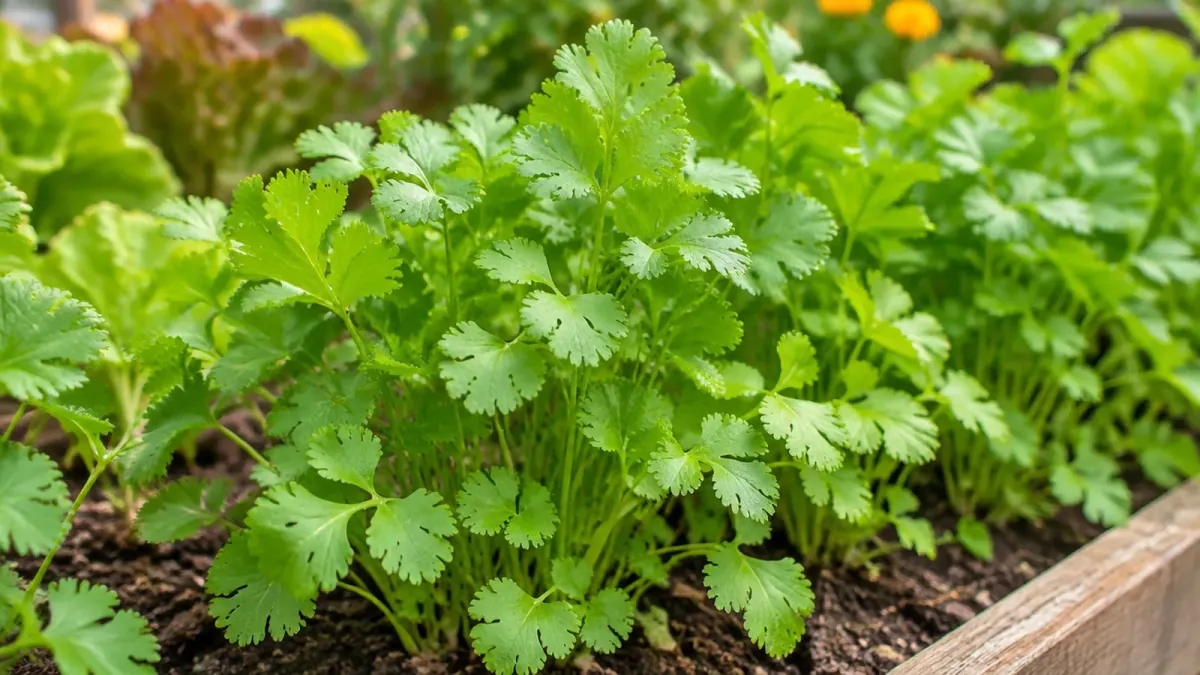
Cilantro (Coriandrum sativum) is a fast-growing annual herb with lacy leaves. It is a cool-season crop that loves spring and fall weather and hates heat. Fresh leaves are cilantro; dried seeds are coriander. For more herb guides, visit our herbs hub.
When to plant
| Climate | Best sowing times |
|---|---|
| Cold-winter areas | Early spring, then again in late summer |
| Mild areas | Early spring, fall |
| Hot-summer areas (zones 8–10) | Fall through winter |
| Short season | Spring, with shade cloth in summer |
Sow when soil is about 55 to 70°F. Light frost won’t kill young plants. Avoid sowing in the heat of midsummer.
How to sow cilantro
Cilantro has a long taproot and dislikes being moved, so sow seeds directly where they will grow.
- Prepare the soil with compost. Aim for pH around 6.2 to 6.8; see our guide to testing soil pH.
- Sow seeds ¼ to ½ inch deep, 1 to 2 inches apart.
- Thin seedlings to about 6 inches apart, which gives them room and delays bolting.
- Water gently to keep the soil moist.
- Repeat every two to three weeks for a steady supply.
Soaking seeds overnight, or lightly crushing the husk, can speed germination.
Light, water and soil
| Need | Details |
|---|---|
| Light | 6 hours of sun in cool weather; afternoon shade in warmth |
| Water | Keep evenly moist; dry spells trigger bolting |
| Soil | Rich, moist, well drained |
| Feeding | Light feed of balanced fertilizer every few weeks |
| Mulch | A thin layer keeps roots cool |
Preventing bolting
Bolting is mainly triggered by heat, long days and stress. You can’t stop it forever, but you can delay it.
- Sow at the right time in cool weather.
- Give afternoon shade in warm spells.
- Keep soil evenly moist and mulch to cool roots.
- Choose slow-bolt varieties such as ‘Calypso’, ‘Santo’ and ‘Slow Bolt’.
- Harvest regularly to keep plants vegetative.
- Don’t disturb roots by transplanting.
- Sow in succession so there is always a young plant coming along.
Harvesting cilantro
Begin picking when plants are 6 inches tall, about 3 to 4 weeks after sowing. Cut outer stems about an inch above the soil, leaving the center to keep growing. Take no more than a third at a time. Pick in the morning for best flavor. Leaves taste best before flower stalks appear.
What to do when cilantro bolts
Bolted cilantro sends up tall stalks with feathery leaves and small white flowers. Leaf flavor declines, but you still have options.
| Option | What to do |
|---|---|
| Let it flower | The flowers attract beneficial insects |
| Collect coriander seed | Let seed heads turn brown, then cut and dry them |
| Self-sow | Let some seed drop for a fall crop |
| Pull and replant | Clear the bed and sow a new batch |
Coriander seed is used whole or ground in curries, pickles and baking.
Growing cilantro in pots
Use a deep pot (at least 8 to 10 inches) with drainage. Sow seeds directly, thin to a few plants, and water regularly, since pots dry out. In summer, move containers into afternoon shade. See our guide to the best herbs to grow indoors for indoor options.
Pests and problems
| Problem | Cause | Fix |
|---|---|---|
| Bolting | Heat, dry soil, long days | Shade, water, resow |
| Yellow leaves | Overwatering or poor drainage | Improve drainage |
| Aphids | Sap-sucking insects | Spray with water; insecticidal soap |
| Powdery mildew | Humid, crowded conditions | Space plants; water at the base |
| Slow germination | Old seed or cold or hot soil | Use fresh seed; soak overnight |
Companions
Cilantro grows well near tomatoes, spinach and lettuce and attracts beneficial insects when it flowers. Keep it away from fennel. See our guide to herb companion planting for more, and compare growing needs with how to grow basil at home, which wants the opposite: heat.
Storing cilantro
Stand stems in a jar of water, cover loosely with a bag and refrigerate for up to a week, or chop and freeze in ice cube trays with a little water or oil. Drying loses most of the flavor.
Pets
Cilantro is listed by the ASPCA as non-toxic to cats and dogs.
Varieties worth trying
| Variety | Notes |
|---|---|
| ‘Calypso’ | Slow to bolt; good leaf yield |
| ‘Santo’ | Classic slow-bolting type; reliable in spring and fall |
| ‘Cruiser’ | Quick, vigorous leaves; early harvests |
| ‘Leisure’ | Slow to bolt; heavy leaf production |
| Vietnamese coriander | Different species; heat tolerant, with a similar flavor |
| Culantro | Different plant with a stronger flavor; likes shade and humidity |
If your summers are hot, Vietnamese coriander (Persicaria odorata) is a useful stand-in. It grows through heat that makes true cilantro bolt, although the flavor is a little different.
Succession sowing plan
Cilantro runs through its life in six to eight weeks, so plan sowings like a calendar. In spring, sow a short row every two to three weeks until daytime temperatures hit the mid 70s. In hot climates, pause through summer and begin again in early fall. In mild-winter climates, sow every few weeks all through winter. Mark each sowing so you can see which row is ready next, and keep a dedicated bed where a bolted crop can drop seed for volunteers.
Cilantro troubleshooting by symptom
| Symptom | Likely cause | What to do |
|---|---|---|
| Tall stalk, feathery leaves | Bolting | Harvest what is left; let seed form or resow |
| Pale, thin leaves | Low nitrogen or too little light | Feed lightly; move to brighter spot |
| Seedlings collapse | Damping off from wet, cool soil | Water less; improve drainage |
| Leaves taste soapy | Genetic trait, not a plant problem | Try a different variety or use in small amounts |
| No germination | Old seed, hot soil | Use fresh seed; sow in cool weather |
Frequently asked questions
Why does cilantro bolt so quickly?
Cilantro is a cool-season herb. Heat, long days and stress such as dry soil or root disturbance make it send up a flower stalk fast. Once it bolts, leaves become feathery and bitter. Slow bolting by sowing in cool weather, giving afternoon shade, keeping soil moist and sowing a fresh batch every few weeks.
When should I plant cilantro?
Sow cilantro in early spring, a few weeks before the last frost, and again in late summer or fall in warm climates. It likes temperatures of roughly 50 to 75°F. In hot-summer areas it grows best in the cool months and in winter. Sowing every two to three weeks gives a continuous harvest.
Can you regrow cilantro after cutting?
Yes, if you cut it right. Snip outer stems about an inch above the soil and leave the center growing, taking no more than a third at a time. Plants usually give two or three harvests before they bolt, so succession sowing is important. Keep soil moist and feed lightly after cutting.
Can I grow cilantro indoors?
Yes, in a cool, bright spot. Use a deep pot, since cilantro has a taproot, and give it 6 hours of sun or a grow light. Indoor plants avoid summer heat but can still bolt if too warm. Sow seeds directly in the pot, because transplanting often stresses roots.
Is cilantro the same as coriander?
They are the same plant, Coriandrum sativum. In the United States, cilantro refers to the fresh leaves and stems, while coriander refers to the dried seeds. In much of the world, including the UK, the leaves are also called coriander. Letting plants bolt gives you coriander seed, which has a different, warm, citrusy flavor.