How to Test Soil pH (and Adjust It)
On this page
To test soil pH, take several small samples from 4 to 6 inches deep across the area, mix them, and test with a home kit, a digital meter or a lab test from your extension service. Most vegetables prefer pH 6.0 to 7.0. To raise pH, add garden lime; to lower it, add elemental sulfur. Changes are slow, so retest after several months.
What is soil pH and why does it matter?
pH is a measure of how acidic or alkaline soil is, on a scale from 0 to 14, where 7 is neutral. It matters because pH controls whether nutrients are available for plants. In very acidic or very alkaline soil, plants can’t absorb some nutrients even when they are present, and soil life suffers. Most garden plants do best between about 6.0 and 7.0. For more soil guides, visit our garden care hub.
Ideal pH for common plants
| Plant | Preferred pH |
|---|---|
| Most vegetables | 6.0–7.0 |
| Tomatoes | 6.2–6.8 |
| Potatoes | 5.0–6.5 |
| Lettuce, spinach | 6.0–7.0 |
| Peppers, cucumbers | 6.0–6.8 |
| Lawn grasses | 6.0–7.0 |
| Roses | 6.0–6.5 |
| Lavender | 6.5–8.0 |
| Blueberries | 4.5–5.5 |
| Azaleas, rhododendrons | 4.5–6.0 |
| Hydrangeas (pink or blue) | Pink: above about 6.5; blue: about 5.5 or below |
Our guide to the best fertilizer for tomato plants explains why pH matters for feeding.
Ways to test soil pH
| Method | Accuracy | Cost | Notes |
|---|---|---|---|
| Lab test (extension service) | High | Low to moderate | Also reports nutrients and organic matter |
| Home color kit | Moderate | Low | Good for rough guidance |
| Digital meter | Variable | Moderate | Needs calibration and care |
| pH test strips | Low to moderate | Low | Quick but less precise |
| Plants as indicators | Rough only | Free | Weeds and hydrangea color give hints |
A lab test is best, especially when starting a garden. Home kits and meters are useful for checking changes.
How to collect a soil sample
- Choose areas. Sample each distinct area (vegetable garden, lawn, flower beds) separately.
- Use clean tools. A stainless steel trowel and plastic bucket avoid contamination.
- Dig small holes 4 to 6 inches deep (about 2 to 3 inches for lawns).
- Take 5 to 10 samples from across the area, avoiding unusual spots such as near paths or compost.
- Mix them in the bucket and remove stones and debris.
- Let it air dry if sending to a lab.
- Follow lab instructions for how much to send.
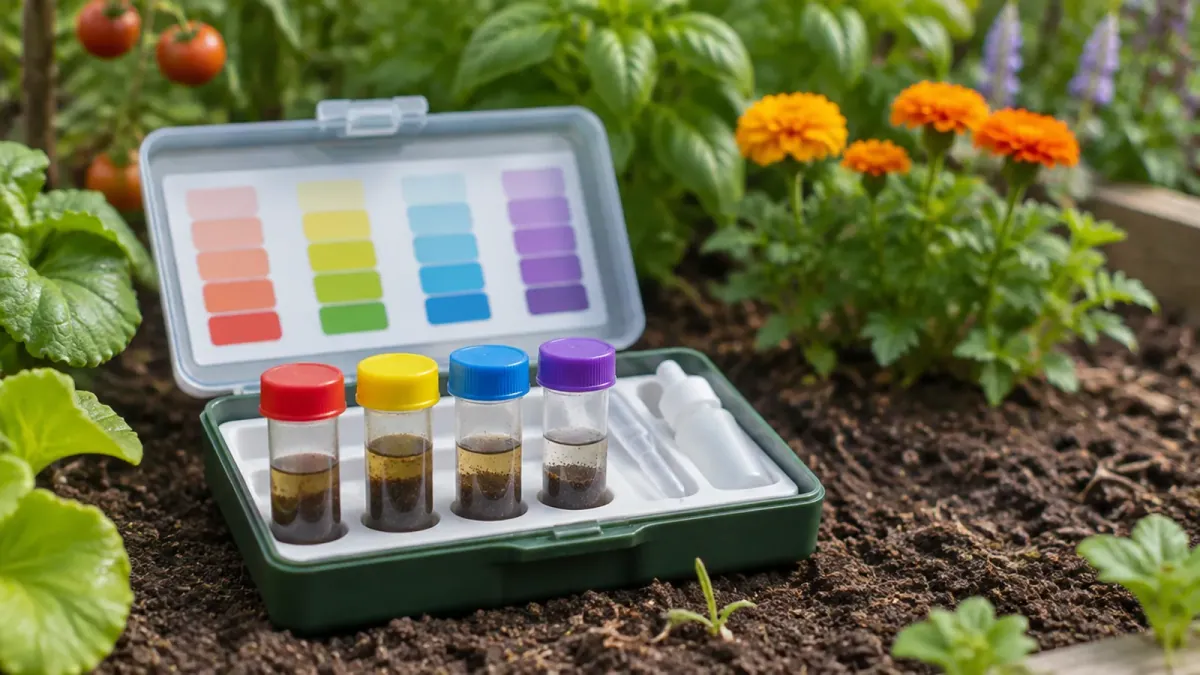
How to test soil pH at home with a kit
- Take your sample as above.
- Place soil in the test container according to the kit instructions.
- Add the indicator solution or capsule and distilled water.
- Shake and let it settle.
- Compare the color to the chart in good light.
- Record the result and the date.
Use distilled water, since tap water can alter results.
How to use a digital pH meter
- Calibrate the meter with buffer solutions according to the instructions.
- Moisten the soil with distilled water if needed.
- Insert the probe into the soil and wait for a stable reading.
- Clean the probe between tests.
- Check against another method, since cheap meters can be inaccurate.
How to raise soil pH
If a test shows soil is too acidic for your plants:
- Apply garden lime (ground limestone). The amount depends on your soil’s current pH, texture and target pH; a lab test gives the recommendation. Clay soils need more than sandy soils.
- Mix it into the top 4 to 6 inches and water in.
- Apply in fall to allow time to react before spring planting.
- Retest after six months to a year.
- Dolomitic lime also supplies magnesium, useful if soil lacks it.
- Wood ash raises pH but is strong and can also add salts; use sparingly and not on acid-loving plants.
How to lower soil pH
If soil is too alkaline for acid-loving plants:
- Use elemental sulfur, which soil bacteria convert slowly to acid. Rates depend on the test.
- Add acidifying organic matter such as pine needles, composted oak leaves and peat in small amounts, though effects are modest.
- Use acidifying fertilizers such as ammonium sulfate for acid-loving plants.
- Avoid lime and wood ash.
- Grow acid-lovers in containers or raised beds filled with acidic mix, which is easier than changing the pH of large areas.
Changes are slow and may need repeating, particularly in soils with lots of free lime.
Reading your results in practice
A pH reading of 6.5 is perfect for most vegetables, and you need do nothing. A reading of 5.5 suggests soil is somewhat acidic: tomatoes and most vegetables will benefit from a little lime, but potatoes and acid-lovers may do fine. A reading of 7.8 suggests alkaline soil: iron and manganese can become hard for plants to take up, so consider acid-loving plants in containers and add organic matter to buffer. Always interpret results alongside your lab’s recommendations for your soil type, because the amount of lime or sulfur depends on texture and buffering.
When to test
The best times to test are in fall or early spring before planting. Test new beds before you plant, and test again if plants show unexplained problems. Avoid testing soon after adding fertilizer, lime, compost or manure. Sample at the same time each year and in the same places, so you can track trends. Our guides to composting for beginners and what you can compost explain how compost can help balance soil, and vermicomposting shows a compact way to make more.
What to do about nutrient problems
If plants show yellow leaves, stunted growth or other symptoms, check pH before adding fertilizer. Iron deficiency, for example, often appears as yellow leaves with green veins in alkaline soil, even if iron is present. Adjust pH rather than adding more fertilizer. Our guide to improving garden soil explains how organic matter buffers pH and helps plants.
Common pH testing mistakes
| Mistake | Problem | Fix |
|---|---|---|
| Testing only one spot | Unrepresentative | Take several samples and mix |
| Using tap water in kits | Skews results | Use distilled water |
| Sampling right after fertilizing or liming | Skews results | Wait several weeks |
| Wrong depth | Surface differs from root zone | Sample 4–6 inches deep |
| Over-correcting | Overshoots; harms plants | Follow lab rates; retest |
| Relying on cheap meters | Inaccurate | Cross-check with kit or lab |
Container and hydroponic pH
Potting mixes are usually adjusted to a suitable pH and need less testing, but tap water can drift it over time. In hydroponics, pH matters even more, since nutrients are dissolved in water; see our guide to pH and EC for hydroponics.
Frequently asked questions
What is the best way to test soil pH?
A lab test through your local cooperative extension service is the most accurate and also reports nutrients and organic matter. Home test kits using color-change solutions or capsules are inexpensive and fine for a rough guide. Digital meters can be convenient but vary in accuracy, so calibrate them and cross-check with a kit or lab result.
What is a good pH for a vegetable garden?
Most vegetables grow best in slightly acidic to neutral soil, about pH 6.0 to 7.0. Within that range, nutrients are generally available for plants to use. Some crops such as potatoes tolerate slightly lower pH, while blueberries need much lower pH, around 4.5 to 5.5. Check requirements for specific plants.
How do you raise soil pH?
Add garden lime, usually ground limestone, following the rate suggested by a soil test, which depends on your soil type and target pH. Lime reacts slowly over months, so apply it in fall for spring planting and mix it into the top few inches. Wood ash also raises pH but should be used sparingly.
How do you lower soil pH?
Elemental sulfur is the usual choice for lowering pH, along with acidifying organic matter such as pine needles and peat in small amounts. Changes are slow and depend on soil buffering. Follow lab recommendations. For small areas such as blueberry beds, containers with acidic mix are easier than changing a large garden’s pH.
How often should you test soil pH?
Test when you start a new garden, then every two to three years, or sooner if plants show nutrient problems. After adding lime or sulfur, retest in six months to a year to see the effect. Test at the same time of year and sample the same areas each time, for comparable results.