What Can You Compost? A Complete Yes/No List
On this page
You can compost fruit and vegetable scraps, coffee grounds, tea leaves, eggshells, grass clippings, leaves, straw, plant trimmings, plain paper and cardboard, and untreated sawdust. Leave out meat, fish, dairy, oils, pet waste, diseased plants, weeds with seeds, treated wood and plastic. Balance fresh “greens” with dry “browns”, roughly one part green to two or three parts brown.
How to use this list
Everything compostable is either a “green” (rich in nitrogen, usually fresh and wet) or a “brown” (rich in carbon, usually dry and woody). A healthy pile needs both. If you are new to composting, start with our guide to composting for beginners at home, and for the step-by-step build, see how to start a compost pile. For more soil guides, visit our garden care hub.
Kitchen scraps
| Item | Compost? | Type | Notes |
|---|---|---|---|
| Fruit and vegetable scraps | Yes | Green | Chop large pieces |
| Citrus peels and onion | Yes, in moderation | Green | Chop; small amounts in worm bins |
| Coffee grounds and paper filters | Yes | Green | Good nitrogen source |
| Tea bags and leaves | Yes | Green | Remove staples; many bags contain plastic |
| Eggshells | Yes | Neutral | Crush; slow to break down |
| Bread, pasta, rice, cooked grains | Small amounts | Green | Can attract pests; bury in the pile |
| Nut shells | Yes, small | Brown | Slow to break down; walnut shells are slower |
| Stale cereal and crackers | Small amounts | Green | Bury in the pile |
| Meat, fish and bones | No | n/a | Attract pests, smell |
| Dairy and eggs (not shells) | No | n/a | Smell; pests |
| Oils, grease, fatty foods | No | n/a | Slow decomposition; smell |
| Cooked leftovers with sauces | No | n/a | Attract rodents |
| Fruit stickers and plastic ties | No | n/a | Don’t break down |
Yard and garden materials
| Item | Compost? | Type | Notes |
|---|---|---|---|
| Fallen leaves | Yes | Brown | Shred to speed up |
| Grass clippings | Yes | Green | Mix with browns to avoid slime |
| Straw and hay | Yes | Brown | Avoid hay with seed heads |
| Plant trimmings and spent flowers | Yes | Green | Chop stems |
| Garden vegetable plants | Yes (healthy) | Green | Avoid diseased plants |
| Wood chips and small twigs | Yes, in small amounts | Brown | Slow; best chopped |
| Sawdust (untreated wood) | Yes, small | Brown | Use sparingly |
| Pine needles | Yes, in moderation | Brown | Slow to break down |
| Weeds without seeds | Yes | Green | Hot pile best |
| Weeds with seeds or spreading roots | No | n/a | They survive and spread |
| Diseased plants | No | n/a | May spread disease |
| Pesticide-treated clippings | No | n/a | Residues may persist |
| Walnut leaves | Small amounts | Brown | Juglone breaks down but is best diluted |
| Invasive plants | No | n/a | Dispose by local guidance |
Paper and household items
| Item | Compost? | Notes |
|---|---|---|
| Plain paper, newspaper | Yes | Shred; use as brown |
| Cardboard (unwaxed) | Yes | Remove tape; shred |
| Paper towels and napkins | Yes | Not if used with chemicals or grease from meat |
| Egg cartons | Yes | Tear up |
| Cotton and wool scraps | Yes | Natural fibers only; cut into small pieces |
| Hair and fur | Yes | Slow to break down; use small amounts |
| Dryer lint | Small amounts | Only from natural fibers |
| Wooden toothpicks, matches | Yes | Break up |
| Glossy magazines and coated paper | No | Coatings and inks |
| Waxed paper and cartons | No | Wax coatings |
| Plastics, “compostable” bioplastics | No | Often need industrial facilities |
| Cat litter and pet waste | No | Pathogens |
| Treated or painted wood | No | Chemicals |
| Charcoal and coal ash | No | Contaminants |
Greens and browns
| Greens (nitrogen-rich, wet) | Browns (carbon-rich, dry) |
|---|---|
| Fruit and vegetable scraps | Dry leaves |
| Coffee grounds | Straw |
| Fresh grass clippings | Shredded cardboard and paper |
| Plant trimmings | Wood chips and sawdust |
| Tea leaves | Pine needles |
If your pile is wet and smells bad, add browns. If it is dry and slow, add greens and water.
Quick fixes
| Problem | Cause | Fix |
|---|---|---|
| Rotten smell | Too many greens or too wet | Add browns; turn |
| Ammonia smell | Too much nitrogen | Add shredded paper or leaves |
| Pile not heating | Too small, dry or low in greens | Add greens and water; build larger |
| Fruit flies | Exposed scraps | Bury scraps; cover with browns |
| Pests or rodents | Meat, dairy, exposed food | Remove them; use a closed bin |
Special cases: items people ask about most
| Item | Verdict | Details |
|---|---|---|
| Coffee grounds | Yes | Count as a green; can be added in moderate amounts, not as a thick layer |
| Eggshells | Yes | Crush; they add a little calcium but break down slowly |
| Citrus peels | Yes, small amounts | Fine in a hot pile; limit in worm bins |
| Onions and garlic | Yes, small amounts | Chop; limit in worm bins |
| Avocado pits and skins | Slowly | Pits take a long time; chop or leave out |
| Banana peels | Yes | Break down quickly; may carry fruit flies |
| Tea bags | Check the bag | Many contain plastic; empty the leaves and bin the bag |
| Corn cobs | Yes, slowly | Chop to speed up |
| Pumpkins and jack-o’-lanterns | Yes | Remove candle wax and decorations; cut up |
| Cut flowers and bouquets | Yes | Remove wire and ribbons |
| Sod and turf | Yes | Stack upside down; breaks down slowly |
| Sawdust | Small amounts | Only from untreated wood; mix thoroughly |
| Dog and cat waste | No | Parasites and pathogens |
| Used cooking oil | No | Slows decomposition; attracts pests |
| Dead pests and weeds with disease | No | May spread problems |
How big should pieces be?
Smaller pieces break down faster because bacteria and fungi have more surface to work on. Chop kitchen scraps into pieces about an inch or two across, shred paper and cardboard, tear leaves or run a mower over them, and chop woody stems. Very large items such as whole pumpkins, thick branches and corn cobs take months unless broken up.
Compost-friendly habits in the kitchen
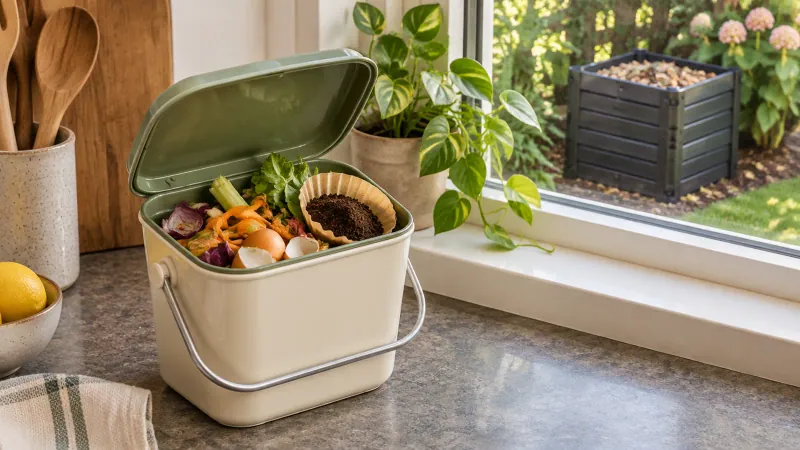
- Keep a small lidded caddy by the sink for scraps and empty it every few days.
- Freeze scraps in a bag if you don’t have a bin yet; thawing helps them break down.
- Save browns: store a bag of dry leaves or shredded paper by the bin.
- Skip packaging: avoid sticky produce labels and plastic ties.
- Use municipal composting if your city offers it, since many programs accept meat, dairy and compostable packaging that you can’t put in a home pile.
What about meat and dairy?
A standard backyard pile shouldn’t take them, because they attract rodents and flies and can smell. If you want to compost them, use a bokashi system, which ferments them in an airtight bucket, or take them to a municipal composting program that accepts food waste. Our guide to composting for beginners explains bokashi and worm bins, and vermicomposting explains what worms will and won’t eat.
What can you compost in a worm bin?
Worms prefer fruit and vegetable scraps, coffee grounds, tea bags, crushed eggshells and shredded paper. They struggle with large amounts of citrus, onion, garlic, spicy foods and anything oily or salty. Avoid meat, dairy and pet waste in worm bins.
How to use finished compost
Spread 1 to 3 inches over beds, mix into potting soil in small amounts, or use as a mulch. Our guide to how to improve garden soil explains how compost fits into a wider plan to build soil.
Frequently asked questions
What can you put in a compost bin?
You can compost fruit and vegetable scraps, coffee grounds and filters, tea leaves, eggshells, grass clippings, leaves, straw, plant trimmings, shredded cardboard and paper, and untreated sawdust. Aim for about two to three parts brown (dry) materials to one part green (fresh) materials. Chop larger pieces so they break down faster.
What should you not compost?
Keep meat, fish, bones, dairy, oils and greasy food, pet waste, diseased plants, weeds with seeds or spreading roots, treated wood, charcoal ash, and plastic or coated paper out of a home compost bin. They can attract pests, create smells, spread disease or fail to break down. Some can be handled in bokashi or municipal compost.
Can you compost citrus peels and onions?
Yes, in moderation. Citrus peels and onion scraps break down fine in a hot, well-managed pile or bin. Very large amounts can make the pile more acidic or slow worms in a worm bin, so keep them small in worm bins and mix them with other materials. Chop them first.
Can you compost paper and cardboard?
Yes. Plain paper, newspaper, paper towels, unwaxed cardboard and egg cartons are good brown materials. Shred or tear them and moisten them. Avoid glossy, coated or heavily printed paper and anything with plastic lining or waxed surfaces. Remove tape and labels from cardboard.
Can you compost weeds?
Weeds without seeds or runners are fine. Weeds with seeds or persistent roots, such as bindweed, couch grass and dandelions in seed, can survive a cold pile and spread. Hot composting at 130 to 160°F can kill many seeds, but a home pile doesn’t always get hot enough everywhere. If in doubt, leave them out.