How to Dry Fresh Herbs: 4 Easy Methods
On this page
To dry herbs, harvest them in the morning after the dew dries, remove damaged leaves and dry them quickly at low heat or in moving air until they crumble. The four easy methods are air drying, a dehydrator, the oven and the microwave. Woody herbs dry best, while soft herbs such as basil are often better frozen.
Before you dry: harvest and prepare
Harvest herbs in the morning, after dew has dried but before the sun gets hot, because essential oils are strongest then. Choose healthy stems before the plant flowers, when flavor peaks. Rinse only if dirty, and dry completely, since moisture causes mold. Remove damaged or yellow leaves and shake out insects. For more herb guides, visit our herbs hub.
Which herbs dry best?
| Herb | Dries well? | Notes |
|---|---|---|
| Rosemary | Excellent | Needles keep flavor; strip after drying |
| Thyme | Excellent | Concentrated flavor |
| Oregano | Excellent | Often stronger dried than fresh |
| Sage | Excellent | Dry slowly to protect color |
| Marjoram | Excellent | Mild and sweet |
| Bay leaves | Excellent | Dry flat, takes weeks |
| Mint | Good | Dry quickly to keep color |
| Lemon balm | Fair | Loses lemon scent |
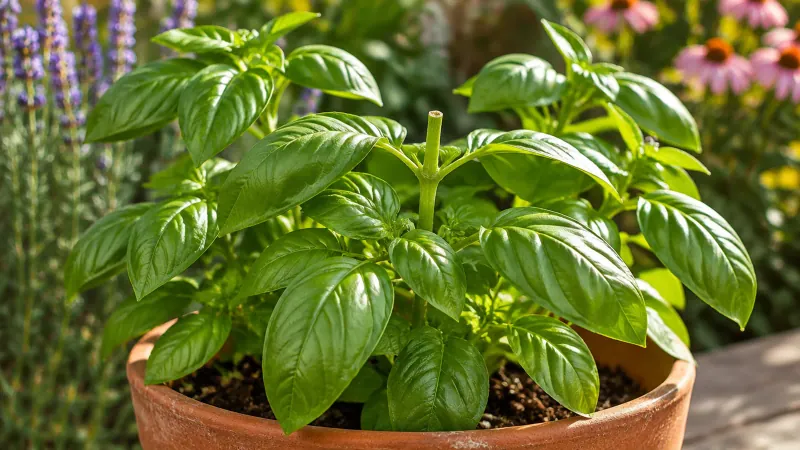
| Basil | Fair | Dries fast; flavor drops, so freeze for best flavor |
| Parsley | Fair | Mild when dried |
| Cilantro | Poor | Loses most flavor; freeze, or save coriander seed |
| Chives | Poor | Freeze instead |
Method 1: Air drying
The simplest method, ideal for woody herbs and dry climates.
- Cut stems 6 to 8 inches long, in the morning.
- Strip lower leaves and tie 5 to 8 stems in a small bundle with string.
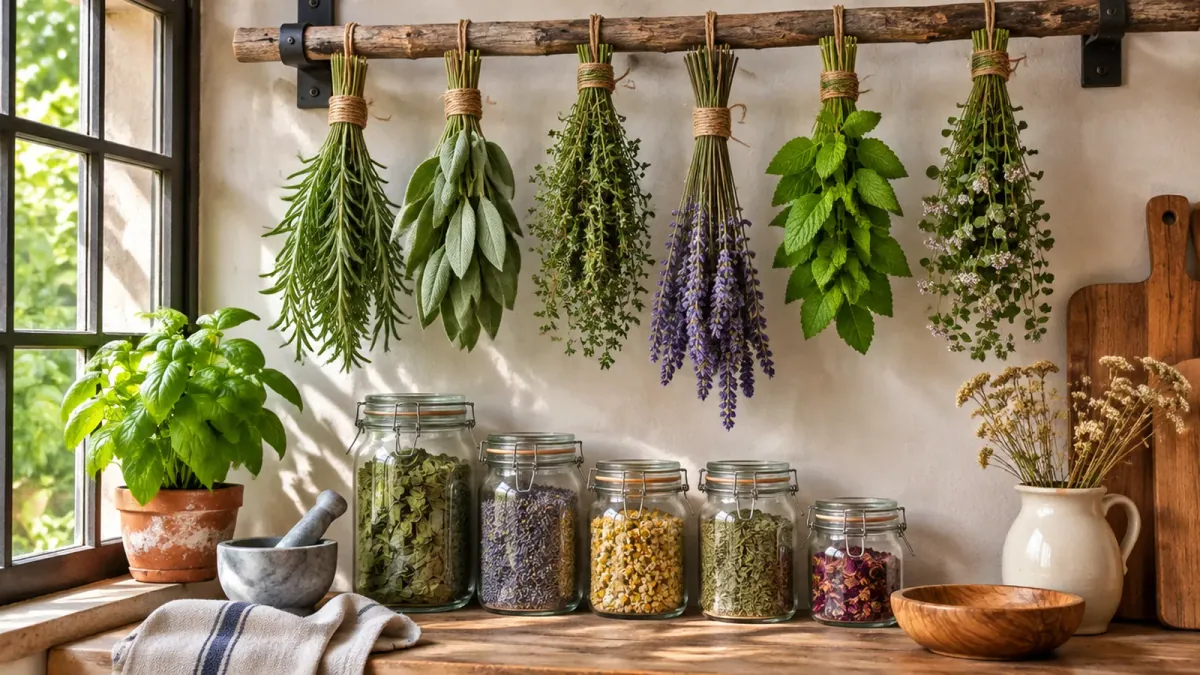
- Hang bundles upside down in a warm, dark, well-ventilated place. Avoid direct sun, which fades color and flavor.
- Wait 1 to 2 weeks until leaves crumble.
- Strip leaves from the stems and store.
For humid areas or soft herbs, put the bundle in a paper bag with holes punched in it to catch crumbled leaves and keep out dust.
Method 2: Dehydrator
A dehydrator is the fastest, most reliable method.
- Spread herbs in a single layer on trays, without overlapping.
- Set to 95 to 115°F (a lower setting keeps volatile oils).
- Dry 1 to 4 hours, checking regularly.
- Test: leaves should crumble easily.
- Cool, then store.
Method 3: Oven
Use this when you don’t have a dehydrator.
- Set the oven to its lowest temperature, usually 170°F or less.
- Spread herbs on a baking sheet lined with parchment.
- Prop the door ajar with a wooden spoon so moisture escapes.
- Check every 15 to 20 minutes. Drying takes 1 to 3 hours.
- Cool and store.
Ovens are inconsistent; watch carefully to prevent scorching.
Method 4: Microwave
For small amounts and quick results.
- Place a single layer of leaves between two paper towels on a plate.
- Microwave for 30 seconds, then check.
- Continue in 15- to 20-second bursts until crisp.
- Cool completely before storing.
Microwaving can cook delicate herbs and reduce flavor, so use it only when you’re in a hurry.
Comparing the methods
| Method | Time | Flavor | Best for | Watch out for |
|---|---|---|---|---|
| Air drying | 1–2 weeks | Excellent | Woody herbs, dry climates | Mold in humid weather |
| Dehydrator | 1–4 hours | Excellent | Any herb, larger batches | Needs equipment |
| Oven | 1–3 hours | Good | Medium batches | Scorching |
| Microwave | 2–5 minutes | Fair | Tiny amounts | Overcooking |
How to know herbs are dry
Leaves should be brittle and crumble easily between your fingers, and stems should snap rather than bend. If leaves feel leathery or bend, dry them longer. Under-dried herbs mold in jars. Test by sealing a few leaves in a jar overnight: any condensation means more drying is needed.
Storing dried herbs
- Use airtight jars (glass is best) and keep whole leaves where possible.
- Label with name and date.
- Store in a cool, dark place, away from the stove and sunlight.
- Crush just before using, for the most flavor.
- Check the first week for moisture or mold.
Dried herbs are more concentrated than fresh. As a rule, use about one-third as much dried herb as fresh.
Alternatives: freezing and other options
| Option | Best for |
|---|---|
| Freezing in oil or water | Basil, parsley, cilantro, chives |
| Herb salt or sugar | Rosemary, thyme, lavender |
| Herb butter | Almost any soft herb |
| Vinegar or oil infusion | Tarragon, basil, but follow food safety guidance for oils |
Mistakes to avoid
- Drying wet herbs, which leads to mold.
- Drying in direct sun, which bleaches color and flavor.
- Using too much heat.
- Storing before herbs are fully dry.
- Crushing early, which lets flavor escape.
- Keeping herbs for years; replace after about a year.
Drying herbs you grow
Growing your own gives you the best material. Our guides to how to grow basil at home, how to grow rosemary and how to grow thyme explain how to keep plants productive, and our guide to how to harvest basil shows how to cut stems for drying.
Frequently asked questions
What is the best way to dry herbs?
Air drying is the simplest and gives the best flavor for sturdy herbs such as rosemary, thyme, oregano and sage. A dehydrator is fastest and most reliable, especially in humid climates. Ovens and microwaves work in a hurry, but heat can cook delicate herbs. Choose based on the herb, your climate and how much time you have.
How long does it take to dry herbs?
Air drying takes one to two weeks. A dehydrator takes about one to four hours at a low setting, the oven roughly one to three hours at its lowest temperature with the door ajar, and the microwave only a couple of minutes in short bursts. Herbs are dry when leaves crumble easily and stems snap.
How long do dried herbs last?
Properly dried and stored whole leaves keep their flavor for about one year, sometimes up to two to three. Ground herbs fade faster. Store them in airtight jars in a cool, dark place, and crush leaves only when you use them. If the aroma has mostly gone, the herb has lost its flavor and should be replaced.
Which herbs dry well and which don’t?
Woody herbs such as rosemary, thyme, oregano, sage, marjoram and bay dry very well. Mint and lemon balm dry reasonably. Basil, parsley and cilantro dry with a noticeable loss of flavor, so freezing is often better. Chives and dill leaves also lose most flavor, though dill seed keeps well.
Do you wash herbs before drying them?
Only if they are dirty. Wet herbs take longer to dry and can mold, so wash gently, then spin or pat them completely dry before drying. If you grew the herbs in clean conditions, simply shake off insects and wipe leaves. Harvest in the morning after the dew has dried for the best oil content.