How to Grow Thyme: Planting and Care
On this page
Grow thyme in full sun, in lean, gritty, well-drained soil, and water sparingly once established. Plant nursery transplants in spring after frost, space them 8 to 12 inches apart, trim lightly after flowering and replace or divide plants every three to five years when they turn woody.
About thyme
Thyme (Thymus vulgaris) is a low, woody, evergreen perennial herb from the Mediterranean. Its tiny, aromatic leaves flavor soups, roasts and sauces, and its flowers attract bees. It is one of the easiest herbs to grow if you copy its native conditions: dry, sunny and gravelly. For more herb guides, visit our herbs hub.
Types of thyme
| Type | Look | Use |
|---|---|---|
| Common (English) thyme | Upright, gray-green leaves | Cooking; the standard |
| French thyme | Narrow, fine leaves | Cooking; a little more tender |
| Lemon thyme | Lemon scent, bright green or variegated | Cooking, tea |
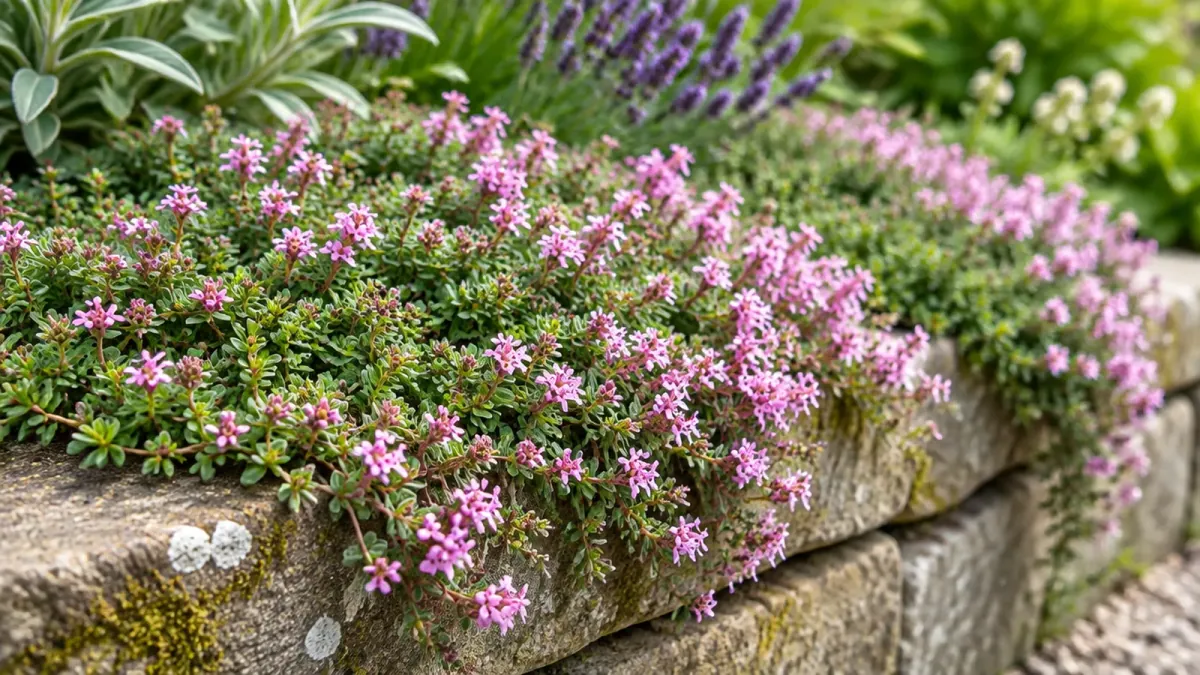
| Creeping thyme | Low mat, tiny flowers | Pathways, ground cover |
| Woolly thyme | Fuzzy, silver mat | Decorative |
| Caraway and orange thymes | Distinct scents | Cooking |
Creeping thymes work well between pavers; see our guide to lawn alternatives.
Where to plant thyme
- Full sun: at least 6 to 8 hours.
- Sharp drainage: add grit or sand to heavy soil, or plant on a slope or in a raised bed.
- Lean soil: rich soil makes soft, weak growth with less flavor.
- Good airflow: avoid humid, crowded corners.
When and how to plant
- Plant in spring after frost, or in early fall in mild climates.
- Space plants 8 to 12 inches apart.
- Set the crown level with the soil, and don’t bury the stems.
- Water well at planting, then sparingly.
- Mulch with gravel rather than organic mulch, which holds moisture against the crown.
Seed can be sown indoors 6 to 10 weeks before the last frost; scatter on the surface and press in lightly.
Growing thyme in pots
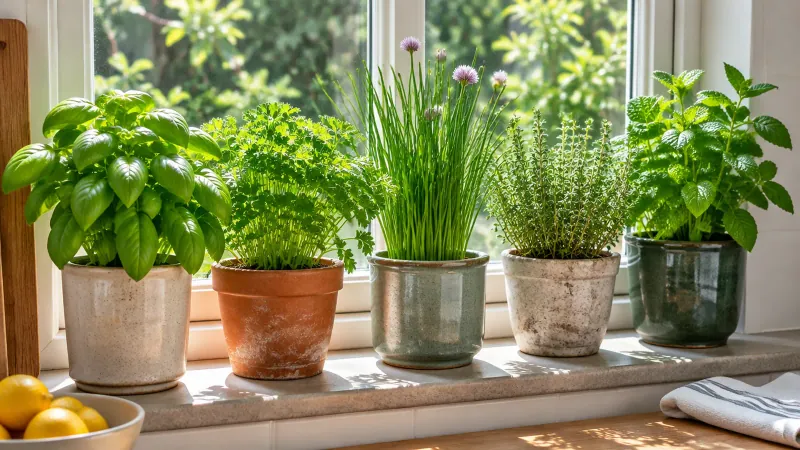
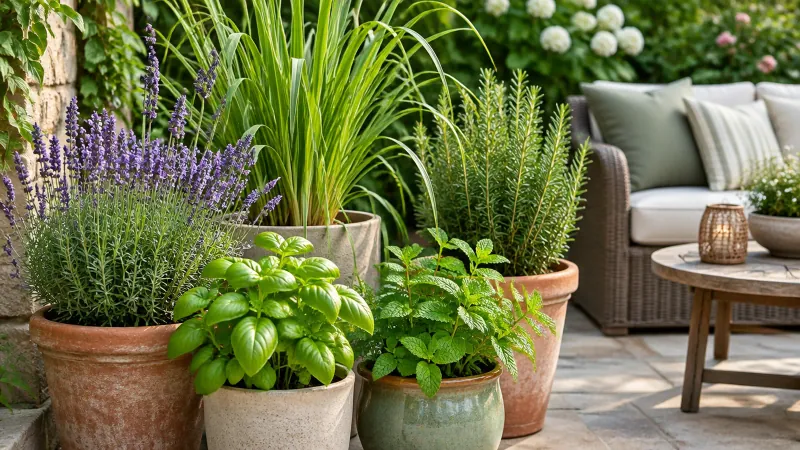
Thyme is an excellent container herb. Use a terra-cotta pot with drainage holes and a gritty mix, such as potting soil blended with perlite or coarse sand. Water only when the top inch or two is dry. In cold areas, move pots to a sheltered spot over winter and keep them on the dry side. For other pot herbs, see how to grow rosemary and how to grow mint in pots, though mint wants far more water than thyme.
Water and feeding
| Need | Details |
|---|---|
| Water | Deeply but rarely; let soil dry out |
| Fertilizer | Rarely; a light compost top-dressing in spring |
| Mulch | Gravel or sand; keeps leaves dry |
| Overwatering | Leads to root rot and fungal problems |
Pruning and harvesting
Harvest sprigs any time after plants are established, cutting just above a leaf pair. Take no more than a third at once. The best flavor comes just before flowering. After blooming, trim back the green growth by about a third to keep plants compact. Don’t cut into old, bare wood, which often won’t resprout.
Propagating thyme
| Method | How | Time |
|---|---|---|
| Division | Lift old plants and split into rooted sections | Spring |
| Cuttings | Take 3-inch softwood cuttings; root in gritty mix | Late spring to summer |
| Layering | Pin a stem to the soil until it roots | Spring |
| Seed | Surface sow; slow | Spring |
Winter care
Common thyme is hardy in zones 5 to 9. In cold climates, mulch lightly with straw or evergreen boughs after the ground freezes, and avoid wet soil over winter, which kills thyme more often than cold does. Don’t prune heavily in fall.
Problems and fixes
| Problem | Cause | Fix |
|---|---|---|
| Wilting or dying plants | Root rot from wet soil | Improve drainage; water less |
| Leggy, woody plants | Age; lack of pruning | Trim regularly; replace after 3–5 years |
| Gray mold | Humid, crowded conditions | Space plants; improve airflow |
| Little flavor | Too much shade or rich soil | Move to full sun; don’t over-feed |
| Spider mites | Hot, dry, dusty conditions | Spray with water |
Companions
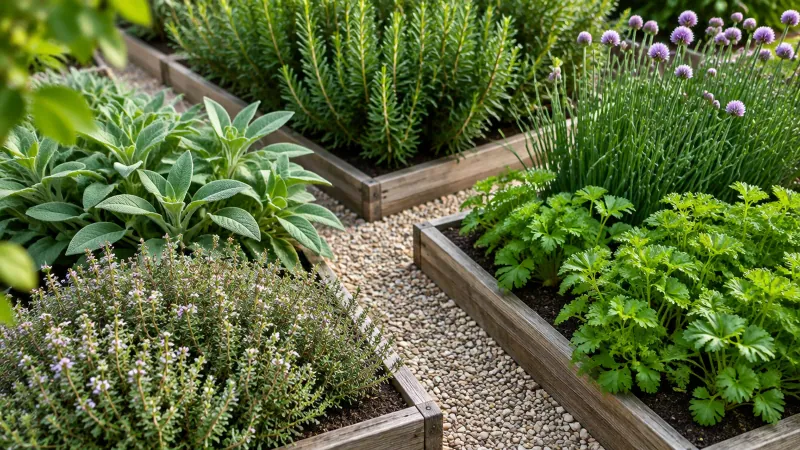
Thyme grows well with other Mediterranean herbs such as rosemary, oregano and sage, which share its need for sun and drainage; see our guide to perennial herbs. It also suits borders and vegetable beds, where its flowers draw pollinators.
Pets
The ASPCA lists thyme (Thymus vulgaris) as non-toxic to cats and dogs. Note that Spanish thyme (Coleus amboinicus) is a different plant listed as toxic.
Using and storing thyme
Fresh sprigs keep for a week or two in the fridge wrapped in a damp towel. To dry thyme, hang small bundles in a warm, airy spot until the leaves crumble, then strip and store them in a jar. Thyme holds its flavor in drying better than many herbs. Strip leaves from woody stems by running your fingers down them against the direction of growth.
Thyme through the seasons
| Season | Care |
|---|---|
| Spring | Plant, divide, and lightly trim winter damage |
| Summer | Harvest; trim after flowering |
| Fall | Stop feeding; keep soil dry; mulch with gravel |
| Winter | Protect from wet; avoid pruning |
Frequently asked questions
Is thyme easy to grow?
Yes, once you give it what it wants: full sun, sharp drainage and sparing water. Thyme is a Mediterranean perennial herb that thrives on neglect and poor, gravelly soil. It fails mainly in wet, heavy soil or humid shade. Plants are usually hardy in zones 5 to 9 and live for several years.
How much water does thyme need?
Little. Water young plants regularly until they are established, then only when the soil is dry a couple of inches down. Established thyme tolerates drought well. Overwatering and wet feet cause root rot, which is the most common reason thyme dies, especially in pots and heavy clay soil.
Can you grow thyme from seed?
Yes, but it is slow. Seeds take 2 to 4 weeks to germinate and plants take months to reach picking size. Surface-sow seeds, since they need light, and keep them lightly moist. Many gardeners buy small plants or propagate from cuttings or division for a faster start.
When and how should I prune thyme?
Trim thyme lightly after it flowers in early summer, cutting back about a third of the green growth, and again in early spring as new growth starts. Avoid cutting into bare, woody stems, since they don’t always regrow. Regular light trimming stops plants from getting leggy and woody.
Does thyme come back every year?
Common thyme is a perennial that returns each year in zones 5 to 9, and some creeping thymes are hardy to zone 4. In colder areas, plant in pots and bring them indoors, or mulch lightly. Plants decline after about three to five years and are best renewed by division or cuttings.