Black Flowers: Dark Blooms That Look Almost Black
On this page
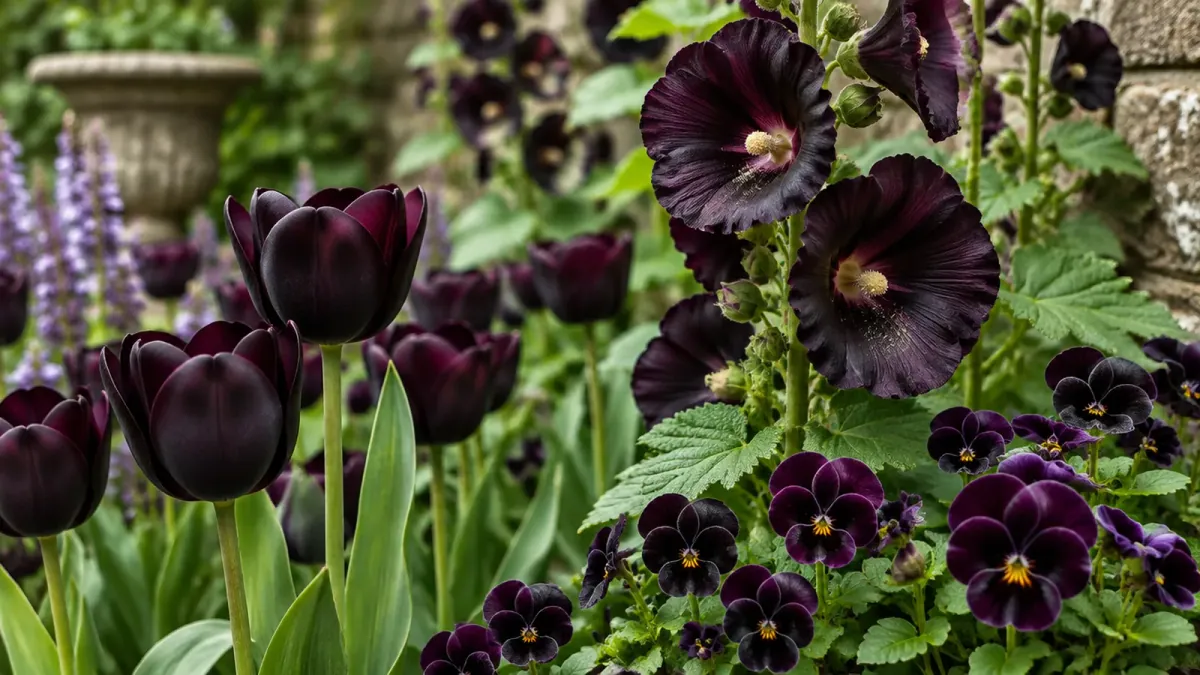
Black flowers are really very dark purple, maroon or burgundy blooms that look almost black, especially in shade or at dusk. The best are ‘Queen of Night’ tulips, black hollyhocks, ‘Black Velvet’ petunias, black pansies, ‘Black Barlow’ columbines and ‘Chocolate’ cosmos. Plant them against light or bright backgrounds so they stand out.
Are there really black flowers?
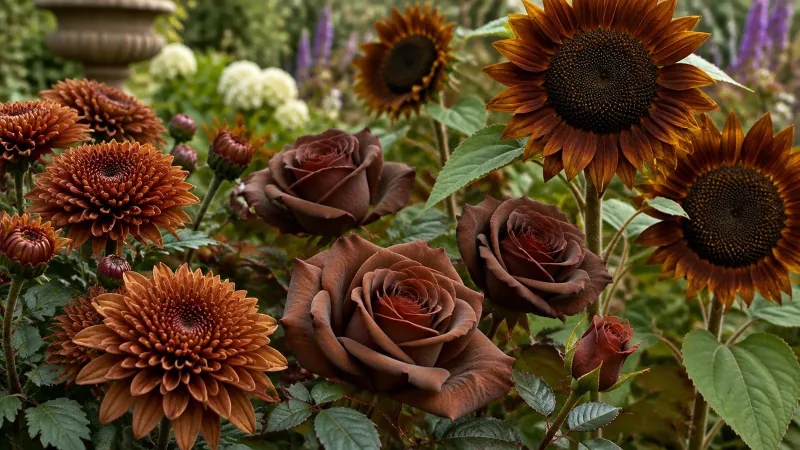
Not in the strict sense. Flower color comes from pigments, and none of them produces a pure black. The “black” flowers gardeners grow have so much dark anthocyanin pigment that they absorb most light and look black, particularly in shade, at dusk or in photos. In direct sunlight, many reveal deep purple, maroon, burgundy or very dark red.
That drama is the appeal. Black flowers give depth and contrast to borders, containers and bouquets, and they look especially good against lime-green, silver and white. For more color guides, browse our flowers hub, and for earthy tones, see our guide to brown flowers.
Black flowers compared
| Flower | Type | Height | Sun | USDA zones | Blooms |
|---|---|---|---|---|---|
| ‘Queen of Night’ tulip | Bulb | 24 in | Full sun | 3–8 | Late spring |
| Black hollyhock (‘Nigra’) | Biennial or short-lived perennial | 5–8 ft | Full sun | 3–8 | Summer |
| ‘Black Velvet’ petunia | Annual | 8–12 in | Full sun | Annual | Summer to frost |
| Black pansy (‘Molly Sanderson’) | Cool-season annual | 6–8 in | Sun to part shade | Annual | Spring and fall |
| ‘Black Barlow’ columbine | Perennial | 24–30 in | Part shade | 3–8 | Spring |
| Chocolate cosmos | Tender perennial | 18–24 in | Full sun | 7–10 | Summer |
| ‘Black Magic’ or ‘Black Beauty’ lily | Bulb | 3–5 ft | Full sun | 4–9 | Midsummer |
| Black calla lily | Tuber | 18–24 in | Sun to part shade | 8–10 | Summer |
| ‘Sooty’ Sweet William | Biennial | 18 in | Full sun | 3–9 | Late spring |
| Black bat flower | Tropical | 2–3 ft | Bright, humid | 10–11 | Year-round in warmth |
| Black hellebore | Perennial | 12–18 in | Part shade | 4–9 | Late winter to spring |
| ‘Black Prince’ snapdragon | Annual | 18–24 in | Full sun | Annual | Spring to summer |
| Dark iris | Perennial | 2–3 ft | Full sun | 3–9 | Late spring |
| Black mondo grass | Foliage perennial | 6–8 in | Sun to part shade | 6–10 | Foliage (white flowers) |
| ‘Black Knight’ scabiosa | Annual | 2–3 ft | Full sun | Annual | Summer |
15 dark flowers that look almost black
1. ‘Queen of Night’ tulip
The most famous black flower, with satiny maroon-black cups on tall stems. Plant bulbs in fall in full sun and well-drained soil. Tulip bulbs are toxic to pets.
2. Black hollyhock (Alcea rosea ‘Nigra’)
Tall spires of deep maroon, almost black flowers with a yellow center. A cottage-garden classic. It often self-sows and is usually grown as a biennial.
3. ‘Black Velvet’ petunia
A true showstopper in containers, with velvety, near-black flowers all summer. Pair it with chartreuse sweet potato vine.
4. Black pansy (Viola ‘Molly Sanderson’)
Small, velvety near-black flowers for cool seasons. Perfect for spring and fall pots, and edible.
5. ‘Black Barlow’ columbine
Double, spurless flowers in deep purple-black on a graceful perennial for part shade.
6. Chocolate cosmos (Cosmos atrosanguineus)
Maroon-black flowers with a chocolate scent. Grows from tubers; lift and store in cold climates. See also our guide to brown flowers.
7. Black-toned lilies (‘Black Beauty’ and similar)
Dark crimson Oriental-Asiatic hybrid lilies with strong color and scent. All parts of true lilies are highly toxic to cats.
8. Black calla lily
Dark, nearly black spathes on glossy leaves. A tender tuber hardy in zones 8 to 10; dig and store it elsewhere. Calla lilies are toxic to pets.
9. ‘Sooty’ Sweet William
Deep maroon-black clusters of fragrant flowers, grown as a biennial.
10. Black bat flower (Tacca chantrieri)
A tropical oddity with large, dark bracts and long whisker-like filaments. Needs warmth and humidity, so grow it as a houseplant or in a greenhouse outside zones 10 to 11.
11. Black hellebore
Dark purple, almost black hellebores bloom in late winter. They suit part shade, and all hellebores are toxic to pets. For more shade flowers, see our guide to the best flowers for full shade.
12. ‘Black Prince’ snapdragon
Snapdragons in very dark burgundy that also make good cut flowers.
13. Dark irises
Many bearded irises, such as ‘Before the Storm’, are bred in near-black shades with contrasting beards.
14. Black mondo grass (Ophiopogon planiscapus ‘Nigrescens’)
Grown for its jet-black foliage rather than its flowers, it makes a dramatic evergreen edging.
15. ‘Black Knight’ scabiosa
Pincushion flowers in deep maroon that attract bees and butterflies and last well in vases.
Black flower meanings
Black flowers carry mixed symbolism. In Western tradition, black is linked with elegance, mystery and mourning, and dark blooms are often chosen for gothic or dramatic weddings and arrangements. Modern gardeners mostly value them for contrast and drama. Meanings are cultural and personal, not fixed; if you are giving black flowers as a gift, our guide to flower color meanings explains how colors are traditionally read.
Why black flowers can fade or look different
The color of a near-black flower changes with light, temperature and age. Cool weather and shade tend to deepen the pigment, so the same variety looks blacker in spring than in a midsummer heatwave. Many flowers also fade to purple or brown as they age, and the flower center or stamens may show a lighter color. Photographs often show a darker, blacker flower than you will see in person, so look at plants in a nursery in daylight when you can.
How to use black flowers in the garden
Dark flowers can vanish in a bed, so give them contrast:
- Plant them against light backgrounds, such as chartreuse foliage, silver plants like artemisia, or white flowers.
- Pair with pale colors. Soft pink, peach, cream and pale yellow all make black flowers pop. Our guide to white flowers has good partners.
- Create a moody scheme by combining black, burgundy and plum with bronze foliage.
- Use containers. A single pot of black petunias or tulips against a light wall is striking.
- Position them where you’ll see them up close, near paths, doors and seating, and where the sun will light the petals.
- Mix with bright colors such as yellow or orange flowers for a bold, high-contrast display.
Growing tips
- Choose the right plant for the site. Black-flowered varieties need the same care as their regular cousins.
- Protect from scorch. Dark petals absorb heat and can burn in intense sun; some afternoon shade helps in hot climates.
- Deadhead to keep annuals blooming.
- Check pet safety. Tulips, lilies (toxic to cats), hellebores and calla lilies are on the ASPCA toxic list. Snapdragons are listed as non-toxic.
Black flowers in bouquets
Black flowers make dramatic cut arrangements. Tulips, scabiosa, snapdragons, hollyhocks and Sweet William all cut well. Combine them with silvery foliage and pale flowers for an elegant effect. Our guide to long-lasting cut flowers lists more flowers for the vase.
Frequently asked questions
Are there truly black flowers?
Not quite. No flower is a pure, light-absorbing black. The darkest ones, such as black tulips, hollyhocks and petunias, are very deep purple, maroon or burgundy that look black, especially in shade and low light. In bright sun, you can usually see the underlying color. Still, these near-black blooms are striking and widely grown.
What is the blackest flower?
The ‘Queen of Night’ tulip, the black hollyhock (Alcea rosea ‘Nigra’), the ‘Black Barlow’ columbine, black pansies such as ‘Molly Sanderson’ and the ‘Black Velvet’ petunia are among the darkest garden flowers. Many appear nearly black in shade or at dusk but show deep purple or burgundy in direct sun. Different growers describe the darkest varieties differently.
What colors go with black flowers?
Black flowers stand out best against light, bright backgrounds. Chartreuse, white, silver, soft pink, peach and pale yellow all contrast well. Lime-green foliage such as heuchera or hosta, or silver artemisia, makes dark petals glow. Avoid planting them only against dark foliage or soil, where they disappear.
Do black flowers have a meaning?
Traditionally, black flowers are associated with mystery, elegance, rebellion and, in some cultures, mourning. In modern gardening and floristry they are mostly chosen for drama and contrast. Meanings are cultural and personal rather than fixed, so choose them for their look.
Are black flowers hard to grow?
Most are no harder than their colored relatives. Black tulips, pansies, petunias and hollyhocks follow the usual care for their type. Dark flowers can be more prone to scorching in strong sun, and the darkest color often fades slightly in heat. Planting in a spot with some afternoon shade in hot climates helps keep color rich.