White Flowers: Best White Flowers for Gardens and Bouquets
On this page
The best white flowers for gardens and bouquets include shasta daisies, white coneflowers, peonies, ‘Annabelle’ hydrangea, alyssum, white roses, tulips, daffodils, snowdrops, lily of the valley and moonflower. White brightens shade, pairs with every other color and glows at dusk. The 20 below span annuals, bulbs, perennials and shrubs, with typical size, sun and zones.
Why white flowers are so useful
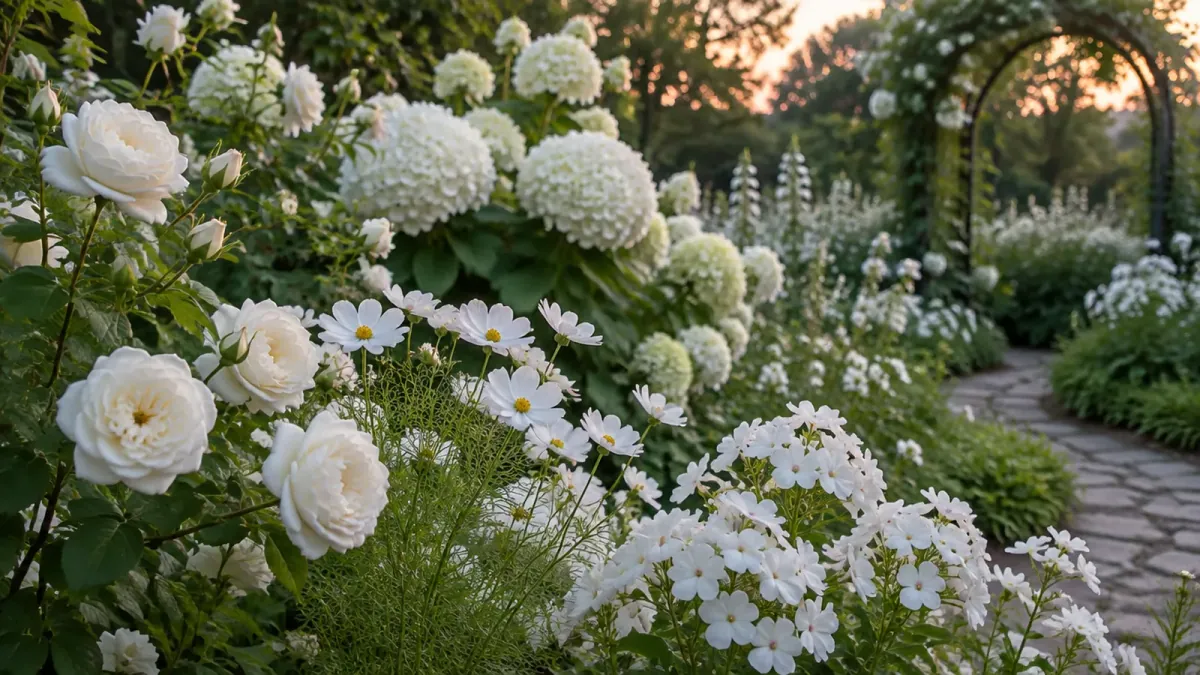
White is the connector of the garden. It goes with every other color, separates clashing shades, and lights up shady spots because the petals reflect what little light there is. In the evening, white flowers seem to glow, which is why they anchor “moon gardens” planted for dusk. White also looks timeless in formal borders and fresh in cottage plantings. For more color guides, browse our flowers hub, and for the cooler look of blue, see our guide to blue flowers.
White flowers compared
Heights, zones and bloom times are typical and vary by variety.
| Flower | Type | Height | Sun | USDA zones | Blooms |
|---|---|---|---|---|---|
| Sweet alyssum | Annual | 4–8 in | Sun to part shade | Annual | Spring to fall |
| White cosmos | Annual | 2–4 ft | Full sun | Annual | Summer to frost |
| Nicotiana (white) | Annual | 1.5–4 ft | Sun to part shade | Annual | Summer |
| Moonflower | Annual vine | 8–15 ft | Full sun | Annual | Summer evenings |
| White petunia | Annual | 6–18 in | Full sun | Annual | Spring to frost |
| Snowdrop | Bulb | 4–8 in | Part shade | 3–7 | Late winter |
| White daffodil | Bulb | 12–18 in | Sun to part shade | 3–8 | Spring |
| White tulip | Bulb | 12–24 in | Full sun | 3–8 | Spring |
| Lily of the valley | Perennial | 6–10 in | Part to full shade | 2–7 | Spring |
| Peony (white) | Perennial | 2–3 ft | Full sun | 3–8 | Late spring |
| Shasta daisy | Perennial | 1–3 ft | Full sun | 4–9 | Summer |
| White coneflower | Perennial | 2–3 ft | Full sun | 3–9 | Summer |
| Garden phlox (white) | Perennial | 2–4 ft | Sun to part shade | 4–8 | Summer |
| White astilbe | Perennial | 1.5–3 ft | Part shade | 4–8 | Early summer |
| White bleeding heart | Perennial | 1–2 ft | Part shade | 3–9 | Spring |
| White hellebore | Perennial | 1–1.5 ft | Part to full shade | 4–9 | Late winter |
| ‘Annabelle’ hydrangea | Shrub | 3–5 ft | Sun to part shade | 3–9 | Summer |
| White rose | Shrub | 2–6 ft | Full sun | 4–10, by type | Summer |
| Gardenia | Shrub | 3–6 ft | Sun to part shade | 8–11 | Late spring to summer |
| Jasmine (star jasmine) | Climber | 10–20 ft | Sun to part shade | 8–10 | Late spring |
White annuals
1. Sweet alyssum
Low carpets of honey-scented flowers for edges and pots. It attracts hoverflies that eat aphids. It may fade in midsummer heat; shear lightly to refresh it.
2. White cosmos
Airy, daisy-like flowers on tall stems. ‘Purity’ is a classic. Easy from seed and good for cutting.
3. White nicotiana
Fragrant, star-shaped flowers that open in the evening and glow at dusk. All parts of nicotiana are toxic if eaten.
4. Moonflower
A fast-growing vine with large, fragrant white trumpets that open at dusk. Soak or nick seeds before sowing. Moonflower is an Ipomoea, and the ASPCA lists morning glory (Ipomoea) as toxic to dogs and cats, so treat it as toxic.
5. White petunia
A tidy, long-flowering choice for containers and borders. Wave and trailing types are particularly vigorous.
White bulbs and spring flowers
6. Snowdrops
Among the first flowers of the year, nodding white bells in late winter. Plant “in the green” or as bulbs in fall in part shade.
7. White daffodils
Varieties such as ‘Thalia’ and ‘Mount Hood’ bring a softer take on the spring daffodil. Daffodils are toxic to pets.
8. White tulips
Clean, classic cups such as ‘Purissima’. Plant bulbs in fall. Tulip bulbs are toxic to pets.
9. Lily of the valley
Fragrant, nodding bells on a spreading ground cover for shade. All parts are highly toxic if eaten, so keep it away from children and pets.
White perennials
10. Peony
Huge, fragrant white blooms in late spring. Plant crowns shallowly, not more than about 2 inches deep, or they may not flower. Peonies are toxic to pets.
11. Shasta daisy
Classic white daisies with yellow centers, perfect for sunny borders and cutting. Divide every few years.
12. White coneflower
Elegant white petals around a coppery cone. Drought-tolerant once established and loved by pollinators.
13. White garden phlox
Fragrant summer flower heads. Choose mildew-resistant varieties and leave space for airflow.
14. White astilbe
Feathery plumes that light up shady beds in early summer. It needs moist soil.
15. White bleeding heart
A graceful spring perennial for shade. It may go dormant in summer, so plant later perennials alongside it. It isn’t on the ASPCA list, so keep it away from pets as a precaution.
16. White hellebore
Long-lasting white blooms from late winter, above evergreen leaves. Tough in dry shade once established. All hellebores are toxic if eaten.
White shrubs and climbers
17. ‘Annabelle’ hydrangea
Huge white flower heads from midsummer, on a very hardy native shrub. Cut back to a low framework in late winter.
18. White roses
From compact shrub roses such as ‘Iceberg’ to climbers like ‘Madame Alfred Carrière’. Choose disease-resistant varieties for less work. See our guide to organic rose pest control.
19. Gardenia
Intensely fragrant, creamy white flowers on glossy evergreen shrubs for zones 8 to 11. Needs acidic soil and humidity, and is toxic to cats and dogs.
20. Star jasmine
A scented evergreen climber for mild climates, hardy in about zones 8 to 10. Give it a trellis or fence in a warm spot.
How to design with white flowers
- Make a moon garden. Combine moonflower, nicotiana, white phlox, white cosmos and silver-leaved plants near a patio. Place scented plants near seating.
- Use white to separate colors. A white plant between clashing shades calms the scheme.
- Brighten shade. White astilbe, hostas, foamflower and lily of the valley make dim spots glow. Our list of the best flowers for full shade has more.
- Pair with silver and green. Lamb’s ear, dusty miller and artemisia sharpen white. See our guide to green flowers for lime-green partners.
- Add a pop of color. White with purple, red or yellow flowers makes each stand out.
White flowers for weddings and bouquets
White roses, peonies, ranunculus, tulips, lisianthus, hydrangea, freesia, gardenias and baby’s breath dominate bridal bouquets. If you are growing your own, plan the season: peonies and tulips are spring flowers; roses, lisianthus and hydrangeas bloom in summer. Baby’s breath is a classic filler, and our guide to long-lasting cut flowers shows how to condition stems. Our guide to flower color meanings explains traditional symbolism, where white stands for purity, innocence and new beginnings.
A simple moon garden plan
A moon garden is planted to be enjoyed in the evening. For a bed about 4 by 8 feet beside a patio, try:
| Position | Plants | Why |
|---|---|---|
| Back | White ‘Annabelle’ hydrangea or a trellis with moonflower | Height and evening glow |
| Middle | White phlox, white coneflower, shasta daisies | Mid-summer bulk; pollinator-friendly |
| Front | Sweet alyssum, white petunias, lamb’s ear (silver foliage) | Low edge; scent and reflective leaves |
| Scent pockets | Nicotiana and a pot of white lilies or gardenias near seating | Fragrance after dark |
Add silver-leaved plants such as dusty miller or artemisia, whose foliage reflects moonlight, and avoid bright lights nearby that wash out the effect.
Common problems with white flowers
| Problem | Likely cause | Fix |
|---|---|---|
| Brown edges on petals | Rain, wind or hot sun | Shelter from storms; deadhead promptly |
| Powdery mildew on phlox | Poor airflow | Space plants; choose resistant varieties |
| Hydrangea ‘Annabelle’ flopping | Heavy heads after rain | Prune harder in late winter; support with a ring |
| Peonies not flowering | Planted too deep or too much shade | Replant with buds about 2 inches below the surface; give six hours of sun |
| Gardenia buds dropping | Dry air, cold drafts or overwatering | Keep conditions steady; avoid moving the plant |
Caring for white flowers
White petals show browning and damage quickly, so a little grooming goes a long way:
- Deadhead often. Faded white blooms turn brown and look untidy.
- Avoid overhead watering on petals to reduce spotting and rot.
- Provide shelter from heavy rain, which marks white flowers such as peonies and roses.
- Mind pets. Lily of the valley, hellebores, tulips, daffodils, peonies and gardenias are on the ASPCA toxic list for cats and dogs. Moonflower is an Ipomoea, a genus the ASPCA lists as toxic. Bleeding heart has no ASPCA entry, so treat it with caution too.
- Plant for succession, from snowdrops to fall anemones, so white is present in every season.
Frequently asked questions
What are the best white flowers for a garden?
Dependable white garden flowers include white coneflower, shasta daisy, peony, hydrangea ‘Annabelle’, white phlox, alyssum, white roses, gardenias in mild climates, white tulips and daffodils, and snowdrops. Choose by sun and season: white petunias and cosmos for summer annuals, shasta daisies for sunny borders, hostas and white astilbe for shade.
What white flowers bloom at night or glow at dusk?
White flowers reflect low light, so they seem to glow at dusk. Moonflower, evening primrose, nicotiana (flowering tobacco), night-blooming jasmine, white four o’clocks and angel’s trumpet open in the evening and are often fragrant. They are traditional in moon gardens, which are designed to be enjoyed after dark. Angel’s trumpet is generally considered highly toxic, though it isn’t on the ASPCA list, so keep it away from pets and children.
What white flowers are best for wedding bouquets?
Popular white wedding flowers include roses, peonies, ranunculus, lily of the valley, stephanotis, gardenias, tulips, lisianthus, white hydrangea, baby’s breath and freesia. Choose varieties with good vase life and consider the season, since many are seasonal. Lily of the valley is highly toxic if eaten, and lilies are dangerous for cats.
What white flowers grow in shade?
Several white flowers brighten shade: white astilbe, hostas with white flowers, snowdrops, lily of the valley, white bleeding heart, wood anemone, foamflower, white hellebores and ‘Annabelle’ hydrangea in part shade. White also makes dark corners feel brighter, because the petals reflect light. Moist, humus-rich soil helps most of them.
Do white flowers attract pollinators?
Yes. Many white flowers feed bees, butterflies and moths, and pale or white flowers that open at dusk attract night-flying moths. Yarrow, alyssum, white coneflower, wild carrot, aster and white salvia are popular with pollinators. Single flowers with accessible nectar and pollen generally work better than heavily doubled forms.