Yellow Flowers: Cheerful Yellow Flowers to Plant
On this page
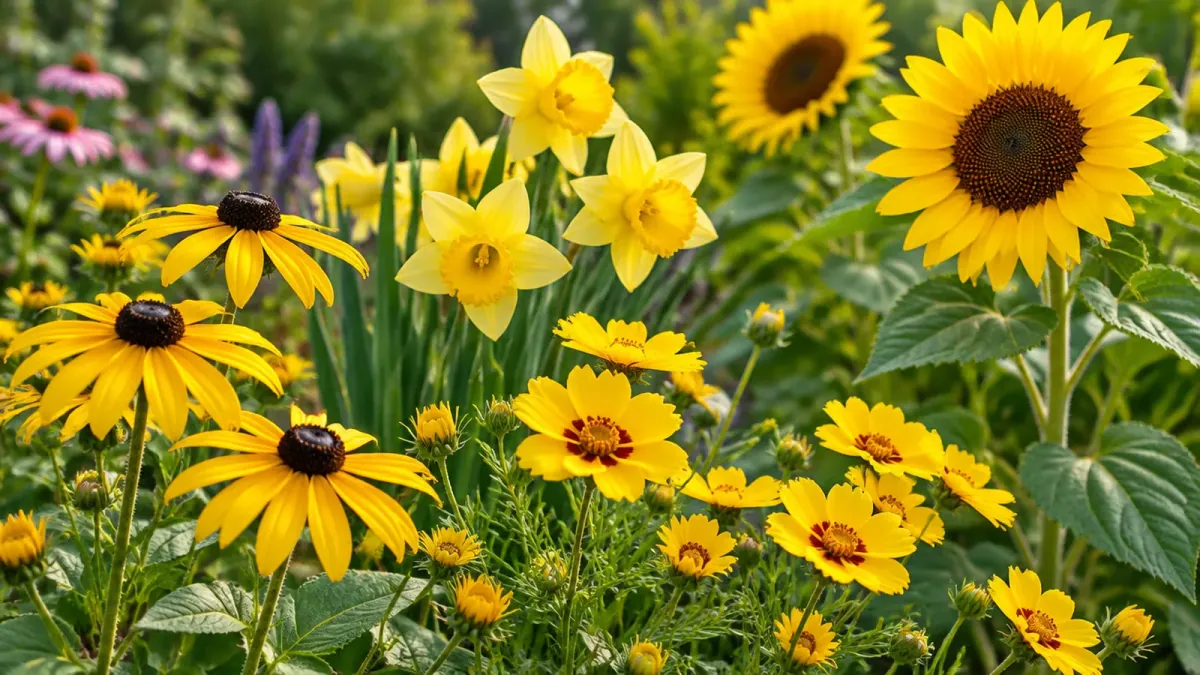
Yellow flowers worth planting include daffodils, sunflowers, black-eyed Susans, coreopsis, daylilies, yarrow, marigolds, goldenrod, forsythia and yellow roses. Yellow is bright and cheerful, brings light to dull corners, and attracts bees and butterflies. Almost all yellow flowers want full sun. The 20 below cover annuals, bulbs, perennials, shrubs and climbers.
Why yellow works
Yellow is the most visible color in daylight, so it reads from far away and lifts shady or gloomy spots. It signals cheer in early spring when daffodils and forsythia arrive, and brings late-season glow when goldenrod and rudbeckia bloom. Too much yellow can look flat, so pair it with cooler colors. For more color guides, browse our flowers hub, and for its neighbor, see our guide to orange flowers.
Yellow flowers compared
Heights and zones are typical and vary by variety and climate.
| Flower | Type | Height | Sun | USDA zones | Blooms |
|---|---|---|---|---|---|
| Sunflower | Annual | 2–10 ft | Full sun | Annual | Summer |
| Marigold | Annual | 6 in–3 ft | Full sun | Annual | Summer to frost |
| Calibrachoa (yellow) | Annual | 6–10 in | Full sun | Annual | Spring to frost |
| Calendula | Annual | 1–2 ft | Sun to part shade | Annual | Spring and fall |
| Sweet pea (yellow tones) | Annual vine | 4–6 ft | Full sun | Annual | Spring |
| Daffodil | Bulb | 6–20 in | Sun to part shade | 3–8 | Spring |
| Winter aconite | Tuber | 3–4 in | Sun to part shade | 3–7 | Late winter |
| Yellow tulip | Bulb | 12–24 in | Full sun | 3–8 | Spring |
| Coreopsis | Perennial | 1–3 ft | Full sun | 3–9 | Summer |
| Black-eyed Susan | Perennial | 2–3 ft | Full sun | 3–9 | Summer to fall |
| Daylily (yellow) | Perennial | 1–3 ft | Sun to part shade | 3–9 | Summer |
| Yarrow (yellow) | Perennial | 2–3 ft | Full sun | 3–9 | Summer |
| Goldenrod | Perennial | 1–5 ft | Full sun | 3–9 | Late summer to fall |
| Helenium | Perennial | 3–5 ft | Full sun | 4–8 | Late summer |
| Primrose | Perennial | 6–12 in | Part shade | 3–8 | Spring |
| Ligularia | Perennial | 2–5 ft | Part shade | 4–8 | Summer |
| Forsythia | Shrub | 6–10 ft | Full sun | 5–8 | Early spring |
| Yellow rose | Shrub | 2–6 ft | Full sun | 4–10 | Summer |
| Witch hazel (yellow types) | Shrub | 10–15 ft | Sun to part shade | 5–8 | Late winter |
| Yellow clematis | Climber | 6–10 ft | Sun; cool roots | 4–9 | Spring to summer |
Yellow annuals
1. Sunflowers
The easiest big yellow flower from seed. Choose branching, pollen-free types for vases and dwarf forms for pots. Seed heads feed birds.
2. Marigolds
Long-blooming, heat-tolerant and tough. French marigolds stay compact; African types grow tall with large pompon flowers.
3. Calibrachoa
Miniature petunia-like flowers in rich yellow for pots and baskets. Needs good drainage and regular feeding.
4. Calendula
Cool-season flowers that bloom through spring and fall. Petals are edible.
5. Yellow sweet peas
Fragrant cut flowers on climbing vines. Sow early, as they dislike heat. The seeds can be harmful if eaten in quantity. The ASPCA lists sweet pea as toxic to horses only.
Yellow spring bulbs
6. Daffodils
Reliable, deer-proof and long-lived. Plant bulbs in fall and let foliage die back naturally. Daffodils are toxic to pets.
7. Winter aconite
Buttercup-like yellow flowers pushing up through snow in late winter. Plant bulbs (soaked first) in fall in part shade.
8. Yellow tulips
Bright, simple cups in spring. Treated as annuals in warm zones. Tulip bulbs are toxic to pets.
Yellow perennials
9. Coreopsis
Long-flowering, drought-tolerant plants such as ‘Moonbeam’ and ‘Zagreb’. Trim after the first bloom for a repeat show.
10. Black-eyed Susan
Golden daisies with dark centers. ‘Goldsturm’ is a classic. Loved by pollinators.
11. Daylilies
‘Stella de Oro’ blooms for months. Other yellow daylilies offer different forms. Daylilies are dangerous for cats.
12. Yarrow
Flat-topped yellow flowers, such as ‘Moonshine’, over gray-green ferny foliage. Tough and drought-tolerant.
13. Goldenrod
Plumes of yellow in late summer and fall that feed countless pollinators. Hay fever is mainly from ragweed, not goldenrod. Choose clump-forming cultivars.
14. Helenium
Yellow and rust-toned daisies from late summer. Needs moist soil.
15. Primroses
Spring flowers in butter yellow for part shade and moist soil.
16. Ligularia
Tall yellow-orange spikes for moist, shady spots, such as pond edges.
Yellow shrubs and climbers
17. Forsythia
Bright yellow flowers on bare branches in early spring. Prune right after flowering. Give it room, as it grows 6 to 10 feet.
18. Yellow roses
Cheerful shrub roses like ‘Julia Child’ bloom over a long season. Choose disease-resistant varieties.
19. Witch hazel
Spidery yellow flowers in late winter with a light scent. A large shrub or small tree.
20. Yellow clematis
Varieties such as ‘Bill MacKenzie’ bloom yellow on a trellis in summer and follow with silky seed heads.
Combining yellow with other colors
- Yellow and blue or purple: a lively opposite pairing. Try coreopsis with salvia. See our guides to blue flowers and purple flowers.
- Yellow and white: crisp and fresh. See white flowers.
- Yellow and lime green: modern and cool. See our guide to green flowers.
- Yellow, orange and red: a hot, late-summer border. See red flowers.
Yellow flowers by season
| Season | Yellow flowers |
|---|---|
| Late winter | Winter aconite, witch hazel, early crocus |
| Early spring | Daffodils, forsythia, primroses, Lenten rose (yellow forms) |
| Late spring | Tulips, columbine, globeflower, yellow iris |
| Summer | Coreopsis, daylilies, black-eyed Susans, yarrow, sunflowers |
| Fall | Goldenrod, helenium, marigolds, rudbeckia |
A sunny yellow border plan
For a bed about 4 by 10 feet in full sun:
| Layer | Plants | Notes |
|---|---|---|
| Back | Sunflowers or goldenrod | Tall; goldenrod comes back each year |
| Middle | Black-eyed Susans, yarrow, daylilies | Bloom from midsummer; drought-tolerant once settled |
| Front | Coreopsis ‘Moonbeam’, marigolds | Low and long-blooming; trim coreopsis after the first flush |
| Spring bulbs | Daffodils tucked between perennials | Perennials hide the fading leaves |
| Cool accents | Purple salvia or blue catmint | Makes the yellow look richer |
Common problems with yellow flowers
| Problem | Likely cause | Fix |
|---|---|---|
| Coreopsis stops flowering | Seed set | Shear by a third after the first bloom |
| Daffodils flower once then not at all | Leaves cut too early | Leave foliage until it yellows and dies back |
| Sunflowers topple | Wind, shallow roots | Stake tall types; plant in sheltered, deep soil |
| Powdery mildew on rudbeckia | Humid weather | Space plants; choose resistant varieties such as ‘Goldsturm’ |
| Forsythia with few flowers | Pruned at the wrong time or cold buds | Prune right after flowering; choose hardier varieties in cold zones |
Growing yellow flowers
- Plant in full sun. Most yellow flowers need six hours or more.
- Choose by season so yellow appears from late winter to fall.
- Deadhead coreopsis, marigolds and daylilies to extend bloom.
- Check deer pressure. Daffodils, yarrow and marigolds are among the less appealing choices.
- Pair with pollinator plants. See our guide to bee-friendly flowers.
- Mind pets. Daffodils, tulips and daylilies (cats) are toxic.
Choosing yellow shades
Yellow ranges from pale primrose to butter, lemon, gold and mustard. Pale yellows look soft beside white, blue and lilac and suit shade, while rich golds and lemons hold their own in full sun beside purple and red. Lemon yellow can look sharp beside warm orange, so repeat one or two shades through a bed rather than mixing many. In hot climates, deeper golds fade less than pale yellows, which can bleach in strong afternoon sun.
Yellow flowers and wildlife
Yellow daisy-type flowers are especially valuable to wildlife. Goldenrod supports more native bee species than almost any other late-season plant, and rudbeckia, coreopsis and sunflowers provide pollen and nectar. Leave seed heads of sunflowers, coneflowers and rudbeckia standing in fall: goldfinches and other birds feed on them through winter. Single-flowered forms give pollinators easier access than heavily doubled ones, which can hide their nectar.
Yellow flowers for cutting and shade
Sunflowers, coreopsis, yarrow, black-eyed Susans and calendula cut well. Our guide to long-lasting cut flowers shows how to extend vase life. For shady corners, try primroses, ligularia and yellow corydalis; our list of flowers for full shade has more.
Frequently asked questions
What are the best yellow flowers for a garden?
Dependable yellow garden flowers include daffodils, sunflowers, black-eyed Susans, coreopsis, daylilies, yarrow, marigolds, goldenrod, forsythia, sunflowers and yellow roses. Most need full sun. Choose by season: daffodils and forsythia for spring, coreopsis and daylilies for summer, goldenrod and rudbeckia for fall.
What yellow flowers bloom all summer?
Coreopsis, black-eyed Susan, marigolds, zinnias, sunflowers, calibrachoa, yellow lantana and ‘Stella de Oro’ daylilies bloom for weeks to months. Deadheading and an early-summer trim keep coreopsis and daylilies reblooming. Annuals such as marigolds and zinnias flower until frost.
What yellow flowers grow in shade?
Fewer yellow flowers like shade, but some cope: yellow corydalis, barrenwort (epimedium), Lenten rose in yellow forms, primroses, ligularia, trollius (globeflower), wood poppy and winter aconite. Most flower best in bright or dappled shade. Moist soil suits ligularia and globeflower.
What do yellow flowers mean?
Yellow traditionally stands for friendship, joy and warmth. It can also suggest renewal, since many yellow flowers arrive in spring. In Victorian flower language, yellow carnations once meant disdain, so meanings vary. Most people today see yellow flowers as cheerful and friendly gifts.
Which yellow flowers are deer-resistant?
Daffodils, yarrow, coreopsis, black-eyed Susans, goldenrod, marigolds and Siberian wallflower are often browsed less by deer. No plant is deer-proof, particularly where deer are hungry. Daffodils are the most reliable because they are toxic. Protect new plants with fencing until they are established.
Why are my yellow flowers turning pale or white in summer?
Strong sun and heat can bleach some yellow flowers, particularly pale primrose-yellow daylilies, roses and some annuals. Fading is mostly cosmetic. Water well, mulch the soil, and give afternoon shade in very hot climates, or choose deeper golden varieties, which usually hold their color better in heat.