Bee-Friendly Flowers: What to Plant for Pollinators
On this page
Bee-friendly flowers include lavender, bee balm, coneflower, borage, salvia, sunflowers, catmint, asters and sedum. Bees prefer blue, purple, yellow and white blooms with simple, open shapes, and they need food from early spring to late fall. Plant in clumps, choose single-flowered varieties and avoid pesticides.
Why bee-friendly flowers matter
Bees pollinate a large share of fruit, vegetable and wildflower crops. Home gardens can offer food and shelter that is increasingly rare in cities and farmland. Native bees, including bumblebees, mason bees and sweat bees, often pollinate better than honeybees, and each species has favorite flowers and a favorite season. A mix of plants and bloom times helps them all, because a plant that suits a long-tongued bumblebee may be useless to a small sweat bee. For more flower guides, visit our flowers hub.
Best bee-friendly perennials
| Plant | Bloom time | Color | Notes |
|---|---|---|---|
| Lavender | Early to midsummer | Purple | Full sun; dry soil |
| Bee balm (Monarda) | Midsummer | Red, pink, purple | Moist soil; spreads |
| Purple coneflower (Echinacea) | Summer to fall | Purple, pink | Tough; seeds feed birds too |
| Catmint (Nepeta) | Late spring to fall | Blue-purple | Shear for repeat bloom |
| Salvia (perennial) | Early to midsummer | Violet-blue | Long bloom; deer resistant |
| Sedum (stonecrop) | Late summer to fall | Pink, red | Late nectar source |
| Asters | Fall | Purple, pink, white | Key fall food |
| Hyssop (Agastache) | Midsummer to fall | Blue, pink, orange | Bees and hummingbirds |
| Catnip | Summer | Lavender-blue | Spreads; cats love it |
| Yarrow | Summer | White, yellow, pink | Tough and drought tolerant |
| Black-eyed Susan | Summer to fall | Yellow | Easy and long lasting |
| Penstemon | Early summer | Pink, purple | Tubular flowers for bumblebees |
Best annuals for bees
| Plant | Bloom time | Notes |
|---|---|---|
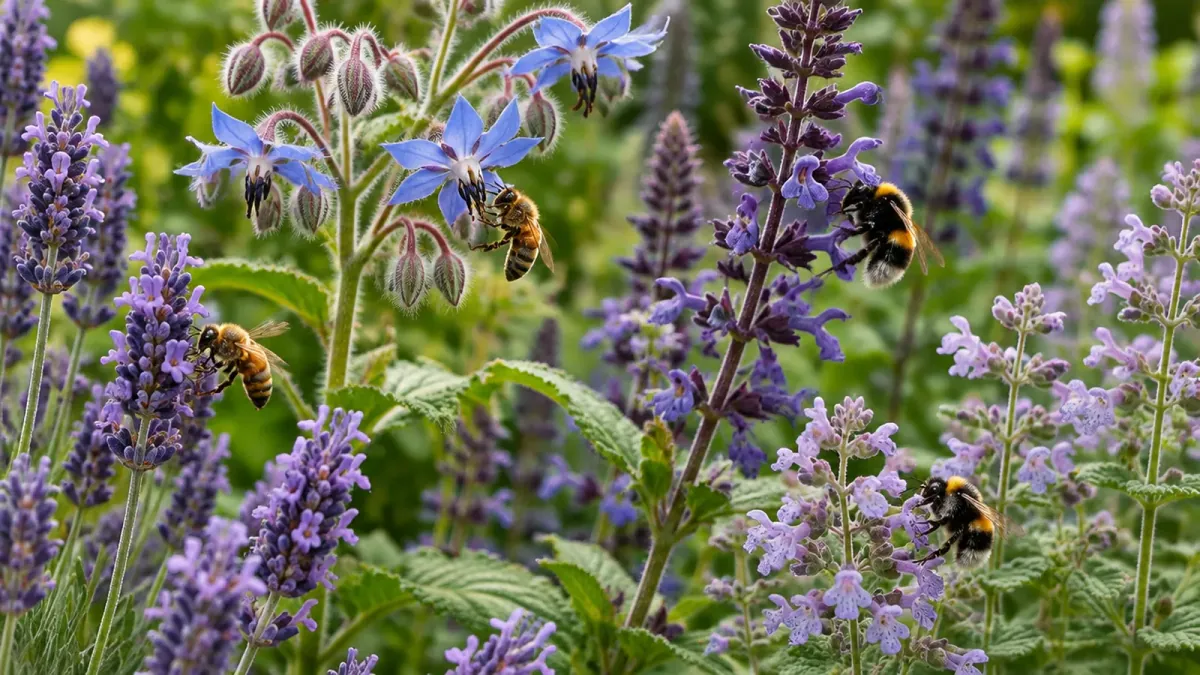
| Borage | Summer | Blue starry flowers; bees visit constantly |
| Sunflowers | Summer to fall | Pollen-rich; choose pollen-bearing varieties |
| Cosmos | Summer to frost | Easy from seed |
| Zinnias | Summer to frost | Single-flowered types are best |
| Sweet alyssum | Spring to fall | Low edging; tiny flowers |
| Calendula | Spring to frost | Cool-season bloomer |
| Phacelia | Late spring to summer | Called “bee’s friend” |
| Nasturtium | Summer | Edible; sprawls |
Our guide to easy flowers to grow from seed covers many of these, and our list of purple flowers includes many bee favorites.
Shrubs, bulbs and early flowers
Early spring is a critical time, when queen bumblebees emerge hungry.
| Plant | Season |
|---|---|
| Crocus | Late winter to early spring |
| Snowdrops | Late winter |
| Hellebores | Late winter to spring |
| Pulmonaria (lungwort) | Early spring |
| Grape hyacinth | Early to mid spring |
| Willow and pussy willow | Early spring |
| Rosemary | Early spring (in warm zones) |
| Redbud and fruit trees | Spring |
Flowering herbs bees love
Bees love thyme, oregano, mint, lavender, borage, chives and basil flowers. Let a few plants bloom. See our guide to perennial herbs for long-lived choices, and our guide to how to grow thyme for a low-growing bee magnet.
Planting for continuous bloom
A bee garden works best when something is in flower from early spring to late fall.
| Season | Plants to include |
|---|---|
| Early spring | Crocus, hellebores, pulmonaria |
| Late spring | Catmint, salvia, penstemon, alyssum |
| Summer | Lavender, bee balm, coneflower, borage, sunflowers |
| Late summer | Sedum, hyssop, zinnias, cosmos |
| Fall | Asters, goldenrod, late salvias |
If hummingbirds are also on your wish list, see flowers that attract hummingbirds. Compare with our list of butterfly-friendly flowers, since many plants serve both.
How to design a bee garden
- Choose a sunny spot sheltered from strong wind.
- Plant in drifts: groups of 3 to 5 of the same plant are easier for bees to find than single specimens.
- Select simple, single flowers and native species when possible.
- Offer water: a shallow dish with pebbles for landing.
- Provide nesting spots: leave bare, well-drained soil and some undisturbed stems and leaf litter.
- Avoid pesticides, especially insecticides on open flowers.
- Keep it going: deadhead lightly and add late-season plants.
Mistakes to avoid
- Planting double-flowered varieties that offer little pollen or nectar.
- Using pesticides, including “natural” sprays, when plants are blooming.
- Choosing only a few bloom times.
- Overly tidy beds that remove nesting sites.
- Planting single specimens instead of groups.
Pet note
Some bee-friendly plants are on ASPCA lists. Lavender, milkweed, yarrow and foxglove are listed as toxic to dogs and cats, while zinnia and alyssum are listed as non-toxic. Bee balm, echinacea, cosmos and black-eyed Susan are not on the ASPCA list, so use caution if pets chew plants. Check each plant at the ASPCA site before planting where pets roam.
Which bees visit which flowers?
Bees differ in size and tongue length, so a varied planting serves more of them.
| Bee type | What it looks like | Favorite flower shapes | Nesting |
|---|---|---|---|
| Bumblebees | Large, fuzzy, black and yellow | Deep tubes: salvia, penstemon, foxglove, catmint | Old rodent burrows, tussocks, cavities |
| Honeybees | Golden brown, medium | Open, shallow flowers; many types | Managed or wild hives |
| Mason bees | Small to medium, metallic | Spring bloom: fruit trees, redbud, pulmonaria | Hollow stems, small holes |
| Leafcutter bees | Medium, striped belly | Daisies, sunflowers, coneflowers | Hollow stems, soft wood |
| Sweat bees | Tiny, often metallic green | Small flat flowers: asters, alyssum, yarrow | Bare soil |
| Mining bees | Medium, hairy | Early spring blooms | Bare, sunny, well-drained soil |
A few small features help many species at once: a patch of bare soil, a bundle of hollow stems left standing through winter, and a shallow water dish with pebbles.
Choosing flowers by shape
Flower shape controls who can feed.
- Open daisy-type flowers (coneflower, black-eyed Susan, sunflower, aster, cosmos) are easy for nearly all bees.
- Small clustered flowers (yarrow, sedum, alyssum, thyme) suit small bees and short-tongued species.
- Tubular and lipped flowers (salvia, catmint, penstemon, foxglove) favor bumblebees.
- Spikes (lavender, liatris, hyssop) offer many small blooms in one place.
- Heavily doubled flowers (many roses, peonies, double zinnias) are poor choices.
Bee-friendly planting by garden type
| Garden | What works |
|---|---|
| Small balcony | Pots of lavender, thyme, alyssum and salvia |
| Vegetable garden | Borage, calendula and herbs among crops; let some crops flower |
| Front yard | Catmint edging, coneflowers, sedum, asters |
| Meadow strip | Native wildflowers and grasses; mow once a year |
| Shady corner | Hellebores, pulmonaria, bugle, foxglove |
Pesticides and bees
Many garden sprays harm bees, including some labeled natural. If you must spray, choose the least toxic product, treat in the evening when bees are not foraging, never spray open flowers, and avoid treating plants that are in bloom. Check labels for pollinator warnings. Better still, tolerate a little leaf damage, which means your garden is feeding something. Even gentler homemade sprays should avoid open blooms.
Quick starter plant list
For a small, inexpensive start, choose one plant from each season: crocus (early), catmint (late spring), lavender (early summer), coneflower (midsummer), sedum (late summer) and asters (fall). Plant each in a group of three or more, and you have bee food from February to November in many climates.
Frequently asked questions
What flowers do bees like best?
Bees favor blue, purple, violet, yellow and white flowers with open, simple shapes. Popular choices include lavender, bee balm, coneflower, borage, salvia, sunflowers, asters, catmint and sedum. Single-petaled flowers give easier access to nectar and pollen than heavily doubled blooms, so choose simple forms over very frilly ones.
How do I create a bee-friendly garden?
Plant a mix of flowers that bloom from early spring to late fall so bees always have food, group the same plant in clumps, choose single-flowered varieties, provide a shallow water source with stones to land on, leave some bare soil and undisturbed areas for nesting, and avoid pesticides, especially when plants are in bloom.
Are double flowers bad for bees?
Often, yes. Heavily doubled flowers, bred for extra petals, can hide or lack nectar and pollen, and the extra petals physically block access. Single or semi-double forms are better for bees. If you love a double variety, plant some single-flowered plants alongside so bees still have good food sources.
What plants do bees visit in early spring and late fall?
Early spring bees visit crocus, snowdrops, hellebores, pussy willow, pulmonaria and early herbs such as rosemary. Late-season sources include asters, goldenrod, sedum, sunflowers and late salvias. Planting for both ends of the season matters, since queen bumblebees need food early and colonies need to build stores before winter.
Do bees like herbs?
Yes, flowering herbs are some of the best bee plants. Lavender, thyme, oregano, mint, borage, chives and basil flowers are all visited heavily. Let a few plants flower instead of cutting everything back, and you will get bees as well as a harvest. Herbs also tend to be tough and easy to grow.