Flowers That Attract Hummingbirds
On this page
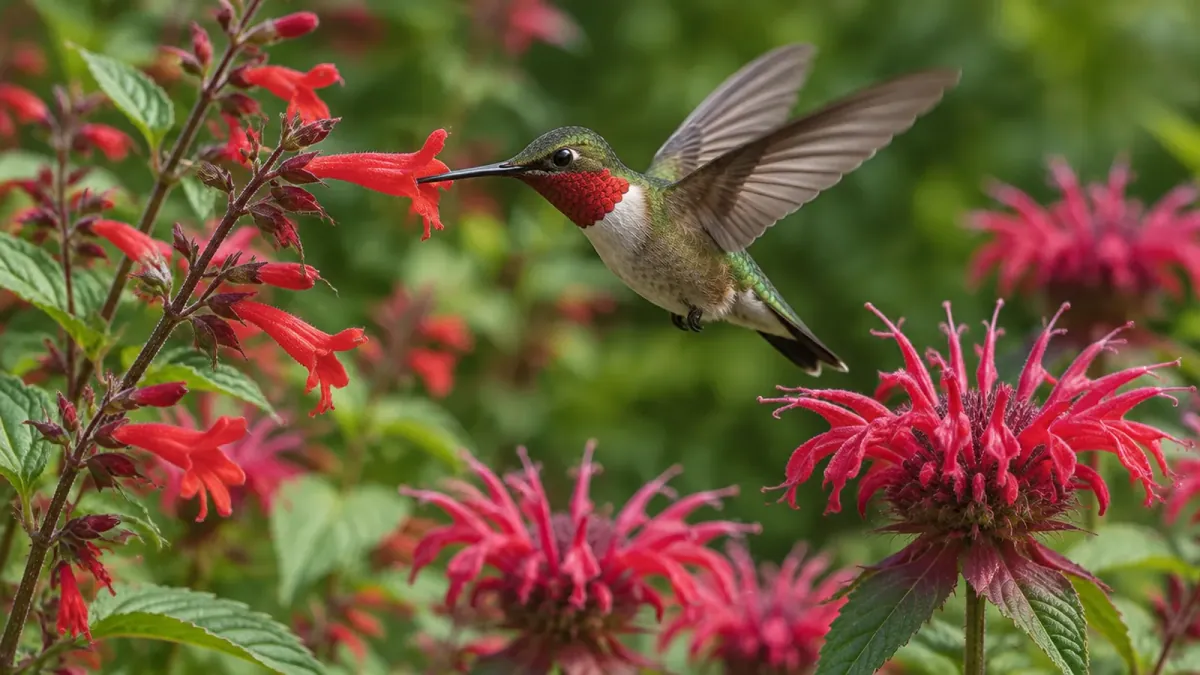
Flowers that attract hummingbirds are mostly tubular, rich in nectar and often red, orange, pink or purple. Top choices include bee balm, salvia, cardinal flower, columbine, penstemon, hyssop, trumpet honeysuckle and fuchsia. Plant in sunny, sheltered spots and offer a succession of bloom from spring to fall.
What hummingbirds look for
Hummingbirds have long beaks and tongues, and fly in short bursts, so they favor flowers that offer plenty of nectar in a tube. They spot color from a distance, and red and orange get their attention, but they will visit any color with good nectar. They also eat small insects for protein, so a pesticide-free garden helps. For more flower guides, visit our flowers hub.
Best perennials for hummingbirds
| Plant | Color | Bloom time | Sun |
|---|---|---|---|
| Bee balm (Monarda) | Red, pink, purple | Midsummer | Sun to part shade |
| Cardinal flower (Lobelia cardinalis) | Bright red | Late summer | Part shade, moist soil |
| Columbine (Aquilegia) | Red, yellow, pink | Spring | Part shade |
| Penstemon | Red, pink, purple | Early summer | Full sun |
| Hyssop (Agastache) | Orange, pink, purple | Summer to fall | Full sun |
| Salvia | Red, purple, blue | Summer | Full sun |
| Hardy hibiscus | Red, pink, white | Midsummer to fall | Full sun, moist |
| Red hot poker (Kniphofia) | Orange, red | Summer | Full sun |
| Foxglove | Pink, purple | Early summer | Part shade; biennial |
| Phlox (tall garden phlox) | Pink, purple | Summer | Sun |
| Daylily | Orange, red | Summer | Sun |
Best annuals and tender plants
| Plant | Color | Notes |
|---|---|---|
| Fuchsia | Red, pink, purple | Hanging baskets; part shade |
| Salvia (annual types) | Red | Long bloom; easy |
| Petunia | Pink, red, purple | Container favorite |
| Lantana | Orange, yellow, pink | Heat loving; long bloom |
| Impatiens | Red, pink, orange | Shade; drooping habit |
| Nasturtium | Orange, red | Edible; trails |
| Zinnia | Red, orange, pink | Easy from seed |
| Geranium (Pelargonium) | Red, pink | Container staple |
| Cuphea | Red, orange | Heat tolerant |
Vines, shrubs and trees
| Plant | Notes |
|---|---|
| Trumpet honeysuckle (Lonicera sempervirens) | Native vine with red tubular flowers |
| Trumpet vine (Campsis) | Vigorous; can be invasive, so contain it |
| Butterfly bush | Nectar for hummingbirds and butterflies; check local invasiveness |
| Weigela | Spring shrub with tubular flowers |
| Rose of Sharon | Late-season bloom |
| Mimosa and bottlebrush | Nectar sources in warm regions |
Bloom calendar
Plant for a long season so hummingbirds always find food.
| Season | Plants |
|---|---|
| Spring | Columbine, weigela, trumpet honeysuckle |
| Early summer | Penstemon, foxglove |
| Midsummer | Bee balm, salvia, daylilies |
| Late summer | Cardinal flower, hyssop, hibiscus |
| Fall | Salvia, late hyssop, zinnias |
For other long-blooming plants, see our guide to flowers that bloom all summer.
How to design a hummingbird garden
- Choose a sunny, sheltered site with some shade nearby for perching.
- Use drifts of one plant so birds can spot them from far away.
- Layer plants at different heights, from low edging to tall vines.
- Provide water: a gentle mist or shallow dripper.
- Leave perches: twigs and shrubs where birds can rest.
- Skip pesticides, which kill the insects birds also eat.
- Add a feeder as a supplement, mixed as 1 part sugar to 4 parts water.
Feeder tips
- Use plain white sugar and water only; no dye or honey.
- Boil briefly, cool completely and refrigerate extra.
- Change nectar every 2 to 3 days in hot weather.
- Clean with hot water and a brush, no soap residue.
- Hang in partial shade, away from windows to reduce strikes.
Hummingbird flowers in containers
Pots of fuchsia, salvia, petunia, lantana and trailing nasturtium brighten balconies. Use a good potting mix, water regularly and feed every two weeks. Group pots for impact. Our guide to easy flowers to grow from seed lists plants to start cheaply, and many of the same plants feed pollinators; see bee-friendly flowers.
Red flowers and warm colors
If red is your target, our list of red flowers shows more choices.
Mistakes to avoid
- Relying on red dye feeders, which can harm birds.
- Using pesticides on or near flowers.
- Planting only a single bloom time.
- Choosing double flowers, which hold little nectar.
- Letting feeders sour or mold.
Pet note
Some hummingbird plants appear on ASPCA lists: foxglove and lantana are listed as toxic to dogs and cats, while petunia, impatiens, zinnia, fuchsia (honeysuckle fuchsia) and hibiscus (Hibiscus syriacus) are listed as non-toxic. Bee balm and penstemon are not on the ASPCA list. If pets chew plants, check each one before planting.
How hummingbirds use a garden
Hummingbirds are territorial. A male may guard a good patch of flowers and chase others away, so a larger planting in several clusters gives more birds a chance to feed. They also hunt tiny insects and spiders, take nesting material such as spider silk, and bathe in light mist. A garden that provides nectar, perches, insects and shelter becomes a regular stop rather than a one-time visit.
| Need | How to provide it |
|---|---|
| Nectar | Tubular flowers and a clean feeder |
| Protein | Insects; avoid pesticides |
| Water | Misters, fountains with gentle spray |
| Perches | Dead twigs, shrubs, tall plants |
| Nesting | Shrubs and trees with soft materials |
| Shelter | Dense shrubs near open feeding areas |
Plants by region
Plant choices vary by region, because wild hummingbird species differ.
| Region | Common plants and notes |
|---|---|
| Eastern and central US | Ruby-throated hummingbirds: bee balm, cardinal flower, trumpet honeysuckle, columbine, salvia |
| Southeast and Gulf coast | Same species plus rarer visitors in fall: firebush, cuphea, turk’s cap, salvia |
| Southwest | Desert hummers: penstemon, hyssop, red yucca, desert willow, ocotillo |
| Pacific coast | Anna’s and Allen’s hummingbirds: salvia, fuchsia, currants, manzanita, monkey flower |
| Pacific Northwest | Rufous hummingbirds: flowering currant, columbine, penstemon, honeysuckle |
Use native plants where possible; local nurseries and native plant societies list the best local choices.
Troubleshooting a quiet garden
| Problem | Likely cause | Fix |
|---|---|---|
| No visitors after a year | Too few flowers, no nectar in season | Add more plants and a longer bloom season |
| Birds visit once and leave | Feeder or flowers run dry | Keep feeders fresh; add more plants |
| Only feeder visitors | Few suitable flowers | Add tubular plants and cluster them |
| Bees and wasps fight at feeder | Sugar water spills | Use bee-proof feeders; keep clean |
| Cats around | Predators | Keep feeders high and in open sight lines |
Patience matters: new gardens can take a season or two to be discovered, and plants take time to bloom heavily.
Frequently asked questions
What flowers attract hummingbirds the most?
Hummingbirds are drawn to tubular, nectar-rich flowers in red, orange, pink and purple. Top plants include bee balm, salvia, cardinal flower, trumpet honeysuckle, columbine, fuchsia, penstemon, hyssop and trumpet vine. Choose a mix of plants that bloom from spring through fall so there is always nectar available.
Do hummingbirds only like red flowers?
No. Red catches their eye, but they feed from any color that offers abundant nectar, including orange, pink, purple, and even blue and white. Shape and nectar matter more than color. Tubular flowers suit their long beaks and tongues. Many hummingbird flowers have little scent, since the birds find food by sight.
Should I use a hummingbird feeder as well?
A feeder can supplement flowers but should not replace them. Use a mix of one part white sugar to four parts water, with no dye or honey, change it every few days in warm weather and clean the feeder regularly with hot water. Dirty or fermented nectar can harm birds.
When do hummingbirds arrive and leave?
In most of the eastern United States, ruby-throated hummingbirds return in spring from about March in the Gulf states to May in the north and leave by early fall. Western regions have other species, some present year round. Have flowers blooming when birds arrive and a few late bloomers to fuel their migration.
Can I attract hummingbirds to a container garden?
Yes. Pots of fuchsia, salvia, petunias, geraniums, lantana and trailing begonias on a balcony or patio draw hummingbirds. Group containers for a bigger target, place them in view of a window, and keep them watered and deadheaded. Hanging baskets of fuchsia are particularly good bets in partial shade.