Flowers That Bloom All Summer
On this page
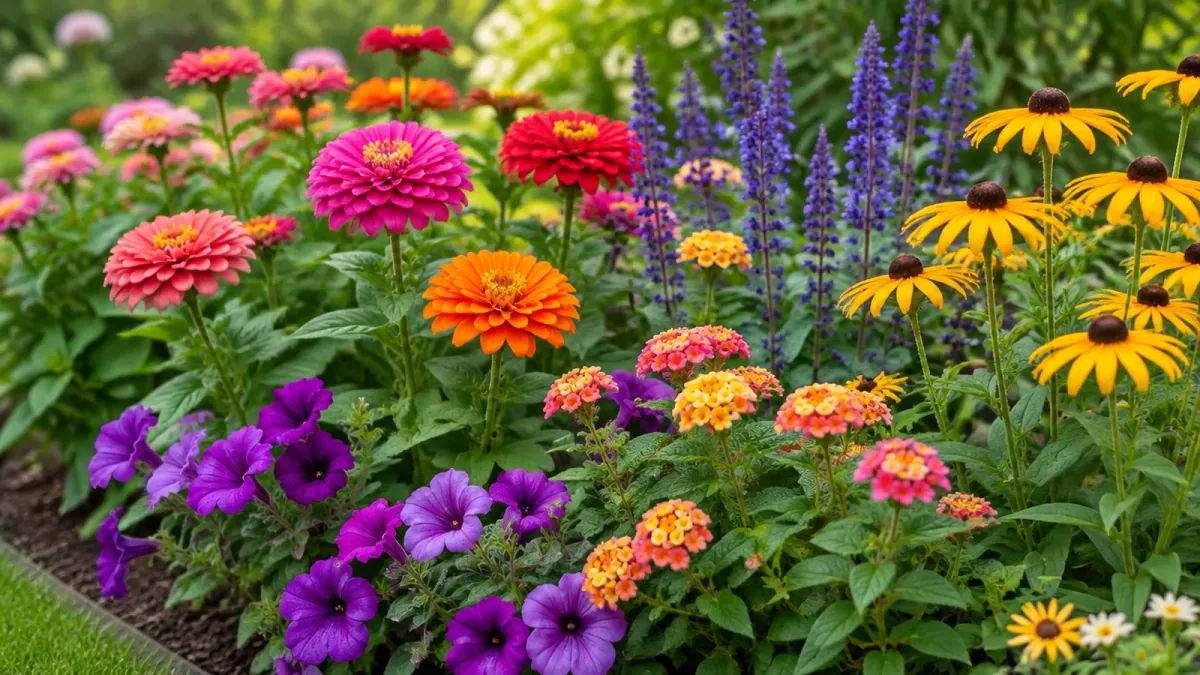
Flowers that bloom all summer include zinnias, petunias, marigolds, cosmos, lantana, geraniums, salvia, catmint, coreopsis and coneflower. The secret is to combine long-blooming annuals with the best perennials, give them full sun, and deadhead and feed regularly. A midsummer trim keeps most plants flowering until frost.
Why some plants bloom longer
Plants flower to make seed. Annuals live only one season, so they keep flowering until they have set seed or frost kills them. If you remove faded flowers before seed forms, they try again. Perennials spread their effort across several years, so each plant often blooms for a shorter time, unless it is a long-blooming variety or is deadheaded. For more flower guides, visit our flowers hub.
Best long-blooming annuals
| Plant | Color range | Sun | Notes |
|---|---|---|---|
| Zinnia | All but blue | Full sun | Easy from seed; deadhead |
| Petunia | Nearly all | Full sun | Shear in midsummer |
| Marigold | Yellow, orange | Full sun | Heat tolerant |
| Cosmos | White, pink, orange | Full sun | Light feeders |
| Lantana | Mixed warm colors | Full sun | Loves heat |
| Geranium (Pelargonium) | Red, pink, white | Sun to part shade | Container classic |
| Angelonia | Purple, pink, white | Full sun | Heat and drought tolerant |
| Sweet alyssum | White, purple | Sun to part shade | Fragrant edging |
| Salvia (annual) | Red, blue, purple | Full sun | Hummingbird favorite |
| Verbena | Purple, pink, red | Full sun | Trailing types for pots |
| Impatiens | Pink, red, white | Shade | Needs moisture |
| Begonia | Red, pink, white | Sun to shade | Reliable in pots |
For plants that are simple to start, see our guide to easy flowers to grow from seeds.
Best long-blooming perennials
| Plant | Bloom length | Color | Notes |
|---|---|---|---|
| Coreopsis (‘Moonbeam’ and others) | 8–12 weeks | Yellow | Trim after first flush |
| Catmint (Nepeta) | Late spring to fall | Blue-purple | Shear for rebloom |
| Salvia ‘May Night’ | Early summer, rebloom | Violet | Cut back after bloom |
| Purple coneflower | Summer to fall | Purple, pink | Tough and long lasting |
| Black-eyed Susan | Summer to fall | Yellow | Easy |
| Gaillardia (blanket flower) | Summer to frost | Red-yellow | Short lived but showy |
| Hardy geranium ‘Rozanne’ | Summer to frost | Blue-violet | Superb for the length of bloom |
| Daylily (reblooming types) | Summer | Many | Choose ‘Stella de Oro’ types |
| Yarrow | Summer | Many | Drought tolerant |
| Shasta daisy | Summer | White | Deadhead |
For color choices, see our lists of yellow flowers and pink flowers. See our guide to perennial flowers for full sun for more.
Planting for color from June to frost
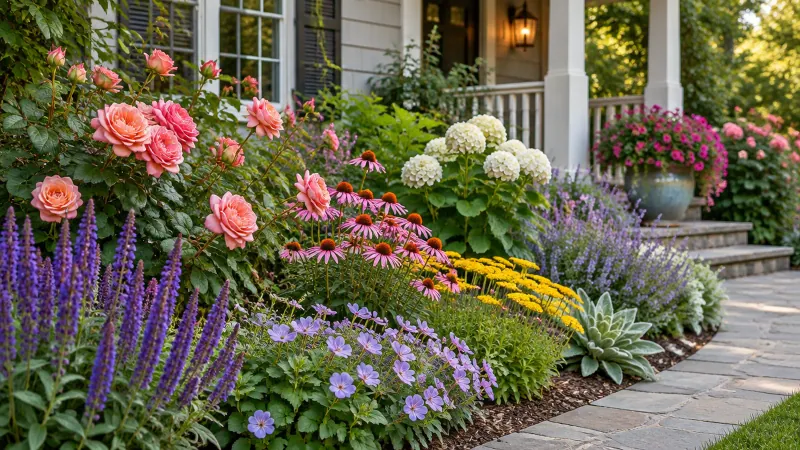
A good summer bed layers plants so something is always in bloom.
| Layer | Plants |
|---|---|
| Back | Tall cosmos, sunflowers, tall salvia |
| Middle | Coneflower, black-eyed Susan, zinnia |
| Front | Marigolds, alyssum, catmint, petunias |
| Containers | Geraniums, petunias, lantana, verbena |
Fill gaps in the perennial bed with annuals, which bridge the lull between bloom periods.
How to keep plants blooming
- Plant in full sun. Most bloomers need 6 or more hours.
- Deadhead regularly. Pinch or snip spent flowers back to a leaf or bud.
- Water deeply during dry weather, and avoid wetting foliage.
- Feed every 2 to 4 weeks with a balanced fertilizer; too much nitrogen gives leaves instead of flowers.
- Shear in midsummer. Cut leggy petunias, catmint, salvia and alyssum back by a third.
- Mulch to keep soil moist and cool.
- Prune hanging baskets so they stay compact.
Deadheading and shearing tips
| Plant | How to deadhead |
|---|---|
| Zinnia, marigold | Pinch off faded heads |
| Coneflower, black-eyed Susan | Snip below the spent flower; leave late ones for birds |
| Petunia | Shear back by a third in midsummer |
| Catmint, salvia | Cut back hard after first bloom |
| Self-cleaning types (‘Wave’ petunias, sweet alyssum) | Little deadheading needed |
Choosing for your climate
In hot summers, pick heat-tolerant plants such as lantana, zinnia, angelonia and gaillardia. In cool summers, petunias, pansies and sweet alyssum perform well. In dry areas, choose drought-tolerant plants like coreopsis and yarrow, and see our guide to drought-tolerant landscaping.
Containers for all-summer color
Container color needs regular care: water daily in heat, feed weekly with diluted liquid fertilizer and deadhead. Combine a tall “thriller,” a mounded “filler” and a trailing “spiller” in each pot.
Mistakes to avoid
- Planting in too much shade.
- Letting flowers go to seed.
- Over-fertilizing with nitrogen.
- Skipping the midsummer trim.
- Overcrowding plants.
Pets
Some long-blooming plants appear on ASPCA lists: lantana and yarrow are listed as toxic to dogs and cats, and scented geranium (Pelargonium) is also listed as toxic. Zinnia, petunia, snapdragon, impatiens, coreopsis and sweet alyssum are listed as non-toxic. Coneflower, cosmos, black-eyed Susan and gaillardia are not on the ASPCA list. Catmint is in the same genus (Nepeta) as catnip, which the ASPCA lists as toxic to cats, so treat catmint as toxic to cats. Use cautious placement if your pets chew plants.
Fertilizer guide for constant bloom
Flowers need regular but moderate feeding. Too much nitrogen gives lush leaves and few blooms.
| Plant type | Feeding approach |
|---|---|
| Annuals in beds | Mix a slow-release fertilizer into the soil at planting; supplement every 3–4 weeks with a balanced liquid feed |
| Annuals in containers | Feed weekly with half-strength liquid fertilizer, since watering washes nutrients out |
| Heavy feeders (petunias, geraniums, zinnias) | Feed every 2 weeks |
| Light feeders (cosmos, coreopsis, gaillardia, yarrow) | Feed lightly or not at all in decent soil |
| Perennials | A spring top-dressing of compost; an extra feed after the first flush |
Water and heat
Deep watering twice a week is better than light daily sprinkles for beds. Water in the morning at the base of plants. Containers may need daily water in hot weather, and large pots with a saucer hold moisture longer. Mulch 2 inches deep. In heat above about 90°F, some flowers pause blooming; they resume when it cools, so keep plants watered and don’t over-fertilize during the pause.
Easy plant combinations for all-summer color
| Combination | Why it works |
|---|---|
| Zinnias, cosmos and marigolds | Tough, heat tolerant, great from seed |
| Catmint, coneflower and yarrow | Long bloom, low water, pollinators |
| Petunias, lantana and geraniums in a pot | Classic summer container |
| Salvia, gaillardia and coreopsis | Sun-loving, drought tolerant |
| Impatiens, begonias and fuchsia | Shade color |
Cut flowers from a summer garden
Many long bloomers also make good cut flowers: zinnias, cosmos, coneflowers and yarrow. Cutting encourages more blooms. See our list of long-lasting cut flowers to grow for varieties that last in a vase.
Planning for a summer that never ends
Think in three waves. Early summer: catmint, salvia, hardy geranium, early coreopsis. Midsummer: coneflower, black-eyed Susan, zinnia, daylily. Late summer into fall: sedum, asters, cosmos, gaillardia. Fill gaps with annuals in pots and sink the pots into the beds where needed.
Frequently asked questions
What flowers bloom the longest in summer?
Annuals bloom longest because they put their energy into flowers until frost. Reliable choices include zinnias, petunias, marigolds, cosmos, geraniums, lantana, angelonia and sweet alyssum. Among perennials, coreopsis ‘Moonbeam’, catmint, salvia ‘May Night’, coneflower, black-eyed Susan and gaillardia bloom for many weeks, especially when deadheaded.
How do I keep flowers blooming all summer?
Deadhead spent flowers regularly, water deeply during dry spells, feed every few weeks with a balanced or bloom fertilizer, and give plants enough sun. Shear leggy plants such as catmint, petunias and salvia back by a third in midsummer to trigger a new flush of flowers. Mulch to keep soil cool and moist.
Do perennials bloom all summer?
Most perennials bloom for two to six weeks, but a few go much longer, such as coreopsis, catmint, hardy geraniums like ‘Rozanne’, salvias, gaillardia and coneflower. For continuous color, mix perennials with different bloom times and tuck annuals between them to fill gaps. Deadheading extends bloom on most perennials.
What flowers bloom all summer in shade?
Impatiens, begonias, torenia, fuchsia and coleus grown for foliage keep color going in shade. Perennial options include hardy geranium, astilbe, hostas for foliage and foamflower. Shade plants bloom less than sun lovers, so expect softer, steadier color and give them rich, moist soil and regular feeding.
What is the easiest summer flower to grow?
Zinnias and marigolds are among the easiest. Both grow quickly from seed sown directly in the ground after frost, tolerate heat and bloom until fall. Cosmos and sunflowers are also simple. If you prefer ready-grown plants, petunias and geraniums from the garden center need little more than sun, water and occasional feeding.