Drought-Tolerant Landscaping Ideas (Xeriscaping)
On this page
Drought tolerant landscaping, or xeriscaping, uses plants suited to dry conditions, improved soil, mulch and efficient irrigation to cut water use. Start with a plan, reduce lawn, group plants by water needs, install drip irrigation, mulch beds and choose plants native or well adapted to your climate. It can be colorful and lush, not just rocks and cacti.
What is drought-tolerant landscaping?
Drought-tolerant landscaping, often called xeriscaping, is a design approach that reduces the need for supplemental water. It is useful in dry regions, in places with water restrictions, and for anyone who wants lower water bills and less work. The idea isn’t to eliminate plants, but to choose the right plants, design the space well and care for the soil.
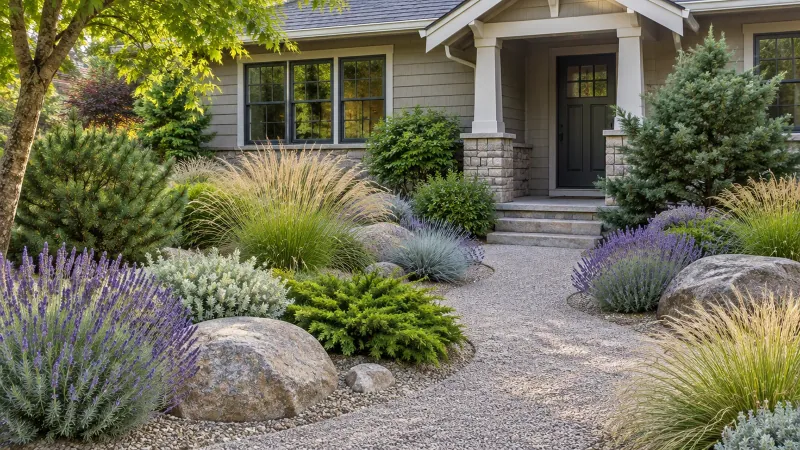
It is often misunderstood as “zero-scaping” with gravel and cactus. In fact, a good drought-tolerant landscape can be rich with flowers, grasses, shrubs and trees. For more landscape ideas, browse our landscaping hub.
The seven principles of xeriscaping
- Plan and design. Map sun, shade, slopes and drainage.
- Improve the soil. Add compost to help it hold water and nutrients.
- Limit turf. Keep grass only where you use it.
- Choose appropriate plants. Use plants adapted to your climate.
- Water efficiently. Use drip irrigation and water deeply and infrequently.
- Mulch. Cover bare soil to reduce evaporation and weeds.
- Maintain. Weed, prune and check irrigation regularly.
18 drought-tolerant landscaping ideas
Design ideas
1. Group plants by water needs. Put plants that need more water near the house or a downspout, and the driest plants farthest away. This is called hydrozoning.
2. Replace part of the lawn. Shrink the lawn to the area you use. Our guides to ground cover plants and lawn alternatives show what to plant instead.
3. Use a mix of plant forms. Combine grasses, upright perennials, mounding shrubs and a few evergreens for texture and year-round interest.
4. Add focal points. A boulder, a large pot or a small tree gives structure so that dry-garden planting doesn’t look sparse.
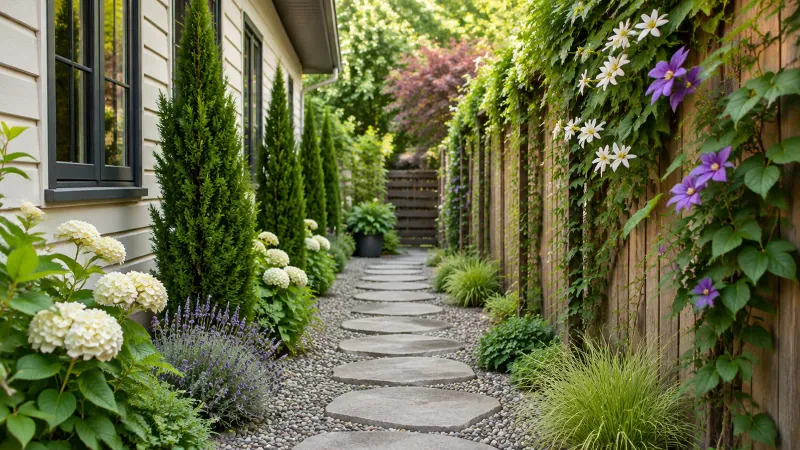
5. Use hard surfaces wisely. Paths, patios and dry creek beds add function. See our garden path ideas for materials.
Soil and mulch ideas
6. Improve the soil with compost. In sandy soil, compost helps hold water. In clay, it improves drainage. See our guide to improving garden soil.
7. Mulch beds with 2 to 3 inches of organic mulch. It cuts evaporation and weeds. Our guide to types of mulch compares the options.
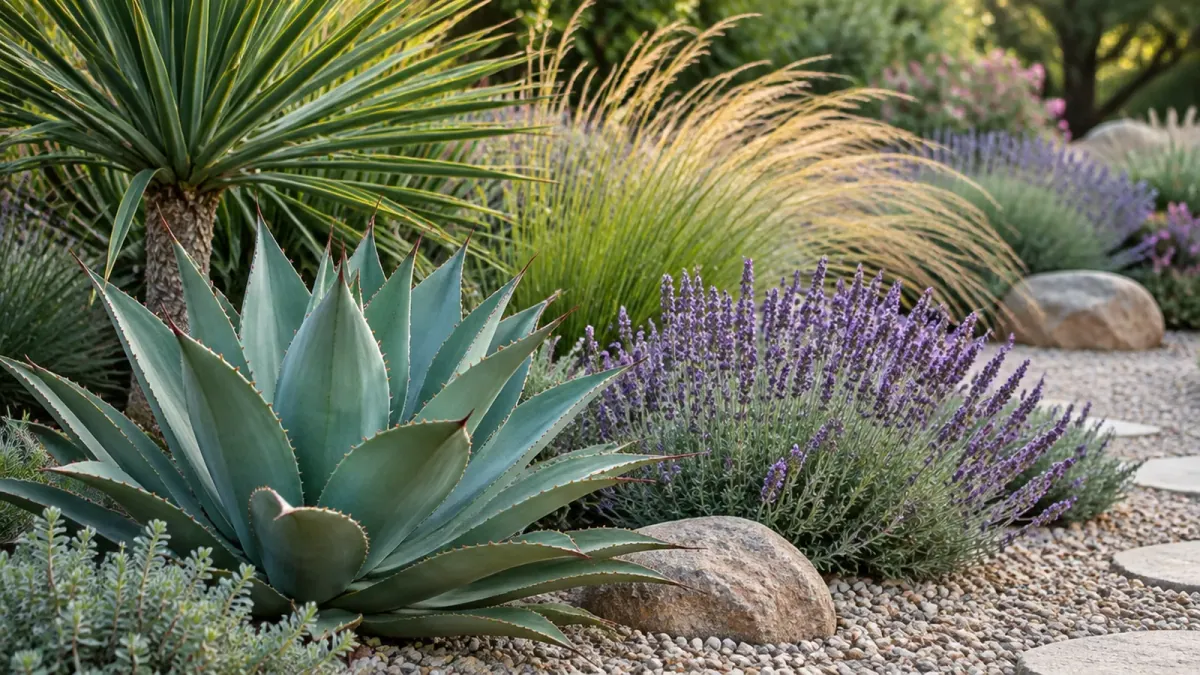
8. Use gravel mulch for dryland plants. Lavender, agave and other plants that hate wet crowns suit gravel.
9. Create swales and berms. Gentle depressions and mounds help capture rain and direct it toward plants.
10. Make a rain garden or dry creek bed. These handle heavy rain without flooding.
Irrigation ideas
11. Install drip irrigation. Drip lines deliver water to roots with little waste. Put them under mulch.
12. Use a smart timer or rain sensor to avoid watering when it isn’t needed.
13. Water deeply and infrequently. Deep watering encourages deep roots. Frequent shallow watering encourages shallow, weak roots.
14. Collect rainwater. A barrel under a downspout gives free water for containers and new plants.
Plant ideas
15. Choose native plants. Plants native to your region are adapted to local rainfall and soils. Your extension service or native plant society can suggest options.
16. Use ornamental grasses. Blue fescue, little bluestem, feather reed grass and Mexican feather grass add movement.
17. Add succulents and drought-tolerant perennials. Sedum, yarrow, agastache and coneflower provide flowers with little water.
18. Plant trees and shrubs for shade. Shade reduces water needs for nearby plants. Choose trees suited to your area and plant them where they will shade the house in summer.
Drought-tolerant plants by type
| Type | Examples | Sun | Notes |
|---|---|---|---|
| Perennials | Yarrow, coneflower, sedum, Russian sage, agastache, catmint | Full sun | Many are also good for pollinators |
| Herbs | Lavender, rosemary, thyme, oregano, sage | Full sun | Need sharp drainage |
| Grasses | Blue fescue, little bluestem, feather reed grass | Full sun | Cut back in late winter |
| Shrubs | Rock rose, ceanothus, juniper, potentilla | Sun | Check hardiness for your zone |
| Succulents | Agave, yucca, hens and chicks, sedum | Full sun | Many are hardy; need drainage |
| Ground covers | Creeping thyme, sedum, ice plant | Full sun | See our ground cover plants guide, and rock garden ideas for stone-and-succulent designs |
| Trees | Desert willow, mesquite, native oaks | Sun | Choose by region |
Drought-tolerant plants are not all the same, so match them to your region: plants from the Mediterranean, the American Southwest and the prairies each prefer different conditions. Always check the label for your USDA zone.
Drought-tolerant landscaping by climate
| Climate | Strategies |
|---|---|
| Hot and dry (Southwest) | Desert and Mediterranean plants; gravel mulch; shade trees |
| Mediterranean (California) | Natives, lavender, rosemary, ceanothus; mulch; winter planting |
| Prairie and plains | Native grasses and wildflowers, such as coneflower and little bluestem |
| Humid, with dry spells | Heat-tolerant perennials such as sedum and coneflower; mulch |
| Cold with dry summers | Hardy perennials such as yarrow and sedum; plant in fall |
How to plant a drought-tolerant garden
- Plan the layout and mark beds.
- Remove lawn or weeds. Smothering with cardboard and mulch is an easy way.
- Improve the soil with compost.
- Install irrigation before planting.
- Plant in fall or spring and space plants for mature size.
- Water deeply after planting and regularly for the first year or two.
- Mulch after planting.
- Reduce watering gradually as plants establish.
Watering schedule for establishing plants
| Time after planting | Watering approach |
|---|---|
| First 2 weeks | Water every 2–3 days to settle roots |
| Weeks 3–8 | Water deeply once or twice a week |
| Rest of the first season | Water deeply every 7–14 days in dry weather |
| Second year | Water only in extended dry spells |
| Established | Little or none for truly drought-tolerant plants |
Adjust for your soil: sandy soil drains quickly and needs more frequent watering, while clay holds water and needs less. Always check the soil a few inches down before watering.
Fire-wise and wildlife-friendly choices
In regions at risk of wildfire, a drought-tolerant landscape can also be fire-wise. Keep plants well spaced, use gravel or paving near the house, and avoid highly resinous shrubs against walls. Native plants provide food and shelter for bees, butterflies and birds, and many fit both purposes. Local fire departments and extension services publish plant lists for your region.
Drought-tolerant landscaping for small spaces
If you have only a small yard or a front strip, concentrate on a few well-chosen plants: a small tree or large shrub for structure, a few clumps of ornamental grass, and groups of sedum, yarrow or catmint in front. A gravel path or stepping stones and a single large pot give the space design without much water. See our low-maintenance front yard ideas for more simple layouts.
Containers and raised beds in a dry garden
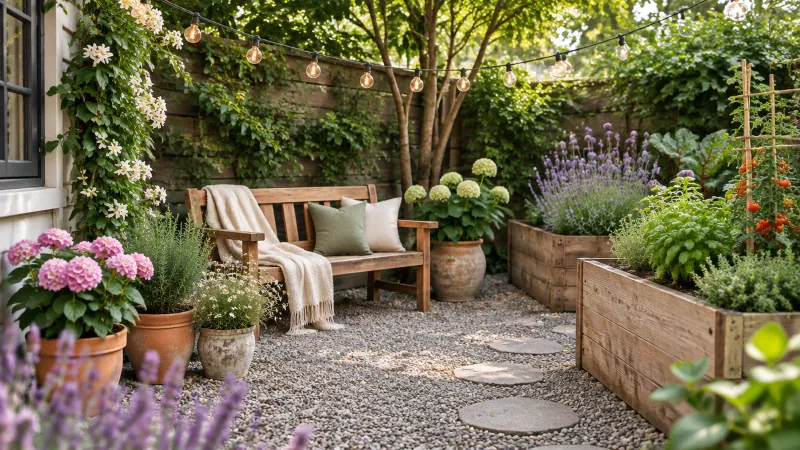
Pots and raised beds dry faster than ground soil, so choose carefully. Large containers of succulents, lavender, rosemary and ornamental grasses need less water than annual flowers. Use potting mix with plenty of grit, and group pots together so they shade each other’s roots. Raised beds filled with a lean, free-draining mix suit Mediterranean herbs and dryland perennials. A drip line to each container makes summer care much easier.
Common mistakes
| Mistake | Problem | Fix |
|---|---|---|
| Planting in summer heat | Stress and high water use | Plant in fall or spring |
| Overwatering “tough” plants | Root rot | Water deeply but rarely; ensure drainage |
| Plastic under gravel | Poor drainage; weeds grow on top | Use breathable fabric or none |
| Ignoring soil | Poor establishment | Improve with compost and match plants to soil |
| Too much gravel and too few plants | Hot, barren look | Plant densely enough to cover soil |
| Forgetting maintenance | Weeds and overgrowth | Weed and prune regularly |
For plant ideas that also need little upkeep, see our guide to low-maintenance front yard landscaping.
Frequently asked questions
What is xeriscaping?
Xeriscaping is landscaping designed to use little or no supplemental water. It uses seven principles: planning and design, soil improvement, limited turf, appropriate plants, efficient irrigation, mulch and ongoing maintenance. The word comes from the Greek xeros, meaning dry. It doesn’t mean a yard of rocks and cacti: well-designed xeriscapes can be lush, colorful and varied.
What are the best drought-tolerant plants?
Good drought-tolerant plants vary by region. Widely used examples include lavender, Russian sage, yarrow, sedum, coneflower, agastache, salvia, ornamental grasses, yucca, agave, rosemary, thyme and native plants suited to your area. Choose plants adapted to your climate and soil, and water them well during their first year or two to establish deep roots.
How do you start a drought-tolerant garden?
Start with a plan: note sun, shade, slopes and drainage. Improve soil with compost, reduce lawn, group plants by water needs, install drip irrigation and add 2 to 3 inches of mulch. Plant in fall or spring so roots establish before heat. Water new plants regularly for the first season, then gradually reduce.
Does drought-tolerant landscaping need any watering?
Yes, at first. New plants need regular watering for the first one to two years while roots grow deep. After that, many drought-tolerant plants need little or no extra water in normal conditions, though most still benefit from occasional deep watering during prolonged drought or heat waves.
Is gravel better than mulch for drought-tolerant gardens?
Both work, and the best choice depends on the plants. Organic mulch such as shredded bark improves soil and suits most shrubs and perennials. Gravel suits true desert and Mediterranean plants that prefer very sharp drainage, and it lasts longer, but it reflects heat and doesn’t feed the soil. Use organic mulch around thirsty plants and gravel around dryland species.