Rock Garden Ideas for Front and Back Yards
On this page
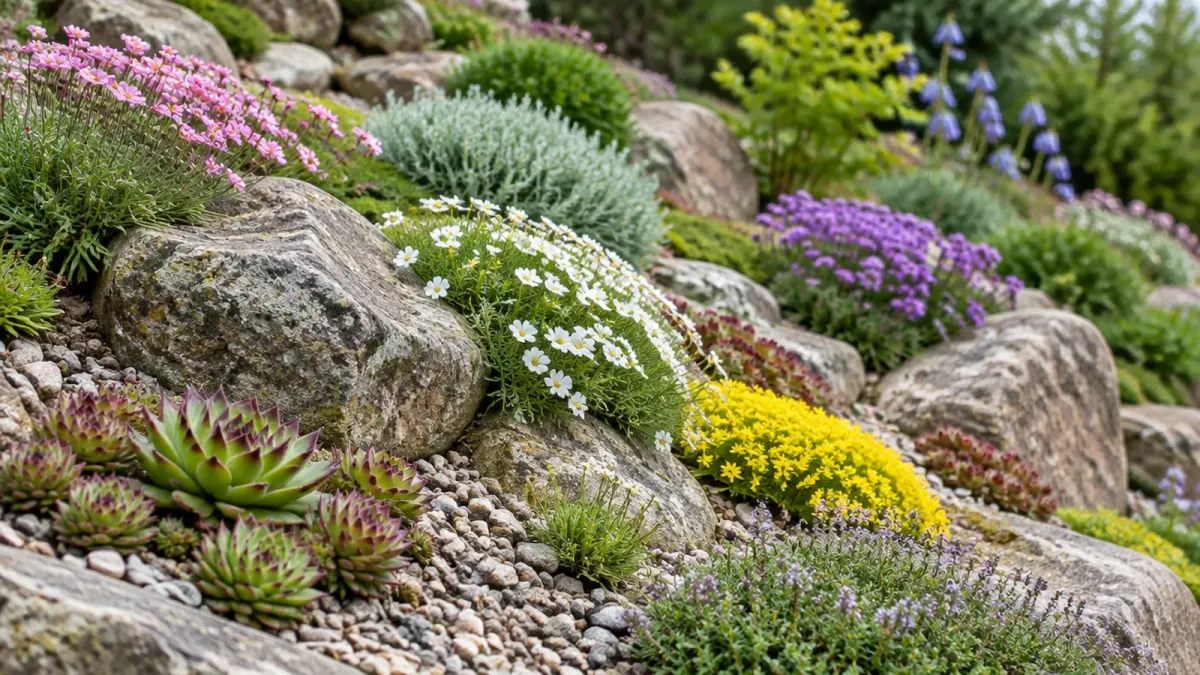
Rock garden ideas range from a simple gravel bed with a few boulders to a terraced slope packed with alpine plants. Use sun, sharp drainage and lean, gritty soil, bury stones partly so they look natural and plant low, drought-tolerant species such as sedum, thyme and creeping phlox in the gaps.
Why a rock garden?
Rock gardens turn awkward spots, slopes, dry corners and poor soil into features. They save water, need little feeding and give year-round interest through stone texture and evergreen plants. They also pair well with drought-tolerant landscaping; see our guide to drought-tolerant landscaping. For more guides, visit our landscaping hub.
Rock garden styles
| Style | What it looks like | Best for |
|---|---|---|
| Sloping rock garden | Stones and plants set into a bank | Hillsides and raised mounds |
| Alpine rock garden | Natural outcrops, tiny mountain plants | Collectors, cooler climates |
| Japanese-style rock garden | Raked gravel, a few carefully placed stones | Calm, minimal spaces |
| Gravel garden | Flat bed of gravel with drifts of plants | Dry climates, front yards |
| Desert or succulent rock garden | Boulders, cacti and succulents | Hot, dry regions |
| Container rock garden | Troughs or pots of stones and alpines | Patios and small yards |
| Dry creek bed | A line of stones that looks like a stream | Drainage problems |
Front yard ideas
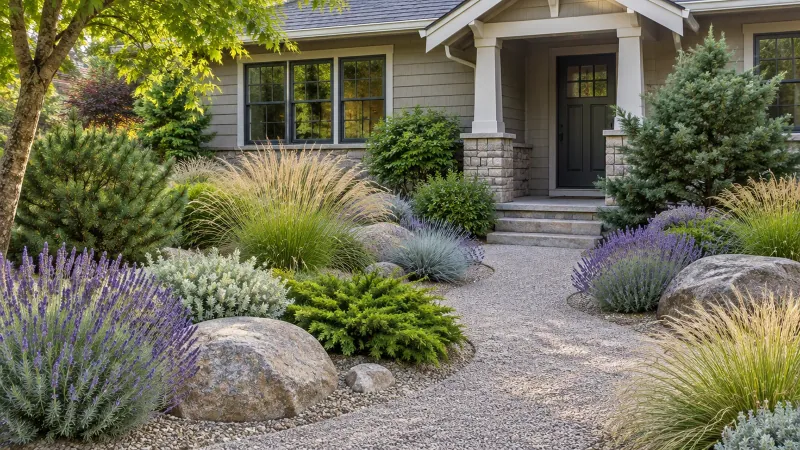
- A mound at the corner of the house with large anchor stones and a gravel path.
- A sloped bank with sedum, thyme and creeping phlox, replacing grass that is hard to mow.
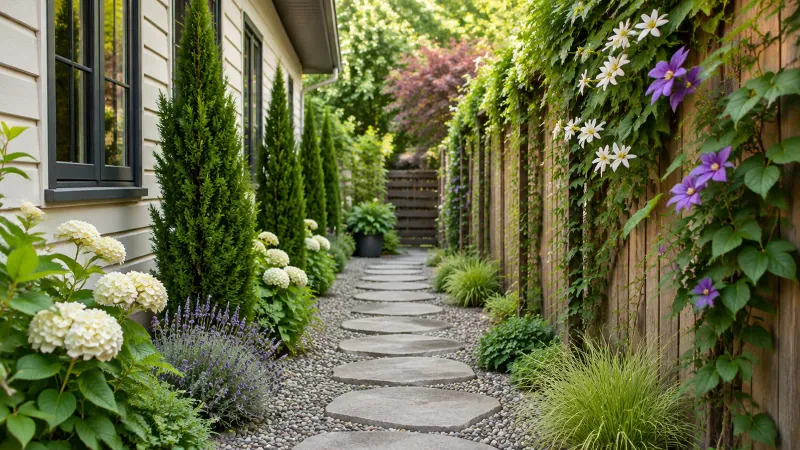
- A gravel strip along the driveway with drought-tolerant plants.
- A dry creek bed that guides runoff and adds interest.
For related ideas, see our guide to low-maintenance front yard ideas and our list of ground cover plants.
Back yard ideas
- A terraced rock garden behind a retaining wall.
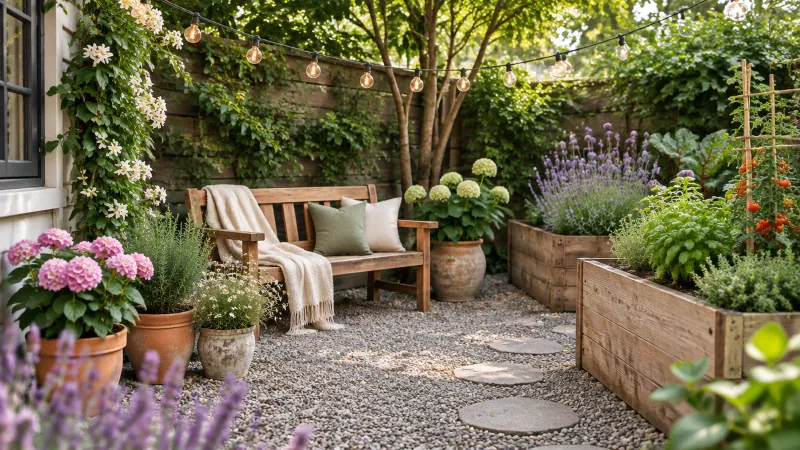
- A raised stone bed with pockets for herbs, such as thyme.
- A rock garden around a patio to soften edges.
- A zen-style gravel garden with a few stones and a bench.
- A trough garden for tiny alpine plants on a table.
Choosing rocks
| Rock type | Look | Notes |
|---|---|---|
| Limestone and sandstone | Soft, weathered, layered | Natural for many regions; can raise pH |
| Granite and fieldstone | Rounded, gray, tan | Durable |
| Lava rock | Dark, porous | Good in warm, dry regions |
| River rock and cobble | Smooth, rounded | Good for dry creek beds |
| Flagstone | Flat | Path edges and steps |
Use local stone where possible, because it fits the landscape and reduces transport. Choose rocks of different sizes, with a few large anchors. Pick one rock type; mixing too many looks messy.
How to build a rock garden
- Pick the site: sunny and well drained. Avoid spots where water pools.
- Mark the shape with a hose or rope. Natural curves look better than straight lines.
- Clear weeds and grass, removing roots. For lawn, cut and remove the sod.
- Shape the ground into a gentle mound or slope, which improves drainage and shows off the rocks.
- Mix the soil: blend native soil with coarse sand or grit, and perhaps a little compost. Avoid rich soil, which makes plants floppy.
- Place the largest stones first. Bury about one third of each, tilting them slightly into the slope and facing the same direction, as in natural outcrops.
- Add medium and small stones to link the large ones, leaving planting pockets.
- Plant in the gaps, setting plants at the same depth as in their pots.
- Top with gravel around plants, 1 to 2 inches deep.
- Water to settle the soil, and keep new plants watered until established.
Best plants for sunny rock gardens
| Plant | Height | Notes |
|---|---|---|
| Sedum (stonecrop) | 2–8 in | Many types; tough; ASPCA lists several sedum as non-toxic |
| Hens and chicks (Sempervivum) | 2–6 in | Rosettes; very hardy |
| Creeping thyme | 2–4 in | Fragrant; see how to grow thyme |
| Creeping phlox (moss phlox) | 4–6 in | Spring carpet; ASPCA lists moss phlox as non-toxic |
| Ice plant (Delosperma) | 2–4 in | Bright flowers; hardiness varies |
| Dianthus | 6–12 in | Fragrant; listed by the ASPCA as toxic |
| Aubrieta | 4–6 in | Spring bloom |
| Armeria (sea thrift) | 6–10 in | Tufts and pink pompons |
| Dwarf grasses | 6–18 in | Add movement |
| Lavender | 12–24 in | Needs sun and good drainage; ASPCA lists it as toxic |
Best plants for shady rock gardens
| Plant | Notes |
|---|---|
| Ajuga | Low spreader; foliage color |
| Coral bells (Heuchera) | Colorful leaves; ASPCA lists it as non-toxic |
| Ferns | Soft texture in shade |
| Sweet woodruff | Fragrant ground cover |
| Hellebores | Winter bloom; ASPCA lists them as toxic |
For more shade options, see our guide to best flowers for full shade gardens.
Maintenance
- Weed regularly while plants establish; pull weeds when small.
- Water new plants weekly in their first season; established plants need little.
- Trim spent flowers and spreaders.
- Top up gravel every few years.
- Divide crowded clumps in spring.
- Don’t over-fertilize, which makes plants leggy.
Mistakes to avoid
- Placing rocks on top like eggs rather than burying them.
- Using rich soil or heavy clay without grit.
- Mixing too many rock types.
- Planting thirsty or large plants.
- Placing in shade for sun plants.
- Using plastic sheeting that blocks drainage.
Pets
Some rock garden plants are toxic to pets: the ASPCA lists dianthus, lavender and hellebore as toxic to dogs and cats, and lists hens and chicks (Echeveria), ice plant (Lampranthus), coral bells and moss phlox as non-toxic. Sempervivum, ajuga and armeria are not on the ASPCA list, so use caution. Check each plant before you plant where pets roam.
Rock garden on a slope
A slope is the ideal rock garden site because water drains away and stones show well. Work from the bottom up, setting the lowest stones first so they anchor the ones above. Tilt each stone slightly back into the bank, so water runs toward the roots of nearby plants. Build in small terraces if the slope is steep, and keep a path or stepping stones to reach plants for weeding.
| Slope | Approach |
|---|---|
| Gentle | Scatter stones in drifts and plant between them |
| Moderate | Set stones in rows like natural ledges |
| Steep | Terrace with a retaining wall of large stones; consider an engineer for walls over about 3 feet |
Seasonal interest
A rock garden can look good in every season if you mix plants. Spring brings creeping phlox, aubrieta and bulbs. Summer brings sedum, thyme and ice plant flowers. Fall adds sedum color and grasses. In winter, evergreen hens and chicks, thyme and the stones themselves keep structure. A few dwarf conifers add height and winter color, so choose slow-growing, compact forms.
Budget tips
Check local sources for free or cheap stone, including quarries, landscape suppliers and construction sites (with permission). Use fewer, larger stones rather than many small ones, which looks more natural. Propagate sedum and thyme from cuttings and divisions for free plants. A small trough or mound is a cheap way to start before building a bigger rock garden.
Frequently asked questions
What is a rock garden?
A rock garden is a planted area built around rocks and gravel, designed to look like a natural rocky landscape. It features low, tough plants that thrive in fast-draining, lean soil, such as sedum, thyme, creeping phlox and hens and chicks. Rock gardens suit slopes, dry sites and low-maintenance yards.
How do I build a rock garden?
Choose a sunny, well-drained site, clear weeds, shape the ground into a gentle mound or slope, and bury larger stones about one third deep so they look natural. Mix a gritty, fast-draining soil, plant low alpine or drought-tolerant species between the stones, and top with gravel. Water new plants until established.
What plants grow best in a rock garden?
Low-growing, drought-tolerant plants do best: sedum, sempervivum (hens and chicks), creeping thyme, creeping phlox, ice plant, dianthus, aubrieta, armeria and ornamental grasses. For shade, use ajuga, coral bells and ferns. Choose plants that match your sun, soil and climate, and avoid thirsty or large plants.
Are rock gardens low maintenance?
They are lower maintenance than most beds, because the plants are tough and need little water or feeding once established. But weeds still grow in gravel, so use landscape fabric or mulch carefully and pull weeds when small. Avoid heavy fabric under planting pockets, and expect occasional trimming and replanting.
What size rocks should I use?
Use a mix: a few large anchor stones, medium rocks to link them and gravel or smaller stones to fill. Choose a single local rock type so the garden looks natural. Bury rocks partly, tilt them in the same direction, and group them in odd numbers. Plan weight and access carefully, since stones are heavy.