Ground Cover Plants to Replace Grass
On this page
Good ground cover plants to replace grass include creeping thyme, white clover, sedum, creeping phlox, moss, sweet woodruff, pachysandra and native sedges. Choose by light and foot traffic: thyme and clover tolerate light walking in sun, while sedges, sweet woodruff and moss suit shade. Prepare the soil, space plants properly, mulch until they fill in and weed in year one.
Why replace grass with ground covers?
Lawns need mowing, watering and feeding, and they often struggle in shade, on slopes and in difficult strips. Ground cover plants are low, spreading plants that cover soil, suppress weeds, hold slopes and cut maintenance. Some offer flowers for pollinators; many stay green with little or no mowing. For more yard design ideas, browse our landscaping hub.
Ground covers aren’t a perfect lawn substitute: most don’t tolerate heavy foot traffic, and they need weeding while they establish. Our guide to lawn alternatives compares options for large areas.
Ground cover plants compared
Sizes, spreads and zones are typical and vary by variety.
| Plant | Height | Light | USDA zones | Foot traffic | Notes |
|---|---|---|---|---|---|
| Creeping thyme | 2–4 in | Full sun | 4–9 | Light | Fragrant; flowers attract bees |
| White clover | 4–8 in | Sun to part shade | 3–10 | Light to moderate | Fixes nitrogen; stays green |
| Corsican mint | 1 in | Part shade | 6–9 | Light | Strong minty scent |
| Sedum (creeping types) | 2–6 in | Full sun | 3–9 | None | Drought-tolerant |
| Creeping phlox | 4–6 in | Full sun | 3–9 | None | Spring flowers |
| Ice plant (hardy) | 2–4 in | Full sun | 5–9 | None | Bright flowers; needs drainage |
| Juniper (creeping) | 6–24 in | Full sun | 3–9 | None | Evergreen; good for slopes |
| Moss | 1–2 in | Shade | Varies | Light | Needs acidic, moist, compacted soil |
| Sweet woodruff | 6–12 in | Part to full shade | 4–8 | Light | White spring flowers |
| Pachysandra | 6–10 in | Part to full shade | 4–9 | None | Evergreen; can be aggressive |
| Native sedges | 6–18 in | Shade to sun | 3–9 | Light | Grass-like; many species |
| Foamflower | 6–12 in | Shade | 4–9 | None | Spring flowers; native |
| Creeping Jenny | 2–4 in | Sun to shade | 3–9 | Light | Golden leaves; invasive in some areas |
| Ajuga (bugleweed) | 3–6 in | Sun to shade | 3–9 | None | Blue flowers; can spread widely |
| Barrenwort (epimedium) | 8–12 in | Part to full shade | 5–9 | None | Good for dry shade |
| Wild ginger | 6–8 in | Shade | 3–7 | None | Native; slow spreader |
| Lamb’s ear | 6–12 in | Full sun | 4–8 | None | Soft, silvery leaves |
| Daylily (spreading) | 1–3 ft | Sun | 3–9 | None | Good for slopes |
Ground covers for sun
1. Creeping thyme
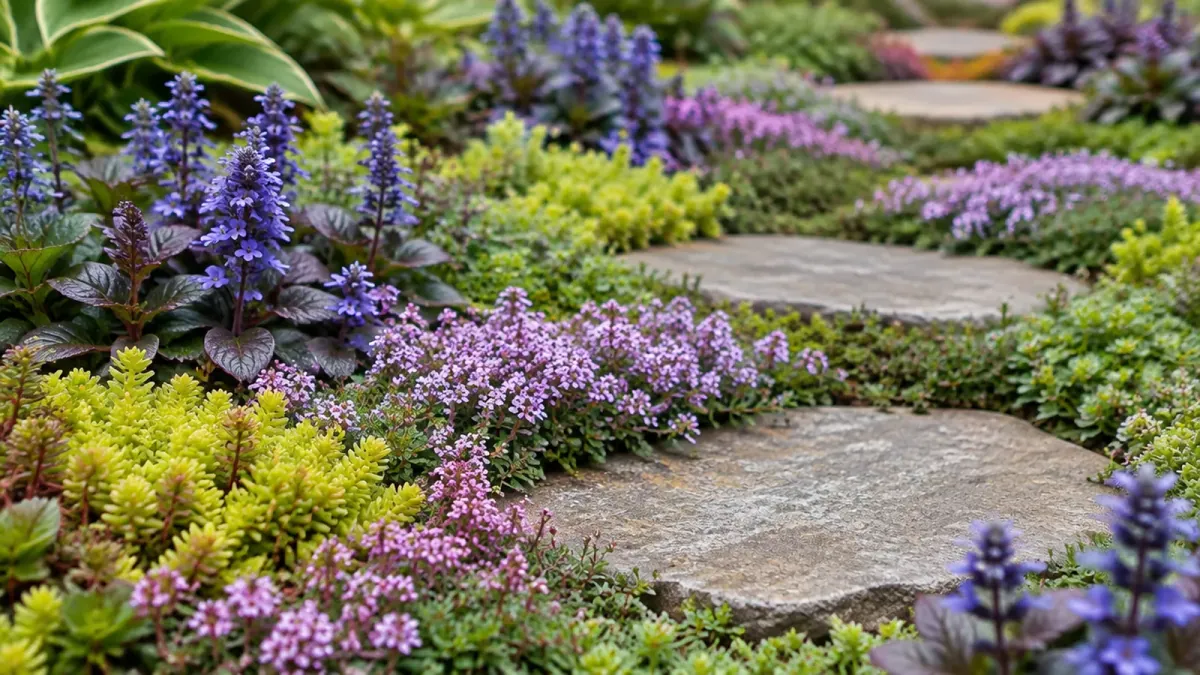
Tiny leaves and purple flowers that smell wonderful when stepped on. It tolerates light foot traffic and drought and needs sharp drainage.
2. White clover
Fast, green and nitrogen-fixing, tolerates mowing and light walking. Flowers feed bees, which some people avoid in play areas.
3. Sedum
Creeping types such as ‘Dragon’s Blood’ and ‘Angelina’ make tough, drought-tolerant mats for hot spots and slopes.
4. Creeping phlox
A carpet of spring flowers in pink, purple and white. Trim after bloom to keep it neat.
5. Hardy ice plant
Glossy, succulent leaves and bright flowers. Needs very good drainage.
6. Creeping juniper
Low evergreen shrubs that cover slopes well. Choose varieties suited to your zone.
7. Lamb’s ear
Soft, silvery leaves that contrast with greens. It suffers in humid summers, where leaves may rot.
Ground covers for shade
8. Native sedges
Grass-like plants, such as Pennsylvania sedge, that form soft, mowable carpets. A top choice for dry or part shade, and native in much of North America.
9. Sweet woodruff
Whorled leaves and tiny white flowers in spring. It likes moist shade.
10. Pachysandra
A dependable evergreen carpet. Japanese pachysandra can be aggressive; the native Allegheny spurge is a better-behaved choice.
11. Foamflower
A native with frothy flower spikes and attractive leaves for moist shade.
12. Barrenwort
Tough and elegant, one of the best plants for dry shade under trees.
13. Wild ginger
A native with large heart-shaped leaves for woodland shade. Slow but long-lived.
14. Moss
A soft, evergreen carpet in shaded, moist, acidic and compacted soil. It isn’t planted so much as encouraged.
Ground covers that tolerate light foot traffic
15. Corsican mint
A tiny, aromatic mat for paths and between stepping stones.
16. Creeping Jenny
Golden or green creeping stems for sun or shade. It spreads quickly and is invasive in some regions; check local lists.
17. Roman chamomile
A low, apple-scented plant traditionally used for scented lawns and paths.
18. Daylilies for slopes
Not walkable, but tough, long-lived and excellent for holding steep banks. See our guide to orange flowers for color choices.
How to plant ground covers
- Remove the grass. Strip it off, or smother with cardboard and mulch for several months. Solarizing is another option.
- Prepare the soil. Loosen the top few inches and mix in compost.
- Space plants as the label advises, usually 6 to 18 inches apart.
- Plant in spring or fall, and water well.
- Mulch between plants to suppress weeds until they fill in.
- Water regularly during the first season.
- Weed frequently in year one.
- Trim and edge to keep ground covers where you want them.
Plan by situation
| Situation | Good choices |
|---|---|
| Sunny, dry strip | Sedum, creeping thyme, ice plant, juniper |
| Shady corner under trees | Epimedium, sedges, wild ginger, sweet woodruff |
| Steep slope | Juniper, daylily, creeping phlox, sedum |
| Between stepping stones | Creeping thyme, Corsican mint, creeping Jenny |
| Replace a small lawn | White clover, sedges, creeping thyme |
| Under shrubs and roses | Lamb’s ear, sedum, creeping phlox |
For difficult, dry sites, see our guide to drought-tolerant landscaping, and for edging beds so ground covers stay in place, our garden edging ideas.
Ground covers for flowers and pollinators
Some ground covers earn their place with blossoms. Creeping thyme, creeping phlox, white clover, sedum, foamflower and barrenwort all flower and attract bees and other pollinators. For continuous interest, mix a few types: phlox for spring, thyme in early summer, sedum in late summer. Avoid planting thick mats of a single invasive species; use a mix of non-invasive plants instead, such as those in our guide to flowers for full shade for shady sections.
How much ground cover do you need?
Estimate by area. Divide the area in square feet by the area each plant will cover at the spacing you choose (for plants 12 inches apart, each covers about 1 square foot; at 6 inches, about 0.25 square foot). For a 100 square foot bed planted 12 inches apart, you need about 100 plants; at 6 inches apart, about 400. Buy a few extras for gaps, and expect to fill in over one to three seasons depending on how fast the species spreads.
Maintaining ground cover through the year
| Season | Tasks |
|---|---|
| Spring | Rake off debris; weed; add compost; cut back damaged growth |
| Summer | Water in dry spells; trim edges; check for pests |
| Fall | Clear leaves from low-growing mats; divide and replant spreaders |
| Winter | Mostly leave alone; keep off frozen plants |
Problems to watch for
- Invasive spread. English ivy, periwinkle, bugleweed and creeping Jenny escape gardens in some regions. Check your state list.
- Weeds. Weeds come through before plants fill in, so mulch and weed early.
- Foot traffic. Most ground covers don’t tolerate heavy use. Use stepping stones.
- Pests. Slugs, voles and deer can damage some ground covers. Choose resistant plants if needed.
- Disease. In humid climates, dense mats can develop rot; ensure airflow and drainage.
Ground covers in rock gardens
Low, tough ground covers such as creeping thyme, sedum and creeping phlox are the backbone of a rock garden. Our guide to rock garden ideas shows how to combine them with stone on a slope or in a gravel bed.
Frequently asked questions
What are the best ground cover plants to replace grass?
Good lawn replacements include creeping thyme, white clover, sedum, creeping phlox, moss, creeping Jenny, sweet woodruff, pachysandra, periwinkle and native sedges. Which is best depends on sun, soil and foot traffic: thyme, clover and Dutch white clover tolerate light walking in sun, while sedges, moss and pachysandra suit shade.
What ground cover grows in shade?
For shade, try pachysandra, sweet woodruff, creeping Jenny, ajuga, native sedges, foamflower, barrenwort, wild ginger, moss and lily of the valley. Most prefer moist, humus-rich soil. Where roots from trees compete, choose tougher plants such as epimedium and sedges. Check each for spread, since some are invasive in certain regions.
What ground cover can you walk on?
Creeping thyme, Irish moss, Corsican mint, white clover, creeping Jenny and chamomile tolerate light foot traffic, making them good for paths and between stepping stones. None stand up to heavy traffic like a sports lawn. For frequently used areas, combine ground cover with stepping stones.
How far apart should you plant ground cover?
Space plants according to the label, usually 6 to 18 inches apart. Closer spacing covers the ground faster but costs more; wider spacing is cheaper but weeds have longer to move in. For fast-spreading species, wider spacing is fine. Mulch between plants until they fill in, and weed regularly in the first year.
Are any ground covers invasive?
Yes. English ivy, periwinkle (Vinca minor and major), Japanese pachysandra in some areas, creeping Jenny and bugleweed are invasive in parts of the United States. Check your state’s invasive plant list or ask your extension service before planting, and choose native or non-invasive alternatives where possible.