Orange Flowers: Bright Orange Blooms to Grow
On this page
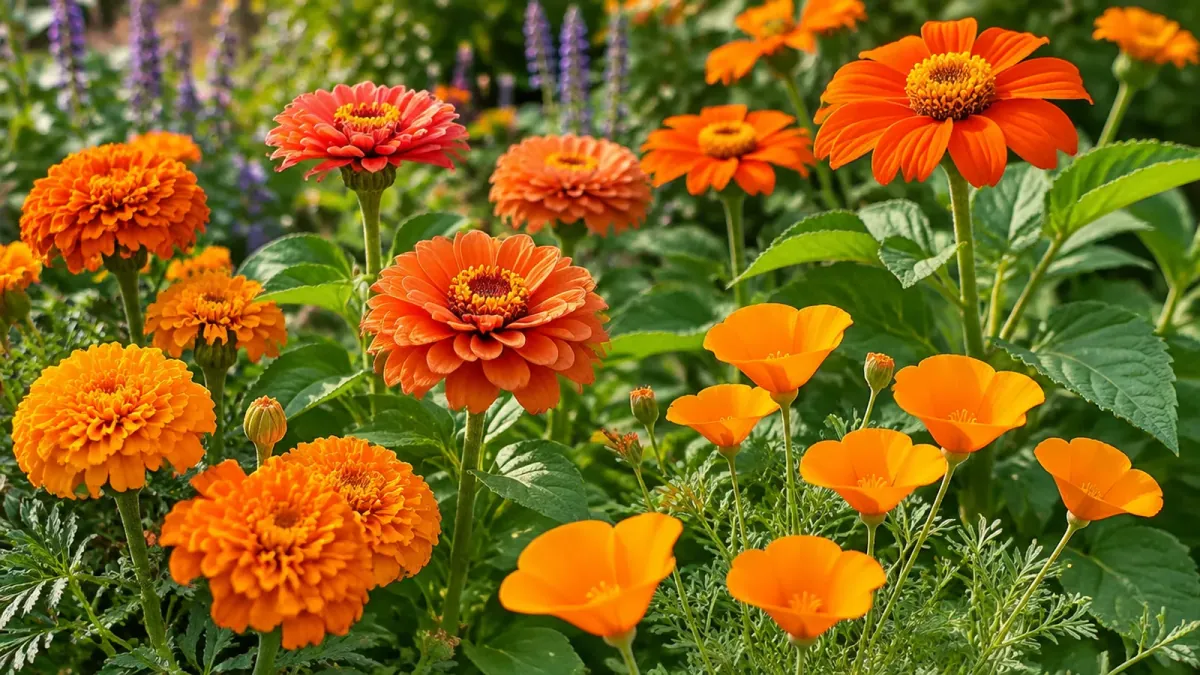
Orange flowers worth growing include marigolds, zinnias, nasturtiums, California poppies, butterfly weed, daylilies, Mexican sunflower, calendula and orange tulips. Orange is energetic and warm, and it pairs well with blue, purple and deep red. Most orange flowers need full sun, and many are easy from seed. The 18 below span annuals, perennials, bulbs and shrubs.
Why add orange to the garden?
Orange is a color that gets noticed. It signals warmth and energy, draws the eye in beds seen from a distance and attracts butterflies and hummingbirds. Because it is strong, a little goes a long way: a drift of orange among cooler colors usually looks better than an all-orange bed, although a “hot” border mixing orange, red and yellow can be spectacular in late summer. For more color guides, browse our flowers hub, and for its neighbors on the color wheel, see our yellow flowers and red flowers guides.
Orange flowers compared
Heights and zones are typical and vary by variety and climate.
| Flower | Type | Height | Sun | USDA zones | Blooms |
|---|---|---|---|---|---|
| Marigold | Annual | 6 in–3 ft | Full sun | Annual | Summer to frost |
| Zinnia | Annual | 1–4 ft | Full sun | Annual | Summer to frost |
| Nasturtium | Annual | 1 ft (trailing longer) | Sun to part shade | Annual | Summer to frost |
| California poppy | Annual or short-lived perennial | 1 ft | Full sun | 6–10 (annual elsewhere) | Spring to fall |
| Calendula | Annual | 1–2 ft | Sun to part shade | Annual | Spring and fall |
| Mexican sunflower | Annual | 4–6 ft | Full sun | Annual | Summer to frost |
| Lantana | Tender perennial | 1–4 ft | Full sun | 8–11 (annual elsewhere) | Summer to frost |
| Orange tulip | Bulb | 12–24 in | Full sun | 3–8 | Spring |
| Crocosmia | Corm | 2–3 ft | Full sun | 6–9 | Midsummer |
| Daylily | Perennial | 1–3 ft | Sun to part shade | 3–9 | Summer |
| Butterfly weed | Perennial | 1–3 ft | Full sun | 3–9 | Summer |
| Geum | Perennial | 1–2 ft | Sun to part shade | 4–9 | Late spring to summer |
| Helenium | Perennial | 3–5 ft | Full sun | 4–8 | Late summer to fall |
| Rudbeckia (orange-toned) | Perennial | 2–3 ft | Full sun | 3–9 | Summer to fall |
| Red hot poker (orange types) | Perennial | 2–4 ft | Full sun | 5–9 | Summer |
| Trumpet vine | Climber | 20–40 ft | Full sun | 4–9 | Summer |
| Japanese lantern (Chinese lantern) | Perennial | 1–2 ft | Sun to part shade | 3–9 | Orange pods in fall |
| Azalea (orange types) | Shrub | 3–6 ft | Part shade | 5–9 | Spring |
Orange annuals
1. Marigolds
Compact French and tall African marigolds bloom nonstop from early summer to frost. They tolerate heat and poor soil. Deadhead for more flowers.
2. Zinnias
Orange varieties such as ‘Profusion Orange’ and ‘Zahara’ are heat-loving and butterfly-friendly. Cut often to encourage more blooms.
3. Nasturtiums
Edible orange flowers and round leaves on trailing or bush plants. They bloom best in lean soil, and their seeds are large and easy to sow.
4. California poppies
Silky orange cups that thrive in poor, dry soil. Scatter seed where they are to grow; they dislike transplanting.
5. Calendula
Cheerful orange daisies for spring and fall. Petals are edible, and the flowers are traditionally used in skin salves.
6. Mexican sunflower
Tall, velvety orange flowers that butterflies adore. It loves heat and tolerates drought.
7. Lantana
Clusters that open yellow and age to orange and red, loved by butterflies. In frost-free zones it is perennial, but it can be invasive there. Lantana is toxic to pets.
Orange bulbs and spring flowers
8. Orange tulips
Varieties such as ‘Orange Emperor’ and ‘Ballerina’ bring spring color. Plant bulbs in fall. Tulips are toxic to pets.
9. Crocosmia
Arching stems of orange-red flowers in midsummer. Hardy in about zones 6 to 9, and some varieties spread vigorously.
Orange perennials
10. Daylilies
Tough, long-lived and available in many orange shades. Each flower lasts a day, but plants produce many. True lilies and daylilies are dangerous for cats.
11. Butterfly weed
A native milkweed with bright orange flower clusters. It feeds monarch caterpillars and adults. It dislikes being moved once established. See our list of butterfly flowers.
12. Geum
Orange cups on wiry stems in late spring. It prefers rich, moist but well-drained soil.
13. Helenium
Daisy-like flowers in rusty orange and copper tones in late summer. It likes moist, fertile soil.
14. Rudbeckia
Orange-gold daisies with dark centers. Tough and drought-tolerant, and loved by pollinators.
15. Red hot poker
Orange and yellow spikes that attract hummingbirds. Plant in full sun with excellent drainage.
Orange climbers and shrubs
16. Trumpet vine
A vigorous climber with orange trumpets that hummingbirds visit. It can be very aggressive and spread by suckers, so give it a strong support and watch it.
17. Japanese lantern
Grown for its bright orange papery pods in fall rather than its flowers. It spreads by runners, so contain it. The unripe fruit is toxic if eaten. Physalis isn’t on the ASPCA list, so keep it away from pets.
18. Orange azaleas
Deciduous azaleas bloom in flame orange in spring. They need acidic, well-drained soil and part shade. Azaleas are toxic to pets.
Color combinations with orange
- Orange and blue or purple: these opposites make orange look intense. Try marigolds with salvia, or crocosmia with delphiniums. See our guides to blue flowers and purple flowers.
- Orange and red: a “hot” scheme for late summer. See our red flowers guide.
- Orange and burgundy or bronze: rich and sophisticated with dark foliage.
- Orange and white or lime green: fresh and modern. See white flowers.
- Orange and pink: a bolder, sunset look that can work if the pink leans coral or salmon.
Orange flowers for different seasons
| Season | Orange flowers |
|---|---|
| Spring | Orange tulips, geum, wallflowers, azaleas, California poppies |
| Early summer | Daylilies, crocosmia, calendula, nasturtiums, butterfly weed |
| Midsummer | Zinnias, marigolds, Mexican sunflower, lantana, trumpet vine |
| Late summer and fall | Helenium, rudbeckia, red hot poker, Chinese lanterns, orange chrysanthemums |
A hot border plan
For a sunny bed about 3 by 10 feet, this planting gives orange from spring to frost:
| Layer | Plants | Notes |
|---|---|---|
| Back | Mexican sunflower, helenium | Tall, heat-loving; stake helenium if needed |
| Middle | Daylilies, butterfly weed, crocosmia | Different bloom times from early to midsummer |
| Front | Marigolds, nasturtiums, geum | Low edge; sow marigolds and nasturtiums from seed |
| Bulbs | Orange tulips between perennials, planted in fall | Spring color before perennials fill in |
| Cool contrast | Blue salvia or purple catmint scattered through | Keeps the planting from feeling flat |
Common problems with orange flowers
| Problem | Likely cause | Fix |
|---|---|---|
| Few marigold flowers | Too much fertilizer or shade | Feed lightly; move to full sun |
| Spider mites on marigolds and zinnias | Hot, dry weather | Rinse leaves; see our guide to homemade pest control for plants |
| Powdery mildew on zinnias | Humidity and crowding | Space plants; water at the base; choose resistant varieties |
| Nasturtium aphids | Rich soil and soft growth | Rinse with water; grow in lean soil |
| Orange tulips shrinking | Warm winters or poor drainage | Treat as annuals or replant fresh bulbs |
Orange flowers for pollinators
Bees, butterflies and hummingbirds are drawn to orange. Butterfly weed, Mexican sunflower, zinnias, bee balm, red hot poker and trumpet vine are especially valuable. Combine them with flowers that bloom all summer for a long season of nectar.
Orange flowers in containers
Marigolds, nasturtiums, calibrachoa, geraniums, zinnias and dwarf cannas make bright container displays. Use a large pot with quality potting mix and feed lightly, as nasturtiums and marigolds flower best in lean mix. In hot weather, containers dry out quickly, so check daily and water when the top inch is dry. Pair orange with blue lobelia or purple petunias for contrast.
Growing tips
- Give them sun. Almost all orange flowers need six or more hours of direct sun.
- Avoid rich soil for nasturtiums, marigolds and cosmos, which flower more in lean soil.
- Deadhead to extend blooming.
- Sow easy types from seed. See our list of easy flowers to grow from seed.
- Mind pets. Lantana, tulips, azaleas and daylilies (cats) are toxic.
Frequently asked questions
What are the best orange flowers for a garden?
Dependable orange garden flowers include marigolds, zinnias, nasturtiums, California poppies, butterfly weed, daylilies, Mexican sunflower, calendula, geums, orange tulips and Japanese lanterns. Most want full sun and many are easy from seed. Butterfly weed and Mexican sunflower also feed butterflies, including monarchs.
What orange flowers attract butterflies and hummingbirds?
Butterfly weed, Mexican sunflower, zinnias, lantana, trumpet vine, crocosmia, bee balm and cardinal flower attract butterflies and hummingbirds. Hummingbirds are drawn to tubular orange and red flowers. Plant in sunny groups and avoid insecticides. Butterfly weed is also a host plant for monarch caterpillars.
What colors go well with orange flowers?
Orange pairs strongly with blue and purple, its opposites on the color wheel, such as salvia, delphinium and lavender. It also looks rich with deep red and burgundy, warm with yellow, and fresh with white or lime green. Dark foliage like bronze fennel or black mondo grass makes orange glow.
Are orange flowers easy to grow?
Many are very easy. Marigolds, zinnias, nasturtiums, calendula and California poppies grow quickly from seed in sun and tolerate poor soil. Perennials such as daylilies and butterfly weed are long-lived and need little care. A few, like tuberous begonias and Japanese lanterns, have more specific needs.
What orange flowers bloom in fall?
Fall orange comes from marigolds and zinnias that bloom until frost, orange chrysanthemums, heleniums, rudbeckia, Mexican sunflower, kniphofia (red hot pokers), pumpkins’ flowers and orange-toned asters. Japanese lanterns bring orange seed pods that last into fall. Choose frost-tolerant varieties for the latest color.