Blue Flowers: Naturally Blue Flowers for Your Garden
On this page
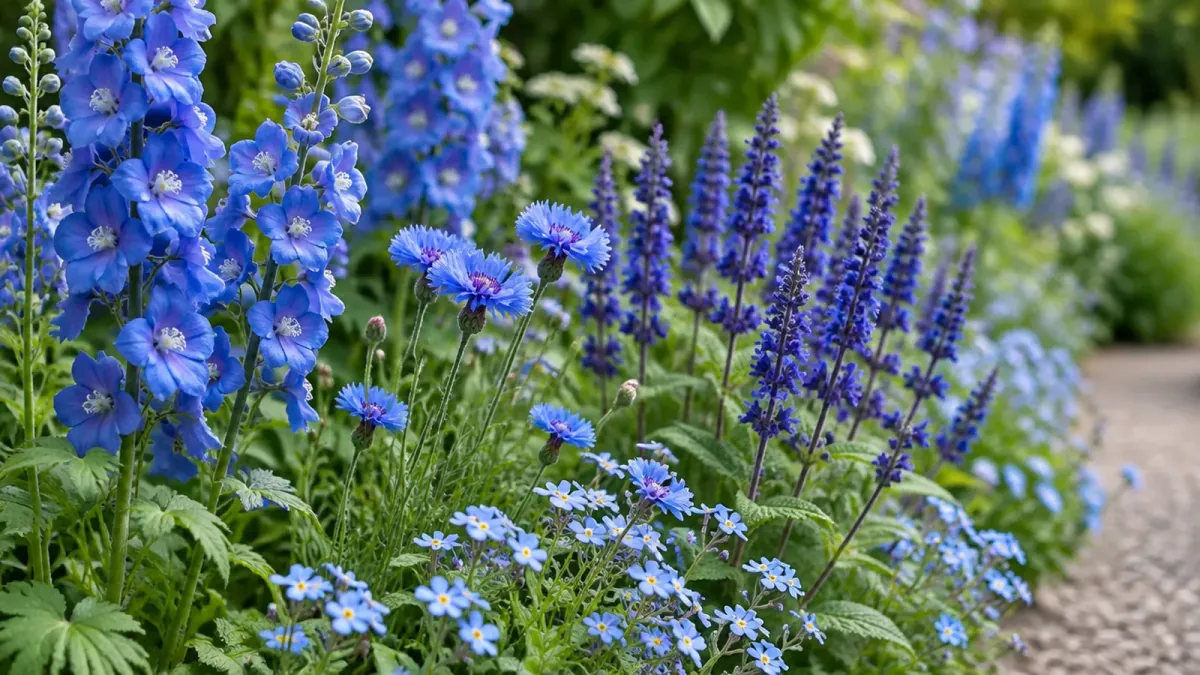
Naturally blue flowers include delphiniums, cornflowers, grape hyacinths, forget-me-nots, Siberian squill, bluebells, salvia, balloon flower, agapanthus and hydrangeas grown in acidic soil. True blue is rare in nature, and many “blue” flowers are really violet or purple. The 20 plants below range from easy annuals grown from seed to long-lived perennials and spring bulbs.
Why true blue flowers are rare
Blue is one of the rarest colors in the flower world. Most plants don’t make a true blue pigment. Instead, blue flowers get their color from anthocyanins, the same pigments that make flowers red or purple, modified by pH, metal ions and other compounds in the petal. That process is complex, which is why many flowers sold as blue are really violet-blue or purple.
Blue is worth the effort. It cools hot colors, pairs beautifully with yellow and orange, and bees are especially attracted to it. For more color guides, visit our flowers hub, and for another uncommon shade, see our guide to naturally green flowers.
Blue flowers compared
Heights and zones are typical; they vary by variety and climate.
| Flower | Type | Height | Sun | USDA zones | Blooms |
|---|---|---|---|---|---|
| Cornflower | Annual | 1–3 ft | Full sun | Annual | Early to midsummer |
| Love-in-a-mist | Annual | 1–2 ft | Full sun | Annual | Early summer |
| Forget-me-not | Biennial | 6–12 in | Part shade | 3–9 | Spring |
| Borage | Annual | 2–3 ft | Full sun | Annual | Summer |
| Lobelia | Annual | 4–8 in | Sun to part shade | Annual | Summer to frost |
| Grape hyacinth | Bulb | 6–8 in | Sun to part shade | 3–9 | Spring |
| Siberian squill | Bulb | 4–6 in | Sun to part shade | 2–8 | Early spring |
| English bluebell | Bulb | 12–18 in | Part shade | 4–8 | Spring |
| Delphinium | Perennial | 3–6 ft | Full sun | 3–7 | Early summer |
| Salvia (‘May Night’ and others) | Perennial | 1.5–2 ft | Full sun | 4–8 | Early summer, repeats |
| Catmint | Perennial | 1–3 ft | Full sun | 3–8 | Late spring to fall |
| Balloon flower | Perennial | 1–2.5 ft | Sun to part shade | 3–8 | Summer |
| Veronica (spike speedwell) | Perennial | 1–2 ft | Full sun | 3–8 | Summer |
| Bearded iris (blue) | Perennial | 2–3 ft | Full sun | 3–9 | Late spring |
| Agapanthus | Perennial | 2–4 ft | Full sun | 8–10 (hardy types to 7) | Summer |
| Himalayan blue poppy | Perennial | 3–4 ft | Part shade | 7–8 (cool climates) | Early summer |
| Hydrangea (bigleaf, blue) | Shrub | 3–6 ft | Part shade | 5–9 | Summer |
| Ceanothus | Shrub | 3–10 ft | Full sun | 8–10 | Spring |
| Caryopteris (bluebeard) | Shrub | 2–4 ft | Full sun | 5–9 | Late summer |
| Plumbago | Shrub or vine | 3–6 ft | Full sun | 9–11 | Summer to fall |
Blue annuals
1. Cornflower (Centaurea cyanus)
True-blue flowers on wiry stems, grown from seed in early spring or fall. Easy, great for cutting and a favorite of bees. Sow in succession for months of blooms. See our list of easy flowers to grow from seed.
2. Love-in-a-mist (Nigella damascena)
Blue, white or pink flowers surrounded by feathery foliage, followed by decorative seed pods for drying. Sow directly; it dislikes transplanting.
3. Forget-me-not (Myosotis)
Clouds of tiny sky-blue flowers in spring. A biennial that self-sows freely and makes a good partner for tulips.
4. Borage (Borago officinalis)
Star-shaped blue flowers on hairy stems, loved by bees and edible. It self-sows readily.
5. Lobelia
Compact plants with intensely blue flowers, ideal for edges, pots and baskets. It prefers cool weather and may fade in extreme heat.
Blue spring bulbs
6. Grape hyacinth (Muscari)
Little spikes of tightly packed, grape-like blue flowers in spring. Easy and long-lived, plant bulbs in fall. They spread and make charming carpets under shrubs.
7. Siberian squill (Scilla siberica)
Nodding, deep blue bells in early spring, often blooming alongside snowdrops. Plant bulbs in fall; they naturalize in lawns and woodland.
8. English bluebell (Hyacinthoides non-scripta)
Fragrant, nodding bluebells for part shade. Bluebells aren’t on the ASPCA list, so keep the bulbs away from pets as a precaution. Buy from reputable nurseries, as wild bluebells are protected in the UK and over-collecting is a problem. The Spanish bluebell, a common garden plant, hybridizes with and can crowd out native bluebells where they grow wild.
Blue perennials
9. Delphinium
Towering spikes in brilliant blues for the back of a border. They need full sun, rich soil, staking and protection from slugs. Delphiniums are toxic to people and pets.
10. Salvia
Many perennial salvias, such as ‘May Night’, produce violet-blue flower spikes for weeks and repeat if cut back. They are tough, drought-tolerant and attract bees and butterflies.
11. Catmint (Nepeta)
Soft blue-lavender flowers over gray-green leaves from late spring until frost. A reliable, low-maintenance perennial that bees adore; cut back after the first flush to encourage rebloom.
12. Balloon flower (Platycodon)
Inflated buds that pop into star-shaped blue flowers. Long-lived and tidy, but slow to emerge in spring, so mark its position.
13. Veronica (spike speedwell)
Dense spikes of blue flowers in summer. Compact and easy, and good for cutting.
14. Bearded iris
Iris breeders have produced many shades of blue, from pale sky to deep midnight. Plant rhizomes in late summer with the tops exposed in full sun and well-drained soil.
15. Agapanthus
Round heads of blue flowers on tall stems in summer. Hardy in zones 8 to 10, with some varieties surviving in zone 7. In colder areas, grow in pots and bring them in for winter.
16. Himalayan blue poppy (Meconopsis)
Famed for sky-blue, silky petals, but fussy: it needs cool, moist, acidic soil and shelter, and does best in the Pacific Northwest, parts of the Northeast and similar cool, damp climates. Don’t be disappointed if it sulks in hot summers.
Blue shrubs and vines
17. Blue hydrangea (Hydrangea macrophylla)
Mophead and lacecap hydrangeas turn blue in acidic soil (roughly pH 5.5 or lower) where aluminum is available, and pink in alkaline soil. A soil test shows your pH. Hydrangeas are toxic to pets.
18. Ceanothus (California lilac)
Evergreen shrubs covered in blue flowers in spring, for zones 8 to 10. Needs full sun and excellent drainage.
19. Caryopteris (bluebeard)
A compact shrub with fluffy blue flowers in late summer, when little else is blooming. Cut back hard in spring.
20. Plumbago
A sprawling shrub or climber with sky-blue flower clusters from summer to fall. Perennial in zones 9 to 11, and grown as an annual or in pots elsewhere.
Design ideas with blue flowers
- Pair with yellow or orange. Blue and yellow, or blue and orange, make a lively, high-contrast scheme. Try delphiniums with yellow yarrow, or cornflowers among orange marigolds.
- Go cool and calm. Blue with white, silver and soft pink creates a cool, restful border. Our guide to white flowers has partners for this scheme.
- Combine with purple. Blue, lavender and violet look natural together; see our guide to purple flowers.
- Layer bulbs and perennials. Plant blue bulbs under perennials that will hide their fading foliage.
- Use blue in shade. Forget-me-nots, bluebells and brunnera brighten dim corners; our list of the best flowers for full shade has more options.
- Plant in drifts. Blue is easy to lose in the garden from a distance, so group plants in generous drifts rather than single specimens.
Blue flowers for bees and butterflies
Bees see blue and violet especially well and visit these flowers heavily. Borage, salvia, catmint, bluebells, cornflowers and echium are favorites. Add them to a pollinator planting alongside butterfly flowers for a garden that hums from spring until frost.
How to grow blue flowers
- Match the plant to the site. Most blue-flowering plants want full sun and good drainage; a few, such as bluebells and forget-me-nots, prefer shade and moisture.
- Check soil pH for hydrangeas if you want blue flowers rather than pink.
- Deadhead annuals and repeat-flowering perennials to prolong blooms.
- Sow in succession. Cornflowers, love-in-a-mist and other quick annuals can be sown every few weeks.
- Mind pets. Delphiniums (larkspur) and hydrangeas are on the ASPCA toxic list for cats and dogs. Bluebells aren’t listed, so treat the bulbs with caution too.
Frequently asked questions
What are the best blue flowers for a garden?
Reliable blue garden flowers include delphiniums, Siberian squill, grape hyacinths, forget-me-nots, cornflowers, love-in-a-mist, salvia, bluebells, balloon flower, hydrangeas, agapanthus and Himalayan blue poppy. The best choice depends on your light, soil and climate. Cornflowers and nigella are easiest from seed, while bulbs such as grape hyacinths and squill return reliably each spring.
Why are there so few truly blue flowers?
Blue is rare in flowers because most plants lack the pigment for it. Plants make blue color by modifying red anthocyanin pigments through changes in acidity, metal ions and other compounds, which is a complex process. Many flowers sold as blue are really violet or purple. Insects, especially bees, see and favor blue, so plants that achieve it are well rewarded.
Can you change the color of hydrangeas to blue?
Bigleaf hydrangeas (Hydrangea macrophylla) turn blue in acidic soil, roughly pH 5.5 or lower, where aluminum is available to the plant, and pink in alkaline soil. Adding aluminum sulfate to the soil can encourage blue, following label directions. White hydrangeas can’t be changed, and panicle and smooth hydrangeas don’t change color with soil pH.
What blue flowers bloom all summer?
Annual flowers give the longest blue display: lobelia, bachelor’s buttons (cornflowers), blue salvia and ageratum bloom for months. Among perennials, catmint, salvia ‘May Night’, veronica and plumbago flower for many weeks, especially if cut back after the first flush. Succession sowing of cornflowers and love-in-a-mist extends their season.
Are blue flowers good for bees?
Yes. Bees see blue and purple well, and they are strongly drawn to blue and violet flowers such as borage, salvia, catmint, lavender, bluebells, cornflowers and echium. A mix of single-flowered blue plants flowering from spring to fall gives bees nectar and pollen all season.