Purple Flowers: Popular Purple Flowers to Grow
On this page
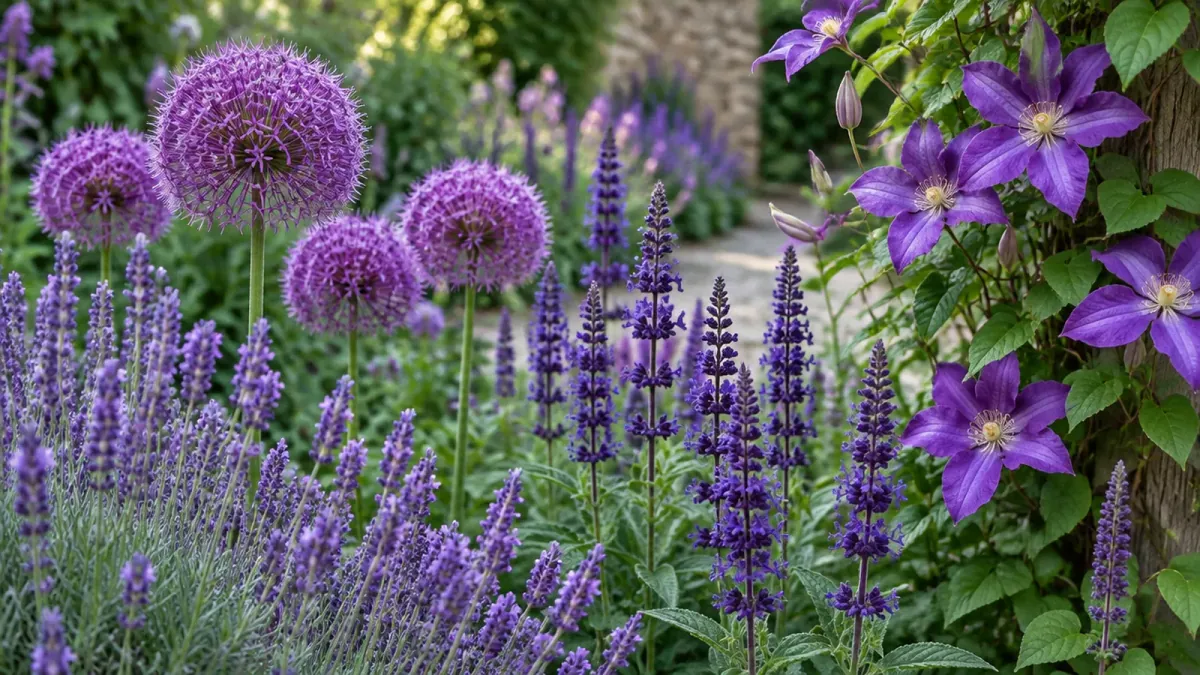
Popular purple flowers include lavender, salvia, purple coneflower, catmint, alliums, iris, clematis, petunias, verbena and asters. Purple suits almost every garden style, pairs with yellow, white and pink, and attracts bees and butterflies. The 20 plants below cover annuals, perennials, bulbs and shrubs, with typical height, sun needs and hardiness zones.
Why purple works in almost any garden
Purple sits between cool blue and hot red, so it calms bright borders and warms cool ones. Pale lavender looks soft and romantic; deep violet looks rich and formal. It also stands out less against green foliage than red or yellow, so planting purple in generous groups matters. For more color guides, browse our flowers hub, and for the cooler neighbor of purple, see our guide to blue flowers.
Purple flowers compared
Heights, zones and bloom times are typical and vary by variety and climate.
| Flower | Type | Height | Sun | USDA zones | Blooms |
|---|---|---|---|---|---|
| Petunia | Annual | 6–18 in | Full sun | Annual | Spring to frost |
| Verbena | Annual or tender perennial | 8–36 in | Full sun | Annual (7–10 perennial) | Summer to frost |
| Heliotrope | Annual | 1–2 ft | Full sun | Annual | Summer |
| Ageratum | Annual | 6–18 in | Sun to part shade | Annual | Summer to frost |
| Larkspur | Annual | 2–4 ft | Full sun | Annual | Early summer |
| Allium (globe types) | Bulb | 1–4 ft | Full sun | 4–9 | Late spring |
| Bearded iris | Perennial | 2–3 ft | Full sun | 3–9 | Late spring |
| Lavender (English) | Perennial | 1–2.5 ft | Full sun | 5–8 | Early to midsummer |
| Salvia (‘May Night’ and others) | Perennial | 1.5–2 ft | Full sun | 4–8 | Early summer, repeats |
| Catmint | Perennial | 1–3 ft | Full sun | 3–8 | Late spring to fall |
| Purple coneflower | Perennial | 2–4 ft | Full sun | 3–9 | Summer |
| Liatris (blazing star) | Perennial | 2–4 ft | Full sun | 3–9 | Midsummer |
| Bee balm (purple types) | Perennial | 2–4 ft | Sun to part shade | 3–9 | Summer |
| Hardy geranium | Perennial | 1–2 ft | Sun to part shade | 4–8 | Early summer |
| New England aster | Perennial | 3–6 ft | Full sun | 3–8 | Fall |
| Clematis | Climber | 6–12 ft | Sun; cool roots | 4–9 | Spring to fall, by type |
| Wisteria | Woody climber | 20+ ft | Full sun | 5–9 | Spring |
| Lilac | Shrub | 5–12 ft | Full sun | 3–7 | Spring |
| Butterfly bush | Shrub | 4–8 ft | Full sun | 5–9 | Summer to fall |
| Hydrangea (purple-pink types) | Shrub | 3–6 ft | Part shade | 5–9 | Summer |
Purple annuals
1. Petunia
A summer container staple. Trailing and wave types fill baskets, while upright grandifloras suit beds. Deadhead older types and feed regularly for steady blooms. Newer series tidy themselves.
2. Verbena
Clusters of purple flowers all summer, drought-tolerant once settled and magnets for butterflies. Trailing types spill from pots; upright ‘Bonariensis’ (purple-top vervain) adds airy height and self-sows.
3. Heliotrope
Deep violet flower heads with a vanilla-cherry scent. Plant near seating where fragrance can be enjoyed. It dislikes cold, so wait until nights stay above about 50°F.
4. Ageratum
Fluffy lavender-purple powder-puff flowers that bloom until frost. Compact types edge borders; taller types make good cut flowers.
5. Larkspur
Tall spikes in purple, blue, pink and white. Sow in fall or very early spring, as seeds need cold to germinate well. All parts are toxic if eaten.
Purple bulbs and spring bloomers
6. Alliums
Globe-shaped purple flower heads on tall stems in late spring, loved by bees and ignored by deer and rodents. Plant bulbs in fall. ‘Purple Sensation’ is a classic. Alliums belong to the onion family, which the ASPCA lists as toxic to cats and dogs.
7. Bearded iris
Ruffled blooms in purple shades from pale lilac to near black. Plant rhizomes in late summer with the tops exposed in full sun and well-drained soil.
8. Lilac (Syringa)
A fragrant spring shrub. Standard lilacs reach 8 to 12 feet; compact types such as ‘Miss Kim’ stay smaller. Prune right after flowering, as buds form on old wood.
9. Wisteria
Pendulous purple flower clusters in spring on a vigorous twining climber. It needs a very sturdy support and regular pruning. Chinese and Japanese wisterias are invasive in parts of the US, so consider the native American wisteria (‘Amethyst Falls’).
Purple perennials
10. Lavender
The classic purple-scented perennial, needing full sun and sharply drained, gritty soil. English lavender is hardiest. Trim lightly after flowering and never cut into old bare wood.
11. Salvia
Violet-purple flower spikes like ‘May Night’ bloom for weeks and repeat if cut back. Tough, drought-tolerant and loved by pollinators.
12. Catmint
Soft lavender-purple flowers over gray-green leaves from late spring to fall. Easy, deer-resistant and ideal for edging.
13. Purple coneflower
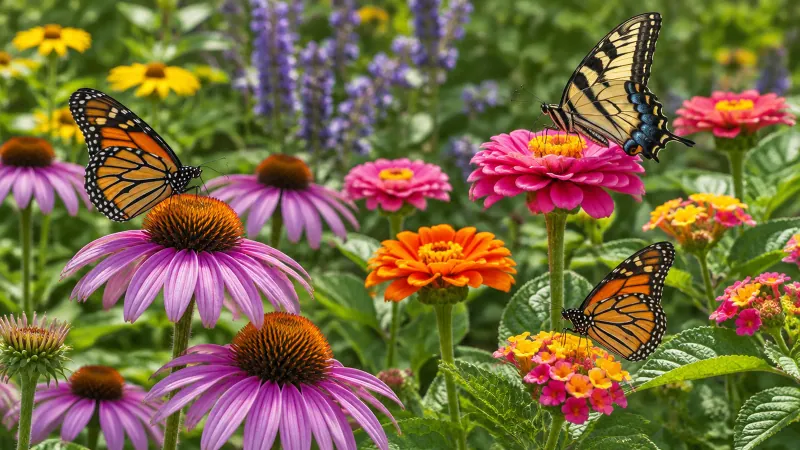
Daisy-like flowers with orange-brown cones. Drought-tolerant once established and good for cutting. Leave seed heads for birds.
14. Liatris
Fuzzy purple spikes that open from the top down. Loved by butterflies and long-lasting in a vase.
15. Bee balm
Shaggy purple flowers (also red and pink) in summer. Choose mildew-resistant varieties and give plants good airflow.
16. Hardy geranium
Not the pelargonium sold as “geranium”, but a tough, long-flowering perennial. ‘Rozanne’ blooms for months and tolerates part shade.
17. New England aster
Masses of purple daisies in fall, when pollinators need nectar most. Pinch stems in early summer for sturdier plants.
Purple climbers and shrubs
18. Clematis
Large-flowered hybrids such as ‘Jackmanii’ bring deep purple blooms on a trellis. Keep roots shaded with low plants or mulch. Pruning depends on the group, so check your variety’s label.
19. Butterfly bush
A pollinator magnet with purple flower cones from summer to fall. It seeds invasively in some regions, including parts of the Pacific Northwest; choose sterile cultivars and check local advice.
20. Hydrangea in purple tones
Bigleaf hydrangeas can open pink-purple or blue-purple depending on soil pH. A soil test shows where yours sits. Hydrangeas are toxic to pets.
Purple flowers for different climates
| Climate | Reliable purple choices | Notes |
|---|---|---|
| Cold (zones 3–5) | Alliums, bearded iris, catmint, purple coneflower, New England aster, lilac | All hardy to at least zone 3–4; mulch young plants in the first winter |
| Moderate (zones 6–7) | Lavender, salvia, clematis, liatris, hardy geranium, butterfly bush | Lavender needs very sharp drainage where winters are wet |
| Warm (zones 8–10) | Verbena, heliotrope, Mexican bush sage, agapanthus, jacaranda (tree), purple fountain grass | Many tender perennials here are annuals in colder zones |
| Hot and dry | Lavender, salvia, catmint, verbena, Russian sage | Water deeply but rarely once established |
| Humid summers | Coneflower, bee balm (resistant types), liatris | Choose mildew-resistant varieties and leave space between plants |
Common problems with purple flowers
| Problem | Likely cause | Fix |
|---|---|---|
| Lavender dying in winter | Wet, heavy soil | Plant on a mound or in gritty soil; avoid mulching with bark around the crown |
| Powdery mildew on bee balm or phlox | Poor airflow, humid weather | Space plants; choose resistant varieties; water at the base |
| Floppy delphinium or larkspur | Wind or rich soil | Stake early; avoid over-fertilizing |
| Clematis wilt | Fungal disease or stem damage | Plant deep, protect stems, cut affected stems to the ground |
| Purple fades to blue-gray | Heat and strong sun on some petunias and verbena | Choose heat-tolerant series; give afternoon shade |
Purple flowers by season
| Season | Purple flowers to plant |
|---|---|
| Early spring | Crocus, hyacinth, violets, hellebores |
| Spring | Alliums, iris, lilac, wisteria, columbine |
| Early summer | Lavender, salvia, catmint, larkspur, clematis |
| Midsummer | Coneflower, liatris, bee balm, petunia, verbena |
| Late summer and fall | Asters, butterfly bush, ageratum, toad lily |
Color combinations with purple
- Purple and yellow: opposite colors on the wheel, so they look vivid together. Try salvia with yarrow or iris with daylilies. See our guide to yellow flowers.
- Purple and white: crisp and elegant. Our list of white flowers has partners.
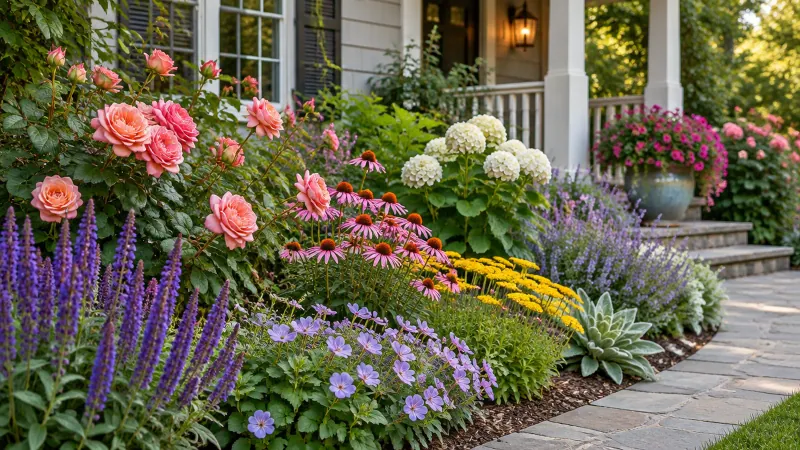
- Purple and pink: soft and romantic; try catmint with roses. See pink flowers.
- Purple and orange: a bold contrast; combine verbena with marigolds. See orange flowers.
- Purple and silver: silver foliage such as artemisia or lamb’s ear makes purple glow.
Purple flowers for shade
Most purple flowers want sun, but some manage in shade: hardy geraniums, bugleweed, columbine, Virginia bluebells, woodland phlox and toad lilies. Our list of the best flowers for full shade has more options.
How to grow purple flowers well
- Match plants to light. Lavender, salvia, coneflower and catmint need full sun and drainage; clematis and geraniums prefer cooler roots.
- Plant in drifts of three to seven so purple reads from a distance.
- Deadhead and trim repeat-flowering perennials after the first flush.
- Check pet safety. Larkspur, alliums (onion family), hydrangeas and wisteria are on the ASPCA toxic list.
- Pair with pollinator plants. Many purple flowers feed bees; see our guide to bee-friendly flowers and our list of butterfly flowers.
- Choose easy starters. Many annuals are easy to grow from seed.
Purple flowers for cutting
Lavender, alliums, larkspur, liatris, salvia, asters, lilac and scabiosa cut well. Alliums and liatris last about two weeks in a vase; lilacs last a few days unless the woody stems are split and kept in cool water. See our guide to long-lasting cut flowers for conditioning tips.
Frequently asked questions
What are the best purple flowers for a garden?
Reliable purple garden flowers include lavender, purple coneflower, salvia, catmint, alliums, irises, clematis, petunias, verbena, asters and lilac. The best choice depends on your sun, soil and climate. Lavender and salvia suit hot, dry sites, while asters, clematis and irises suit richer soil. Mix spring bulbs, summer perennials and fall asters for purple from spring to frost.
What purple flowers bloom all summer?
Annuals give the longest purple show: petunias, verbena, heliotrope, ageratum and purple angelonia bloom from early summer until frost. Among perennials, salvia, catmint and purple coneflower flower for many weeks and rebloom if trimmed after the first flush. Deadheading spent flowers keeps most of them blooming longer.
What purple flowers grow in shade?
Several purple flowers tolerate shade: hardy geraniums, bugleweed (Ajuga), Virginia bluebells, woodland phlox, columbine, hostas with lavender flower spikes, toad lilies and monkshood. Most bloom best in bright or dappled shade rather than deep shade. Moist, humus-rich soil helps. Check that your choice suits your hardiness zone.
What do purple flowers symbolize?
Purple has long been linked with royalty, creativity, mystery and admiration, partly because purple dye was once rare and expensive. Lighter lavender shades are often associated with grace and calm, while deep violet suggests richness and dignity. Meanings vary by culture and flower type, so treat them as traditions rather than rules.
Which purple flowers attract bees and butterflies?
Lavender, salvia, catmint, purple coneflower, alliums, asters, bee balm, verbena, buddleja and liatris are all popular with bees and butterflies. Bees in particular favor purple and blue flowers. Planting single-flowered types in sunny, sheltered groups, and choosing a mix that flowers from spring to fall, gives pollinators a steady supply of nectar.