Pink Flowers: Types of Pink Flowers With Pictures
On this page
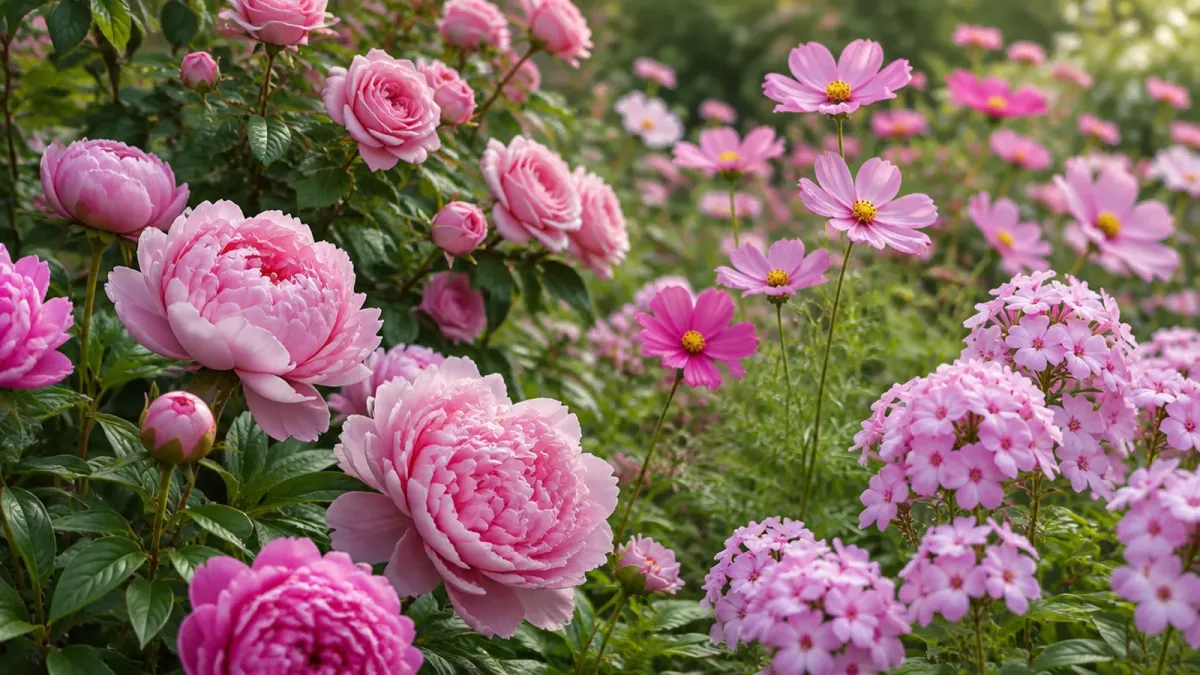
Popular pink flowers include roses, peonies, tulips, camellias, hydrangeas, dahlias, cosmos, zinnias, petunias, dianthus, sedum and bleeding heart. Pink ranges from pale blush to hot magenta and suits cottage, formal and modern gardens. The 20 below cover annuals, bulbs, perennials, shrubs and climbers, with height, sun needs, hardiness zones and bloom time.
Why pink is so popular
Pink is one of the most loved garden colors. It is soft enough to be romantic, strong enough to hold a border together, and easy to pair. It ranges from pale blush to salmon, coral, rose and hot magenta, so one color family can carry an entire planting. For more color guides, browse our flowers hub, and for a cool partner, see our guide to purple flowers.
Pink flowers compared
Heights and zones are typical and vary by variety and climate.
| Flower | Type | Height | Sun | USDA zones | Blooms |
|---|---|---|---|---|---|
| Petunia | Annual | 6–18 in | Full sun | Annual | Spring to frost |
| Zinnia | Annual | 1–4 ft | Full sun | Annual | Summer to frost |
| Cosmos | Annual | 2–5 ft | Full sun | Annual | Summer to frost |
| Impatiens | Annual | 8–24 in | Part to full shade | Annual | Summer to frost |
| Begonia | Annual | 6–18 in | Sun to shade | Annual | Summer to frost |
| Tulip | Bulb | 12–24 in | Full sun | 3–8 | Spring |
| Dahlia | Tuber | 1–5 ft | Full sun | 8–11 (lift elsewhere) | Midsummer to frost |
| Peony | Perennial | 2–3 ft | Full sun | 3–8 | Late spring |
| Bleeding heart | Perennial | 1–3 ft | Part shade | 3–9 | Spring |
| Hardy geranium | Perennial | 1–2 ft | Sun to part shade | 4–8 | Early summer |
| Purple coneflower | Perennial | 2–4 ft | Full sun | 3–9 | Summer |
| Garden phlox | Perennial | 2–4 ft | Sun to part shade | 4–8 | Summer |
| Astilbe | Perennial | 1.5–3 ft | Part shade | 4–8 | Early summer |
| Sedum ‘Autumn Joy’ types | Perennial | 1–2 ft | Full sun | 3–9 | Late summer to fall |
| Japanese anemone | Perennial | 2–4 ft | Part shade | 5–8 | Late summer to fall |
| Dianthus | Perennial | 6–18 in | Full sun | 3–9 | Late spring to summer |
| Rose | Shrub | 2–6 ft | Full sun | 4–10, by type | Summer, repeating |
| Hydrangea (pink types) | Shrub | 3–6 ft | Part shade | 5–9 | Summer |
| Camellia | Shrub | 6–12 ft | Part shade | 7–9 | Fall to spring |
| Weigela | Shrub | 4–8 ft | Full sun | 4–8 | Late spring |
Pink annuals
1. Petunias
Reliable and long-blooming in sun. Trailing and wave types suit baskets; modern series need little deadheading.
2. Zinnias
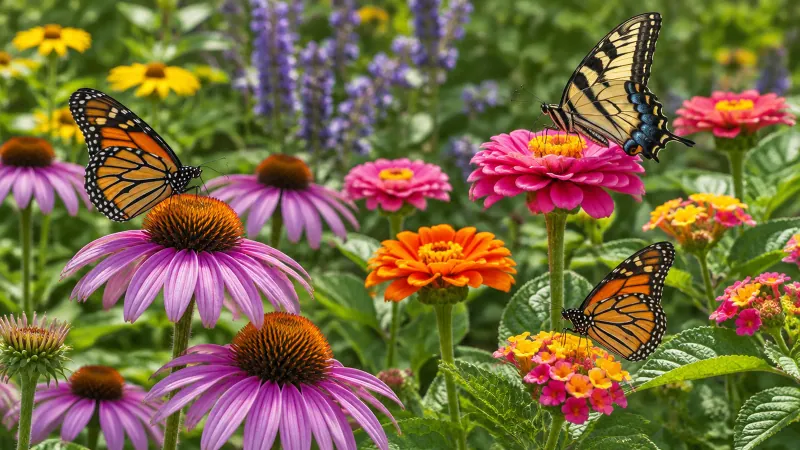
Pink zinnias bloom all summer and attract butterflies. Easy from seed. Space well to avoid mildew.
3. Cosmos
Airy pink flowers on tall stems. They flower better in lean soil.
4. Impatiens
The classic shade annual. Choose disease-resistant series or New Guinea types where downy mildew is a problem.
5. Begonias
Wax and tuberous begonias bring long-lasting pink to sun and shade.
Pink bulbs and spring flowers
6. Pink tulips
From pale ‘Pink Impression’ to deep rose. Plant bulbs in fall. Tulips are toxic to pets.
7. Dahlias
Pink dinnerplate and pompon types bloom from midsummer to frost. Lift tubers in cold zones. See our guide to long-lasting cut flowers.
Pink perennials
8. Peonies
Large, fragrant blooms in late spring, from blush to deep pink. Plant crowns shallowly. Peonies are toxic to pets.
9. Bleeding heart
Arching stems of heart-shaped pink flowers for shade in spring. It isn’t on the ASPCA list, so keep it away from pets as a precaution.
10. Hardy geranium
‘Rozanne’ and pink-flowered kinds bloom for months and tolerate part shade.
11. Purple coneflower
Pink-purple petals around orange cones. Drought-tolerant and good for pollinators.
12. Garden phlox
Fragrant pink flower heads. Choose mildew-resistant varieties.
13. Astilbe
Feathery pink plumes for moist shade.
14. Sedum
Flat flower heads that turn from green to pink to rust. Easy and drought-tolerant.
15. Japanese anemone
Pink saucers on tall stems from late summer, in part shade.
16. Dianthus
Fragrant pinks and carnations for edging and cutting. Needs sharp drainage.
Pink shrubs and trees
17. Roses
Pink is the most popular rose color. Choose disease-resistant shrub roses for easier care, and see our guide to organic rose pest control.
18. Hydrangeas
Bigleaf hydrangeas open pink in alkaline soil (roughly pH 6.5 or higher) and blue in acidic soil. Hydrangeas are toxic to pets.
19. Camellia
Glossy evergreen shrubs with pink flowers from fall to spring in zones 7 to 9. Prefers part shade and acidic soil.
20. Weigela
Pink trumpet flowers in late spring on a tough shrub. Hummingbirds visit.
Pink flowers by season
| Season | Pink flowers |
|---|---|
| Late winter | Camellia, hellebore, cherry blossom |
| Spring | Tulip, peony, bleeding heart, weigela |
| Summer | Rose, phlox, coneflower, petunia, hydrangea, zinnia |
| Fall | Sedum, Japanese anemone, aster, dahlia |
Color combinations with pink
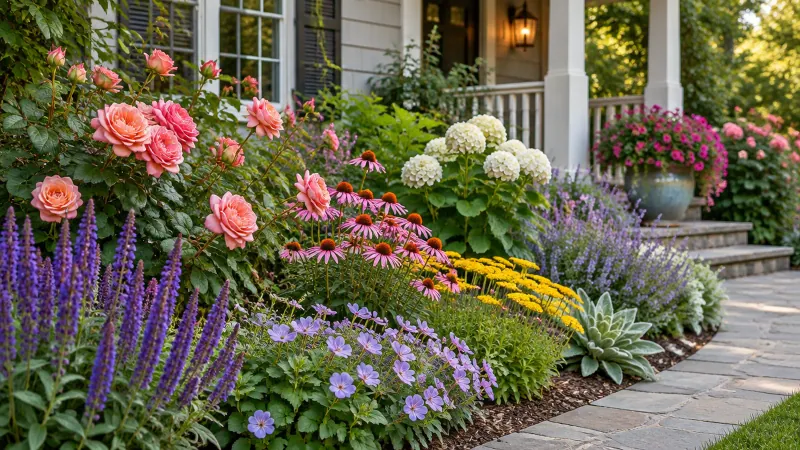
- Pink and purple: soft and romantic. Try catmint with roses.
- Pink and white: classic. See our white flowers guide.
- Pink and silver or gray foliage: lamb’s ear and artemisia sharpen pink.
- Pink and blue: a pretty cool scheme. See our blue flowers guide.
- Pink and chartreuse: modern and fresh. See green flowers.
- Pink and red: bold and lively if kept in the same tone family; see red flowers.
Pink flowers for different conditions
| Condition | Reliable pink flowers |
|---|---|
| Full sun, hot and dry | Zinnia, cosmos, sedum, dianthus, purple coneflower |
| Part shade, moist | Astilbe, bleeding heart, hardy geranium, Japanese anemone |
| Deep shade | Impatiens, begonias, hellebores, fuchsia |
| Containers | Petunias, geraniums, begonias, calibrachoa |
| Cold climates (zone 3–4) | Peonies, phlox, hardy geranium, sedum, tulips |
| Mild climates (zone 8+) | Camellias, dahlias, azaleas, roses |
A pink cottage border plan
For a bed about 4 by 10 feet in sun to part shade:
| Layer | Plants |
|---|---|
| Back | Weigela or a climbing rose on a trellis |
| Middle | Peonies, garden phlox, purple coneflower |
| Front | Hardy geranium, dianthus, sedum |
| Bulbs and annuals | Pink tulips in fall; cosmos and zinnias sown in late spring to fill gaps |
Add lavender or catmint for a purple counterpoint and gray foliage for contrast.
Common problems with pink flowers
| Problem | Likely cause | Fix |
|---|---|---|
| Hydrangea blooms the wrong color | Soil pH | Test pH; pink needs roughly 6.5 or higher, blue roughly 5.5 or lower |
| Powdery mildew on phlox | Poor airflow | Space plants; choose resistant varieties |
| Peonies don’t flower | Planted too deep or shaded | Replant buds about 2 inches deep; give six hours of sun |
| Black spot on roses | Wet leaves | Water at the base; remove infected leaves |
| Faded, bleached petals | Intense sun | Provide afternoon shade; pick varieties bred for heat |
Pink flower meanings
Pink is traditionally linked with gratitude, admiration, grace and gentle affection. Pale pink suggests sweetness, while deep pink conveys appreciation. For more, see our guide to flower color meanings.
Pink flowers for cutting
Pink roses, peonies, dahlias, zinnias, cosmos, snapdragons and sweet peas are cut-flower favorites. Peonies last about a week and are best cut at the soft “marshmallow” bud stage, while dahlias last five to seven days and zinnias one to two weeks. Cut in the cool of the morning, strip lower leaves and use clean water. Our guide to how to start a cut flower garden explains how to plan a productive patch.
Growing tips for pink flowers
- Match plants to light. Roses, coneflowers and sedum want full sun; bleeding heart and astilbe prefer shade.
- Deadhead to extend blooming.
- Watch fading. Pink can bleach in strong sun, so some afternoon shade helps in hot climates.
- Mind pets. Tulips, peonies, hydrangeas and foxglove are on the ASPCA toxic list. Bleeding heart isn’t listed, so treat it with caution too.
- Plant pollinator favorites. See our guide to butterfly flowers.
Frequently asked questions
What are the most popular pink flowers?
Popular pink flowers include roses, peonies, cherry blossoms, tulips, camellias, hydrangeas, dahlias, cosmos, zinnias, petunias, dianthus, sedum and bleeding heart. Which suits you depends on season, light and climate. Peonies and tulips are spring classics, roses and hydrangeas bloom through summer, and sedum and asters finish the season.
What pink flowers bloom all summer?
Pink petunias, geraniums (pelargoniums), zinnias, cosmos, impatiens, begonias and vinca bloom until frost. Perennials such as hardy geraniums, echinacea, phlox and ‘Knock Out’ roses flower for many weeks. Regular deadheading and feeding keep most of them going. Trailing petunias and calibrachoa suit hanging baskets.
What do pink flowers symbolize?
Pink usually stands for gratitude, admiration, gentleness and affection. Pale pink suggests sweetness and grace, while hot pink conveys energy and appreciation. Pink roses are a common thank-you or friendship gift. Meanings are traditions rather than rules, and vary by culture.
What pink flowers grow in shade?
Pink flowers for shade include bleeding heart, astilbe, impatiens, begonias, fuchsia, hellebores, foxglove, hardy cyclamen and hydrangeas. Most bloom best in bright or dappled shade with rich, moist soil. Foxgloves and hellebores are toxic to pets, so check before planting if you have animals.
Can you make flowers turn pink?
Hydrangeas are the best-known example. Bigleaf hydrangeas open pink in alkaline soil (roughly pH 6.5 or higher) and blue in acidic soil. Most other flowers are fixed by genetics and don’t change with soil. Dyed flowers sold in shops are colored artificially, and the color usually isn’t passed on to the next bloom.
What pink flowers are easiest to grow from seed?
Cosmos, zinnias, sweet peas, snapdragons, poppies and annual phlox are among the easiest pink flowers from seed. Most are sown directly in the garden after the last frost in full sun and bloom within two to three months. Sweet peas and poppies prefer cool weather, so sow them early in spring or in fall in mild climates.