How to Start a Cut Flower Garden
On this page
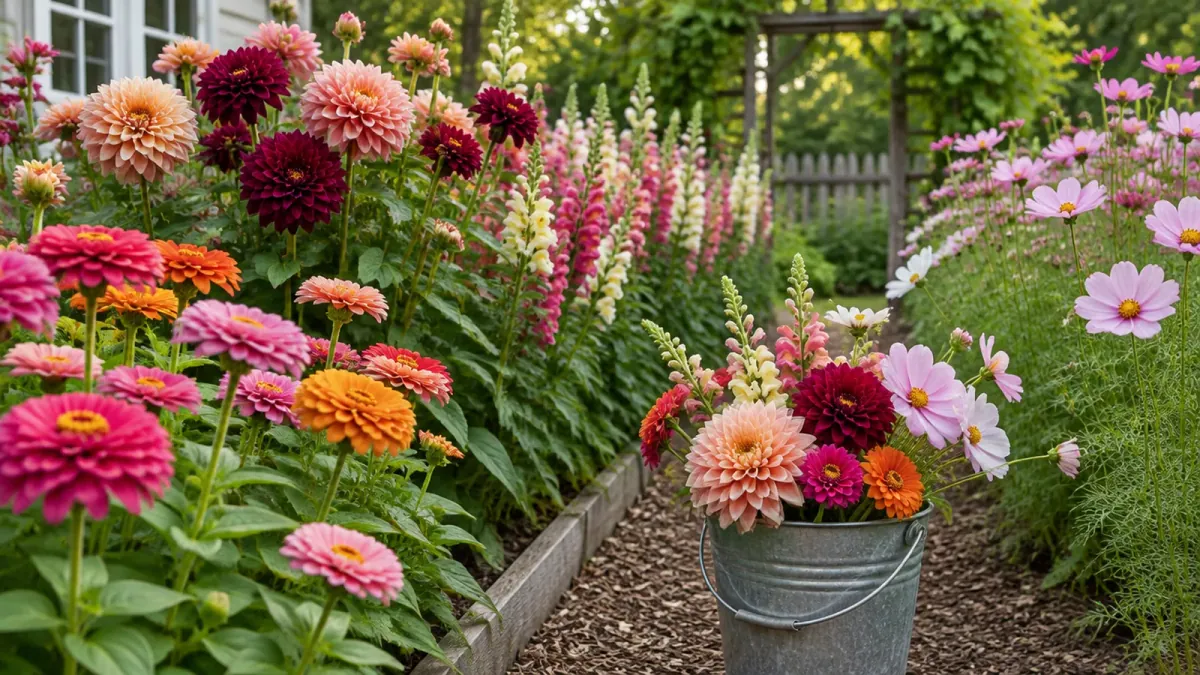
To start a cut flower garden, choose a sunny site with at least six hours of light, enrich the soil, and grow easy cut-and-come-again flowers such as zinnias, cosmos, snapdragons and sunflowers. Sow in succession, pinch plants for more stems and cut often, and you can have bouquets from late spring until frost.
Why grow your own cut flowers?
A cut flower garden gives you a steady supply of fresh bouquets for a fraction of what shop flowers cost, and you can grow varieties rarely sold in stores, such as scented sweet peas and unusual zinnia colors. Cutting also keeps plants blooming. Even a small patch can supply a vase a week. For more flower guides, visit our flowers hub.
Choose the right site
- Sun: at least six hours of direct sun; eight is better.
- Drainage: avoid low spots where water pools.
- Shelter: a spot protected from strong wind keeps tall flowers upright.
- Water access: a hose or drip line nearby saves effort.
- Out of view if needed: cutting beds can look messy, so a back corner or a row in the vegetable garden works well.
Prepare the soil
Cut flowers are hungry plants. Loosen soil to a spade’s depth, remove weeds and mix in 2 to 3 inches of compost. Test your pH; most cut flowers like about 6.0 to 7.0. See our guide to how to improve garden soil. A raised bed gives you good soil quickly; see our raised garden bed ideas.
Plan your layout
Plant for cutting, not for show. Rows or blocks spaced a bit tighter than ornamental beds give you long, straight stems.
| Layout | Notes |
|---|---|
| Rows 12–18 inches apart | Easiest to weed, water and cut |
| Block planting in a raised bed | Compact and productive |
| Mixed in the vegetable garden | Good for pollinators and pest control |
| Containers | For patios and balconies |
Use a support net (flower netting) stretched horizontally over the bed at 12 to 18 inches high for tall plants such as snapdragons, so stems stay straight.
Best flowers to start with
| Flower | Start | Sun | Vase life | Notes |
|---|---|---|---|---|
| Zinnia | Seed after frost | Full | 5–7 days | Cut-and-come-again; many colors |
| Cosmos | Seed after frost | Full | 5–7 days | Airy; pinch for bushiness |
| Sunflower (branching types) | Seed | Full | 5–7 days | Pollenless types are neater indoors |
| Snapdragon | Seed or plants early | Full | 7–10 days | Cool-season; harvest when lower flowers open |
| Calendula | Seed early | Sun to part shade | 5–7 days | Cool-season |
| Celosia | Seed or plants | Full | 7–14 days | Excellent dried too |
| Sweet pea | Seed in cool weather | Full | 5–7 days | Needs a trellis; scented |
| Dahlia | Tubers after frost | Full | 5–7 days | High value; needs support |
| Lisianthus | Plants | Full | 10–14 days | Slow; more advanced |
| Sweet alyssum | Seed | Sun to part shade | Short | Filler and fragrance |
Our lists of long-lasting cut flowers to grow and easy flowers to grow from seed have more choices.
Sow in succession
Succession sowing gives you a steady supply rather than a short flush.
| Time | Task |
|---|---|
| Late winter | Start slow plants indoors: snapdragons, lisianthus |
| Early spring | Sow hardy annuals outdoors: calendula, sweet pea |
| After last frost | Sow zinnias, cosmos, sunflowers |
| Every 2–3 weeks to midsummer | Repeat sowings of zinnias, sunflowers |
| Midsummer | Sow late cool-season flowers for fall |
| Fall | Plant bulbs and sow hardy annuals for spring |
Sunflowers in particular bloom in a single flush, so sow a new row every two weeks for a long season.
Plant and care
- Space plants according to the packet, usually 6 to 12 inches apart.
- Pinch young plants when they are about 8 to 12 inches tall, cutting just above a set of leaves. This makes branching, giving many more stems.
- Water deeply once or twice a week; use drip lines to keep foliage dry.
- Feed every few weeks with a balanced or bloom fertilizer.
- Mulch to suppress weeds and hold moisture.
- Weed regularly while plants are young.
- Support tall plants early with netting or stakes.
When and how to harvest
Cut in the cool of early morning or evening. Use clean, sharp snips and cut stems long, just above a leaf set, to encourage branching. Put stems straight into a bucket of cool water.
| Flower | Best cutting stage |
|---|---|
| Zinnia | Fully open, stiff stem |
| Cosmos | Just opened |
| Snapdragon | Lower third of flowers open |
| Sunflower | Petals beginning to open |
| Dahlia | Fully open |
| Sweet pea | A few flowers open on the stem |
| Celosia | Fully colored |
Condition cut flowers
Conditioning helps flowers last. Strip leaves below the water line, recut stems at an angle, and let the bucket stand for a few hours in a cool, dark place before arranging. Change water every one to two days and keep vases out of direct sun.
Many of these plants double as pollinator food, so see our lists of bee-friendly flowers and flowers that bloom all summer for extra ideas.
Common mistakes
- Too little sun.
- Skipping the pinch, which leaves short, leggy stems.
- Not supporting tall plants.
- Cutting too short and removing all the branching points.
- Letting plants go to seed, which stops blooming.
- Planting everything at once instead of in waves.
Pet note
Some cut flowers are on ASPCA lists. Dahlia, tulips, daffodils, buttercups (Ranunculus) and many lilies are listed as toxic to dogs and cats, with lilies of the Lilium group especially dangerous to cats. Zinnias, snapdragons and sunflowers are listed as non-toxic. Cosmos and lisianthus are not on the ASPCA list. Keep bouquets and fallen petals where pets cannot reach them.
A simple first-year plan
| Month | What to do |
|---|---|
| Late winter | Order seed, start snapdragons and celosia indoors |
| Early spring | Build the bed, add compost, sow calendula and sweet peas |
| After last frost | Transplant seedlings; sow zinnias, cosmos, sunflowers |
| Early summer | Pinch, stake, mulch; start cutting |
| Midsummer | Sow second rows; feed; keep cutting |
| Fall | Plant bulbs; clean beds; save seed from open-pollinated types |
Dahlias and bulbs
Dahlia tubers are a high-value cut flower. Plant them after frost, 4 to 6 inches deep, and stake early. Spring bulbs such as tulips and daffodils are planted in fall for early bouquets, and cutting them with a long stem takes leaves that the bulb needs, so cut sparingly or plant extra for the vase.
Fillers, foliage and structure
A bouquet needs more than focal blooms. Grow some airy fillers (sweet alyssum, bupleurum, baby’s breath), greenery (herbs such as basil and mint, or foliage from shrubs) and structure (snapdragons, celosia). Our guide to baby’s breath flowers covers a classic filler.
Frequently asked questions
How big should a beginner cut flower garden be?
A 4-by-8-foot bed, about 32 square feet, is enough for a steady supply of bouquets for one household and is easy to manage. Even a few large containers can work. Start small, learn what grows well in your site, and expand next year. Rows of plants spaced for cutting, not for display, give more stems.
What are the easiest flowers for a cut flower garden?
Zinnias, cosmos, sunflowers, calendula, snapdragons, celosia and sweet alyssum are among the easiest, because they grow quickly from seed and bloom heavily when you keep cutting them. These cut-and-come-again plants produce more flowers the more you pick. Add dahlias, sweet peas and lisianthus once you have some experience.
When should I cut flowers for bouquets?
Cut in the cool early morning or evening, when stems are full of water. The right stage varies by flower: zinnias when the petals are fully open, snapdragons when the lower third of the flowers is open, and dahlias and sunflowers when fully open. Use clean, sharp snips and put stems straight into a bucket of water.
How do I make cut flowers last longer?
Use clean buckets and vases, strip leaves that would sit below the water line, and cut stems at an angle with sharp snips. Use cool water, change it every day or two and keep arrangements out of direct sun and away from ripening fruit. Floral preservative, if you use it, feeds the stems and slows bacteria.
Can I grow cut flowers in containers?
Yes. Large containers of at least 10 to 12 gallons suit zinnias, dwarf sunflowers, cosmos, snapdragons and compact dahlias. Use a good potting mix, water regularly and feed every couple of weeks. Container yields are lower than beds, but a patio garden can still supply small bouquets through the summer.