Red Flowers: Types of Red Flowers for Gardens
On this page
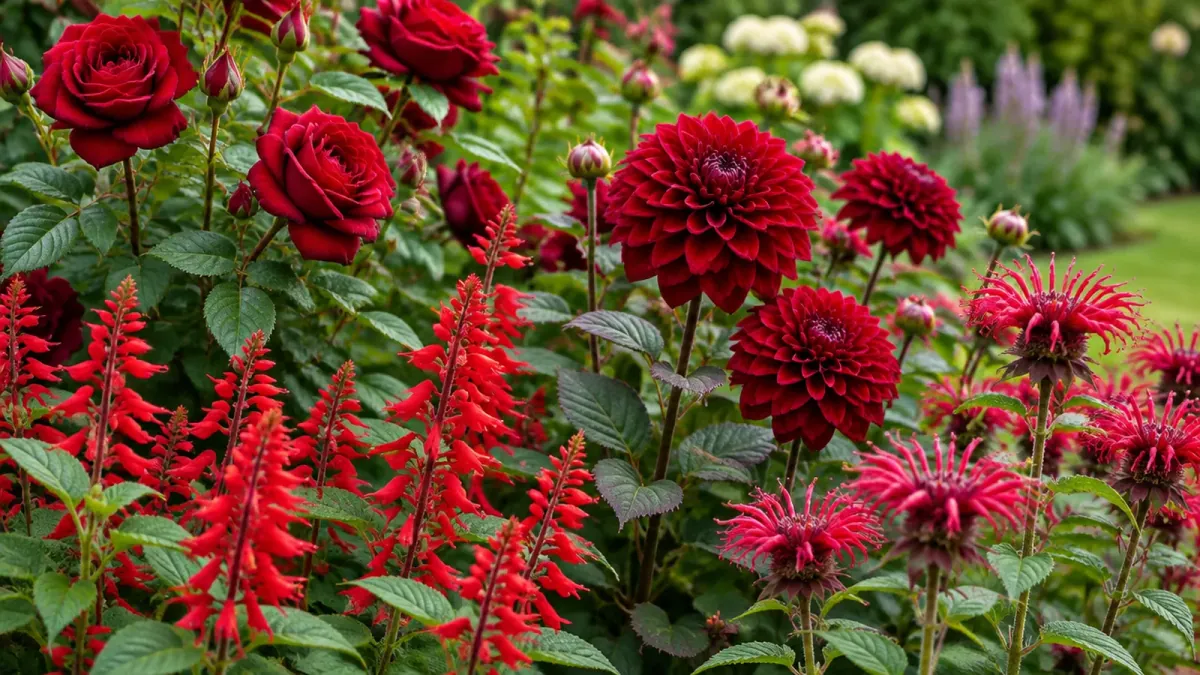
Red flowers worth growing include red roses, tulips, geraniums, salvia, zinnias, dahlias, poppies, bee balm, cardinal flower, red hot poker and cannas. Red is the boldest garden color, drawing the eye and hummingbirds, so use it for accents. The 20 below cover annuals, bulbs, perennials, shrubs and climbers, with typical height, sun and zones.
Why red needs a plan
Red is the strongest color in the garden. It attracts attention, draws hummingbirds, and makes distant beds seem closer. That power is also its risk: too much red can overwhelm a planting, and red flowers often disappear against dark green foliage in low light. A few well-placed groups of red usually look better than scattered single plants. For more color guides, browse our flowers hub, and for the hot-border partners, see our guides to orange flowers and yellow flowers.
Red flowers compared
Heights and zones are typical and vary by variety and climate.
| Flower | Type | Height | Sun | USDA zones | Blooms |
|---|---|---|---|---|---|
| Zinnia | Annual | 1–4 ft | Full sun | Annual | Summer to frost |
| Geranium (pelargonium) | Annual | 1–3 ft | Full sun | Annual | Spring to frost |
| Red salvia | Annual | 1–3 ft | Full sun | Annual | Summer to frost |
| Petunia | Annual | 6–18 in | Full sun | Annual | Spring to frost |
| Poppy (Shirley) | Annual | 2–3 ft | Full sun | Annual | Late spring |
| Red tulip | Bulb | 12–24 in | Full sun | 3–8 | Spring |
| Dahlia | Tuber | 1–5 ft | Full sun | 8–11 (lift elsewhere) | Midsummer to frost |
| Canna | Rhizome | 2–6 ft | Full sun | 7–11 | Summer to frost |
| Bee balm | Perennial | 2–4 ft | Sun to part shade | 3–9 | Summer |
| Cardinal flower | Perennial | 2–4 ft | Sun to part shade | 3–9 | Late summer |
| Red hot poker | Perennial | 2–4 ft | Full sun | 5–9 | Summer |
| Peony (red) | Perennial | 2–3 ft | Full sun | 3–8 | Late spring |
| Columbine (red) | Perennial | 1–3 ft | Sun to part shade | 3–8 | Spring |
| Penstemon (red) | Perennial | 1–3 ft | Full sun | 4–9 | Summer |
| Crocosmia ‘Lucifer’ | Corm | 3–4 ft | Full sun | 5–9 | Midsummer |
| Rose (red) | Shrub | 2–6 ft | Full sun | 4–10, by type | Summer, repeating |
| Camellia (red) | Shrub | 6–12 ft | Part shade | 7–9 | Fall to spring |
| Hibiscus (hardy, red) | Shrub or perennial | 3–6 ft | Full sun | 4–9 | Summer |
| Trumpet honeysuckle | Climber | 10–20 ft | Sun to part shade | 4–9 | Spring to summer |
| Fuchsia | Tender shrub | 1–3 ft | Part shade | 9–11 (annual elsewhere) | Summer to frost |
Red annuals
1. Zinnias
Fiery reds from compact to tall. Easy from seed, heat-tolerant and loved by butterflies.
2. Geraniums (pelargoniums)
Reliable red color in pots and beds all summer. Bring them in for winter in cold zones. Pelargoniums are toxic to pets.
3. Red salvia
Tall spikes that hummingbirds adore. Heat- and drought-tolerant once established.
4. Petunias
Red petunias such as the Wave series bloom nonstop in baskets.
5. Shirley and corn poppies
Papery red flowers in late spring. Sow seed directly where they are to grow. They are the poppies worn for remembrance in many countries.
Red bulbs, tubers and spring flowers
6. Red tulips
Classic spring color. Plant bulbs in fall. Tulips are toxic to pets.
7. Dahlias
Red dahlias, from small pompons to dinnerplates, bloom until frost. Lift tubers in cold zones.
8. Cannas
Tropical-looking red flowers with bold foliage. Lift rhizomes in zones colder than 7.
Red perennials
9. Bee balm
Shaggy red flowers that hummingbirds and butterflies visit. Choose mildew-resistant varieties like ‘Jacob Cline’.
10. Cardinal flower
A native with brilliant red spikes in late summer, for moist soil. A top hummingbird plant. Toxic if eaten.
11. Red hot poker
Torch-like spikes in red and orange. Needs full sun and excellent drainage.
12. Red peonies
Rich red, fragrant blooms in late spring. Toxic to pets.
13. Red columbine
Native ‘Eastern red columbine’ has nodding red-and-yellow flowers hummingbirds love.
14. Penstemon
Tubular red flowers on tough, drought-tolerant plants such as ‘Firebird’.
15. Crocosmia ‘Lucifer’
Arching fiery red sprays in midsummer.
Red shrubs and climbers
16. Red roses
A classic, from hybrid teas to easy shrub roses. For fewer pest problems, see our guide to organic rose pest control.
17. Red camellia
Glossy evergreen shrubs with red blooms from fall to spring in mild climates.
18. Hardy hibiscus
Huge, dinner-plate flowers in red on perennials that die back in winter. Late to emerge in spring.
19. Trumpet honeysuckle
A native, non-invasive climber with red tubular flowers loved by hummingbirds. Don’t confuse it with invasive Japanese honeysuckle.
20. Fuchsia
Dangling red-and-purple flowers for shade baskets. Hummingbirds adore them.
Red flowers for hummingbirds
Hummingbirds are strongly drawn to tubular red flowers. Bee balm, cardinal flower, salvia, trumpet honeysuckle, columbine, penstemon, fuchsia and red hot poker are favorites. Plant in groups, give them a sunny, sheltered spot and avoid pesticides. Our guide to flowers that attract hummingbirds has more.
Combining red with other colors
- Red and white: crisp and classic. See white flowers.
- Red and orange or yellow: a hot border for late summer.
- Red and purple: rich and dramatic; see purple flowers.
- Red and green: the natural pairing. See our guide to green flowers.
- Red and blue: vivid and patriotic; see blue flowers.
- Red and bronze foliage: warm and sophisticated.
Red flowers for different seasons
| Season | Red flowers |
|---|---|
| Late winter and early spring | Red camellia, early red tulips, hellebores (deep red forms) |
| Spring | Tulips, poppies, peony, columbine |
| Summer | Roses, bee balm, geranium, salvia, penstemon, canna, red hot poker |
| Fall | Dahlias, cardinal flower, chrysanthemum, red salvia |
A red and green hummingbird border
For a sunny bed about 4 by 8 feet:
| Layer | Plants | Notes |
|---|---|---|
| Back | Canna or trumpet honeysuckle on a trellis | Height and nectar |
| Middle | Bee balm, cardinal flower (moist area), red salvia | Tubular flowers for hummingbirds |
| Front | Red geraniums, penstemon, red petunias | Long-blooming edging |
| Foliage contrast | Silver artemisia or bronze fennel | Makes red stand out |
Common problems with red flowers
| Problem | Likely cause | Fix |
|---|---|---|
| Red turning dull or brown | Heat, fading or age | Choose heat-tolerant varieties; deadhead often |
| Powdery mildew on bee balm | Poor airflow | Choose resistant varieties like ‘Jacob Cline’ |
| Cannas with chewed leaves | Canna leaf rollers | Remove rolled leaves and caterpillars by hand |
| Dahlia buds and leaves distorted | Earwigs or slugs | Trap and hand-pick; clean up debris |
| Geraniums with few flowers | Too much nitrogen or too little light | Feed with a bloom fertilizer; give six hours of sun |
Red flower meanings
Red stands for love, passion and courage. Red roses mean romantic love, red tulips a declaration of love, and red poppies remembrance. See our guide to flower color meanings.
Red flowers in containers
Red looks sharp in pots. Geraniums, petunias, red salvia, begonias, fuchsia and dwarf cannas are dependable. Use a large container with quality potting mix, feed every one to two weeks and deadhead regularly. In hot sun, dark glazed pots can overheat roots, so shade the sides or choose a light-colored container. Red against a white or pale wall makes a striking, simple display.
Growing tips
- Plant in full sun for the strongest red color.
- Give afternoon shade in very hot climates to prevent bleaching.
- Deadhead to extend bloom.
- Use red sparingly as an accent, and place it where it will be seen against lighter foliage.
- Mind pets. Geraniums, tulips, peonies and lilies are toxic to cats or dogs.
Frequently asked questions
What are the best red flowers for a garden?
Dependable red garden flowers include red roses, tulips, geraniums (pelargoniums), salvia, zinnias, dahlias, poppies, bee balm, cardinal flower, red hot poker and canna. Red draws the eye, so use it as an accent. Many red flowers also attract hummingbirds, which are especially fond of tubular red blooms.
What red flowers attract hummingbirds?
Hummingbirds favor tubular red flowers such as bee balm, cardinal flower, red salvia, trumpet vine, columbine, fuchsia, red hot poker, penstemon, honeysuckle and cannas. Plant in sunny groups, keep feeders clean if you use them, and avoid insecticides. See our guide to flowers that attract hummingbirds for more.
What do red flowers symbolize?
Red is the color of love, passion and courage. Red roses are the classic symbol of romantic love, while red tulips traditionally declare love and red poppies are used to remember fallen soldiers in many countries. Meanings are traditions and differ between cultures.
What red flowers bloom all summer?
Red geraniums, petunias, zinnias, salvia, begonias, cannas and ‘Knock Out’ roses bloom for months. Perennials such as bee balm and red hot poker flower for several weeks. Deadhead regularly and feed container plants to keep them blooming. Dahlias bloom from midsummer to frost.
Do red flowers fade in the sun?
Some do. Red pigments can bleach or darken in intense heat and strong sun, especially on thin-petaled annuals and some roses. Choose heat-tolerant varieties, water well, and give afternoon shade in very hot climates. Deeper, velvety reds usually hold their color better than bright, thin-petaled ones.
What red flowers are easy for beginners?
Zinnias, geraniums, red salvia, petunias, poppies and nasturtiums are all easy. Most thrive in full sun with ordinary soil and need little more than regular watering and deadheading. Zinnias, poppies and nasturtiums grow quickly from seed sown directly in the garden, and bloom within two or three months.