Garden Path Ideas and Walkway Materials
On this page
Garden path ideas range from simple stepping stones set in grass to formal brick or paver walkways. Choose a material that suits your style, budget and traffic: gravel and mulch are cheap and soft, pavers and brick are firm and tidy, and stepping stones are quick. A good base, edging and drainage matter more than the surface material.
Planning your path
A good path leads somewhere, such as a gate, patio, bench or compost bin, and follows the way people actually walk. Mark the route with a hose or string and walk it before building. Think about how it will be used: wheelbarrows, mowers and strollers need wider, firmer surfaces than a casual stroll. For more guides, visit our landscaping hub.
| Planning question | Consider |
|---|---|
| Who will use it? | Wheelchair, stroller and wheelbarrow access needs firm, smooth surfaces |
| How wide? | 3–4 ft main; 2 ft secondary |
| Straight or curved? | Straight is formal and fast; curves feel natural |
| Slope? | Steps or a gentle gradient; avoid slippery surfaces |
| Water? | Plan drainage and avoid low spots |
| Light? | Add low path lights for evening use |
Walkway materials compared
Costs are relative because prices vary by region and supplier.
| Material | Look | Relative cost | Maintenance | Notes |
|---|---|---|---|---|
| Gravel | Informal, crunchy | Low to moderate | Rake, top up, weed | Needs edging; hard for wheelchairs |
| Wood chip mulch | Soft, natural | Low | Replenish yearly | Good for woodland paths |
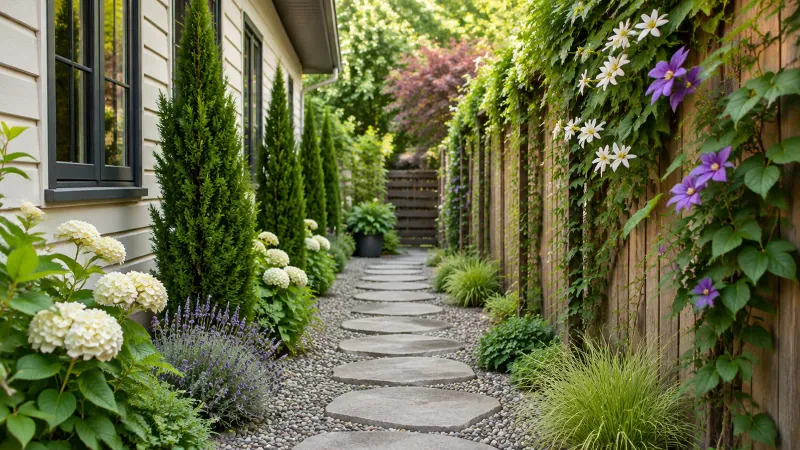
| Stepping stones | Casual, simple | Low to moderate | Low | Fast to build; set in lawn or gravel |
| Pavers (concrete) | Neat, many patterns | Moderate | Low | Firm and flat |
| Brick | Traditional | Moderate to high | Low | Many laying patterns |
| Natural flagstone | Rustic, irregular | High | Low | Beautiful but heavy; needs a solid base |
| Decomposed granite | Soft, earthy | Low to moderate | Moderate | Compacts firmly; can track indoors |
| Poured concrete | Plain, modern | Moderate to high | Low | Less permeable |
| Grass path | Soft | Low | Mowing | Wears with heavy use |
| Reclaimed materials | Eclectic | Varies | Varies | Check safety and slipperiness |
Path ideas by style
Cottage garden
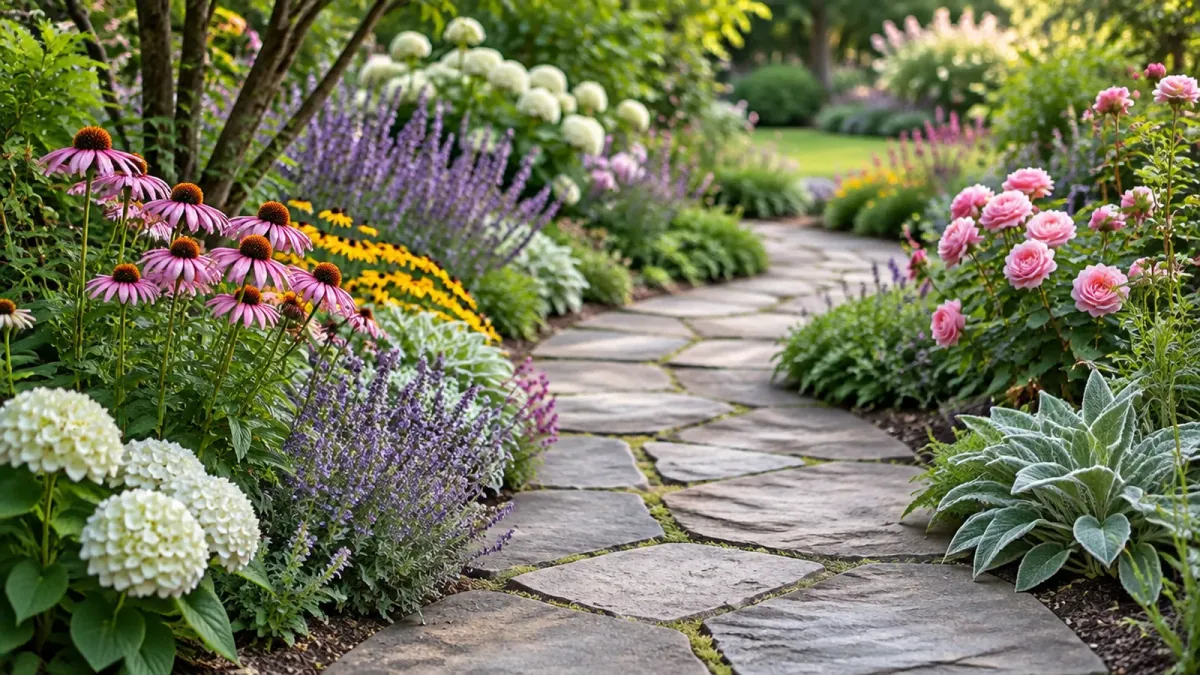
A winding brick or gravel path edged with lavender, catmint and roses. Choose curves and flowers spilling onto the path.
Modern garden
Straight lines with large concrete or porcelain pavers, crisp steel edging and low plantings, such as ornamental grasses.
Woodland garden
A soft mulch or stepping-stone path winding through ferns and hostas. See our guide to landscaping around trees for protecting roots.
Vegetable garden
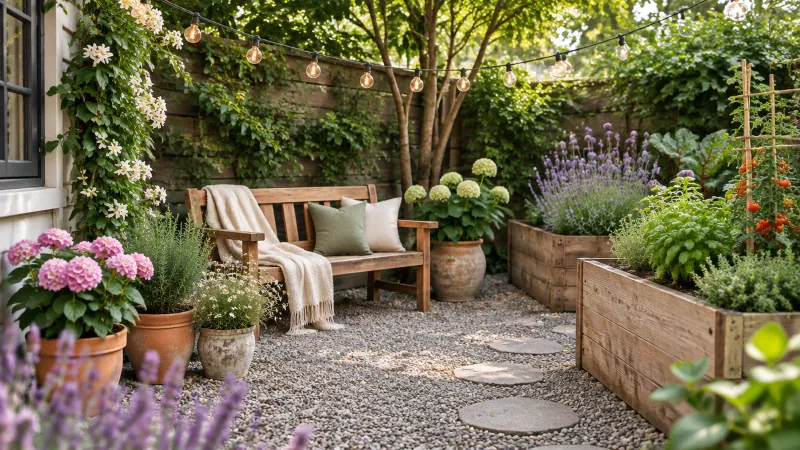
Wide mulch or gravel paths between raised beds that keep feet out of the soil. See our raised garden bed ideas for layouts.
Rock or dry garden
Gravel and stone paths running through succulent and alpine plantings; see rock garden ideas.
Front yard walkway
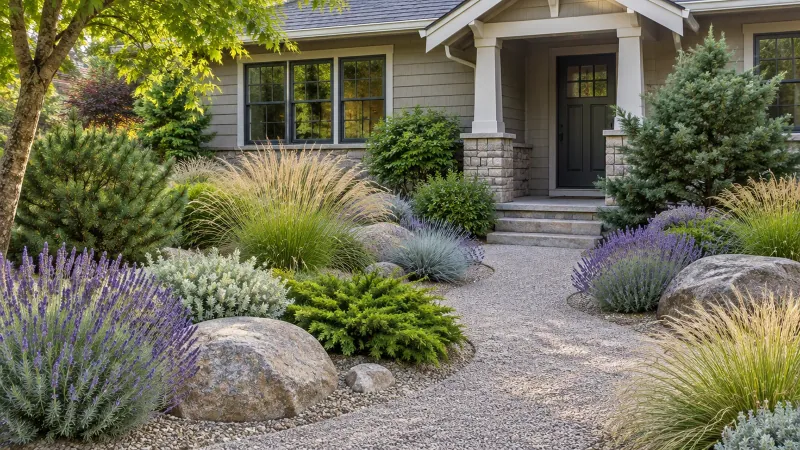
A broad, welcoming path with firm pavers or brick, good lighting and plants close to the sides, in keeping with the house style.
How to build a gravel path
- Mark the route with a hose or string and check width.
- Excavate to about 4 to 6 inches deep, removing sod and roots.
- Install edging such as metal, stone or wood to hold gravel in; see garden edging ideas.
- Add and compact a base of crushed stone, about 3 to 4 inches.
- Lay landscape fabric if you want to limit weeds, overlapping seams.
- Spread 2 to 3 inches of path gravel, raking it level.
- Compact lightly and add a little more if needed.
Make the path slightly higher in the middle (a crown) or sloped to one side for drainage.
How to build a paver or brick path
- Mark and excavate about 7 to 9 inches deep, depending on your soil and traffic.
- Install edging or restraints.
- Lay and compact 4 to 6 inches of crushed stone base.
- Add 1 inch of leveling sand and screed flat.
- Set pavers or brick tightly, tapping with a rubber mallet and checking level.
- Fill joints with sand or polymeric sand, sweep and compact.
- Water lightly to settle the sand, and top up joints after a few weeks.
How to lay stepping stones
- Set out stones on the ground, spacing them about 24 to 30 inches from center to center, or at a comfortable stride.
- Trace around each with a spade, or mark with sand.
- Dig a hole a bit deeper than the stone, add a layer of sand or gravel, and set the stone level with the ground.
- Fill gaps with soil, ground cover or gravel.
Plants beside paths
Soft plants soften edges, but they shouldn’t block the way. Good choices include thyme, creeping sedum, lavender, catmint and ornamental grasses. See our list of ground cover plants for low options. Avoid thorny plants beside narrow paths.
Safety and maintenance
- Slip resistance: choose textured surfaces; moss and wet leaves are slippery.
- Lighting: low-voltage lights help in the dark.
- Drainage: fix puddles early.
- Weeds: pull or treat when small.
- Settling: refill joints and re-level stones yearly.
- Frost: in cold climates, use a deep, well-drained base to limit heaving.
Mistakes to avoid
- Skipping the base.
- Making paths too narrow.
- No edging, so materials spread.
- Poor drainage.
- Using slippery, smooth surfaces on slopes.
- Placing paths where nobody walks.
Pets
Gravel and mulch can get hot or sharp for paws; choose smoother, shaded materials for dogs. Cocoa bean shell mulch contains theobromine and can be harmful to dogs, so avoid it. Check plants beside the path, since lavender is listed by the ASPCA as toxic to dogs and cats, while thyme is listed as non-toxic.
Frequently asked questions
What is the cheapest material for a garden path?
Wood chip mulch and gravel are usually the least expensive path materials, and stepping stones with grass or ground cover between them can also be affordable. Cost varies by region and supplier. Mulch paths need topping up regularly, while gravel lasts longer but needs edging and a weed barrier. Compare local prices before deciding.
How wide should a garden path be?
A main path should be about 3 to 4 feet wide so two people can walk side by side or a wheelbarrow can pass. Secondary paths can be 2 feet wide, and stepping-stone paths work with stones spaced about 24 to 30 inches center to center. Leave extra width for any path used with a mower or cart.
How do I build a gravel path?
Mark the route, dig out about 4 to 6 inches, install edging, lay and compact a base of crushed stone, add landscape fabric if needed to block weeds, then spread 2 to 3 inches of path gravel. Rake it level and compact it lightly. A slight crown or slope helps water run off.
What should go under a garden path?
A compacted base of crushed stone keeps paths firm and drained, with a layer of sand under pavers or flagstone for leveling. Landscape fabric under gravel or mulch limits weeds, though it needs care at edges. Install edging to hold the material in. The depth of the base depends on your soil and the traffic the path will carry.
How do I stop weeds growing in my garden path?
Use a compacted base, a quality landscape fabric under loose materials and edging that keeps grass out. Pull weeds when small, and top up gravel or mulch so seedlings can’t root. In paver paths, fill joints with polymeric sand or tight-growing plants such as thyme. Avoid over-reliance on herbicides near garden beds.