Landscaping Around Trees: Ideas and What to Avoid
On this page
When landscaping around trees, protect the roots and trunk: apply a wide, shallow mulch ring pulled back from the trunk, plant shade-tolerant, shallow-rooted plants in small sizes, avoid heavy digging and extra soil and use gravel, stepping stones or decks that sit over roots. Piled mulch, deep fill and tight edging do the most harm.
Why trees are tricky
Most tree roots grow in the top foot or two of soil, and many extend out well beyond the spread of the branches. They need oxygen and water from those upper layers. Digging, piling soil, compacting the ground or building over them can injure the roots and weaken the tree. Shade and root competition also make it hard for plants to grow underneath. The aim is to add beauty without damaging the tree. For more guides, visit our landscaping hub.
Landscaping ideas around trees
| Idea | Why it works |
|---|---|
| Wide mulch ring | Protects roots, holds moisture and removes lawn competition |
| Shade plant bed | Adds color in the shade, with shallow-rooted perennials |
| Ground cover carpet | A low, easy blanket of foliage; see ground cover plants |
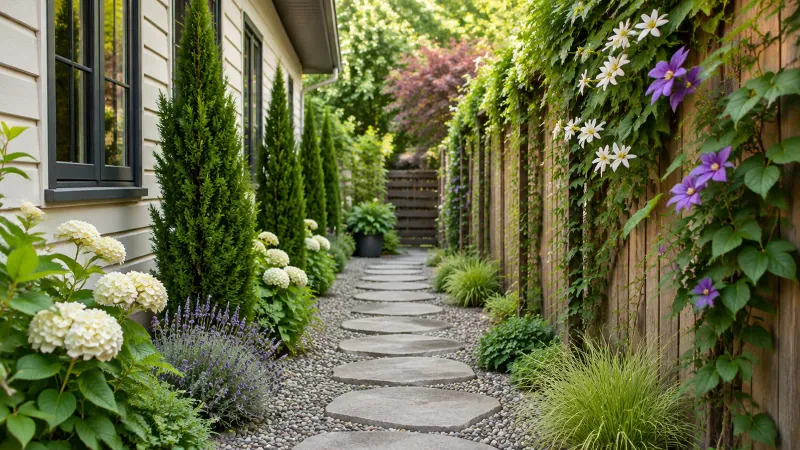
| Gravel or stepping-stone path | Sits on the surface; no digging |
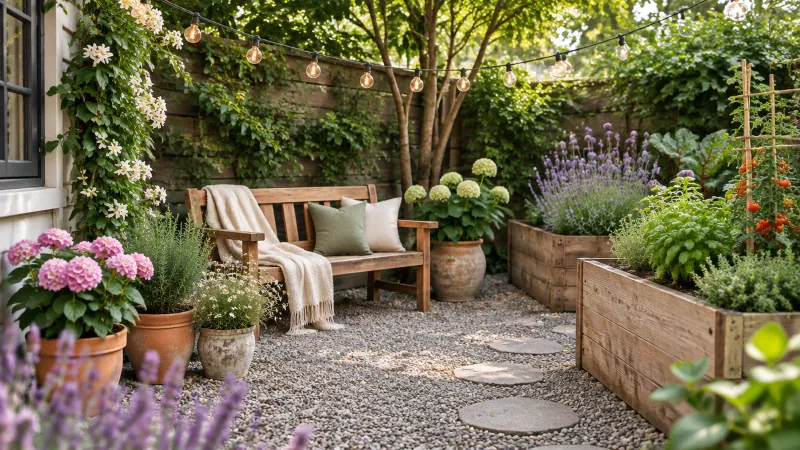
| Bench or seating on a surface base | Creates a shady retreat |
| Container plants | Add color without disturbing roots |
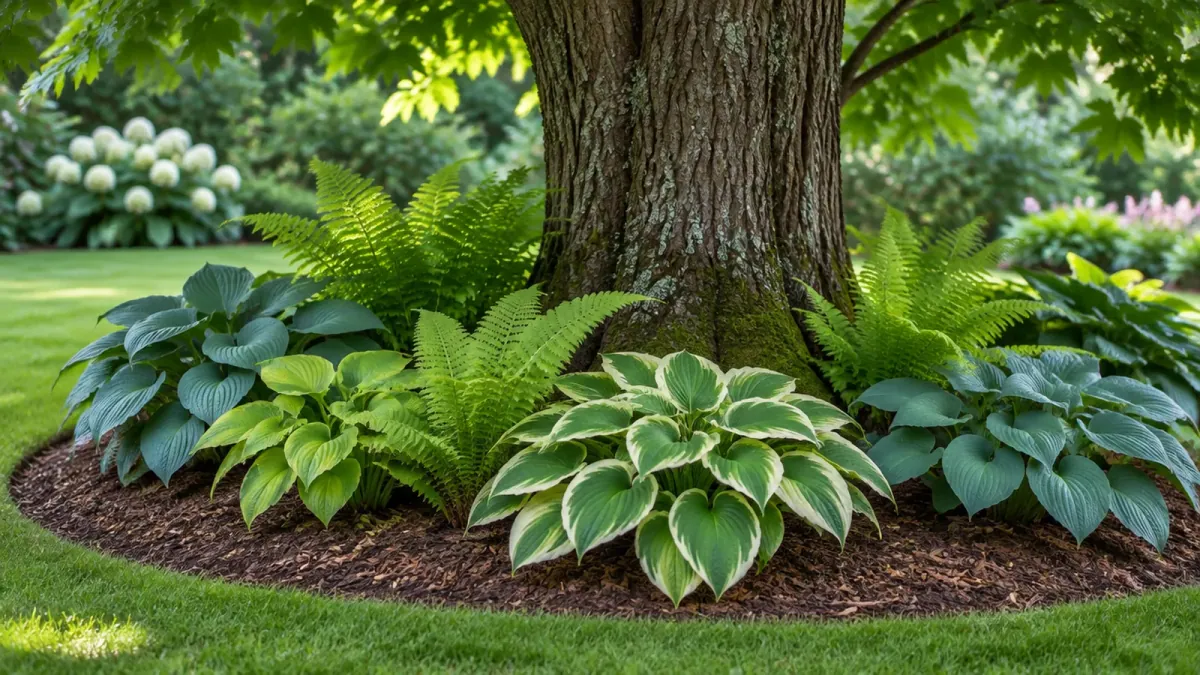
| Woodland garden | Layers of ferns, hostas and spring bulbs |
| Natural stone edging | Defines the bed without deep trenches |
Mulch the right way
Mulch is the best thing you can do for most trees.
- Remove grass from the planned ring, or smother it with cardboard.
- Spread 2 to 4 inches of mulch such as wood chips or shredded bark.
- Pull it back 3 to 6 inches from the trunk so the bark stays dry and the trunk flare shows.
- Make the ring wide: the larger the better, ideally to the drip line (the edge of the branches) for small trees.
- Top up each year, since mulch breaks down.
Avoid “mulch volcanoes,” where mulch is piled against the trunk. This keeps bark wet, promotes rot and disease and gives pests a hiding place. For choices, see our guide to types of mulch.
Plants for shade under trees
| Plant | Notes |
|---|---|
| Hosta | Bold leaves; slugs love it; ASPCA lists hosta as toxic to dogs and cats |
| Ferns | Soft texture; some are listed by the ASPCA as non-toxic, though not all ferns |
| Coral bells (Heuchera) | Colorful leaves; ASPCA lists it as non-toxic |
| Ajuga | Low spreader with blue spikes |
| Sweet woodruff | Fragrant ground cover |
| Hellebores | Winter and early spring bloom; ASPCA lists them as toxic |
| Epimedium | Tough for dry shade |
| Sedges (Carex) | Grass-like and tidy |
| Liriope | Tough; ASPCA lists it as non-toxic |
| Spring bulbs (snowdrops, daffodils) | Bloom before the tree leafs out; daffodils are toxic to pets |
| Foamflower, astilbe | Moist shade favorites |
For more shade choices, see our guide to best flowers for full shade gardens.
Dry shade, wet shade and deep shade
| Condition | Typical trees | Plant ideas |
|---|---|---|
| Dry shade | Maples, oaks, evergreens | Epimedium, sedges, hellebores, liriope, barrenwort |
| Moist shade | Willows, near water | Ferns, astilbe, hosta, foamflower |
| Deep shade | Dense evergreens | Ferns, mosses, sweet woodruff, hellebores |
| Dappled shade | Birches, honey locust | Wide range of woodland plants |
How to plant under a tree
- Use small plants (1 gallon or smaller); they need smaller holes.
- Dig by hand, not with a machine, and don’t cut roots over about 2 inches thick.
- Move planting spots to avoid large roots.
- Water more often the first year, since tree roots compete for water.
- Mulch around plants.
- Don’t fertilize heavily, which encourages weak growth.
- Don’t remove large amounts of soil around the trunk.
Hardscape and structures
| Feature | Tips |
|---|---|
| Path | Lay gravel or stepping stones on the surface with minimal digging; see garden path ideas |
| Patio | Use permeable materials or a floating deck above the roots |
| Retaining wall | Keep it well away from the trunk, or ask an arborist |
| Fire pit or seating | Keep a safe distance from the trunk and canopy |
| Lights | Mount on stakes or existing structures, not on the tree |
Avoid fill soil over roots, impermeable pavement, plastic or fabric under mulch and heavy equipment that compacts the soil.
What to avoid
| Mistake | Why it hurts |
|---|---|
| Piling mulch or soil against the trunk | Rot, pests and disease |
| Adding more than an inch or two of fill soil | Suffocates roots |
| Digging deeply or cutting large roots | Weakens and destabilizes the tree |
| Planting turf right to the trunk | Competition and mower damage |
| Using solid plastic under mulch | Blocks air and water |
| Tight, solid edging against the trunk | Girdles roots and traps water |
| Using herbicides near roots | Can harm the tree |
When to call an arborist
Consult a certified arborist for a large tree if you plan major work, see signs of decline such as dead branches, fungus on the trunk or leaning, or must cut thick roots. Arborists can advise on pruning, root protection and whether a tree is safe.
Pets
Some plants under trees are toxic to pets: the ASPCA lists hosta, hellebore and daffodil as toxic to dogs and cats, and lists coral bells and liriope as non-toxic. Fallen fruit, nuts and some mulches can also be a risk. Cocoa bean shell mulch contains theobromine and can be harmful to dogs; choose a different mulch if you have dogs.
Lawn under trees
Grass struggles under dense shade and competes with roots for water. If you want a lawn, choose a shade-tolerant mix, mow high and water deeply but rarely. Often a better option is to replace turf near the trunk with mulch or shade plants; see our guide to lawn alternatives. Reducing mower damage to the trunk also helps the tree.
Frequently asked questions
What can I plant under a tree?
Choose shade-tolerant, shallow-rooted plants such as hostas, ferns, coral bells, ajuga, sweet woodruff, epimedium, hellebores and sedges. Plant small, young plants rather than large ones, so you disturb fewer roots. Keep plants beyond the trunk flare, and avoid heavy digging. Dry shade, common under maples and oaks, needs tougher plants.
How close can I plant to a tree trunk?
Keep plants and mulch away from the trunk itself: leave a few inches of bare space at the base so the bark stays dry. Plant beyond that, and the farther out you plant, the less you disturb the main roots. Avoid planting directly against the trunk, and never pile soil or mulch up around it.
How deep should mulch be around a tree?
Apply 2 to 4 inches of mulch, spread in a wide ring and pulled back from the trunk by a few inches. Never pile mulch against the trunk in a volcano shape, which keeps bark wet and invites rot, pests and disease. A wider ring is better than a deep one. Replenish thin mulch yearly.
Can I add soil or build a raised bed around a tree?
Avoid adding more than an inch or two of soil over tree roots, and never build a solid raised bed against the trunk. Roots need oxygen, and piling soil can suffocate them and rot the trunk. If you want a bed, build a low, wide one that leaves the trunk flare exposed, or choose mulch and shade plants instead.
How do I landscape around a tree with big roots?
Work with the roots. Avoid cutting large roots, and don’t dig deeply. Use mulch, shallow-rooted ground covers, stepping stones or a gravel path laid directly on the surface, or build a deck or seating area that sits above the roots. If large roots are in the way, consult an arborist before cutting.