Types of Mulch: Which One Should You Use?
On this page
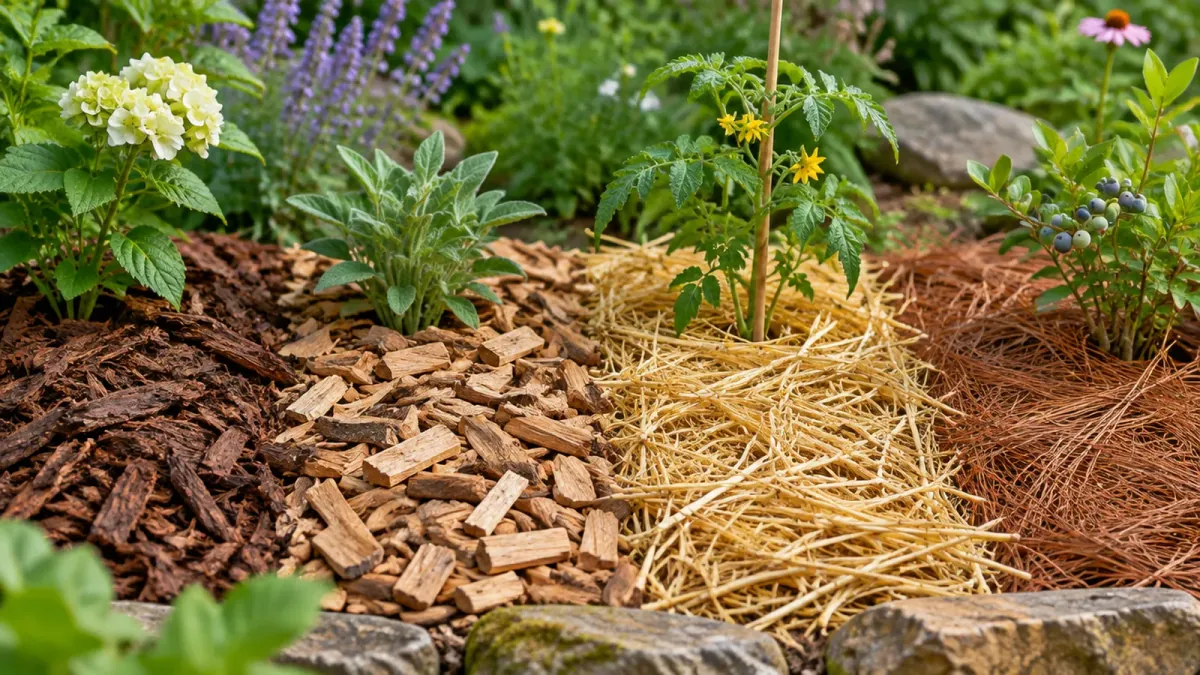
The main types of mulch are organic, such as bark, wood chips, straw, shredded leaves, compost and pine needles, and inorganic, such as gravel and rubber. Organic mulch feeds the soil and suits most beds. Apply 2 to 3 inches, keep it away from stems and trunks, and match the type to the planting.
What mulch does
Mulch is a covering spread over the soil. It suppresses weeds, holds moisture, moderates soil temperature, reduces erosion and, if organic, breaks down to feed soil. It also gives beds a neat look. Used well, mulch saves time and water. For more guides, visit our landscaping hub.
Organic vs inorganic mulch
| Group | Examples | Pros | Cons |
|---|---|---|---|
| Organic | Bark, wood chips, straw, leaves, compost, pine needles, grass clippings | Feeds soil, improves structure, cool | Breaks down; needs topping up |
| Inorganic | Gravel, stone, rubber, plastic sheeting | Long lasting; no decay | No soil benefit; can heat up; harder to remove |
Types of mulch compared
Costs are relative because prices vary by region.
| Mulch | Best for | Relative cost | Lasts | Notes |
|---|---|---|---|---|
| Shredded bark | Trees, shrubs, perennial beds | Moderate | 1–2 years | Attractive, stays in place |
| Wood chips | Trees, paths, shrubs | Low to moderate | 1–3 years | Often free from arborists |
| Straw | Vegetable gardens | Low | 1 season | Use weed-free straw |
| Shredded leaves | Beds, vegetables | Free | 1 season | Great soil builder |
| Compost | Vegetable and flower beds | Low to moderate | A season | Feeds plants; may allow weeds |
| Grass clippings | Vegetable gardens | Free | A few weeks | Use thinly; avoid treated lawn |
| Pine needles | Acid-loving plants | Low | 1–2 years | Light; stays in place on slopes |
| Gravel and stone | Rock gardens, dry areas | Moderate | Very long | No decay; can heat up |
| Rubber mulch | Playgrounds | Moderate to high | Very long | Doesn’t feed soil; can be a heat and fire concern |
| Cardboard and newspaper | Weed barrier under mulch | Free | A season | Wet it and cover with mulch |
| Landscape fabric | Under gravel and paths | Low to moderate | Years | Not ideal under organic mulch in beds |
Wood chips and bark
Wood chips and shredded bark are popular for borders, trees and shrubs. Chips from tree service companies are often cheap or free and work well. Fresh wood chips can temporarily tie up nitrogen at the soil surface, but they rarely harm established plants when used as mulch rather than mixed into the soil. Avoid dyed mulches of unknown origin.
Straw and leaves
Straw is a classic vegetable garden mulch, light and easy to move, and it suppresses weeds. Buy straw, not hay, which contains seeds. Shredded leaves make excellent free mulch. Both break down in a season and add organic matter; leaf mold and compost are covered in our composting guides.
Compost as mulch
A 1- to 2-inch layer of compost feeds plants and improves soil, though weed seeds can sprout through it. Topping compost with coarser mulch gives both benefits.
Pine needles
Pine needles are light, drain well and can be used around acid-loving plants. Contrary to myth, they don’t change soil pH much.
Gravel and stone
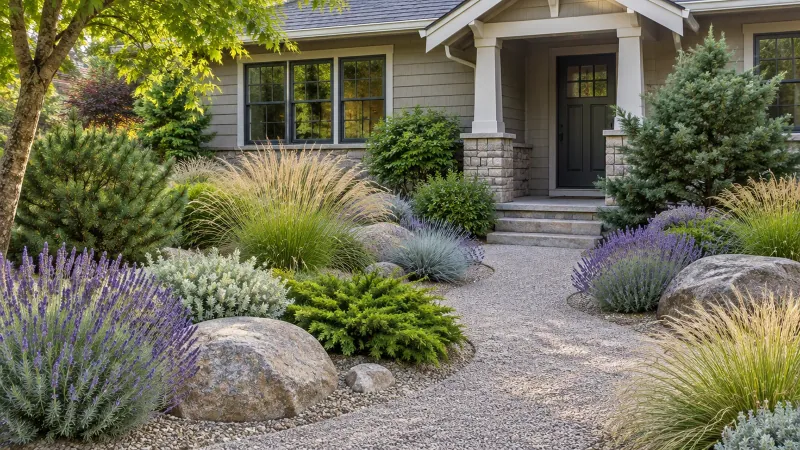
Gravel suits rock gardens, succulent beds and paths. It doesn’t break down and doesn’t hold moisture, so it suits drought-tolerant plants. It can heat up in full sun and is hard to remove later. See our guide to rock garden ideas.
Rubber and plastic
Rubber mulch is used for playgrounds, where it cushions falls. It doesn’t improve soil. Plastic sheeting blocks water and air, and is generally not recommended for ornamental beds.
Which mulch for which place?
| Place | Good mulches |
|---|---|
| Trees and shrubs | Wood chips, shredded bark; see landscaping around trees |
| Perennial and flower beds | Shredded bark, compost, leaves |
| Vegetable gardens | Straw, shredded leaves, compost, grass clippings (thin) |
| Rock and succulent gardens | Gravel and stone |
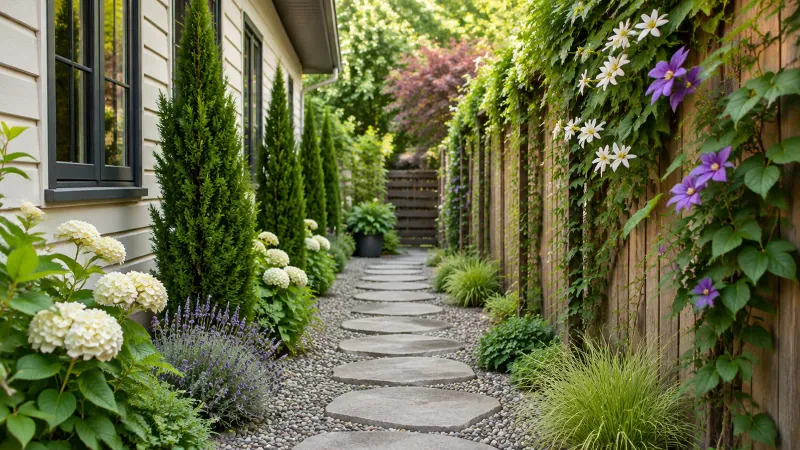
| Paths | Wood chips, gravel; see garden path ideas |
| Acid-loving plants | Pine needles, bark |
| Slopes | Shredded bark or straw netting that locks together |
| Playgrounds | Engineered wood fiber or rubber |
How to apply mulch
- Weed the bed and, if you wish, water well.
- Add a layer of cardboard for stubborn weeds, wetting it down.
- Spread 2 to 3 inches of mulch evenly.
- Pull mulch back a few inches from trunks and stems.
- Keep it away from siding and foundations by 6 to 12 inches.
- Top up as it breaks down, usually each spring.
Our garden maintenance guide lists seasonal mulching tasks, and how to improve garden soil explains how mulch builds soil over time.
Mistakes to avoid
- Piling mulch against trunks (a “mulch volcano”).
- Spreading it too thick.
- Using hay with seeds.
- Using too much fresh chips mixed into the soil.
- Using treated or dyed wood of unknown origin.
- Laying plastic under organic mulch.
- Mulching bare ground in a cold spring, which can slow soil warming for vegetables.
Pets
Cocoa bean shell mulch contains theobromine, the same compound found in chocolate, and the ASPCA warns that, if eaten, it can cause theobromine toxicity in dogs, with rapid heart rate, tremors and seizures. Choose bark, wood chips, straw or another mulch if you have a dog, and keep pets away from moldy mulch. Check the plants in your beds against the ASPCA list, too.
Mulch and soil health
Organic mulch is food for soil life. Earthworms and microbes pull it down and turn it into humus, which improves structure, drainage and water holding. Over several seasons beds under organic mulch often become darker, looser and easier to dig. The trade-off is that you need to replenish it. If your soil is poor, a layer of compost under the mulch gives a quicker start.
Seasonal mulching
| Season | Mulching task |
|---|---|
| Spring | Weed, then mulch after the soil warms; refresh old beds |
| Summer | Top up thin areas to save water |
| Fall | Add leaves or straw to protect roots and tender plants |
| Winter | Apply a winter layer over perennials after the ground cools in cold climates |
Mulch myths
- “Mulch robs soil of nitrogen.” Only the thin layer where chips touch soil is affected, and plants rarely suffer when chips sit on top.
- “Pine needles acidify soil.” Their effect is small.
- “Dyed mulch is always unsafe.” Quality varies; look for products from clean wood.
- “More is better.” Thick layers can suffocate roots.
Frequently asked questions
What is the best mulch for a garden?
It depends on the area. Shredded bark and wood chips suit trees, shrubs and perennial beds, straw and shredded leaves suit vegetable gardens, compost improves soil in beds, and gravel suits dry or rock gardens. Choose organic mulch that breaks down and feeds the soil in most beds, and inorganic types for special uses.
How deep should mulch be?
Spread 2 to 3 inches of mulch on most beds and up to 4 inches for coarse chips around trees, keeping it a few inches away from trunks and stems. Thinner mulch can fail to suppress weeds, and too much can smother plants or hold excess moisture. Fine materials such as grass clippings should be applied thinly.
Is it OK to put new mulch over old mulch?
Usually, but check the depth first. If old mulch is still 1 to 2 inches thick, add a thin new layer, or loosen the old mulch with a rake and top up. If it has matted or you have more than 3 to 4 inches, remove some. Too deep a layer can block water and air.
Does mulch attract termites or pests?
Mulch can shelter slugs, earwigs and sometimes termites in damp, deep layers. Wood mulch itself is not the main attraction for termites, but moist mulch piled against a house can create a path. Keep mulch about 6 to 12 inches from foundations and siding and avoid deep layers next to buildings.
Is any mulch harmful to pets?
Yes, some can be. Cocoa bean shell mulch contains theobromine, the same compound as chocolate, and the ASPCA warns that, if eaten, cocoa bean mulch can cause theobromine toxicity in dogs (rapid heart rate, tremors, seizures). Mold-covered mulch can also upset stomachs. If you have a dog that eats mulch, choose another type, and keep dogs from newly applied products.