Perennial Flowers for Full Sun
On this page
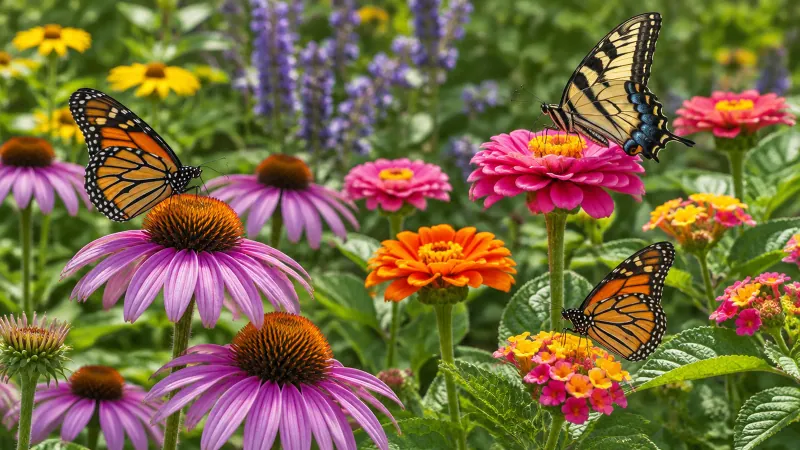
Perennial flowers for full sun include purple coneflower, black-eyed Susan, salvia, daylily, yarrow, coreopsis, catmint, sedum, Shasta daisy and blanket flower. They need six or more hours of direct sun, tolerate heat and often drought, and return every year. Choose varieties with staggered bloom times for color from spring to fall.
Why choose perennials?
Perennials come back year after year, which saves replanting and often money. In full sun they bloom heavily, attract pollinators and, once established, many need little care. The trade-off is that each plant usually blooms for only a few weeks, so choose a mix for continuous color. For more flower guides, visit our flowers hub.
20 perennials for full sun
| Plant | Zones | Height | Bloom | Color |
|---|---|---|---|---|
| Purple coneflower | 3–9 | 2–4 ft | Summer to fall | Purple, pink, white |
| Black-eyed Susan | 3–9 | 2–3 ft | Summer to fall | Yellow |
| Salvia ‘May Night’ | 4–9 | 18–24 in | Early summer | Violet-blue |
| Daylily | 3–9 | 1–3 ft | Summer | Many |
| Yarrow | 3–9 | 1–3 ft | Summer | White, yellow, pink |
| Coreopsis | 4–9 | 1–2 ft | Summer | Yellow |
| Catmint | 3–8 | 1–2 ft | Late spring to fall | Blue-purple |
| Sedum ‘Autumn Joy’ | 3–9 | 1–2 ft | Late summer to fall | Pink to rust |
| Shasta daisy | 5–9 | 1–3 ft | Summer | White |
| Blanket flower (Gaillardia) | 3–10 | 1–2 ft | Summer to frost | Red and yellow |
| Russian sage | 4–9 | 3–5 ft | Midsummer to fall | Lavender-blue |
| Lavender | 5–9 | 1–3 ft | Early summer | Purple |
| Bee balm | 3–9 | 2–4 ft | Midsummer | Red, pink, purple |
| Veronica (spike speedwell) | 3–8 | 1–2 ft | Summer | Blue, purple |
| Liatris (blazing star) | 3–9 | 2–4 ft | Summer | Purple |
| Garden phlox | 4–8 | 2–4 ft | Summer | Pink, purple, white |
| Balloon flower | 3–8 | 1–3 ft | Summer | Blue, white |
| Hardy hibiscus | 4–9 | 3–6 ft | Midsummer to fall | Red, pink, white |
| Peony | 3–8 | 2–3 ft | Late spring | Pink, white, red |
| Hardy geranium ‘Rozanne’ | 5–8 | 18–24 in | Summer to frost | Blue-violet |
Zones are approximate; check your variety’s tag. For colors, see also our pages on purple flowers and pink flowers.
Choosing by purpose
| Goal | Good picks |
|---|---|
| Longest bloom | Coreopsis, catmint, ‘Rozanne’ geranium, gaillardia |
| Dry soil | Yarrow, sedum, Russian sage, lavender, blanket flower |
| Pollinators | Coneflower, bee balm, salvia, catmint, liatris |
| Cut flowers | Coneflower, Shasta daisy, yarrow, liatris; see long-lasting cut flowers |
| Deer resistance | Catmint, salvia, yarrow, Russian sage, lavender |
| Fall color | Sedum, asters, hardy hibiscus |
How to plant perennials in full sun
- Pick the site: at least six hours of direct light, with good drainage.
- Prepare the soil: loosen to a spade’s depth and mix in compost. See our guide to improving garden soil.
- Dig a hole about twice as wide as the root ball, at the same depth.
- Set the plant with the crown level with the soil.
- Backfill, firm and water deeply.
- Mulch 2 inches deep, keeping mulch off the crown.
- Water every few days for the first few weeks, then weekly.
Spacing and layout
| Size | Spacing | Examples |
|---|---|---|
| Compact (under 18 in) | 12–15 in | Coreopsis, catmint, hardy geranium |
| Medium (18–36 in) | 18–24 in | Coneflower, salvia, daylily |
| Large (over 3 ft) | 30–36 in | Russian sage, hardy hibiscus, tall phlox |
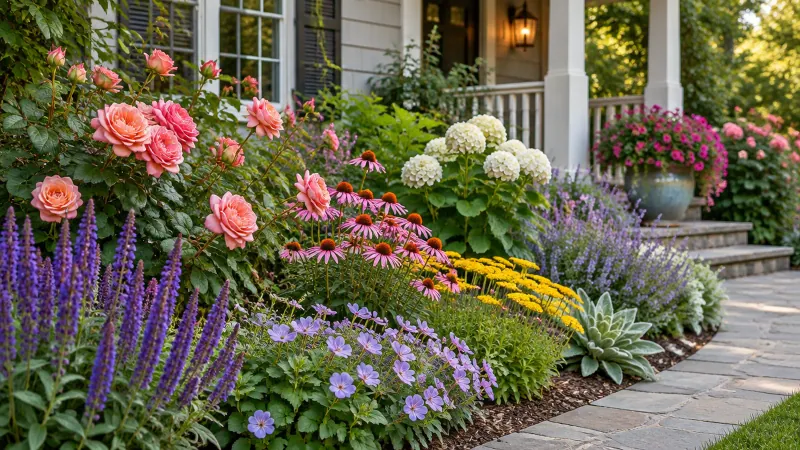
Plant in drifts of 3 to 5 of the same plant for a natural look. Put taller plants at the back, and mix flower shapes: spires such as liatris, daisies such as coneflower and mounds such as sedum. For layout ideas, see our guide to flower garden design for the front yard.
Caring for sun perennials
- Watering: deep, infrequent; mulch to hold moisture.
- Feeding: a light compost topping in spring is enough for most.
- Deadheading: extends bloom for many plants; leave coneflower and sedum seed heads for birds in fall.
- Cutting back: trim stems in late winter or early spring, or after bloom for rebloomers.
- Dividing: every three to five years in spring or fall, when centers die out or plants crowd.
- Staking: tall plants may need support in windy spots.
Seasonal care
| Season | Tasks |
|---|---|
| Early spring | Cut back old stems, add compost, divide |
| Late spring | Stake tall plants, mulch |
| Summer | Water in drought; deadhead |
| Fall | Plant new perennials; leave some seed heads |
| Winter | Mulch lightly in cold zones |
Common problems
| Problem | Cause | Fix |
|---|---|---|
| Floppy stems | Too much shade or nitrogen | Move to sun; ease feeding; stake |
| Powdery mildew | Humid, crowded conditions | Space plants; choose resistant types |
| Few flowers | Too much shade, too much nitrogen | Move or reduce feeding |
| Center dies out | Plant overcrowded | Divide |
| Rot in winter | Wet clay soil | Improve drainage |
Pets
Several sun perennials appear on ASPCA lists: lavender, yarrow and peony are listed as toxic to dogs and cats, and coreopsis, phlox (moss phlox) and hibiscus (Hibiscus syriacus) are listed as non-toxic. Coneflower, black-eyed Susan, bee balm and liatris are not on the ASPCA list. Catmint is in the same genus (Nepeta) as catnip, which the ASPCA lists as toxic to cats, so treat catmint as toxic to cats. Use caution where pets chew plants. Check each plant on the ASPCA site before planting.
Plant combinations that work
| Combination | Look and benefit |
|---|---|
| Coneflower, black-eyed Susan and Russian sage | Purple, gold and silver for summer; pollinators |
| Catmint with daylilies | Soft blue against bright blooms; long season |
| Sedum, asters and ornamental grasses | Fall interest |
| Yarrow, blanket flower and coreopsis | Warm, hot-sun palette; low water |
| Lavender, salvia and thyme | Fragrant, dry-soil bed |
Dividing perennials
Dividing renews plants and gives you free copies. Divide when the center looks bare, flowering drops or clumps become crowded, usually every three to five years.
- Choose a cool, overcast day in spring or fall.
- Water the day before.
- Dig up the whole clump carefully.
- Split into sections with a sharp spade or knife, each with roots and shoots.
- Replant at once at the same depth and water well.
Summer bloomers divide best in fall, and fall bloomers in spring.
Perennials in poor or dry soil
| Soil problem | Best choices |
|---|---|
| Sandy, dry | Yarrow, sedum, lavender, blanket flower, Russian sage |
| Heavy clay | Coneflower, black-eyed Susan, daylily, bee balm |
| Rocky and poor | Coreopsis, catmint, yarrow |
| Hot reflected heat | Sedum, lavender, salvia |
For a low-water garden, see our guide to drought-tolerant landscaping.
Frequently asked questions
What are the best perennial flowers for full sun?
Top performers include purple coneflower, black-eyed Susan, salvia, daylily, yarrow, coreopsis, catmint, sedum, Shasta daisy and blanket flower. They tolerate six or more hours of direct sun, handle heat, and many are drought tolerant once established. Choose a mix of bloom times to keep color from spring to fall.
Which perennials bloom the longest in full sun?
Coreopsis, catmint, hardy geranium ‘Rozanne’, salvia, coneflower, gaillardia and reblooming daylilies flower for many weeks. Deadheading extends bloom further. Combining plants with overlapping seasons gives continuous color, and trimming spent stems back to a leaf or side bud often triggers another flush of flowers.
Do full-sun perennials need a lot of water?
Newly planted perennials need regular watering for the first season while roots grow. After that, many sun lovers such as sedum, yarrow, coneflower, coreopsis and blanket flower tolerate drought well and need water only during long dry spells. Deep, infrequent watering encourages strong roots better than frequent light sprinkles.
When is the best time to plant perennials?
Spring and early fall are best, because mild weather and moist soil help roots establish. Fall planting works well in most zones if you plant about six weeks before the ground freezes. Avoid planting in the heat of midsummer when possible, and water newly set plants well wherever you plant.
How far apart should perennials be planted?
Follow the plant tag, as spacing ranges from 12 inches for compact types to 36 inches for large ones. Planting too closely creates crowding and disease, while spacing too far leaves bare soil. Most mid-sized perennials such as coneflower and salvia do well 18 to 24 inches apart, and clumps fill in within two to three years.