How to Repot a Plant Without Shocking It
On this page
To repot a plant, water it a day ahead, slide it out, loosen circling roots, set it in a pot only one size larger with drainage holes and fresh potting mix, and water well. Repot in spring when possible, avoid oversized pots, and hold off on fertilizer for a month while roots recover.
Signs your plant needs repotting
Plants don’t need repotting just because time has passed. Look for these signs:
| Sign | What it means |
|---|---|
| Roots poking out of drainage holes | The pot is full of roots |
| Roots circling the surface or the outside of the root ball | Rootbound |
| Water runs straight through | Little soil left, roots take over |
| Plant dries out within a day or two | Roots outcompete soil for water |
| Slow or stunted growth during the growing season | Roots are cramped |
| Plant is top-heavy and tips over | Pot is too small |
| Soil is compacted, crusty or smells sour | Mix is worn out; fresh soil needed |
Not every symptom means repotting. Yellow leaves, for example, often come from watering mistakes; see our guide to the signs of overwatering plants. For more indoor plant guides, visit our indoor plants hub.
When to repot
Repot in spring or early summer, when plants begin active growth and recover quickly. Avoid winter, when plants are resting. Repot out of season only for emergencies: root rot, a broken pot or a plant that has become dangerously rootbound. Avoid repotting during flowering or when the plant is stressed.
Choosing a pot
- Size: go up 1 to 2 inches in diameter for small and medium plants. Larger plants can go up 2 to 4 inches.
- Drainage: holes are essential. If you love a decorative pot without holes, use it as a cover and keep the plant in a plastic pot with drainage inside it.
- Material: terra-cotta dries faster and suits succulents and plants prone to rot. Plastic and glazed ceramic hold water longer, which suits moisture-loving plants.
- Depth: match the plant. Shallow pots suit succulents and cacti, and taller pots suit plants with deep roots.
| Pot material | Pros | Cons |
|---|---|---|
| Terra-cotta | Breathable; reduces overwatering | Dries out fast; heavy |
| Plastic | Light, cheap, holds moisture | Can stay wet; less airflow |
| Glazed ceramic | Attractive; holds moisture | Often lacks holes; heavy |
| Fabric grow bags | Excellent airflow | Dry out fast; less decorative |
Choosing the right mix
Use fresh potting mix suited to the plant. See our guide to the best soil for indoor plants.
| Plant type | Mix |
|---|---|
| Most foliage plants | Standard houseplant mix with perlite |
| Succulents and cacti | Fast-draining cactus mix |
| Orchids | Bark-based orchid mix |
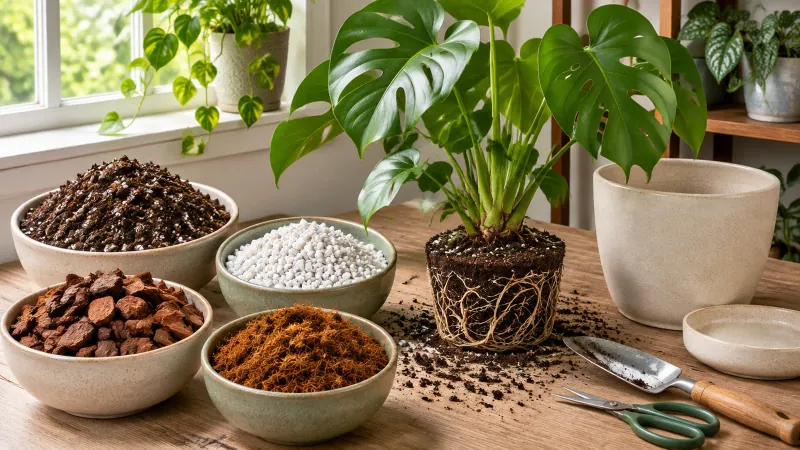
| Aroids (pothos, monstera) | Chunky mix with bark and perlite |
| Ferns and moisture lovers | Peat- or coir-based mix that holds water |
Don’t use garden soil, which compacts in pots and can bring pests.
What you need
- A new pot one size larger, cleaned.
- Fresh potting mix.
- A trowel or large spoon.
- A sharp knife or pruners, wiped with rubbing alcohol.
- Newspaper or a tray to catch the mess.
- Gloves, if you wish.
How to repot a plant, step by step
- Water the plant a day before repotting.
- Prepare the new pot: add a layer of mix in the base so the plant will sit at the right height. Don’t add rocks to the base; they do not improve drainage.
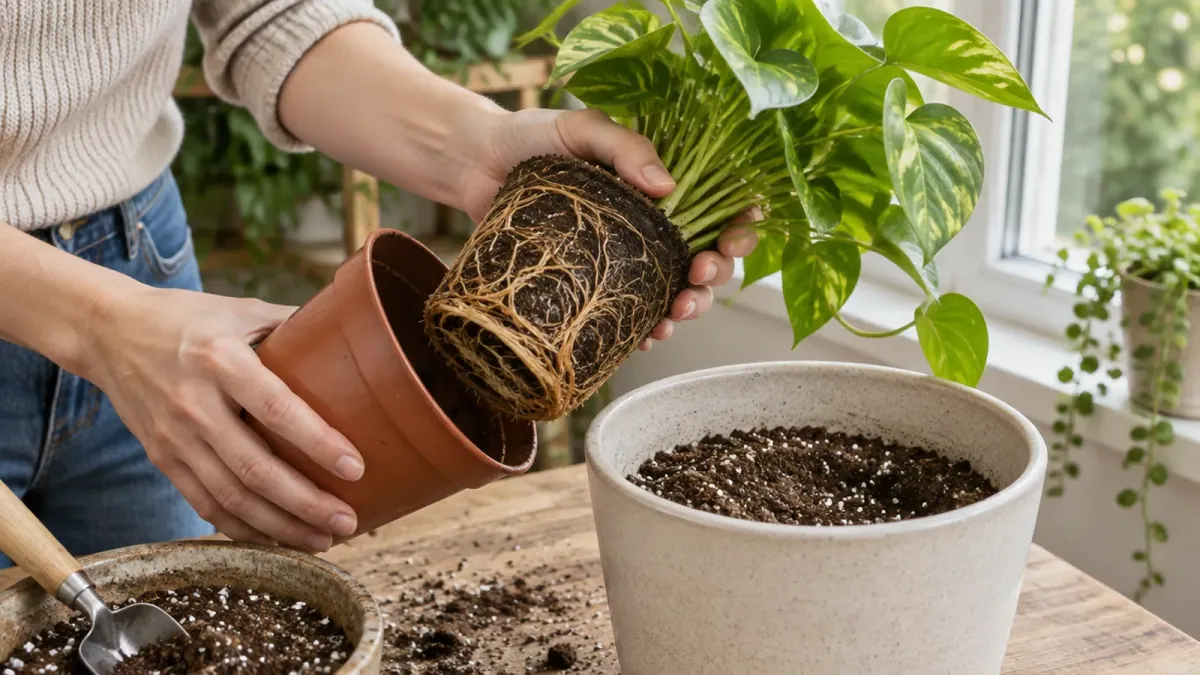
- Remove the plant: tip the pot sideways, hold the base of the stems and gently slide the plant out. If stuck, squeeze plastic pots or run a knife around the edge.
- Inspect the roots: healthy roots are firm and white to tan. Trim any that are brown, mushy or smelly.
- Loosen the root ball: gently tease circling roots apart. If very tight, make a few shallow vertical cuts in the root ball.
- Set the plant in the new pot at the same depth as before, with the top of the root ball about an inch below the rim.
- Fill around the sides with fresh mix and press lightly. Don’t pack it tightly.
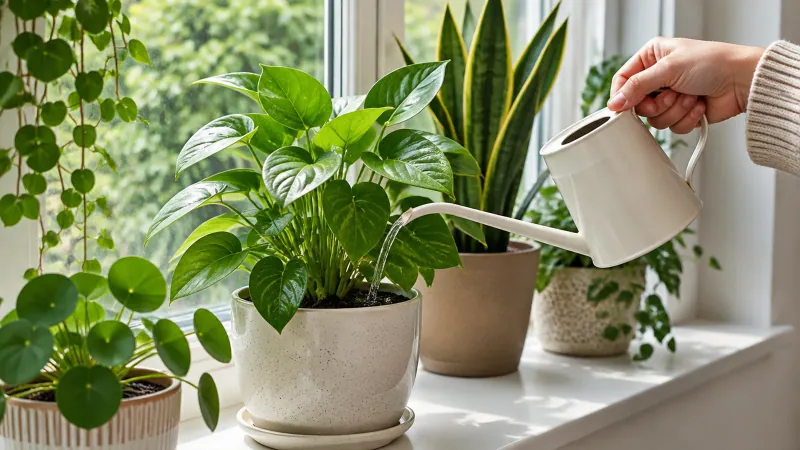
- Water thoroughly until water runs from the drainage holes, and empty the saucer.
- Place in bright, indirect light, out of direct sun for a week or so.
Aftercare
| Task | Guidance |
|---|---|
| Watering | Keep evenly moist, then return to your usual routine. See our watering schedule for home plants |
| Fertilizer | Wait 4–6 weeks; fresh mix has nutrients |
| Light | Bright, indirect; avoid sudden changes |
| Humidity | Mist or group plants if the plant wilts |
| Expect | Slight droop or leaf drop for a week or two |
Special cases
Rootbound but you want to keep it the same size
Remove the plant, trim up to a third of the roots and outer soil, clean the pot and refill with fresh mix.
Plants with root rot
Remove all soft, brown roots, rinse the rest, repot in fresh, dry mix in a clean pot with drainage, and water lightly until new growth appears.
Big plants
Large plants are heavy. Lay the pot on its side with a helper, or top-dress the top few inches with fresh soil every year instead of full repotting.
Succulents and cacti
Use gloves or folded newspaper for spiny types, let roots dry a few days after trimming, and wait a few days before watering.
Mistakes to avoid
- A pot that is too big.
- No drainage holes.
- Burying the stem deeper than before.
- Packing the mix tightly.
- Fertilizing right away.
- Repotting in winter or when the plant is stressed.
- Adding gravel at the bottom.
Pets
Many houseplants are toxic to pets, and fresh soil attracts digging. Check each plant on the ASPCA list; our guide to pet-safe house plants lists non-toxic choices.
Frequently asked questions
How do I know when a plant needs repotting?
Look for roots growing from drainage holes or circling the surface, water running straight through without soaking in, a plant that dries out within a day or two, stunted growth, or a plant that tips over because it is top-heavy. Most houseplants need repotting every one to three years, though slow growers such as snake plants need it less often.
What is the best time of year to repot?
Spring and early summer, when most houseplants begin active growth, are the best times, because roots recover and fill in quickly. Avoid repotting in winter when growth is slow, and avoid repotting plants that are flowering or stressed, unless the plant is badly rootbound or in a failing pot.
What size pot should I use?
Choose a pot only 1 to 2 inches wider in diameter than the current one, or 2 to 4 inches for large floor plants. A pot that is too big holds extra wet soil around the roots, which can cause root rot. If your plant is rootbound but you don’t want it bigger, trim roots and return it to the same pot with fresh mix.
Should I water a plant before or after repotting?
Water a day or so before repotting so the root ball slides out easily and roots are hydrated. After repotting, water thoroughly to settle the mix around the roots and remove air pockets, then let the excess drain. Avoid fertilizing for about four to six weeks while the plant recovers.
Can I repot a plant in the same pot?
Yes. If you want to keep the plant the same size, remove it, trim up to a third of the roots and outer soil, clean the pot and refill with fresh mix. This is common with bonsai and plants you want to keep compact. Do it in the growing season and water carefully afterward.