Pet-Safe Houseplants: Non-Toxic Plants for Cats and Dogs
On this page
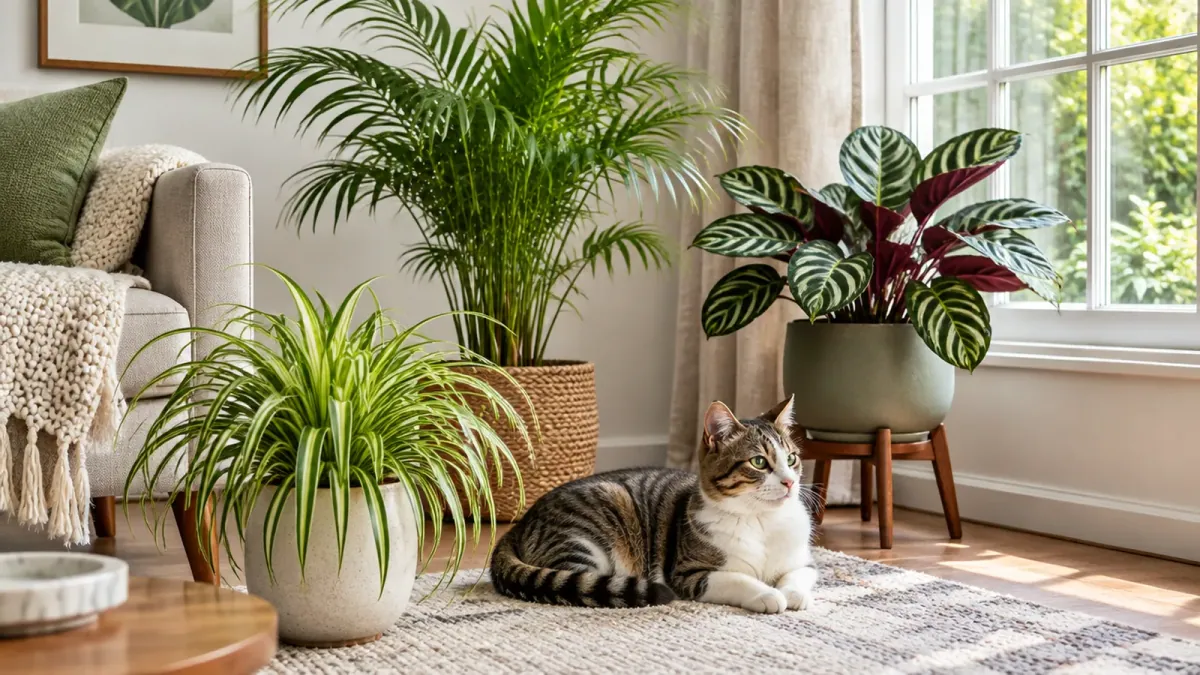
Pet safe house plants include spider plant, parlor palm, areca palm, bamboo palm, Boston fern, cast iron plant, prayer plant, calathea, peperomia, money tree, ponytail palm, Christmas cactus, African violet and haworthia, all listed as non-toxic to cats and dogs by the ASPCA. Avoid pothos, philodendron, monstera, peace lily, snake plant and lilies if pets chew plants.
How to read “pet safe”
This guide follows the ASPCA’s toxic and non-toxic plant lists, which are the standard reference for most US vets. “Non-toxic” means the plant isn’t expected to cause serious poisoning if a cat or dog chews it. It doesn’t mean the plant is good to eat: swallowing large amounts of any plant can still cause vomiting or diarrhea, and some pets choke on leaves. Lists change as new information appears and plant names are sometimes confusing, so confirm any plant by its Latin name.
For more houseplant guides, visit our indoor plants hub.
Pet-safe houseplants compared
| Plant | Light | Water | Size |
|---|---|---|---|
| Spider plant | Medium to bright | Every 1–2 weeks | 1 ft, trailing plantlets |
| Parlor palm | Low to medium | Let top inch dry | 2–4 ft |
| Areca palm | Bright, indirect | Keep evenly moist | 5–7 ft |
| Bamboo palm | Low to medium | Keep slightly moist | 3–6 ft |
| Ponytail palm | Bright | Let dry out | 3–6 ft |
| Boston fern | Medium, humid | Keep evenly moist | 1–3 ft |
| Cast iron plant | Low to medium | Let top 2 in dry | 2–3 ft |
| Prayer plant | Low to medium | Keep evenly moist | 1 ft |
| Calathea (many types) | Medium, indirect | Keep evenly moist | 1–3 ft |
| Peperomia | Medium to bright | Let top inch dry | 6–12 in |
| Money tree | Bright, indirect | Let top 2 in dry | 4–7 ft |
| African violet | Bright, indirect | Water from below | 6 in |
| Moth orchid (Phalaenopsis) | Bright, indirect | Weekly in bark | 1–2 ft |
| Christmas cactus | Bright, indirect | Every 1–2 weeks | 1 ft |
| Haworthia | Bright | Every 2–3 weeks | 4–6 in |
| Echeveria | Very bright | Every 2–3 weeks | 4–8 in |
| Burro’s tail | Bright | Every 2–3 weeks | Trailing to 2 ft |
| Banana plant (dwarf) | Very bright | Keep moist | 4–8 ft |
Pet-safe palms and big plants
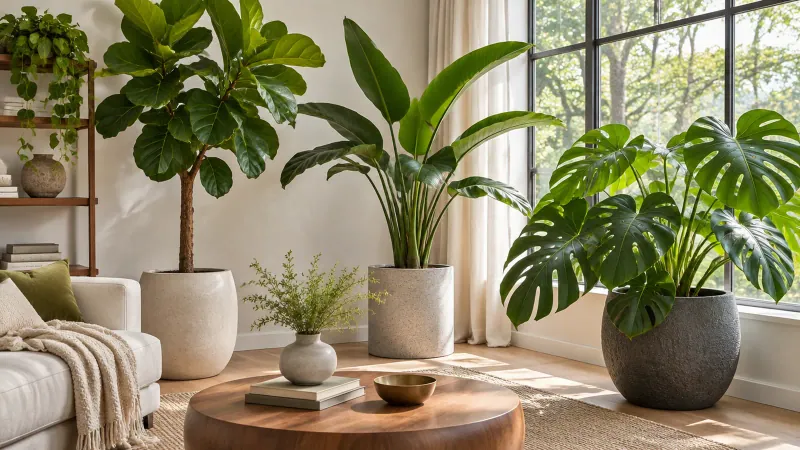
If you want a statement plant, palms are the best pet-safe choice. Parlor, areca and bamboo palms are non-toxic and suit most rooms. Money tree is non-toxic and tolerates average light. Ponytail palm isn’t a true palm but a succulent and is safe too. Beware of the sago palm, a cycad with palm-like leaves that is extremely toxic to dogs and cats. Our guide to large indoor plants marks the ASPCA status of each big plant.
Pet-safe hanging and trailing plants
Spider plants, burro’s tail, Boston fern and trailing peperomia are good pet-friendly choices for shelves and baskets. Hanging plants out of reach is a simple extra layer of protection; see our guide to hanging indoor plants.
Pet-safe plants for low light
Cast iron plant, parlor palm, bamboo palm, prayer plant and Boston fern all tolerate dim rooms and are non-toxic. See our guide to low-light indoor plants for care tips.
Common houseplants that are toxic
| Plant | Why it matters | Typical signs |
|---|---|---|
| Lilies (Lilium, daylilies) | Extremely dangerous to cats; even pollen or vase water can cause kidney failure | Vomiting, lethargy, loss of appetite |
| Sago palm | Highly toxic to dogs and cats | Vomiting, diarrhea, liver failure |
| Pothos, philodendron, monstera | Calcium oxalate crystals irritate mouth and throat | Drooling, pawing at mouth, vomiting |
| Dieffenbachia (dumb cane) | Same crystals; can cause swelling | Mouth pain, drooling |
| Peace lily | Calcium oxalate crystals | Drooling, vomiting |
| Snake plant | Saponins and crystals | Vomiting, drooling |
| ZZ plant (not on the ASPCA list) | Calcium oxalate crystals | Drooling, vomiting |
| Aloe vera, jade plant | Irritating compounds | Vomiting, lethargy |
| English ivy | Triterpenoid saponins | Vomiting, drooling |
| Oleander, azalea | Cardiac glycosides or grayanotoxins | Serious; seek urgent care |
Our guides to the best soil for indoor plants and houseplant pests note safe approaches; always check the product label of any treatment for pets.
Pet-safe plants by room
| Room | Good non-toxic choices |
|---|---|
| Living room | Areca palm, parlor palm, money tree, calathea |
| Bedroom | Spider plant, Boston fern, peperomia |
| Kitchen | Herbs such as basil, rosemary and thyme (non-toxic), African violets on a sill |
| Bathroom | Boston fern, bamboo palm, orchids (moth orchid) |
| Office | Cast iron plant, spider plant, haworthia |
| Cat-friendly window | Cat grass (check with your vet), spider plant; the ASPCA lists catnip as toxic to cats in large amounts |
Non-toxic doesn’t mean problem-free
- Soil and fertilizer. Potting mix, slow-release fertilizer pellets, and some mulches can upset pets if eaten. Keep bags and pellets out of reach.
- Standing water. Saucer water can contain fertilizer, and cats may drink it.
- Pesticides. Systemic insecticides and some “natural” oils are harmful to pets. Check labels, and keep treated plants away from animals until dry.
- Pots and stakes. Pets can knock over heavy pots or swallow stakes, ties and decorative stones.
- Choking and obstruction. Swallowing large leaves or pieces of plant can cause blockage in small animals.
Making a pet-friendly plant shelf
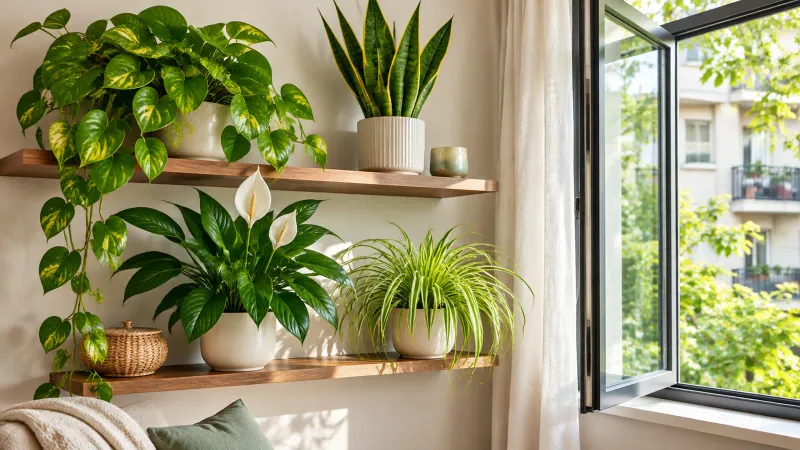
A simple plan helps: put the non-toxic plants on low shelves where pets can reach them, and any toxic plants you want to keep on high shelves or in rooms pets cannot enter. Provide a pot of cat grass as an alternative, and redirect chewing with toys. If your cat keeps attacking a plant, move it. Most pets lose interest in plants they can’t easily reach.
Herbs and edible plants that are safe
Several kitchen herbs are listed as non-toxic by the ASPCA, including basil, rosemary, thyme, dill and sage, so a small pot of herbs on the windowsill is a good pet-friendly choice. Mint, chives, garlic and onions, however, are not safe. Growing herbs indoors needs plenty of light; our guide to the best herbs to grow indoors explains which suit a windowsill.
If your pet chews a plant
- Remove plant pieces from your pet’s mouth and offer water.
- Identify the plant and take a sample or photo.
- Call your vet, an emergency clinic or an animal poison control service immediately, even if your pet seems fine.
- Don’t induce vomiting unless a professional tells you to.
- Follow the vet’s advice, and watch for drooling, vomiting, lethargy or tremors.
Keeping pets and plants apart
- Place plants out of reach, on high shelves or in hanging baskets.
- Use barriers, such as plant stands, closed rooms or decorative cloches.
- Offer cat grass (ask your vet if you are unsure) as an alternative to chew.
- Choose heavy pots that pets can’t tip.
- Watch the soil. Fertilizer, mulch and some soils are toxic. Keep fertilizers and pesticides out of reach.
- Check cut flowers. Lilies in a vase are dangerous for cats.
For easy options in general, see our guide to easy houseplants for beginners, and for air quality claims about plants, our guide to indoor plants that clean the air explains the evidence.
Frequently asked questions
What are the best pet safe house plants?
According to the ASPCA, non-toxic houseplants include spider plant, parlor palm, areca palm, bamboo palm, Boston fern, cast iron plant, prayer plant, calathea, peperomia, money tree, ponytail palm, Christmas cactus, African violet and haworthia. They are safe if chewed, though eating large amounts of any plant can still cause stomach upset.
Which common houseplants are toxic to cats and dogs?
Common houseplants listed as toxic by the ASPCA include pothos, philodendron, monstera, peace lily, snake plant, dieffenbachia, aloe vera, jade plant, sago palm and English ivy. Rubber plant and fiddle-leaf fig are Ficus species, which the ASPCA lists as toxic to dogs, cats and horses. ZZ plant has no ASPCA entry, so treat it as toxic too. Lilies (Lilium and Hemerocallis) are especially dangerous for cats. Sago palm is highly toxic to dogs. Check any plant on the ASPCA list before bringing it home.
Is the spider plant safe for cats?
Yes. The ASPCA lists spider plants as non-toxic to cats and dogs. Cats are often drawn to the dangling leaves and may chew them, and the plant contains compounds that can mildly affect some cats, but it is not considered poisonous. A chewed plant may cause a little stomach upset. Hanging it out of reach saves the plant.
What should I do if my pet eats a toxic plant?
Remove any plant material from your pet’s mouth, note the plant and how much was eaten, and call your vet, an emergency clinic or an animal poison control service right away. Don’t wait for symptoms or try to make your pet vomit unless a professional tells you to. Take a sample or photo of the plant to the vet.
Are succulents safe for pets?
Some are and some aren’t. Haworthia, echeveria, burro’s tail and hens and chicks are listed as non-toxic by the ASPCA, while jade plant, aloe vera, kalanchoe and several euphorbias (such as poinsettia and pencil cactus) are toxic. Check each plant individually, because succulents vary widely. Keep any toxic ones out of reach, and choose non-toxic types for homes with pets.
Is cat grass safe for cats?
Probably. Cat grass is usually wheat, oat, barley or rye grass grown in a pot, and many cats enjoy chewing it. The ASPCA doesn’t list these grasses by those names, so ask your vet if you are unsure. It gives cats an alternative to your houseplants and can help with hairballs for some cats. Grow it in a shallow pot in a sunny window, replace it every few weeks, and avoid grass treated with pesticides.