Hanging Indoor Plants: Best Trailing Houseplants
On this page
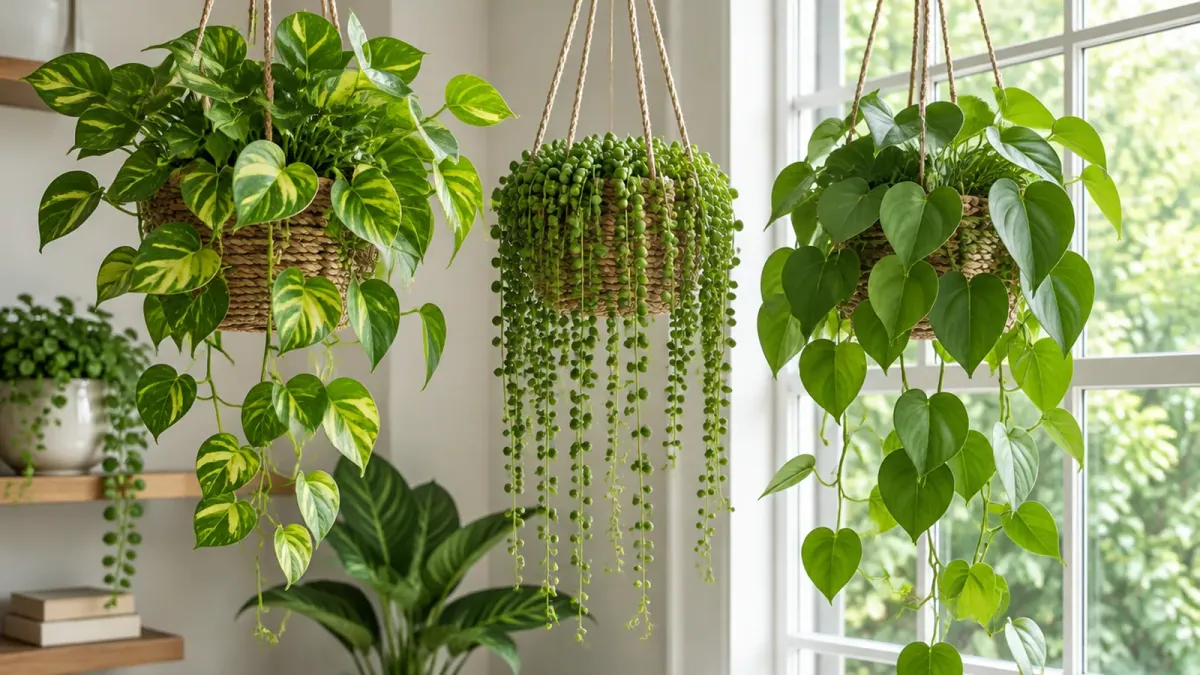
The best hanging indoor plants are pothos, heartleaf philodendron, spider plants, string of hearts, string of pearls, Boston ferns, hoyas and tradescantia. Choose by light: pothos, philodendron and spider plants suit most rooms, while string of pearls and hoya need bright light. Water hanging pots in a sink, and check weight limits before you hang anything.
Why hang plants?
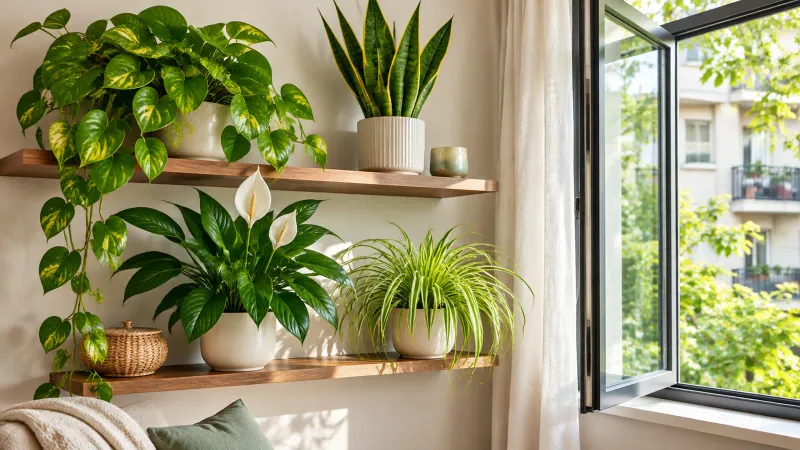
Hanging plants free up shelf and floor space, bring greenery to eye level and above, and show off trailing stems that would be hidden in a pot on a table. They also keep leaves away from dogs and small children. The trade-offs: hanging pots dry out faster because warm air rises, and watering needs care to avoid drips. For more houseplant guides, visit our indoor plants hub.
Hanging plants compared
| Plant | Light | Water | Trails to | Pets (ASPCA) |
|---|---|---|---|---|
| Pothos | Low to bright | Let top 2 in dry | 6 ft+ | Toxic |
| Heartleaf philodendron | Low to bright | Let top 2 in dry | 6 ft+ | Toxic |
| Spider plant | Medium to bright | Let top inch dry | 2 ft, plantlets | Non-toxic |
| Tradescantia | Medium to bright | Let top inch dry | 2–3 ft | Toxic |
| Swedish ivy | Medium to bright | Let top inch dry | 2–3 ft | Non-toxic |
| Boston fern | Medium; humid | Keep evenly moist | 2–3 ft | Non-toxic |
| String of hearts | Bright | Let dry out | 3–6 ft | Not on the ASPCA list; keep away from pets |
| String of pearls | Very bright | Let dry out | 2–3 ft | Toxic (ASPCA lists Senecio species as toxic) |
| Burro’s tail | Very bright | Let dry out | 2 ft | Non-toxic |
| Hoya | Bright, indirect | Let dry out | 3–6 ft | Non-toxic |
| English ivy | Medium to bright | Let top inch dry | 6 ft+ | Toxic |
| Trailing peperomia | Medium to bright | Let top inch dry | 1–2 ft | Non-toxic |
| Heartleaf hoya (Hoya kerrii) | Bright | Let dry out | 1–2 ft | Non-toxic |
| Ric rac cactus | Bright, indirect | Let top inch dry | 2 ft | Not on the ASPCA list |
14 trailing houseplants
1. Pothos
The classic hanging plant. Easy, fast and tolerant of low light, with green, golden and variegated forms. Toxic to pets.
2. Heartleaf philodendron
Softer, darker heart-shaped leaves that trail for feet. Similar care to pothos.
3. Spider plant
Arching striped leaves and dangling baby plantlets. A pet-safe, easy option that thrives in baskets.
4. Tradescantia
Purple, silver or green striped leaves on fast-growing stems. Pinch tips to keep it full. The ASPCA lists tradescantia as toxic to cats and dogs, and the sap can irritate skin.
5. Swedish ivy (Plectranthus)
Scalloped leaves on cascading stems. Easy and non-toxic. Unrelated to true ivy.
6. Boston fern
Lush, arching fronds that love humidity. A bathroom basket suits it. Don’t let it dry out.
7. String of hearts
Delicate vines with heart-shaped, marbled leaves. Needs bright light and very little water. It isn’t on the ASPCA list, so keep it away from pets as a precaution.
8. String of pearls
Bead-like leaves on trailing stems. It needs very bright light, excellent drainage and little water. The ASPCA lists Senecio species as toxic to dogs and cats, and string of pearls is a Senecio (Senecio rowleyanus, also sold as Curio), so treat it as toxic.
9. Burro’s tail
Thick, plump, overlapping leaves on drooping stems. Handle gently, as leaves drop easily. Non-toxic.
10. Hoya
Waxy leaves and clusters of fragrant flowers. Hoyas like bright light and to dry out between waterings.
11. English ivy
A classic with many leaf shapes. It prefers cooler rooms and is prone to spider mites in dry heat. Toxic to pets and invasive outdoors in many regions.
12. Trailing peperomia
Rounded, fleshy leaves on gentle trails. Easy and non-toxic.
13. Heartleaf hoya
Single thick heart-shaped leaves, often sold as a Valentine’s gift. Slow-growing and drought-tolerant.
14. Ric rac cactus
A zigzag, jungle-type cactus with unusual stems and flowers. Prefers bright, indirect light and moderate water. It isn’t on the ASPCA list.
Choosing the right plant for the spot
| Situation | Best choices |
|---|---|
| Low light | Pothos, philodendron, spider plant |
| Bright south window | String of pearls, string of hearts, burro’s tail, hoya |
| Humid bathroom | Boston fern, Swedish ivy, pothos |
| Homes with cats | Spider plant, Boston fern, burro’s tail, peperomia (see pet-safe houseplants) |
| Beginners | Pothos, spider plant, philodendron (see easy houseplants) |
How to hang indoor plants safely
- Check the weight. A 10-inch pot of wet soil can weigh 10 pounds or more. Use hooks and anchors rated for far more.
- Screw into studs or use ceiling anchors for heavier baskets. Avoid hanging from curtain rods unless they are rated for the load.
- Use a swivel hook so you can rotate the plant for even light.
- Try no-drill options: tension rods, tension poles, adhesive hooks rated for the weight, or a floor-standing hanger.
- Keep clear of heat vents and radiators, which dry plants out.
- Leave room to take it down for watering.
Watering hanging plants
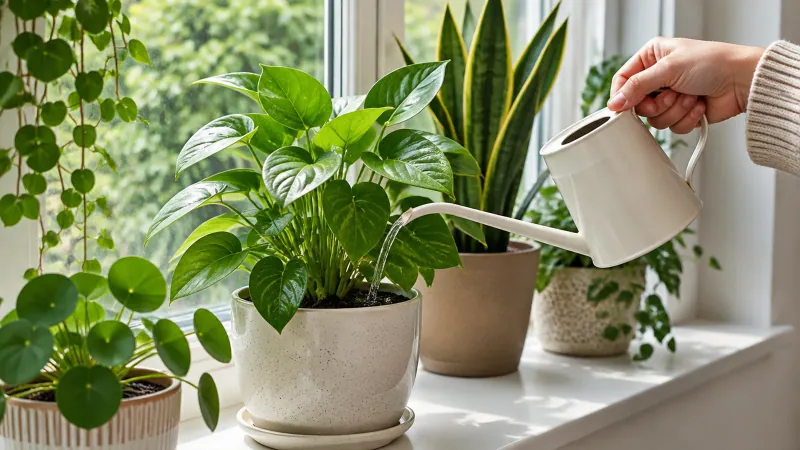
Hanging plants dry out faster than those on shelves because warm air collects near the ceiling. Check the soil weekly, and water them in a sink or tub: drench the soil, let it drain fully for 10 to 20 minutes, then rehang. Use a pot with a drainage hole and a saucer attached to the basket to catch drips. Our houseplant watering schedule gives typical frequencies, and our guide to the signs of overwatering helps you spot problems early.
Keeping hanging plants full
- Pinch tips of pothos, tradescantia and philodendron every few weeks to encourage branching.
- Rotate the plant so all sides get light.
- Trim long, bare stems and root the cuttings in water to refill the pot.
- Repot every one to two years into a pot one size up; see how to repot a plant.
- Feed lightly in spring and summer.
Caring for hanging plants through the year
| Season | What to do |
|---|---|
| Spring | Repot if roots fill the pot; resume monthly feeding; trim leggy stems |
| Summer | Check soil weekly; move away from hot windows; watch for spider mites |
| Fall | Reduce feeding; clean leaves; move closer to windows as days shorten |
| Winter | Water less; keep away from heating vents and cold glass; stop feeding |
Common problems
| Problem | Likely cause | Fix |
|---|---|---|
| Bare stems with leaves only at the ends | Too little light or no pruning | Move to brighter light; prune and root cuttings |
| Yellow leaves | Overwatering | Let soil dry; check drainage |
| Crispy brown edges | Dry air or underwatering | Water more regularly; move from heat vents |
| Dripping onto floor | Watering in place | Water in a sink; use a saucer |
| Pests such as spider mites | Dry, warm air | Rinse leaves; see houseplant pests |
Frequently asked questions
What are the best hanging indoor plants?
Pothos, heartleaf philodendron, spider plant, string of hearts, string of pearls, Boston fern, hoya, tradescantia and Swedish ivy are among the best hanging indoor plants. Pothos and philodendron are the easiest, while string of pearls and hoya need very bright light. Choose by the light you have and whether pets can reach the plant.
What hanging plants are good for low light?
Pothos, heartleaf philodendron, spider plant, Boston fern (in medium light), tradescantia and Swedish ivy tolerate lower light. Variegated forms lose their patterns when light is very low. Succulent trailers such as string of pearls and burro’s tail need bright light and don’t do well in dim rooms.
How do you water hanging plants?
Take the pot down and water it in a sink or tub, letting water drain fully before rehanging, because dripping onto floors and furniture is the main problem with hanging baskets. Check the soil with a finger before watering. Hanging pots dry faster than pots on shelves because warm air rises, so check more often in summer.
How do you hang plants without drilling?
Use a tension rod in a window, a ceiling-mounted tension pole, adhesive hooks rated for the weight, a freestanding plant stand or hanger stand, or a curtain rod with S-hooks. Always check the weight of the potted plant when wet, since a damp pot is much heavier than it looks, and don’t exceed the hook’s limit.
Are hanging plants safe for cats and dogs?
Hanging puts plants out of reach of dogs, but cats often climb or jump. Spider plant, Boston fern, burro’s tail and peperomia are non-toxic to cats and dogs, per the ASPCA. Pothos, philodendron, tradescantia and English ivy are on the ASPCA toxic list. String of pearls is a Senecio, and the ASPCA lists Senecio species as toxic. String of hearts has no ASPCA entry, so keep it away from pets too. If your pets can reach the plant, choose a non-toxic one.