Houseplant Pests: How to Identify and Get Rid of Them
On this page
To get rid of houseplant pests, identify the pest, isolate the plant, remove as many as you can by rinsing or wiping, and repeat treatment with insecticidal soap, neem oil or alcohol swabs every five to seven days for several weeks. Fungus gnats need drier soil, and prevention starts with quarantining new plants.
First steps for any infestation
- Isolate the plant in a separate room so pests don’t spread.
- Identify the pest using the table below. Use a magnifying glass to check leaf undersides and stems.
- Remove what you can: prune badly infested leaves and rinse the plant.
- Treat with the right method and repeat.
- Check neighbors and inspect them weekly for a month.
For more indoor plant guides, visit our indoor plants hub.
Pest identification chart
| Pest | What you see | Damage | Where |
|---|---|---|---|
| Fungus gnats | Tiny black flies near the soil; larvae in the top inch | Weak seedlings, wilting from root feeding | Damp soil |
| Spider mites | Tiny dots, stippled yellow leaves, fine webbing | Leaves fade, curl and drop | Underside of leaves; dry, warm rooms |
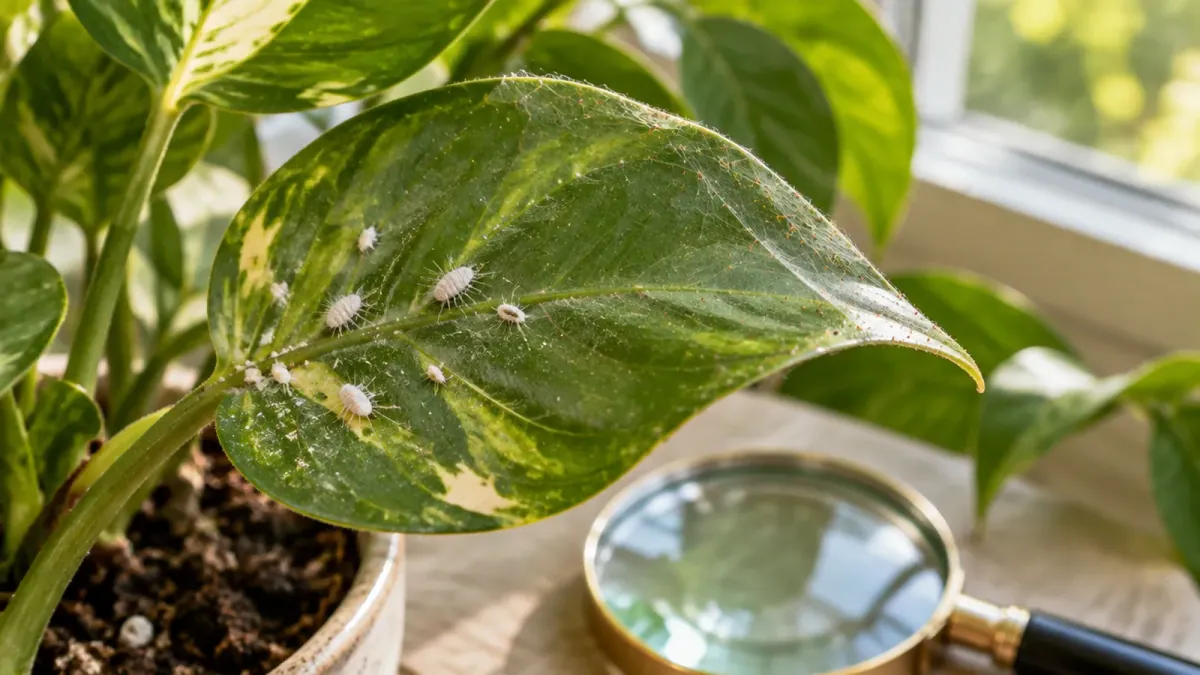
| Mealybugs | White, cottony clusters | Sticky honeydew; stunted growth | Leaf joints, stems |
| Scale | Small brown or tan bumps, often hard | Yellowing, sticky residue | Stems and leaf veins |
| Aphids | Soft green, black or white insects in clusters | Curled, sticky new growth | New growth, buds |
| Thrips | Slender tiny insects, silvery streaks, black specks | Silver scars on leaves | Leaves and flowers |
| Whiteflies | Small white flies that flutter when disturbed | Yellowing leaves, honeydew | Underside of leaves |
Fungus gnats
Fungus gnats are tiny black flies that hover around soil. Adults are harmless but larvae feed on fungi and roots, especially in seedlings.
Fix:
- Let the top 1 to 2 inches of soil dry between waterings.
- Use yellow sticky traps to catch adults.
- Treat soil with a product containing Bacillus thuringiensis israelensis (BTI), sold as mosquito or gnat bits.
- Top-dress with sand or fine gravel to deter egg laying.
- Fix overwatering; see our guide to signs of overwatering plants.
Spider mites
Spider mites are barely visible. Look for tiny dots, a dusty or silvery look, and fine webbing between leaves.
Fix:
- Rinse the whole plant in the shower with lukewarm water.
- Spray with insecticidal soap or neem oil, covering leaf undersides.
- Repeat every 5 to 7 days for at least three weeks.
- Increase humidity; mites thrive in dry air.
- Isolate and discard heavily infested plants if necessary.
Mealybugs
Mealybugs look like small bits of white cotton and leave sticky honeydew.
Fix:
- Dab each insect with a cotton swab dipped in 70 percent rubbing alcohol.
- Spray with insecticidal soap or neem oil.
- Check roots; some species live in soil.
- Repeat weekly until none appear for several weeks.
Scale
Scale insects form hard or soft bumps on stems and leaves and secrete sticky honeydew.
Fix:
- Scrape off scales with a fingernail or soft brush.
- Wipe with alcohol-soaked cotton.
- Spray with horticultural oil or insecticidal soap on crawlers.
- Repeat every week for a month.
Aphids
Aphids cluster on tender new growth.
Fix:
- Rinse them off with water.
- Wipe with soapy water or spray with insecticidal soap.
- Prune badly infested tips.
- Repeat every few days until gone.
Thrips and whiteflies
Thrips cause silvery streaks and black specks, while whiteflies flutter from the undersides of leaves when disturbed.
Fix:
- Use yellow or blue sticky traps.
- Rinse and spray with insecticidal soap repeatedly.
- Remove infested flowers and leaves.
- Treat the soil surface if larvae are present.
Treatment options compared
| Treatment | Good for | Notes |
|---|---|---|
| Water rinse | Aphids, spider mites, dust | Gentle; start here |
| Wiping with a damp cloth | All pests, dust | Good for smooth leaves |
| Rubbing alcohol swab | Mealybugs, scale | Test on a leaf first; avoid on delicate foliage |
| Insecticidal soap | Aphids, mites, mealybugs, whiteflies | Spray on contact; repeat |
| Neem oil | Many soft-bodied pests | Can burn leaves; use out of sun and test first |
| Horticultural oil | Scale, mites | Follow label |
| Sticky traps | Fungus gnats, whiteflies, thrips | Monitor and catch adults |
| BTI | Fungus gnat larvae | Mix into water |
| Systemic insecticides | Persistent infestations | Follow label; not for edible plants; keep from pets |
Always test any spray on one leaf and wait a day. Follow label directions. For gentler options, see our guide to homemade pest control for plants.
Preventing houseplant pests
- Quarantine new plants for two to three weeks.
- Check plants weekly, especially leaf undersides.
- Water correctly: don’t overwater; keep gnats away.
- Wipe dust off leaves monthly.
- Provide humidity and airflow for plants that suffer from mites.
- Use fresh, sterile potting mix.
- Wash outdoor plants before bringing them indoors; see our guide to repotting a plant for fresh soil.
- Keep plants healthy: stressed plants attract pests.
When to throw a plant away
If a plant is beyond saving, or pests keep returning after repeated treatment, it may be kinder to discard it than to risk the rest of your collection. Bag it before removal to avoid spreading pests.
Pets and pest treatments
Many pest treatments, including neem oil, insecticidal soaps and systemic products, can irritate pets that lick or chew treated plants. Keep pets away until sprays dry, and move plants out of reach. Check whether your plant itself is toxic with the ASPCA list.
Healthy plants resist pests better, so match care to the plant. Beginners can start with sturdy species from our list of easy houseplants for beginners, and pet owners should check pet-safe house plants before treating.
Monthly pest-check routine
| Step | Time |
|---|---|
| Look under leaves with a magnifier | 5 minutes |
| Check stems and leaf joints | 2 minutes |
| Examine soil surface for gnats | 1 minute |
| Wipe dusty leaves | 5 minutes |
| Check traps | 1 minute |
Honeydew, sooty mold and ants
Sap-sucking pests such as mealybugs, scale, aphids and whiteflies excrete sticky honeydew. It coats leaves and the surface below, and a black sooty mold may grow on it. Wipe honeydew off with a damp cloth, treat the pests that caused it and don’t worry about the mold itself, which disappears when the stickiness is gone. Ants, which feed on honeydew, can be a clue to an infestation.
How long does treatment take?
Eggs survive most sprays, so one treatment is never enough. Plan on a minimum of three to four weeks of weekly treatment for most pests, and keep monitoring for a month afterward. Don’t change products every few days; give each treatment time to work, and combine physical removal with sprays for the best results.
Frequently asked questions
What are the most common houseplant pests?
The usual suspects are fungus gnats, spider mites, mealybugs, aphids, scale insects, thrips and whiteflies. Fungus gnats are tiny black flies around soil, spider mites cause stippled leaves with fine webbing, mealybugs look like white cotton, and scale appears as brown bumps on stems. Identify the pest first, since treatments differ.
How do I get rid of houseplant pests naturally?
Isolate the plant, rinse leaves with lukewarm water, wipe pests off with a cloth, and dab mealybugs and scale with rubbing alcohol on a cotton swab. Follow with insecticidal soap or neem oil sprays every 5 to 7 days for several weeks. Let soil dry to control fungus gnats and use sticky traps to catch adults.
Where do houseplant pests come from?
They arrive on new plants, in contaminated potting mix, on cut flowers, on your clothes after you’ve been in the garden, or through open windows. Plants that spend summer outdoors are common carriers. Quarantine new plants for two to three weeks, inspect leaves and soil, and check plants regularly so problems are caught early.
Is neem oil safe for houseplants?
Neem oil is widely used on houseplants, but it can burn leaves in strong light or heat and isn’t suitable for every plant, so test on a leaf first and apply out of direct sun. Follow the label, shake well and cover the undersides of leaves. If you have pets, keep them away from treated plants until they dry.
Why do my houseplants keep getting pests?
Repeated infestations often come from stressed plants, overwatering, dry heated air, dusty leaves or untreated eggs left behind. Pests lay eggs that survive a single treatment, so repeat treatment weekly for at least three to four weeks. Improve care, clean leaves and isolate infested plants to stop pests from spreading.