Easy Houseplants for Beginners
On this page
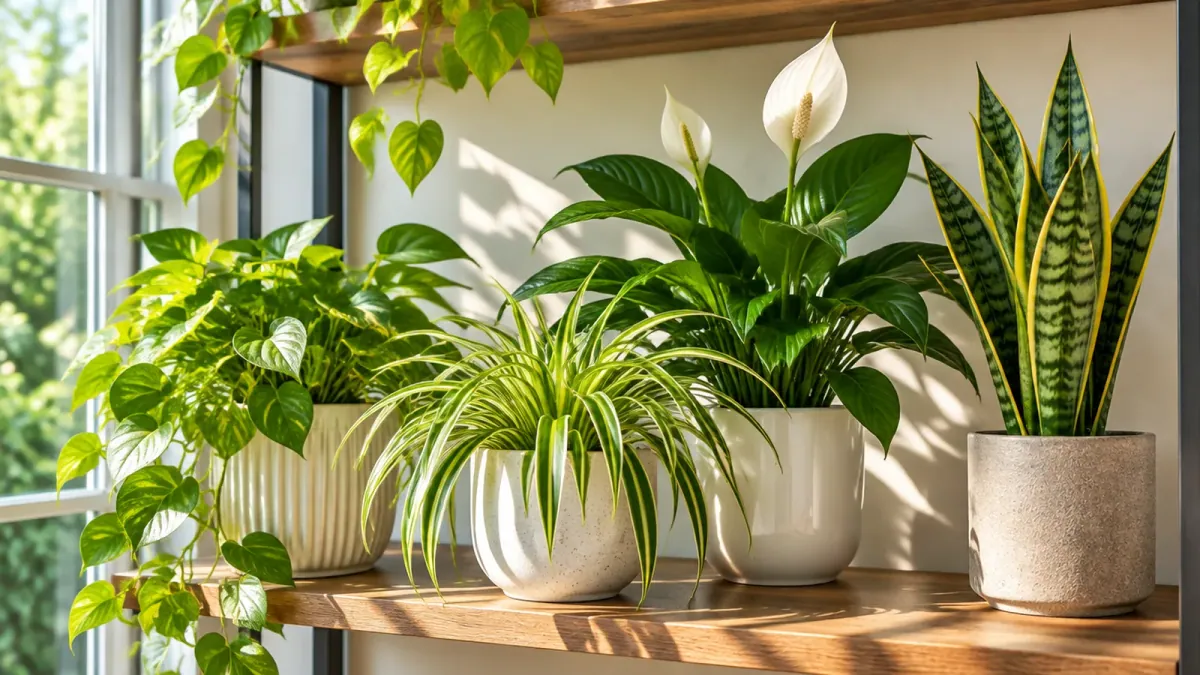
The easiest houseplants for beginners are snake plants, ZZ plants, pothos, spider plants, cast iron plants, philodendron, jade plants and aloe. They tolerate irregular watering, dry air and imperfect light. Match the plant to your light, use a pot with drainage holes, and water only when the soil is dry two inches down: that alone prevents most failures.
What makes a houseplant easy?
Easy houseplants share traits: they store water in leaves, stems or roots, so a missed watering isn’t fatal; they tolerate the lower light and drier air of an ordinary home; and they grow steadily without constant pruning or feeding. Most beginners lose plants not to neglect but to overwatering, so plants that dislike wet roots are best of all for beginners. For more houseplant guides, visit our indoor plants hub.
Easy houseplants compared
| Plant | Light | Water | Growth | Pets (ASPCA) |
|---|---|---|---|---|
| Snake plant | Low to bright | Every 2–4 weeks | Slow | Toxic |
| ZZ plant | Low to bright | Every 2–4 weeks | Slow | Not on the ASPCA list; treat as toxic |
| Pothos | Low to bright | Every 1–2 weeks | Fast | Toxic |
| Heartleaf philodendron | Low to bright | Every 1–2 weeks | Fast | Toxic |
| Spider plant | Medium to bright | Every 1–2 weeks | Medium | Non-toxic |
| Cast iron plant | Low to medium | Every 1–2 weeks | Slow | Non-toxic |
| Chinese evergreen | Low to medium | Every 1–2 weeks | Slow | Toxic |
| Peace lily | Low to medium | Weekly (droops when dry) | Medium | Toxic |
| Rubber plant | Bright, indirect | Every 1–2 weeks | Medium to fast | Toxic (ASPCA lists Ficus species as toxic) |
| Jade plant | Bright, some direct sun | Every 2–3 weeks | Slow | Toxic |
| Aloe vera | Bright, some direct sun | Every 2–3 weeks | Slow | Toxic |
| Ponytail palm | Bright | Every 2–3 weeks | Slow | Non-toxic |
| Parlor palm | Low to medium | Every 1–2 weeks | Slow | Non-toxic |
| Christmas cactus | Bright, indirect | Every 1–2 weeks | Medium | Non-toxic |
| Dracaena (corn plant) | Low to medium | Every 1–2 weeks | Slow | Toxic |
15 easy houseplants
1. Snake plant
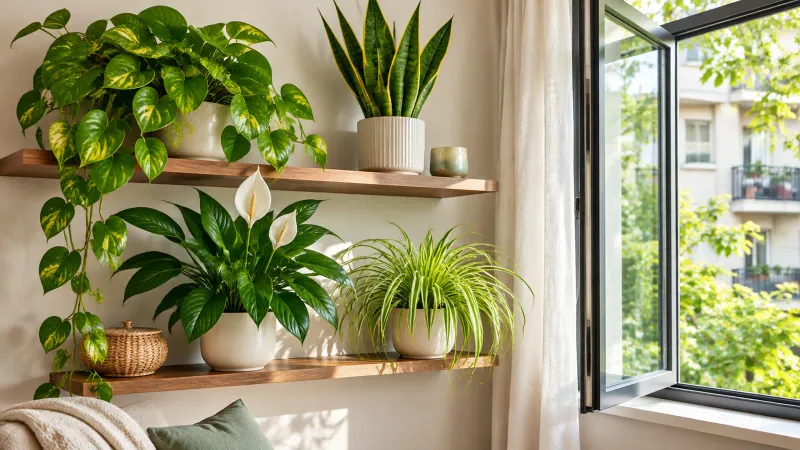
Upright, sculptural leaves in many sizes. It survives low light, dry air and neglect, and dies from overwatering. Water only when the soil is completely dry.
2. ZZ plant
Glossy leaves on arching stems growing from water-storing rhizomes. Thrives on neglect and tolerates low light.
3. Pothos
A trailing vine with heart-shaped leaves, in green, golden and variegated forms. It wilts when thirsty and bounces back after watering. Cuttings root easily in water.
4. Heartleaf philodendron
Similar to pothos, with softer, heart-shaped leaves. Fast-growing in medium light and tolerant of low light.
5. Spider plant
Arching striped leaves and dangling baby plantlets. Easy and safe for pets, though brown tips from tap water salts are common.
6. Cast iron plant
Tough, slow, dark green leaves for dim corners. Shrugs off neglect and drafts.
7. Chinese evergreen
Patterned leaves in silver, pink and green. Tolerates low light and average humidity.
8. Peace lily
Glossy leaves and white flowers. It droops dramatically when thirsty, which makes it easy to read.
9. Rubber plant
A bold, glossy plant that grows tall in bright, indirect light. Easier than a fiddle-leaf fig.
10. Jade plant
A succulent tree with thick leaves that stores water. Needs bright light and well-drained mix. Overwatering is the main risk.
11. Aloe vera
A spiky succulent for a sunny window. The gel is traditionally applied to minor burns. Don’t eat the leaves. Toxic to pets.
12. Ponytail palm
A swollen trunk topped with narrow leaves. Needs bright light and very little water. Non-toxic.
13. Parlor palm
A graceful, small palm for low to medium light. Pet-safe.
14. Christmas cactus
Flowers in winter when days are short and nights cool. Water more than desert cacti, and avoid moving it while buds form.
15. Dracaena
Tall, stylish and tolerant of lower light. Corn plant and ‘Janet Craig’ are easiest.
The six rules of keeping houseplants alive
- Match the plant to your light. Check the light level before you buy. Our guide to low-light indoor plants explains how to read it.
- Use a pot with a drainage hole. Plants sitting in water rot.
- Check before watering. Push a finger two inches into the soil. Our houseplant watering schedule gives typical frequencies.
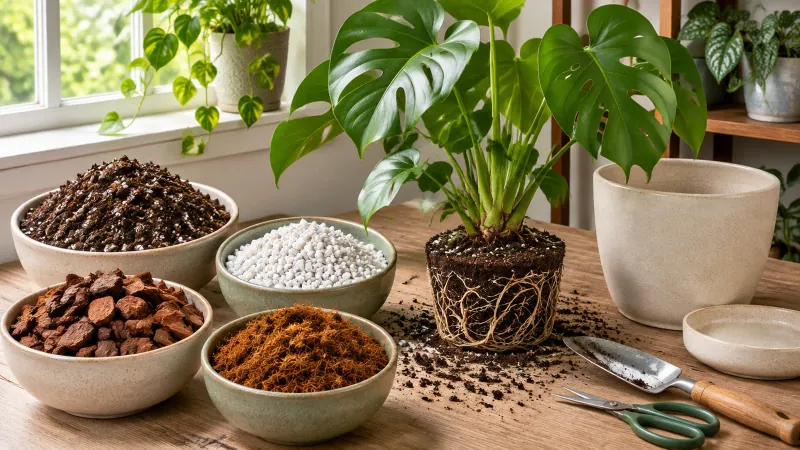
- Use a free-draining mix. See our guide to the best soil for indoor plants.
- Water less in winter, when growth slows.
- Leave plants alone. Frequent moving, fussing and repotting stress them. Give a new plant a few weeks to settle.
Easy houseplants by light level
| Your light | Best easy plants |
|---|---|
| Low (north window or far from a window) | Cast iron plant, snake plant, ZZ plant, pothos, parlor palm |
| Medium (east window or a few feet from a bright one) | Spider plant, Chinese evergreen, peace lily, philodendron, dracaena |
| Bright, indirect (near a south or west window) | Rubber plant, Christmas cactus, monstera, pothos in full color |
| Bright with direct sun | Jade plant, aloe, ponytail palm, succulents |
Your first month with a new plant
- Week 1: Unpack the plant, check leaves and soil for pests, and place it in its permanent spot. Don’t repot yet.
- Week 2: Learn its light. Note how the spot changes from morning to evening and whether leaves lean.
- Week 3: Water only if the soil is dry two inches down. Write the date in a notebook or phone, so you learn how fast it dries.
- Week 4: Wipe dust from leaves and rotate the pot. Resist the urge to fertilize until spring or summer growth begins.
Keeping a simple log of watering dates for the first season is the fastest way to learn what your plants and your home need.
Buying healthy plants
- Check the leaves, top and bottom, for spots, webbing, sticky residue or tiny insects.
- Look at the soil. It shouldn’t be soggy or smell sour.
- Check the roots. Roots circling heavily out of the drainage holes mean the plant is rootbound.
- Pick a plant with several healthy stems or fresh new growth.
- Avoid plants in cold drafts at stores or shipped in freezing weather; cold damage shows days later.
- Quarantine new plants for a couple of weeks away from your others.
Beginner mistakes to avoid
| Mistake | What happens | Better approach |
|---|---|---|
| Watering on a fixed schedule | Roots rot or plants dry out | Check the soil first |
| Pot with no drainage | Water collects at the bottom | Use a nursery pot inside a decorative one |
| Putting sun-lovers in dim rooms | Stretched, pale, weak growth | Match plants to light or add a grow light |
| Over-fertilizing | Brown tips, salt build-up | Feed at half strength in spring and summer only |
| Repotting too soon or too big | Soggy soil, stress | Repot only when roots fill the pot, into a pot one size up; see how to repot a plant |
| Ignoring pests | Infestations spread | Check leaf undersides weekly; see our guide to houseplant pests |
Choosing your first plants
Start with two or three plants, not twenty. Pick one plant for each light level you have, and learn how each behaves. If you have pets, choose from the non-toxic group, and see our guide to pet-safe houseplants. If you want height, consider one of the large indoor plants once you are confident, and if you want a hanging display, see our hanging indoor plants.
When to repot and feed
Easy houseplants need little: repot every one to three years in spring when roots fill the pot or grow through the drainage holes, and feed monthly in spring and summer with a balanced liquid fertilizer at half strength. Skip fertilizer in fall and winter. Too much care kills more easy plants than too little.
Frequently asked questions
What is the easiest houseplant to keep alive?
Snake plants, ZZ plants and pothos are widely considered the easiest houseplants. They tolerate low light, dry air and missed waterings, grow slowly or steadily without fuss, and recover from mistakes. If you have bright light, a jade plant or rubber plant is also forgiving. Overwatering is the one thing most easy plants can’t take.
What houseplants are hard to kill?
Cast iron plant, snake plant, ZZ plant, pothos, spider plant, philodendron, aloe vera and jade plant are among the hardest to kill. They store water in leaves, stems or roots, so they cope with missed waterings, and most tolerate average household temperatures. No plant survives constant overwatering, deep darkness or freezing drafts.
How often should a beginner water houseplants?
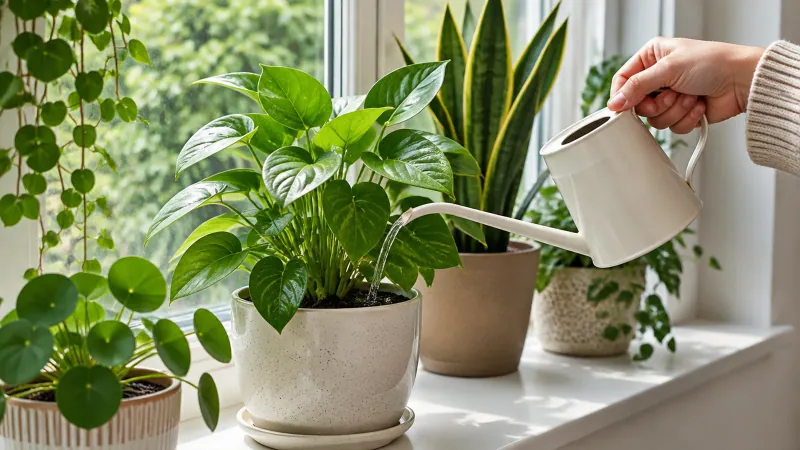
Water when the soil needs it, not on a fixed schedule. For most easy houseplants, push a finger in about two inches and water when it feels dry, then water until it drains and empty the saucer. Succulents, snake plants and ZZ plants prefer to dry out completely. This might mean every one to three weeks.
How much light do easy houseplants need?
Easy houseplants vary. Snake plants, ZZ plants and pothos tolerate low to medium light, while jade plants, aloe and succulents need bright light with some direct sun. Most prefer bright, indirect light near a window. A good beginner’s habit is to look at the sky from where the plant will sit: the more sky you see, the more light it gets.
Why do my houseplants keep dying?
The most common causes are overwatering, too little light and poor drainage. Plants in pots without drainage holes, watered on a rigid schedule in dim rooms, often rot. Other causes include cold drafts, heating vents and pests. Check the soil before watering, use pots with drainage, and match the plant to the light you actually have.