Best Paste Tomato Varieties for Sauce
On this page
The best paste tomato varieties for sauce include San Marzano for classic sweet, meaty fruit; Roma for a big, concentrated canning harvest; Amish Paste and Opalka for rich heirloom flavor; and Big Mama for large fruit. Choose determinate types if you want to can in one batch, and indeterminate types if you want fresh sauce tomatoes from midsummer until frost.
What makes a paste tomato?
Paste tomatoes are bred for cooking. Compared with slicing tomatoes, they have:
- More flesh and less juice, so sauce thickens faster.
- Thick walls and fewer seed cavities, so there is less to strain out.
- Firm texture, which holds up when roasted, dried or canned.
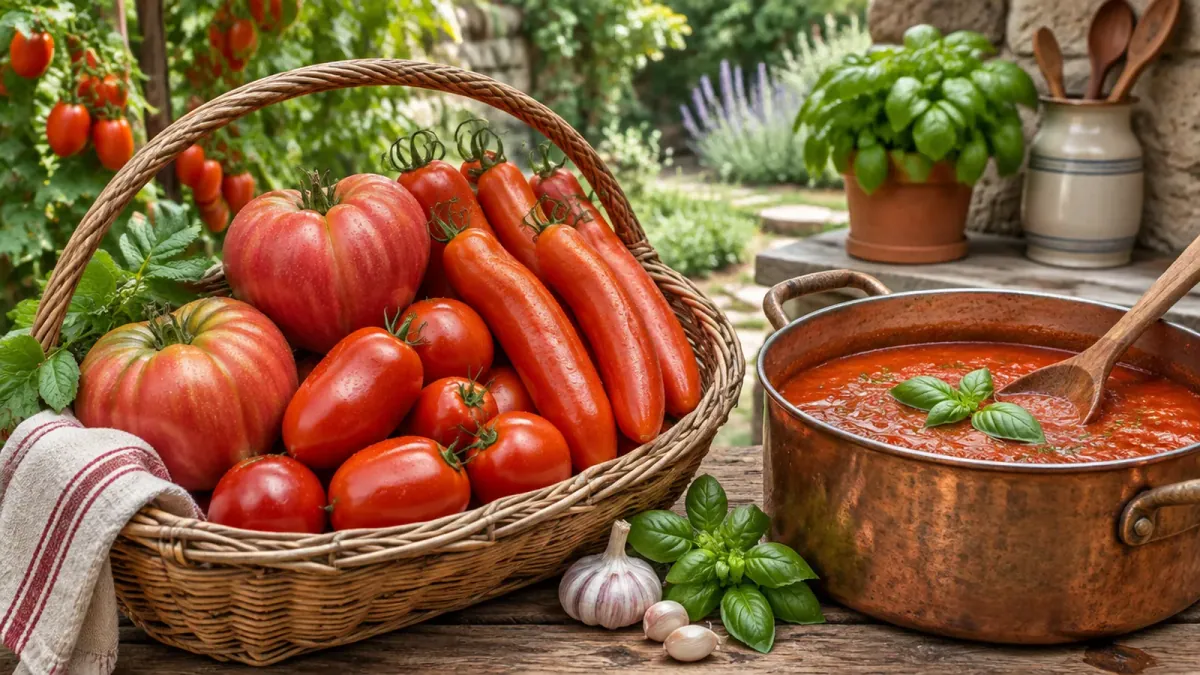
Most are plum-shaped, but some heirloom paste types are heart-shaped or long and banana-like. For more tomato varieties and growing guides, visit our tomato plants hub.
Paste tomato varieties compared
Sizes and habits are typical as described by seed suppliers and vary with growing conditions.
| Variety | Habit | Fruit | Type | Notes |
|---|---|---|---|---|
| San Marzano | Indeterminate | Long, slender, pointed | Heirloom | Classic Italian sauce tomato |
| Roma VF | Determinate | Egg-shaped, medium | Open-pollinated | Concentrated harvest; wilt resistance |
| ‘Martino’s Roma’ | Determinate | Plum-shaped | Heirloom | Compact plants; good for pots |
| Amish Paste | Indeterminate | Large, plum to heart-shaped | Heirloom | Rich flavor; juicier than most paste types |
| Opalka | Indeterminate | Long, banana-like | Heirloom | Very meaty; few seeds |
| Polish Linguisa | Indeterminate | Long, sausage-shaped | Heirloom | Meaty; productive |
| ‘Jersey Devil’ | Indeterminate | Long, pointed | Heirloom | Distinctive horn shape |
| ‘Speckled Roman’ | Indeterminate | Plum-shaped, red with gold stripes | Open-pollinated | Striking; good flavor |
| Big Mama | Indeterminate | Very large plum | Hybrid | Big fruit; easy to peel |
| ‘Super San Marzano’ | Indeterminate | San Marzano-type | Hybrid | Disease resistance listed by suppliers |
| Juliet | Indeterminate | Mini plum (grape) | Hybrid | Small but meaty; crack-resistant |
The best paste tomato varieties for sauce
San Marzano
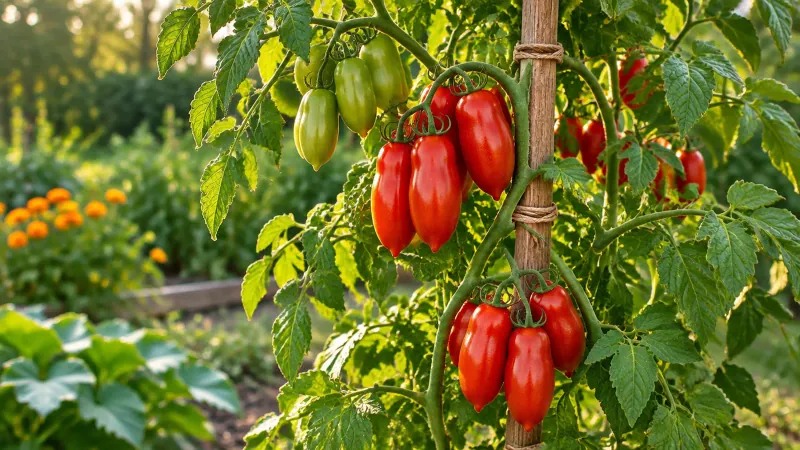
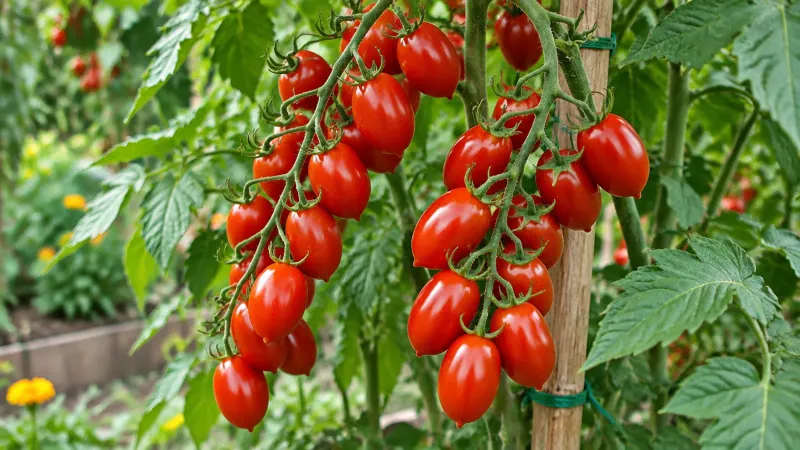
The benchmark sauce tomato: long, slim fruit with sweet, low-acid flesh and few seeds on tall, indeterminate vines. Our full guide to San Marzano tomato plants covers growing it from seed to harvest.
Roma VF
The most widely grown paste tomato in North America. Compact determinate plants ripen most of their egg-shaped fruit over a few weeks, which makes canning simple. The “VF” means resistance to verticillium and fusarium wilt. If you’re choosing between these two classics, see our side-by-side comparison of Roma vs San Marzano tomatoes.
‘Martino’s Roma’
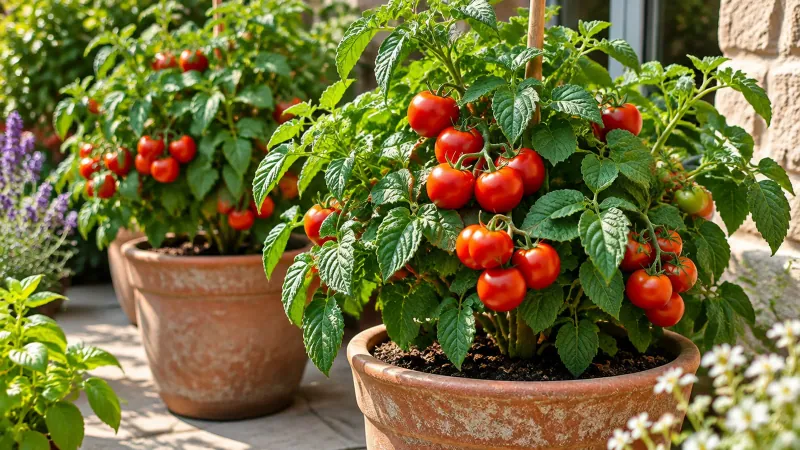
A compact, determinate heirloom with plum-shaped fruit, well suited to containers and small gardens.
Amish Paste
A popular heirloom with large, plum- to heart-shaped fruit and rich, sweet flavor. It is juicier than most paste types, so it also works well fresh.
Opalka
A Polish heirloom with long, banana-shaped fruit that is very meaty and almost seedless, cooking down into thick sauce.
Polish Linguisa
Another long, sausage-shaped heirloom, productive and meaty, with good flavor for sauce and canning.
‘Jersey Devil’
An heirloom with long, pointed fruit shaped like a horn or pepper. Meaty, with few seeds.
‘Speckled Roman’
Plum-shaped red fruit striped with gold. It looks striking in the garden and makes a good, flavorful sauce.
Big Mama
A hybrid with very large plum-shaped fruit, so you need fewer tomatoes per batch of sauce. The skins slip off easily after blanching.
‘Super San Marzano’
A hybrid San Marzano type that seed suppliers list with disease resistance, a useful option where wilts or other diseases are a problem.
Juliet
Not a traditional paste tomato, but the meaty grape-type Juliet tomato cooks into a quick, sweet sauce and resists cracking.
Hybrid or heirloom paste tomatoes?
Heirloom paste tomatoes such as San Marzano, Amish Paste and Opalka are open-pollinated, so you can save seed from year to year, and many gardeners value their flavor and history. They are often more variable in yield and less disease-resistant. Hybrids such as Big Mama and ‘Super San Marzano’ tend to be more uniform and may carry resistance to specific diseases, but seed must be bought each year. Many growers plant a mix: a reliable hybrid or Roma for the main canning crop, and a couple of heirlooms for flavor.
How to choose
- For one big canning harvest: choose determinate types such as Roma VF or ‘Martino’s Roma’.
- For sauce all summer: choose indeterminate types such as San Marzano, Amish Paste or Opalka.
- For containers: compact determinate types are easiest. Our guide to determinate vs indeterminate tomatoes explains the difference.
- For disease problems: look for resistance codes on seed packets, such as V (verticillium) and F (fusarium).
- For seed saving: choose open-pollinated heirlooms; hybrids won’t come true.
Growing tips for paste tomatoes
- Plant in full sun in rich, well-drained soil improved with compost, after your last frost.
- Support early. Short cages suit determinates; indeterminates need 6- to 8-foot stakes or tall cages.
- Water evenly. Elongated paste tomatoes are especially prone to blossom end rot, the dark, sunken patch on the bottom of the fruit that is usually caused by uneven watering. Mulch and steady moisture are the best prevention.
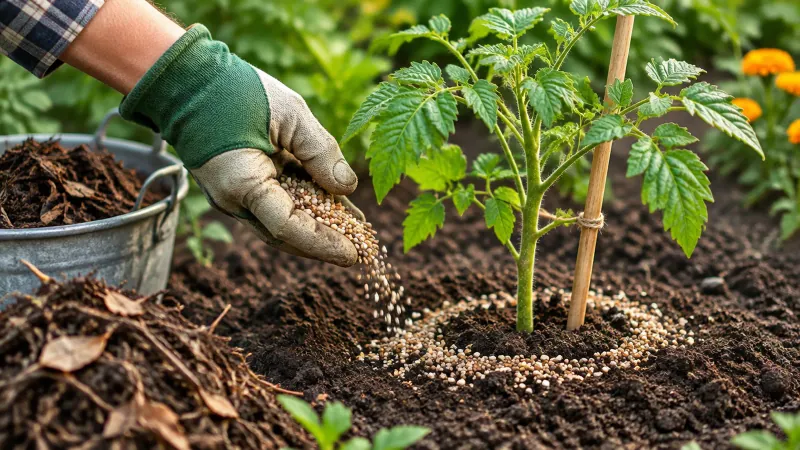
- Feed at fruit set. Switch to a lower-nitrogen tomato fertilizer once fruits form; see our guide to the best fertilizer for tomato plants.
- Harvest fully ripe. Pick when the fruit is deep red and slightly soft. Paste tomatoes can also be picked at first blush and ripened indoors if pests or rain are a problem.
From garden to sauce
For the thickest sauce, cut paste tomatoes in half and roast them for an hour or so before cooking down, which drives off water and deepens flavor. A food mill quickly removes skins and seeds. Paste tomatoes also freeze well whole; once thawed, the skins slip off. If you plan to can, follow a tested recipe from a reliable source such as your extension service, since tomatoes need added acid for safe water-bath canning.
Frequently asked questions
What is the best tomato for making sauce?
San Marzano is the classic sauce tomato, prized for meaty, sweet, low-acid flesh with few seeds. Roma is the most popular choice for canning large batches because its compact plants ripen most of their fruit at once. Amish Paste and Opalka are excellent heirlooms with rich flavor. The best choice depends on your space, season length and whether you want one big harvest or a steady supply.
Are paste tomatoes determinate or indeterminate?
Paste tomatoes come in both types. Roma, ‘Martino’s Roma’ and many modern hybrids are determinate, with compact plants and a concentrated harvest. San Marzano, Amish Paste, Opalka, Polish Linguisa and Big Mama are indeterminate, growing tall and fruiting until frost. Choose determinate types for canning in batches and indeterminate types for a long season of fresh sauce.
Can you make sauce with regular tomatoes?
Yes. Any ripe tomato can be made into sauce. Slicing and beefsteak tomatoes contain more water and seeds, so the sauce takes longer to cook down and yields less for the same weight of fruit. Many cooks mix paste tomatoes with flavorful slicers or cherry tomatoes to get both thickness and depth of flavor.
What is the difference between paste tomatoes and plum tomatoes?
In everyday use the terms overlap. Plum tomato describes the elongated, oval shape; paste tomato describes the purpose, meaning meaty fruit with thick walls, few seeds and little juice, ideal for cooking down. Most plum tomatoes are paste types, but some paste varieties, such as Amish Paste, are heart-shaped or round rather than plum-shaped.
How many paste tomato plants do I need?
It depends on how much sauce you want and on your season, so there is no fixed number. For fresh sauce through the summer, a few indeterminate plants are often enough. For canning a winter supply, gardeners commonly grow considerably more, often a dozen or more compact determinate plants. Keep notes on your harvest in the first year and adjust next season.