Roma vs San Marzano Tomatoes: Which Should You Grow?
On this page
Roma vs San Marzano comes down to how you want your harvest. Roma is usually a compact determinate plant that ripens most of its egg-shaped fruit within a few weeks, which is ideal for canning in one big batch. San Marzano is a tall indeterminate heirloom with longer, pointed, sweeter fruit that keeps coming until frost. Both make excellent sauce.
Roma vs San Marzano at a glance
| Feature | Roma | San Marzano |
|---|---|---|
| Origin | Developed in the United States in the 20th century | Italian heirloom from Campania |
| Seed type | Open-pollinated (many hybrid “Roma types” exist) | Open-pollinated heirloom (hybrid “San Marzano types” exist) |
| Growth habit | Usually determinate | Indeterminate |
| Plant height | About 3–4 ft | About 5–8 ft |
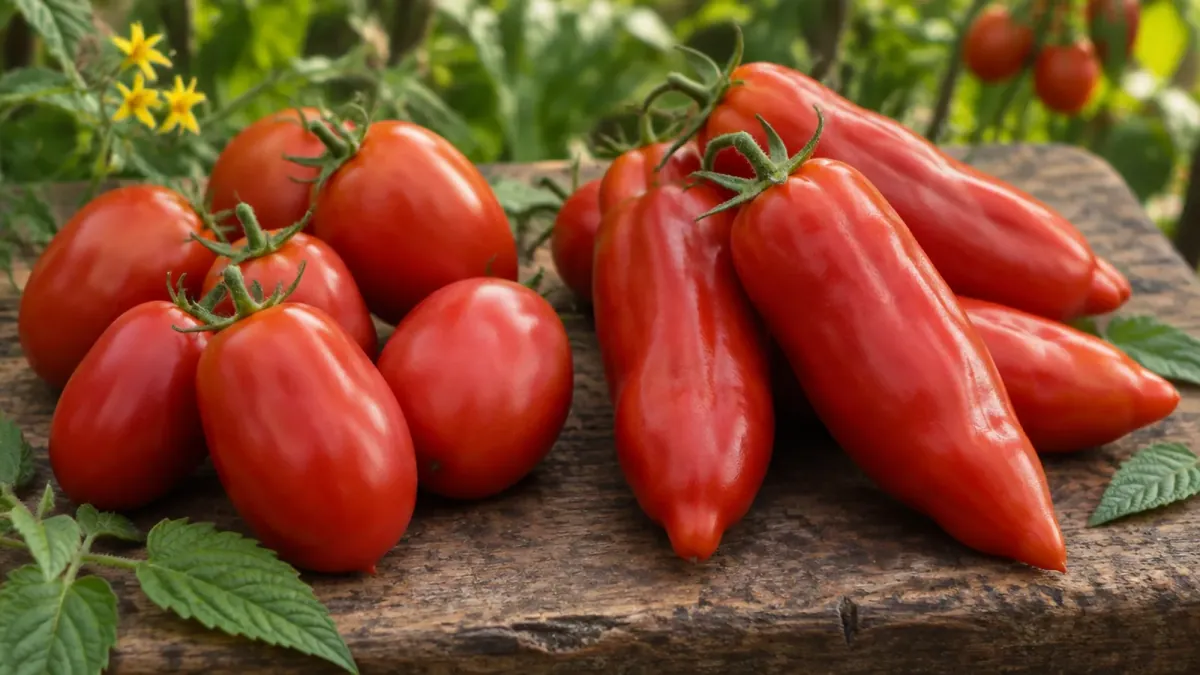
| Fruit shape | Egg-shaped, blunt ends | Long and narrow with a pointed tip |
| Fruit size | Typically 2–3 in long | Typically about 3 in long, often slimmer |
| Flesh | Meaty, firm | Very meaty, few seeds, often described as sweeter |
| Harvest pattern | Most fruit over a few weeks | Steady until frost |
| Disease resistance | ‘Roma VF’ is resistant to verticillium and fusarium wilt | No specific resistance in the heirloom |
| Support | Short cage | Tall stake, strong cage or trellis |
| Containers | Very good (5–10 gal) | Possible in large pots (15–20 gal) |
For a full profile of the Italian variety, see our guide to San Marzano tomato plants. For more tomato guides, visit our tomato plants hub.
Origin and background
San Marzano is named after the town of San Marzano sul Sarno, near Naples, and is traditionally grown in the volcanic soils of Campania in southern Italy. Tomatoes grown there under strict rules can carry the protected DOP label.
Roma is a newer variety, developed in the United States in the mid-20th century as a reliable, productive paste tomato. The widely sold ‘Roma VF’ carries resistance to verticillium and fusarium wilt, two soil-borne diseases, which is indicated by the “VF” in its name.
Fruit, flavor and texture
Both are paste tomatoes, which means meaty flesh, thick walls, relatively few seeds and less juice than slicing tomatoes. That makes them cook down into sauce faster.
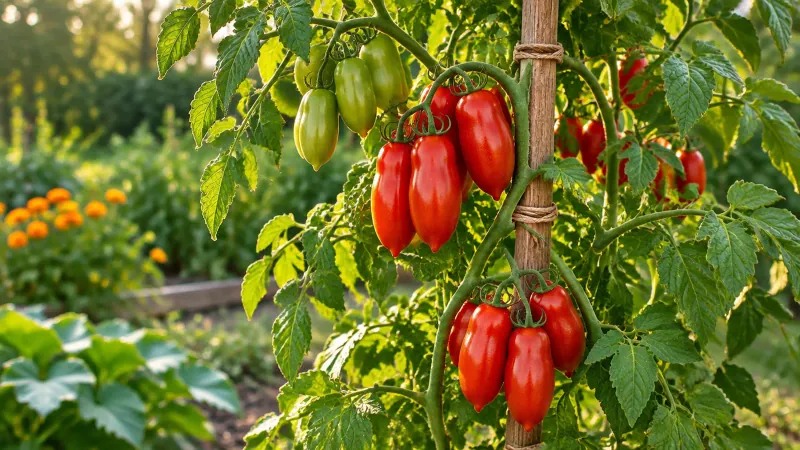
- San Marzano fruit is longer and slimmer, with a pointed tip. Its flavor is often described as sweet and less acidic, with very dense flesh, which is why many cooks consider it the classic sauce tomato.
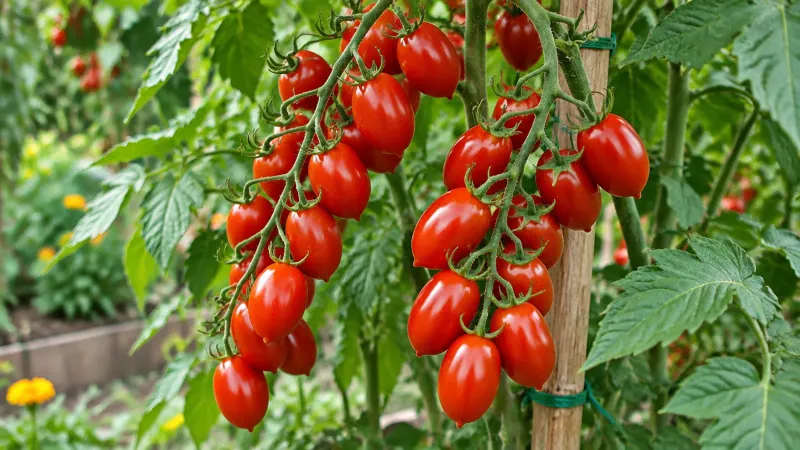
- Roma fruit is shorter and more egg-shaped, with blunt ends. It is meaty and dependable, with a slightly more acidic, “tomatoey” flavor that many people like in sauces and salsas.
Flavor depends on more than the variety. Full sun, fully ripe fruit and steady watering make a big difference to either.
Growth habit: the biggest practical difference
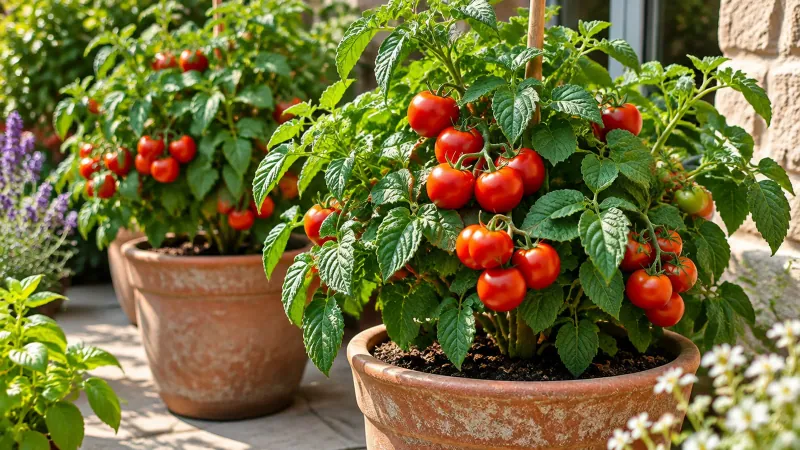
Roma is usually determinate. The plants stop growing at about 3 to 4 feet and ripen most of their crop over a few weeks. That suits small gardens, containers and anyone who wants to can or freeze a large batch at once.
San Marzano is indeterminate. The vines keep growing all season, often reaching 5 to 8 feet, and produce fruit steadily until frost. You will harvest smaller quantities more often, which suits cooking fresh sauce through the summer.
Our guide to determinate vs indeterminate tomatoes explains how these habits affect pruning, support and spacing.
Growing differences
| Task | Roma | San Marzano |
|---|---|---|
| Spacing | About 18–24 in | 24–36 in (closer if pruned to 1–2 stems) |
| Support | Short, sturdy cage | 6–8 ft stake, tall cage or trellis |
| Pruning | Little or none | Remove many side shoots to keep 1–2 main stems |
| Watering | Even moisture; both are prone to blossom end rot | Even moisture; mulch well |
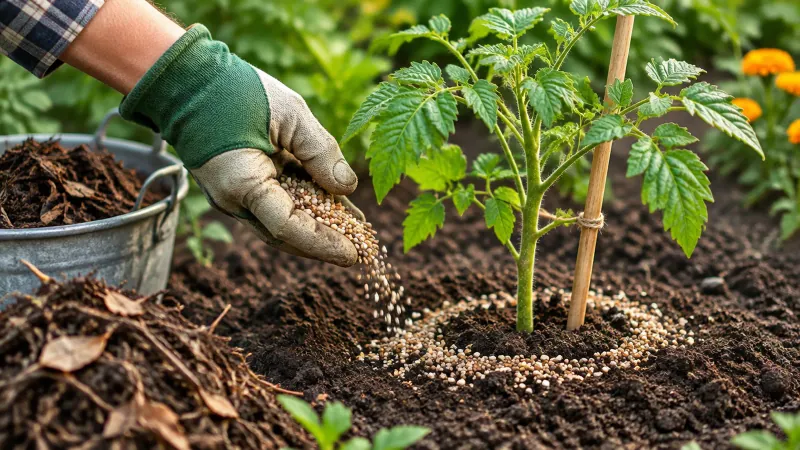
| Feeding | Tomato fertilizer from fruit set | Tomato fertilizer from fruit set, through the long season |
Our guide to tomato plant spacing gives exact distances for each training method. Both paste tomatoes are prone to blossom end rot, the dark, sunken patch on the bottom of fruit caused mainly by uneven watering. Mulch and consistent watering are the best prevention. For feeding, see our guide to the best fertilizer for tomato plants.
Which should you grow?
| Your situation | Best choice |
|---|---|
| You want to can a big batch in one weekend | Roma |
| You grow in pots or have a small space | Roma |
| Your growing season is short | Roma, or both, with San Marzano topped in late summer |
| You want the sweetest, classic Italian-style sauce tomato | San Marzano |
| You want fresh paste tomatoes all summer | San Marzano |
| Soil-borne wilt diseases are a problem in your garden | ‘Roma VF’ or another resistant variety |
| You want to save your own seed | Either open-pollinated version |
If you can’t decide, grow both: a few Roma plants for an early canning batch and a couple of San Marzano plants for a steady supply until frost. For more options, including hybrids and heirlooms with different strengths, see our list of the best paste tomato varieties.
Using your harvest
Both varieties are ideal for sauce, paste, roasting, drying and canning. Pick fruit when it is evenly deep red and slightly soft. To make sauce, core and halve the tomatoes, cook them down, then pass them through a food mill to remove skins and seeds, or roast them first for a deeper flavor. Paste tomatoes also freeze well whole: once thawed, the skins slip off easily.
Frequently asked questions
Are Roma and San Marzano tomatoes the same?
No. Both are plum-shaped paste tomatoes, but they are different varieties. San Marzano is an Italian heirloom with long, slender, pointed fruit on tall indeterminate vines. Roma is a later variety with shorter, egg-shaped fruit, usually grown on compact determinate plants. They are used the same way in the kitchen, which is why the names are often mixed up.
Which is better for sauce, Roma or San Marzano?
Both make excellent sauce. San Marzano is usually described as sweeter and less acidic, with very meaty flesh and few seeds, so many cooks prefer it for simple tomato sauces. Roma is meaty and reliable too, and its concentrated harvest makes it easier to process in large batches. Growing conditions and ripeness affect flavor as much as the variety.
Which produces more tomatoes, Roma or San Marzano?
Over a full, long season, an indeterminate San Marzano plant usually produces more in total, because it keeps fruiting until frost. Roma plants are smaller and ripen most of their crop within a few weeks, so each plant yields less overall but delivers it all at once. In short seasons, Roma’s earlier, concentrated crop can be the more dependable of the two.
Is San Marzano a type of Roma tomato?
Not exactly. Both belong to the broad group of plum or paste tomatoes, and supermarkets sometimes label all plum tomatoes as ‘Roma’. San Marzano is the older Italian variety, and Roma is a separate variety developed later. You will also find hybrids and selections sold as ‘San Marzano type’ or ‘Roma type’ that combine traits of both.
Can you grow Roma and San Marzano together?
Yes, and many gardeners do. Growing a few Roma plants gives a big early batch for canning, while San Marzano keeps producing fresh paste tomatoes until frost. Tomatoes are mostly self-pollinating, so cross-pollination between them is uncommon, but grow them a little apart if you plan to save San Marzano seed.