Cucumber Trellis Ideas You Can Build
On this page
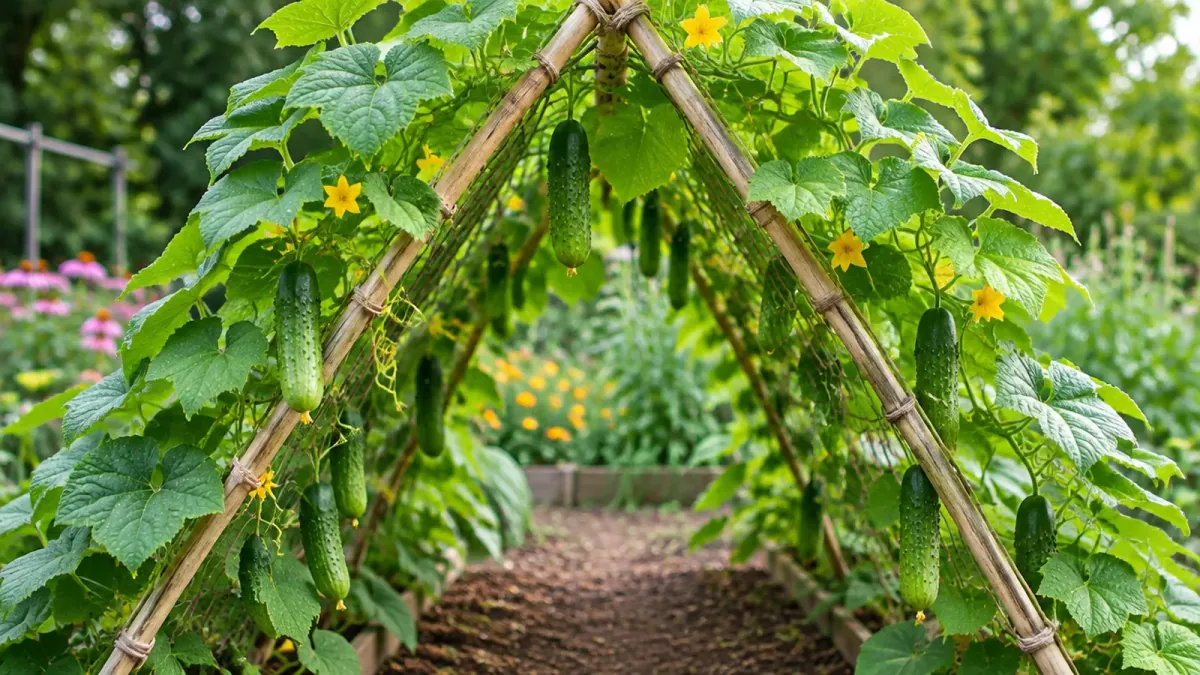
Good cucumber trellis ideas include a cattle panel arch, an A-frame, a string trellis hung from a frame, a fence or wall panel and a tripod. Aim for 5 to 6 feet of height, strong supports and openings wide enough to reach through, and train vines upward from when seedlings are 6 to 8 inches tall.
Why trellis cucumbers?
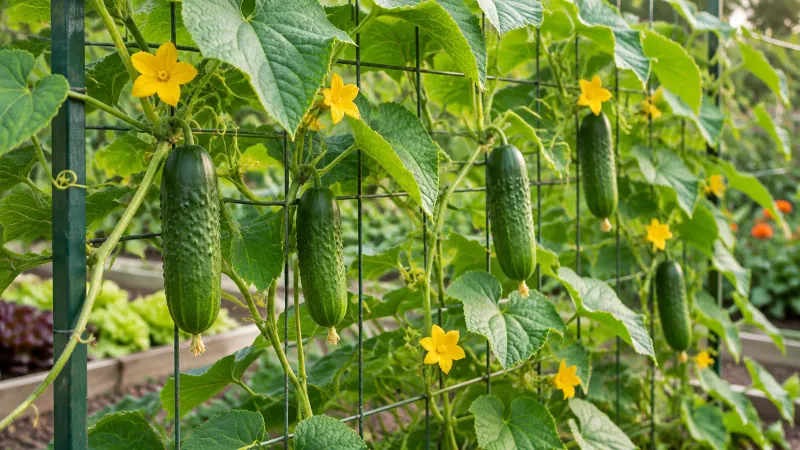
Cucumbers are vigorous vines. Left on the ground, they sprawl, take a lot of space and keep fruit in damp contact with soil. On a trellis they climb with tendrils, so air moves around the leaves, disease is reduced and fruit hangs straight and clean. Trellises also make picking easier and fit more plants into small gardens. See also our guide to how to grow cucumbers vertically. For more guides, visit our vegetable gardening hub.
Choosing a trellis: key criteria
| Criterion | What to check |
|---|---|
| Height | 5–6 ft above the soil |
| Strength | Must hold vines and fruit, plus wind |
| Opening size | Wide enough (4–6 in) to reach through and pick |
| Tendril grip | Thin supports (under about 1 in) are easiest for tendrils to grab |
| Durability | Outlasts the season; metal and rot-resistant wood last longest |
| Setup | Easy to install and take down |
| Cost | Cattle panels and string are inexpensive relative to many kits |
Trellis ideas compared
| Idea | Strength | Cost (relative) | Skill | Best for |
|---|---|---|---|---|
| Cattle panel arch | Very strong | Moderate | Moderate | Rows, tunnels, big harvests |
| A-frame | Strong | Low to moderate | Moderate | Raised beds and rows |
| Vertical string trellis | Light | Low | Easy | Small gardens, greenhouses |
| Fence or wall trellis | Strong | Low | Easy | Using an existing structure |
| Tripod or teepee | Moderate | Low | Easy | Containers, small beds |
| Tomato cage | Light | Low | Easy | Containers; bush types |
| Netting on posts | Light to moderate | Low | Easy | Long rows |
| Wire or wood lattice panel | Moderate | Moderate | Easy | Decorative gardens |
Cattle panel arch
A cattle panel (a sturdy wire fence panel, often 16 feet long) bent into an arch between two raised beds or rows makes a strong, attractive tunnel. Cucumbers hang inside where they are easy to see and pick, and the shade below suits lettuce. Panels are stiff, so you need help to bend them, and posts or stakes to anchor the ends.
A-frame trellis
Two rectangular frames hinged at the top, with wire, netting or string between, form an A that is easy to move. Plant along both sides, or train vines up one side and grow shade-loving crops underneath. Build it from 2-by-2 lumber and secure it against wind.
String trellis
String hung from an overhead wire or beam is the cheapest and lightest option. Tie a string at each plant base, run it up to the support and twist the vine around it as it grows. Use sturdy twine or stranded rope. This is common in greenhouses; see vertical vegetable garden ideas for more.
Fence or wall trellis
Planting beside a fence gives a ready-made support. Attach netting or wire mesh to the fence for tendrils to grip. Choose a sunny side, and watch for heat reflecting from a wall. Leave a few inches between the fence and the vine for airflow.
Tripods and teepees
Three or four tall stakes or bamboo canes tied at the top make a quick trellis for a single plant or pot. Wrap twine around the poles to give tendrils something to grab. Use thicker poles, since they must hold a loaded vine.
How to build a simple A-frame trellis
Materials: four 6-foot 2-by-2 boards, hinges, screws, wire mesh or twine, staples.
- Build two frames (rectangles) from the boards, about 6 feet tall and 3 to 4 feet wide.
- Attach wire mesh or string across each frame, leaving openings you can reach through.
- Hinge the two frames at the top.
- Open them into an A shape and set them over the bed, with the base about 2 to 3 feet apart.
- Add a cross brace or stake the base into the ground.
- Plant cucumbers along both sides, 8 to 12 inches apart.
Training cucumbers up a trellis
- Plant seeds or transplants at the base of the trellis.
- Guide the main vine to the support when it is about 6 to 8 inches tall.
- Tie loosely with soft ties in a figure eight where needed.
- Check every few days and tuck new growth into the trellis.
- Prune lower side shoots if you want a clean base and better airflow.
- Support heavy fruit with slings if needed for large varieties.
Choosing varieties for trellises
| Type | Notes |
|---|---|
| Slicing cucumbers | Vigorous vines; need a strong trellis |
| Pickling cucumbers | Many fruits; good production on trellises |
| Lemon and specialty types | Climbers; lighter fruit |
| Bush and compact types | Don’t need tall trellises |
| Burpless, long types | Hang straight when trellised |
Vining types climb best. For small spaces, see our list of easiest vegetables to grow.
Common problems
| Problem | Fix |
|---|---|
| Vines falling off | Add ties; use thinner supports |
| Trellis collapses | Use stronger posts; brace |
| Mildew | Improve airflow; water at the base |
| Crooked fruit | Check watering; ensure fruit hangs freely |
| Too much shade | Place the trellis so it doesn’t shade other crops |
Pets
Cucumber (Cucumis sativus) is listed by the ASPCA as non-toxic to cats and dogs. Keep tools, twine and netting away from animals that might chew or get tangled in them.
Frequently asked questions
How tall should a cucumber trellis be?
Aim for 5 to 6 feet tall for most vining cucumbers, which can climb 6 feet or more in a season. A trellis that is too short makes vines flop over the top. If you cannot reach the top easily, bend the vine back or choose a bush or compact variety, and make sure supports are strong enough for the weight of the fruit.
What is the best trellis for cucumbers?
A cattle panel arch or A-frame is strong, long lasting and easy to harvest from. String trellises are cheap and light, and wall or fence trellises save space. The best choice depends on your space, budget and how heavy the crop will be. Choose strong materials with openings wide enough to reach through.
How do I train cucumbers up a trellis?
Start when seedlings are about 6 to 8 inches tall. Gently guide the main vine toward the support and loosely tie it with soft ties or clips. Cucumbers send out tendrils that grab onto thin supports. Check every few days, and tie new growth, since vines grow quickly in warm weather.
How far apart should I plant cucumbers on a trellis?
Plant cucumbers about 8 to 12 inches apart along a trellis, which is closer than sprawling vines on the ground, because the vines grow up instead of out. Leave room between rows for access, about 2 to 3 feet. Good spacing also helps air move through leaves, which reduces mildew.
Do cucumbers grow better on a trellis?
Often yes. Vertical growing gives better airflow, which reduces powdery mildew and other diseases, keeps fruit clean and straight and makes cucumbers easier to spot and pick. It also saves ground space. Heavy fruit varieties may need stronger supports, and bush varieties don’t need trellising.