Vertical Vegetable Garden Ideas for Small Spaces
On this page
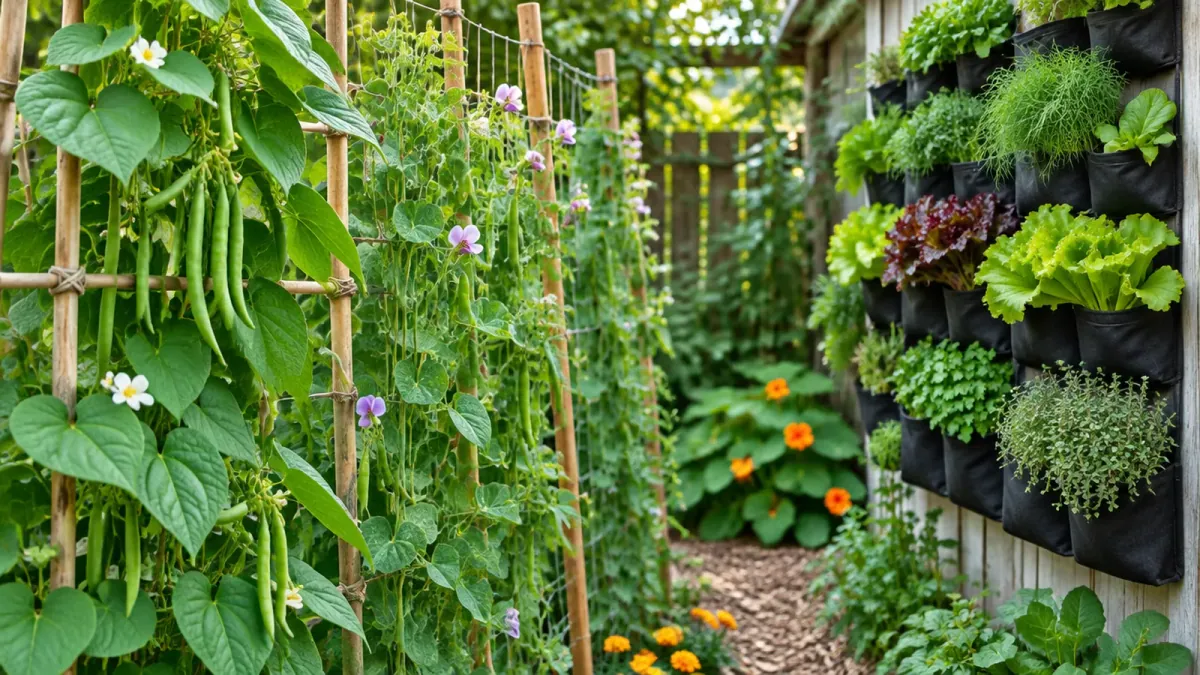
Vertical vegetable garden ideas include trellises, arches and cattle panels for climbing crops such as cucumbers, pole beans, peas and tomatoes, plus stacked towers, wall pockets and hanging pots for strawberries, greens and herbs. Growing up saves ground space, improves airflow and keeps fruit clean. Choose strong supports, climbing varieties and plan for extra watering.
Why grow vegetables vertically?
Growing up gives you more growing area in the same footprint. Plants climbing trellises get better light and airflow, suffer less disease and are easier to pick. Fruit hangs clear of the soil, so it stays clean and straight. Vertical growing suits small yards, balconies and raised beds, and it adds structure to the garden. For more small-space ideas, browse our vegetables and small-space gardening hub.
Crops that climb
| Crop | How it climbs | Support needed | Notes |
|---|---|---|---|
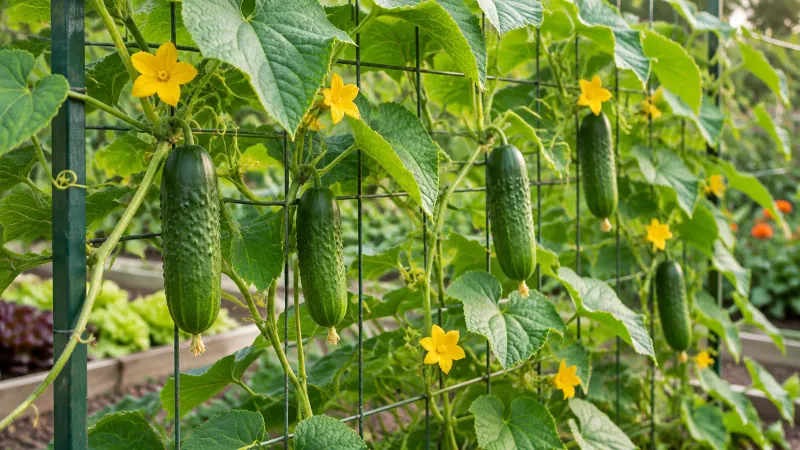
| Cucumbers | Tendrils | Trellis, netting | See how to grow cucumbers vertically |
| Pole beans | Twining | Poles, strings, teepee | Productive and easy |
| Peas | Tendrils | Netting, twiggy sticks | Cool-season; light |
| Indeterminate tomatoes | Tied | Tall stakes, strings, cattle panel | Heavy; strong support |
| Small squash and melons | Tendrils | Strong trellis with slings | Support heavy fruit |
| Malabar spinach | Twining | Trellis | Heat-loving green |
| Climbing nasturtiums | Twining | Trellis | Edible flowers |
| Hops and gourds | Twining | Very sturdy support | Vigorous |
Vertical garden ideas
Trellises and frames
1. Wall-mounted trellis. A wooden or metal trellis fixed to a sunny wall suits cucumbers, beans and peas. Leave a gap behind it for airflow.
2. A-frame trellis. Two hinged panels set in an A shape support climbers on both sides and give shade underneath for lettuce. Good over raised beds. Our cucumber trellis ideas show designs.
3. Cattle panel arch. A curved livestock panel between two beds makes a strong, walk-through tunnel for squash, cucumbers and beans.
4. Teepee or pole frame. Bamboo poles tied at the top make a cheap bean teepee, great for children.
5. String trellis. Strings from an overhead beam to the plant base suit tomatoes and cucumbers, especially in greenhouses.
6. Netting on a fence. Plastic or jute netting stretched on an existing fence gives instant support for peas and beans.
Towers and stacked planters
7. Stacked pot tower. Pots of decreasing size stacked around a central pole grow strawberries, herbs and lettuce.
8. Tiered planter. Shelf-style planters have several levels of containers and fit small patios.
9. Hydroponic tower. Indoor or outdoor towers pump nutrient solution past plants; see our guide to the best hydroponic growing systems.
Walls and hanging gardens
10. Pallet planter. An upright pallet lined with fabric holds herbs and lettuce. Use only heat-treated (HT) pallets.
11. Wall pocket planters. Felt or fabric pockets on a wall suit shallow-rooted greens and herbs.
12. Hanging baskets. Strawberries, cherry tomatoes and herbs grow well in baskets, and trailing varieties spill over the edge.
13. Gutter garden. Rain gutters fixed to a fence hold lettuce and herbs. Drill drainage holes.
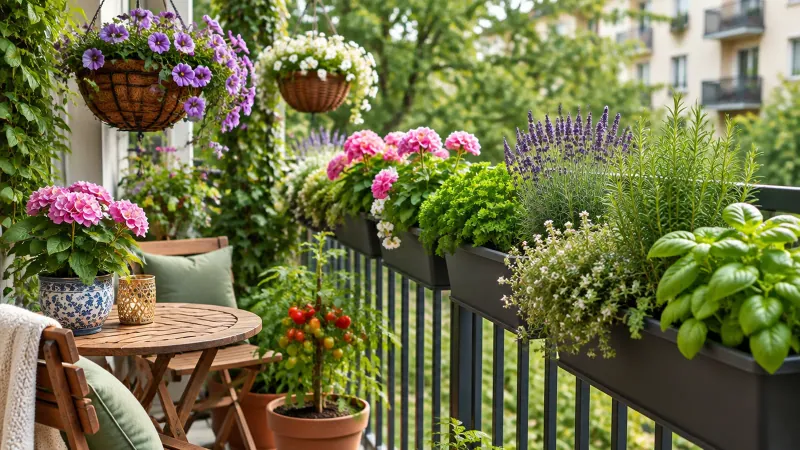
14. Railing planters. Hooked-over planters add growing space on a balcony; see balcony gardening ideas for beginners.
Choosing what to grow where
| Spot | Best crops |
|---|---|
| Sunny wall or fence | Cucumbers, pole beans, tomatoes, peas |
| Over a raised bed | Squash, cucumbers, melons on an A-frame |
| Shady wall | Lettuce, spinach, herbs in pockets |
| Balcony railing | Herbs, lettuce, strawberries, cherry tomatoes |
| Hanging baskets | Strawberries, trailing tomatoes, herbs |
| Fence with netting | Peas, pole beans |
Building a simple vertical garden
- Choose a sunny spot and decide where it will go. Put tall structures on the north side.
- Select a support suited to the crop’s weight.
- Anchor it firmly. Set posts at least 12 to 18 inches deep, or use a base weight for containers.
- Plant climbers at the base, spacing as the packet suggests.
- Train young vines onto the support, tying loosely with soft twine.
- Water at the base and mulch.
- Feed during the growing season.
- Harvest often to keep plants producing.
Watering and feeding
Vertical gardens dry out faster because of airflow and limited soil volume. Check planters daily in summer, and consider drip irrigation on a timer. Feed container-grown vertical crops every one to two weeks with a balanced liquid fertilizer, since frequent watering washes nutrients out. For help with feeding tomatoes, see our guide to the best fertilizer for tomato plants.
Soil and containers for vertical planters
Use a light, moisture-holding potting mix, ideally with compost and perlite. Heavy garden soil makes planters too heavy and can drain poorly. Make sure every container has drainage holes, and line pockets and pallets with landscape fabric to hold soil.
Vertical gardens on balconies and patios
On a balcony, weight and wind are the main limits. Keep soil volume small, use lightweight potting mix and containers, and fix trellises firmly to a wall or a heavy base. Compact, vining crops such as cucumbers, pole beans, peas and cherry tomatoes suit this setting. Place the tallest structures where they won’t cast shade on the rest, and leave a gap between plants and walls for airflow. Our balcony gardening ideas for beginners cover safety and weight in more detail.
Season-by-season vertical plan
| Season | Crops to train up |
|---|---|
| Early spring | Peas on netting; sow lettuce in the shade below |
| Late spring | Pole beans, cucumbers, squash on trellises |
| Summer | Tomatoes tied to stakes or strings; harvest regularly |
| Fall | Sow fall peas; replace spent beans with lettuce and kale |
Common problems
| Problem | Cause | Fix |
|---|---|---|
| Trellis collapses | Weak posts or too much weight | Use stronger materials and anchor deeply |
| Dry, wilting plants | Fast-drying planters | Water daily; use drip and mulch |
| Heavy fruit breaks vines | No support | Use slings or net bags for melons and squash |
| Shaded neighbors | Tall structure on the south side | Place on the north side |
| Powdery mildew on cucumbers | Poor airflow | Space plants; choose resistant varieties |
Companion planting on a vertical garden
Combine climbers with low crops underneath: lettuce and spinach in the shade of a bean or cucumber trellis, or herbs at the base of tomatoes. See our companion planting chart for combinations that work.
Frequently asked questions
What vegetables grow well vertically?
Cucumbers, pole beans, peas, indeterminate tomatoes, small squash and melons, Malabar spinach, climbing nasturtiums and some gourds climb well. Strawberries, lettuce and herbs grow well in vertical towers and wall planters. Choose climbing or vining varieties rather than bush types, and support heavy fruit such as melons with slings.
What are the benefits of a vertical vegetable garden?
Vertical gardens save ground space, improve airflow and light on leaves, reduce disease, keep fruit clean and straight, and make harvest easier. They also add height and structure to small gardens and balconies. The main trade-offs are the cost of supports and more frequent watering, since vertical planters can dry out faster.
How strong does a trellis need to be?
It needs to carry the weight of mature plants and wet foliage, plus wind loads. Pole beans and cucumbers are light, but tomatoes and melons are heavy and need sturdy posts set deep in the ground or well anchored, with strong wire, cattle panel or rigid mesh. Use rot-resistant posts and check supports regularly.
Can you grow a vertical vegetable garden on a balcony?
Yes. Use a trellis fixed to the wall, a tension pole, railing planters or a freestanding frame with containers at the base. Check weight limits and wind exposure, since tall frames catch wind. Choose compact vining crops such as cucumbers, pole beans, peas and small tomatoes, and use lightweight potting mix.
How do you water a vertical garden?
Vertical planters and pockets dry out faster than ground beds, so check daily in summer. Drip irrigation with a timer is the most reliable method. Water slowly so it soaks in rather than running off, and use a good moisture-holding mix. In stacked planters, water from the top so it trickles down.