How to Prune Tomato Plants (and When Not To)
On this page
Prune indeterminate tomato plants by pinching out suckers (the shoots between the main stem and leaf branches) while they are small, removing leaves that touch the soil, and topping plants about a month before frost. Do not prune determinate tomatoes beyond removing dead or diseased leaves, because their side shoots carry much of the crop.
Why prune tomatoes at all?
Pruning is about managing the plant’s energy and airflow. Tomato vines make far more leaves and shoots than they need. Removing some of them helps leaves dry faster after rain, which reduces fungal diseases, keeps plants tidy enough to tie to a stake or trellis, and can speed ripening. It also means fewer, but often larger, fruits on indeterminate varieties. For more tomato guides, visit our tomato plants hub.
Check your plant type first
Pruning rules depend on growth habit. Our guide to determinate vs indeterminate tomatoes explains how to tell them apart.
| Type | Pruning approach | Why |
|---|---|---|
| Determinate (bush) | Little or none; remove lower leaves only | Fruit forms on side shoots; they stop growing at a set height |
| Indeterminate (vining) | Remove most suckers; prune lower leaves | Vines keep growing and need to be kept in check |
| Dwarf indeterminate | Light pruning of crowded shoots | Stay compact but keep growing |
| Cherry tomatoes (vining) | Light to moderate | Vigorous; extra stems are fine if supported |
| Potato-leaf heirlooms | Light | Large leaves shade fruit; keep more foliage |
Know what you’re removing
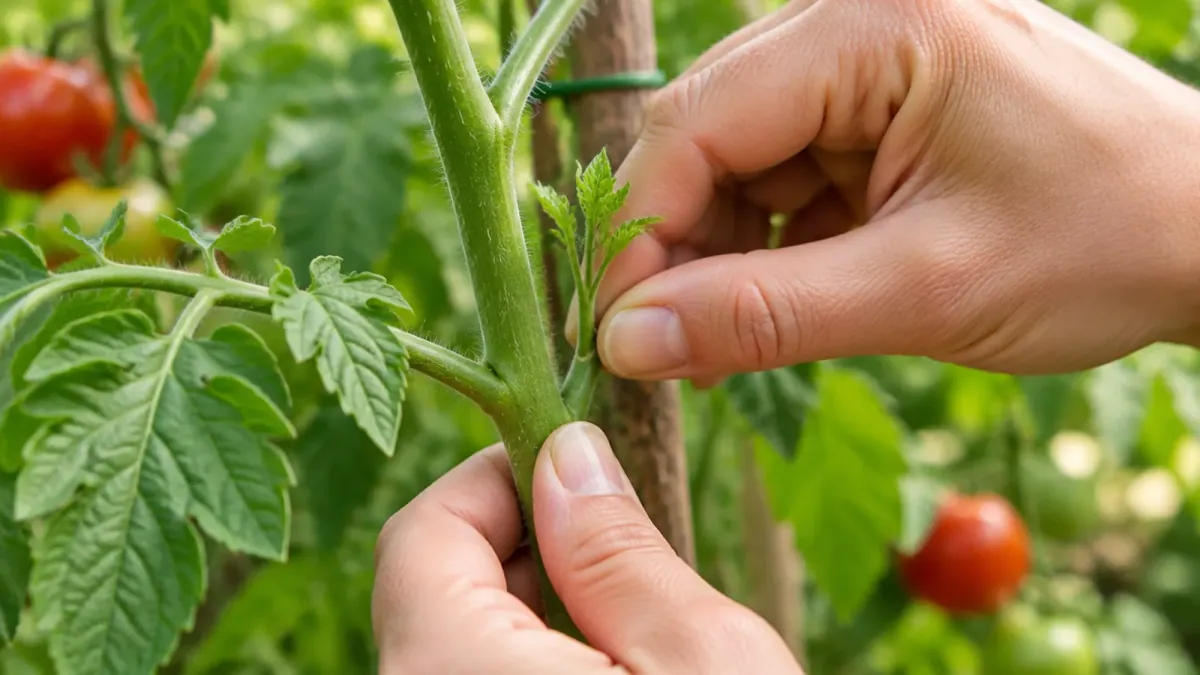
- Suckers: shoots that grow in the angle between the main stem and a leaf branch. A small sucker snaps off with your fingers.
- Lower leaves: the leaves nearest the soil, which collect splashed disease spores.
- Diseased or yellow leaves: remove at any time.
- Flower trusses: leave them alone, unless thinning a heavily loaded cluster.
- Growing tip: the top of the main stem, which you pinch out late in the season.
How to prune indeterminate tomatoes
1. Start early
Check plants weekly from the time they are about 1 foot tall. Pinch suckers when they are 2 to 4 inches long: they snap off cleanly and heal quickly. Suckers thicker than a pencil are best cut with clean snips.
2. Choose how many stems to keep
| Method | Stems kept | Result |
|---|---|---|
| Single stem | 1 | Narrow plant, fewer but larger fruit; best for tight spacing |
| Double stem | 2 (main plus the first sucker below the first flower truss) | A good balance of yield and tidiness |
| Three or four stems | 3–4 | Bushier, higher total yield; needs wide spacing and strong supports |
| Unpruned | Many | Dense, tangled; more disease and smaller fruit |
Most home gardeners do well with two to three stems. Spacing matters here: see our guide to tomato plant spacing.
3. Remove lower leaves
When plants are about 2 feet tall, remove leaves from the bottom 8 to 12 inches, or any that touch the ground. This reduces soil splash and improves airflow near the base. Cut leaves cleanly close to the stem.
4. Keep removing suckers
New suckers keep appearing all season. A weekly walk-through takes a few minutes. If you miss a few and they become large, either leave them (they will bear fruit) or cut them off cleanly.
5. Thin leaves for airflow, not for sun
Some gardeners remove a few leaves around ripening trusses to improve airflow. Don’t strip the plant: fruit needs shade from leaves to avoid sunscald, particularly in hot climates.
6. Top the plant late in the season
About four to six weeks before your first frost, pinch or cut off the growing tip of each main stem, and remove any new flowers that won’t have time to ripen. The plant will then concentrate on ripening the tomatoes it already carries.
Pruning determinate tomatoes
Determinate varieties stop growing when each main stem ends in a flower cluster. Because side shoots bear fruit, removing them reduces your harvest. Prune only:
- Leaves touching the soil.
- Yellow, spotted or diseased leaves.
- A few suckers below the first flower truss, if you want a cleaner base.
Never top determinate plants. For container types, see our guide to patio tomato plants.
When not to prune
| Situation | Why to hold back |
|---|---|
| Extreme heat | Leaves protect fruit from sunscald |
| Wet, humid weather | Fresh cuts can let in disease; prune only in dry weather |
| Plants under stress (drought, transplant shock) | Wait until they recover |
| Determinate plants | Side shoots carry fruit |
| Late in the season, after topping | The plant has nothing left to gain |
Pruning tools and hygiene
Use clean fingers or sharp snips. Wipe blades with rubbing alcohol between plants, particularly if you have seen disease. Prune in the morning on a dry day so cuts dry quickly. Dispose of diseased leaves in the trash, not the compost. Wash hands after handling tobacco or smoking, since tobacco mosaic virus can spread to tomatoes.
Can you grow new plants from suckers?
Yes. A sucker about 4 to 6 inches long, stuck in a glass of water or a pot of moist mix, grows roots within a week or two. Planted out in midsummer, rooted suckers can give a later crop on indeterminate varieties. This is a cheap way to make extra plants of a favorite variety such as San Marzano.
Common pruning mistakes
| Mistake | Problem | Better approach |
|---|---|---|
| Removing too many leaves | Sunscald; weaker plant | Never remove more than about a third |
| Pruning determinates like vines | Lost fruit | Prune only the lowest leaves |
| Waiting until suckers are huge | Large wounds; setback | Pinch them small |
| Pruning wet plants | Spread of disease | Prune on a dry morning |
| Cutting off flower trusses | Fewer tomatoes | Leave flowers alone |
| Not supporting pruned plants | Stems snap | Tie to strong stakes; see tomato cages vs stakes |
After pruning
Water at the base and keep feeding regularly. Pruned plants put more energy into fruit, so steady watering and the right fertilizer matter. Our guides to how often to water tomato plants and the best fertilizer for tomato plants explain how to keep plants productive.
Frequently asked questions
Should you prune tomato plants?
It depends on the type. Indeterminate tomatoes benefit from pruning: removing most suckers and the lowest leaves improves airflow and keeps the vines manageable. Determinate tomatoes need little or no pruning, because their side shoots carry much of the crop. Check your variety’s label first, since pruning the wrong type can cut your harvest.
What are tomato suckers?
Suckers are the small shoots that grow in the V between the main stem and a leaf branch. Left alone, each can grow into a full stem with its own flowers and fruit. Many gardeners remove them on indeterminate plants to keep one to three main stems, which makes plants easier to support and helps fruit ripen.
Can you prune tomatoes too much?
Yes. Leaves feed the plant and shade the fruit, so heavy pruning can reduce yield and expose tomatoes to sunscald. A good rule is never to remove more than about a third of the foliage at once. Prune lightly and often rather than stripping a plant in one session, especially in hot, sunny climates.
When should you stop pruning tomatoes?
Stop removing suckers about four to six weeks before your first expected fall frost and pinch off the top of each main stem. That is called topping. It tells the plant to put its energy into ripening the fruit already set instead of growing new shoots that will not mature before frost.
Do cherry tomatoes need pruning?
Most cherry tomatoes are vigorous indeterminate vines, so some pruning helps. Removing the lowest leaves and thinning crowded suckers improves airflow, but many gardeners leave extra stems on cherry types because they are productive. Compact determinate cherry varieties for pots do not need pruning.